Loading...
Done
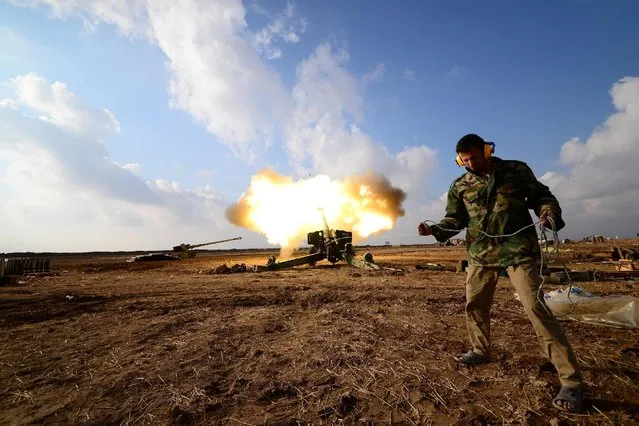
Members of Hashid Shaabi or Popular Mobilization Forces (PMF) fire towards Islamic State militant positions in west of Mosul, Iraq, December 28, 2016. (Photo by Reuters/Stringer)

Members of Hashid Shaabi or Popular Mobilization Forces (PMF) fire towards Islamic State militant positions in west of Mosul, Iraq, December 28, 2016. (Photo by Reuters/Stringer)
Details
29 Dec 2016 07:58:00
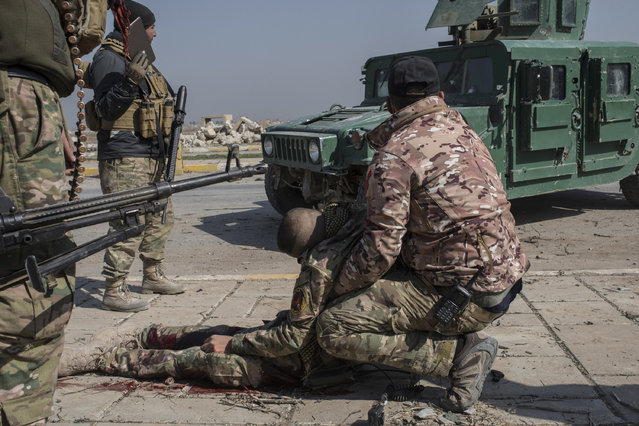
An injured Iraqi Emergency Response Division (ERD) soldier hit by a mortar is held by another officer as they wait for medics to arrive at the Islamic State occupied Mosul Airport in west Mosul, part of the offensive to retake the city some two years after it fell to the hardline jihadist group, February 23, 2017. Iraqi forces encountered stiff resistance with improvised explosives, heavy mortar fire and snipers hampering their advance before they successfully took the airport. (Photo by Martyn Aim/Getty Images)

An injured Iraqi Emergency Response Division (ERD) soldier hit by a mortar is held by another officer as they wait for medics to arrive at the Islamic State occupied Mosul Airport in west Mosul, part of the offensive to retake the city some two years after it fell to the hardline jihadist group, February 23, 2017. Iraqi forces encountered stiff resistance with improvised explosives, heavy mortar fire and snipers hampering their advance before they successfully took the airport. (Photo by Martyn Aim/Getty Images)
Details
27 Feb 2017 00:01:00
Iraqis run for cover as they flee Mosul's Al-Tayaran neighbourhood on February 28, 2017, during an offensive by Iraqi forces to retake the area from Islamic State (IS) group fighters. Hundreds of civilians fled through the desert to escape fighting and privation in Mosul, joining thousands of others who left their homes as conditions worsen in the city's west. (Photo by Ahmad Al-Rubaye/AFP Photo)

Iraqis run for cover as they flee Mosul's Al-Tayaran neighbourhood on February 28, 2017, during an offensive by Iraqi forces to retake the area from Islamic State (IS) group fighters. Hundreds of civilians fled through the desert to escape fighting and privation in Mosul, joining thousands of others who left their homes as conditions worsen in the city's west. (Photo by Ahmad Al-Rubaye/AFP Photo)
Details
02 Mar 2017 00:01:00
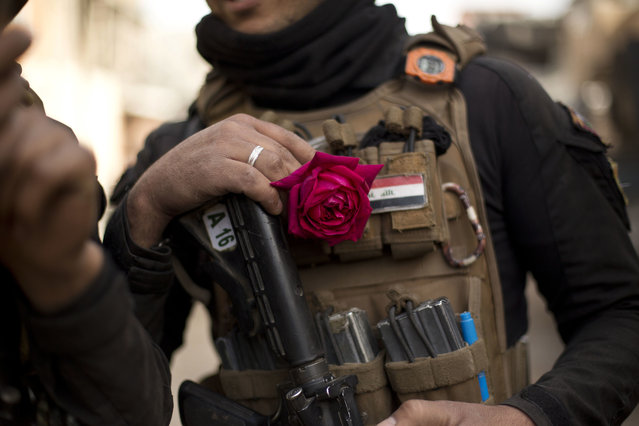
An Iraqi special forces soldier wears a rose in his body armor as troops move from the Yarmouk neighborhood to take another district from Islamic State militant control in Mosul, Iraq, Wednesday, April 12, 2017. (Photo by Maya Alleruzzo/AP Photo)

An Iraqi special forces soldier wears a rose in his body armor as troops move from the Yarmouk neighborhood to take another district from Islamic State militant control in Mosul, Iraq, Wednesday, April 12, 2017. (Photo by Maya Alleruzzo/AP Photo)
Details
26 Apr 2017 08:29:00
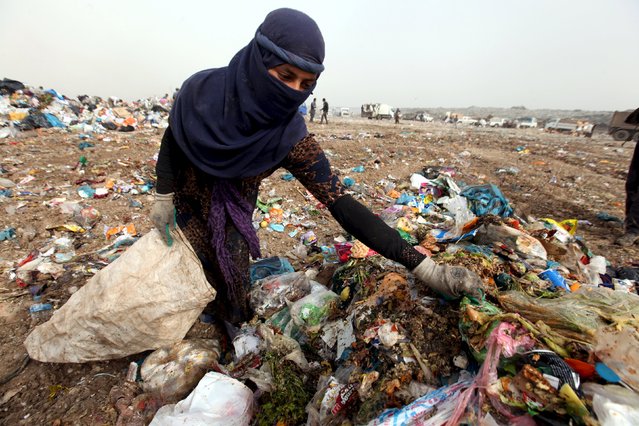
A garbage collector looks for recyclable waste at a dump in Erbil, in Iraq's northern autonomous Kurdistan region, February 21, 2016. (Photo by Azad Lashkari/Reuters)

A garbage collector looks for recyclable waste at a dump in Erbil, in Iraq's northern autonomous Kurdistan region, February 21, 2016. (Photo by Azad Lashkari/Reuters)
Details
22 Feb 2016 10:18:00
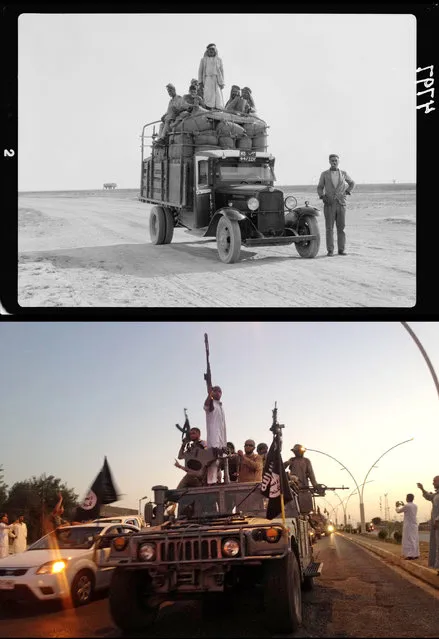
This combination of two photographs shows a 1932 image of men on a lorry on the road to Mosul, northern Iraq, from the Library of Congress, top, and fighters from the Islamic State group parading in a commandeered Iraqi security forces armored vehicle down a main road in Mosul on Monday, June 23, 2014. (Photo by AP Photo)


Iraq's second largest city, Mosul, is locked under the rule of extremists from the Islamic State group trying to purge it of everything they see as contradicting their stark vision of Islam. A trove of photographs now housed at the Library of Congress offers a glimpse of a different Mosul – before wars, insurgency, sectarian strife and now radicals' rule. The scenes were taken in the autumn of 1932 by staff from the American Colony Photo Department during a visit to Iraq at the end of the British mandate. (Photo by AP Photo)
Details
21 Sep 2014 11:13:00
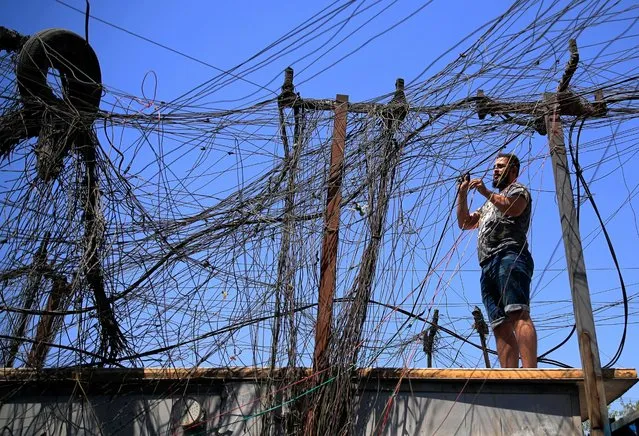
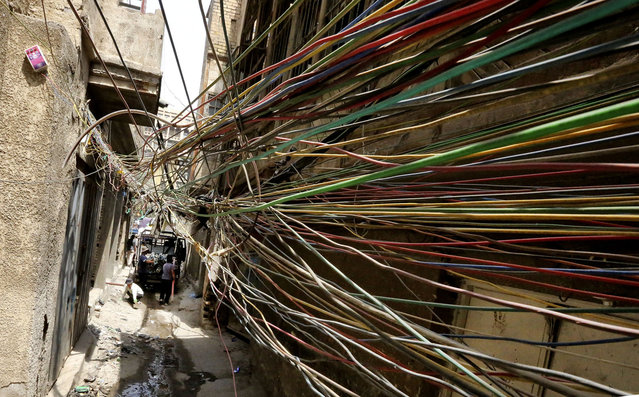
A picture taken on April 27, 2021, shows the electrical wires running between homes in the capital Baghdad's Murabaa neighbourhood. Between January and March alone, the interior ministry recorded 7,000 fires, the deadliest of which erupted on Sunday in a Covid-19 hospital in Baghdad. Eighty-two people died and 100 others were injured in the inferno, which sparked shock and outrage in the country. Baghdad, a sprawling metropolis of 10 million people, has the tragic distinction of being the Iraqi city hit by the most fires every year. (Photo by Sabah Arar/AFP Photo)

A picture taken on April 27, 2021, shows the electrical wires running between homes in the capital Baghdad's Murabaa neighbourhood. Between January and March alone, the interior ministry recorded 7,000 fires, the deadliest of which erupted on Sunday in a Covid-19 hospital in Baghdad. Eighty-two people died and 100 others were injured in the inferno, which sparked shock and outrage in the country. Baghdad, a sprawling metropolis of 10 million people, has the tragic distinction of being the Iraqi city hit by the most fires every year. (Photo by Sabah Arar/AFP Photo)
Details
06 May 2021 08:26:00
Muqtada Haider turns the switches to transfer electricity to private homes in Baghdad, Iraq, Friday, September 10, 2021. In Iraq, electricity is a potent symbol of endemic corruption, rooted in the country’s sectarian power-sharing system. This contributes to chronic electrical outages of up to 14 hours a day in a major oil-producing nation with plentiful energy resources. (Photo by Hadi Mizban/AP Photo)

Muqtada Haider turns the switches to transfer electricity to private homes in Baghdad, Iraq, Friday, September 10, 2021. In Iraq, electricity is a potent symbol of endemic corruption, rooted in the country’s sectarian power-sharing system. This contributes to chronic electrical outages of up to 14 hours a day in a major oil-producing nation with plentiful energy resources. (Photo by Hadi Mizban/AP Photo)
Details
29 Sep 2021 08:03:00