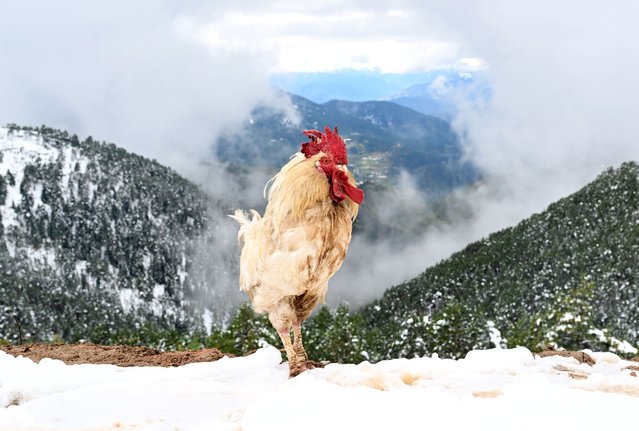
A rooster is seen with the Zigana Mountain Pass, an important road route connecting the Eastern Black Sea region to Eastern Anatolia at an altitude of 2,050 meters, and the surrounding high areas after effective snowfall has occurred intermittently on October 23, 2024 in Trabzon, Turkiye. (Photo by Hakan Burak Altunoz/Anadolu via Getty Images)
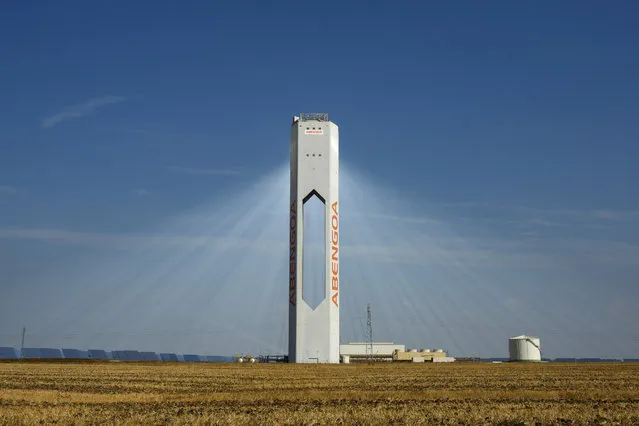
A tower belonging to the Abengoa solar plant at the Solucar solar park is seen in Sanlucar la Mayor, Spain on October 1, 2018. (Photo by Marcelo del Pozo/Reuters)
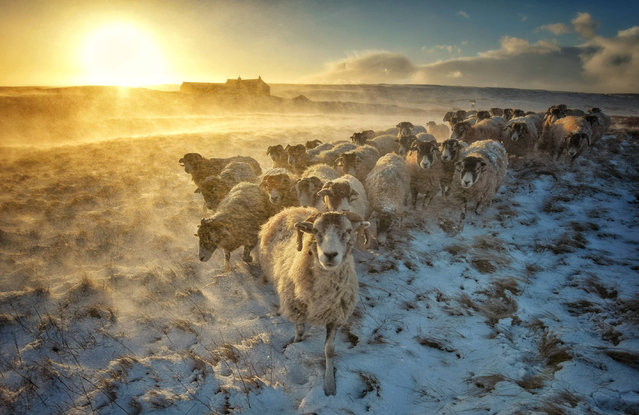
A flock of sheep huddles together while snow spindrift is whipped up by strong winds in Swaledale, North Yorkshire, UK on March 17, 2017. (Photo by Paul Kingston/NNP North News & Pictures Ltd)
Revellers shield themselves as they celebrate in the rain near Stonehenge stone circle, despite official Summer Solstice celebrations being cancelled due to the spread of the coronavirus disease (COVID-19), near Amesbury, Britain, June 21, 2020. (Photo by Toby Melville/Reuters)
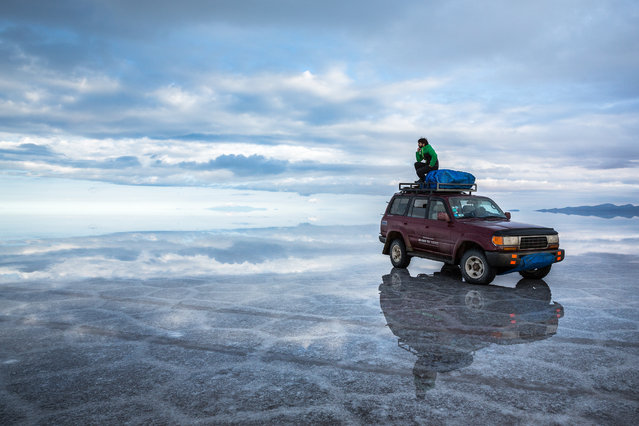
At 10,582 square kilometres, the Bolivian salt flats – otherwise known as Salar de Uyuni – are the largest on the planet and contain between 50 and 70% of the world’s lithium reserves. After exploring Chile and Argentina, photographer Joel Santos decided to travel to Bolivia in January 2017 to check the salt flats off his bucket list. With an electrical storm rolling in, Joel and his two travelling companions were the only souls left on the vast flats and captured the eerie flats without a person in sight. (Photo by Joel Santos/Barcroft Images)