Loading...
Done
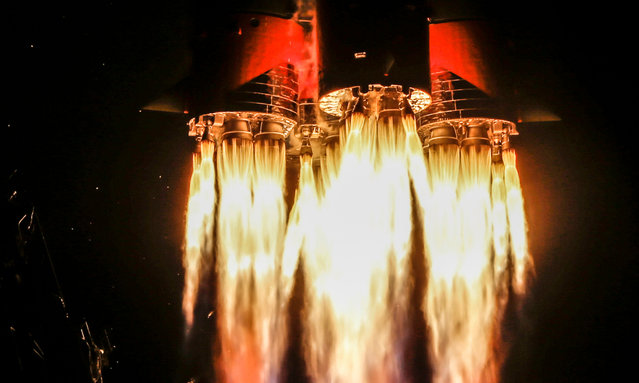
Soyuz MS-12 spacecraft with crew members of Expedition 59/60 Russian cosmonaut Alexey Ovchinin, NASA astronauts Christina Koch and Nick Hague lifts off from the launch pad at the Russian leased Baikonur cosmodrome, Kazakhstan, 15 March 2019. Hague, Koch, and Ovchinin will spend six-and-a-half months living and working aboard the International Space Station. (Photo by Sergei Ilnitsky/EPA/EFE)

Soyuz MS-12 spacecraft with crew members of Expedition 59/60 Russian cosmonaut Alexey Ovchinin, NASA astronauts Christina Koch and Nick Hague lifts off from the launch pad at the Russian leased Baikonur cosmodrome, Kazakhstan, 15 March 2019. Hague, Koch, and Ovchinin will spend six-and-a-half months living and working aboard the International Space Station. (Photo by Sergei Ilnitsky/EPA/EFE)
Details
11 Apr 2019 00:03:00
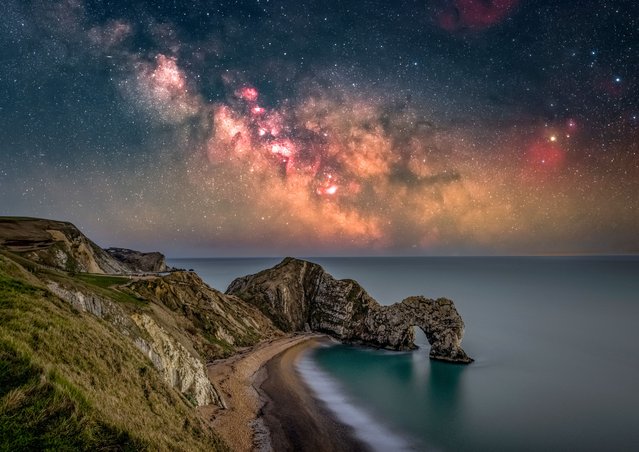
The Milky Way rising above Durdle Door in Dorset, United Kingdom on Saturday night, March 18, 2023. The image consists of 19 two-minute exposures, ten of the foreground and nine of the sky which needed a motorised star tracker to ensure the Milky Way wasn't blurry. All the photos were merged together to reveal more detail than what the naked eye can see. (Photo by Nick Bull/Picture Exclusive)

The Milky Way rising above Durdle Door in Dorset, United Kingdom on Saturday night, March 18, 2023. The image consists of 19 two-minute exposures, ten of the foreground and nine of the sky which needed a motorised star tracker to ensure the Milky Way wasn't blurry. All the photos were merged together to reveal more detail than what the naked eye can see. (Photo by Nick Bull/Picture Exclusive)
Details
24 Aug 2023 02:47:00
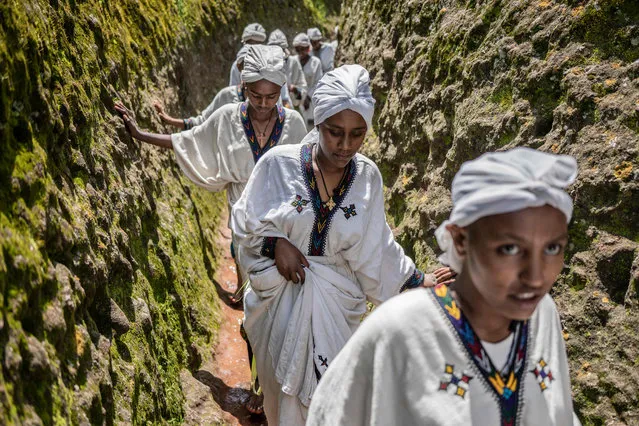
Young women walk through the cave of Saint George during Ashenda festival, at Saint George Church, in Lalibela, Ethiopia, on August 22, 2022. (Photo by Amanuel Sileshi/AFP Photo)

Young women walk through the cave of Saint George during Ashenda festival, at Saint George Church, in Lalibela, Ethiopia, on August 22, 2022. (Photo by Amanuel Sileshi/AFP Photo)
Details
27 Aug 2022 04:21:00
The following “Utopian Tours” drawings are conceptual images of what tourism in North Korea might one day look like, created by North Korean architects. The images, curated by Nick Bonner, are on view as part of the exhibition at the Venice Architecture Biennale in the Korean Pavilion. Bonner runs the Beijing-based Koryo Tours – a company that organizes tours of outsiders into North Korea. (Photo by Nick Bonner/Kyle Vanhemert/Venice Architecture Biennale)

At this year’s Venice Bienniale in Italy, the Korean pavilion has a curious exhibit called “Commissions for Utopia”. It includes renderings from North Korea’s top architects and artists (all anonymous), many of whom studied at the Paekho Institute of Architecture, North Korea’s state-run architectural college, and none of whom have ever left the country. They were asked to create a vision of North Korea’s future sustainable architecture for its expanding tourism industry. Their final products are a glimpse into what it would be like to envision the future after being entirely cut off from the present for almost 70 years. (Photo by Nick Bonner/Kyle Vanhemert/Venice Architecture Biennale)
Details
08 Aug 2014 11:03:00
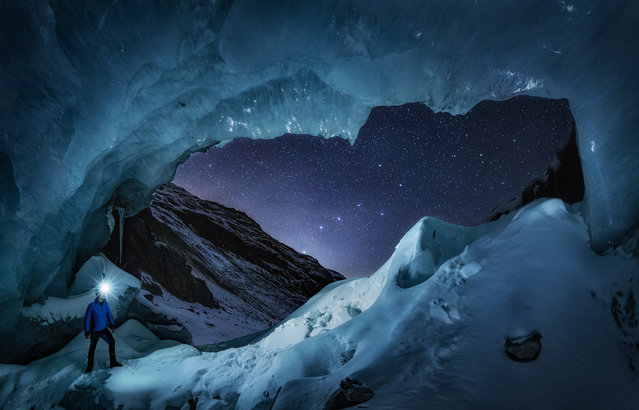
“Mr Big Dipper”, Nicholas Roemmelt (Denmark). A stargazer observes the constellation of the Big Dipper perfectly aligned with the window of the entrance to a large glacier cave in Engadin, Switzerland. This is a panorama of two pictures, and each is a stack of another two pictures: one for the stars and another one for the foreground, but with no composing or time blending. (Photo by Nicholas Roemmelt/National Maritime Museum/The Guardian)

“Mr Big Dipper”, Nicholas Roemmelt (Denmark). A stargazer observes the constellation of the Big Dipper perfectly aligned with the window of the entrance to a large glacier cave in Engadin, Switzerland. This is a panorama of two pictures, and each is a stack of another two pictures: one for the stars and another one for the foreground, but with no composing or time blending. (Photo by Nicholas Roemmelt/National Maritime Museum/The Guardian)
Details
27 Jul 2017 06:50:00
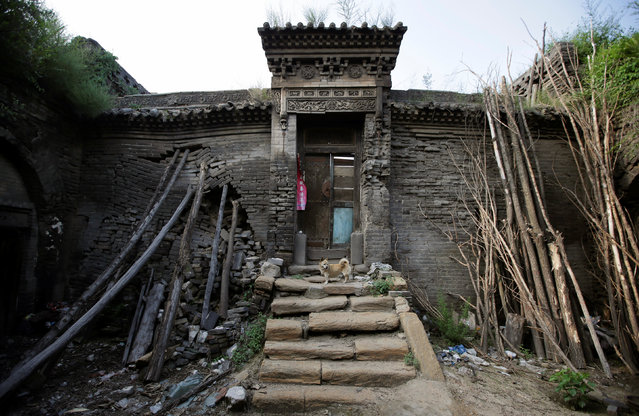
Tree trunks and rocks are set up to support a leaning wall of Li Yonghua's damaged cave house in an area where land is sinking next to a coal mine, in Helin village of Xiaoyi, China's Shanxi province, August 2, 2016. (Photo by Jason Lee/Reuters)

Tree trunks and rocks are set up to support a leaning wall of Li Yonghua's damaged cave house in an area where land is sinking next to a coal mine, in Helin village of Xiaoyi, China's Shanxi province, August 2, 2016. (Photo by Jason Lee/Reuters)
Details
15 Aug 2016 11:49:00
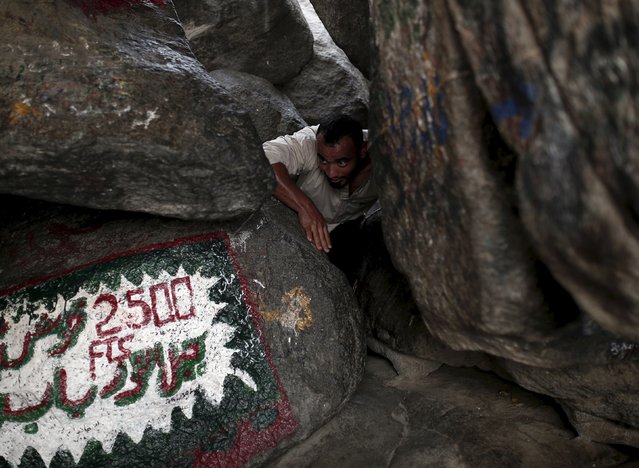
A Muslim pilgrim makes his way to Hera cave, where Muslims believe Prophet Mohammad received the first words of the Koran through Gabriel, at the top of Mount Al-Noor during the annual haj pilgrimage in the holy city of Mecca, September 21, 2015. (Photo by Ahmad Masood/Reuters)

A Muslim pilgrim makes his way to Hera cave, where Muslims believe Prophet Mohammad received the first words of the Koran through Gabriel, at the top of Mount Al-Noor during the annual haj pilgrimage in the holy city of Mecca, September 21, 2015. (Photo by Ahmad Masood/Reuters)
Details
23 Sep 2015 08:01:00
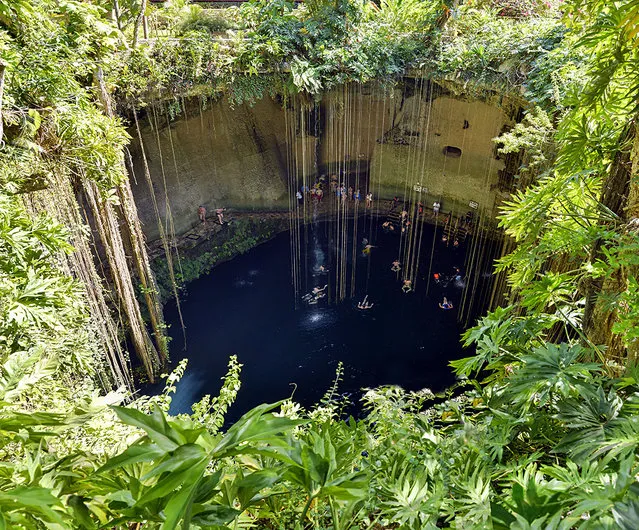
Cenote In Mexico

A cenote is a natural phenomenon, a sinkhole in the Earth’s surface. The Yucatan Peninsula in Mexico has an estimated 7,000 cenotes because it is primarily made up of porous limestone. For millions of years, rainfall slowly ate away at the limestone and a huge system of underground caves and caverns was formed. Many filled with water from rain or from the underground water table. When the roof of a water filled cave collapses, a cenote is born. The water found in a cenote may be fresh water, salt water, or both. Structurally it may be completely open, like a lake, almost completely closed with just a small opening at the top, or somewhere in between.
Details
06 Oct 2013 09:45:00