Loading...
Done
Olympus BioScapes Digital Imaging Competition 2012

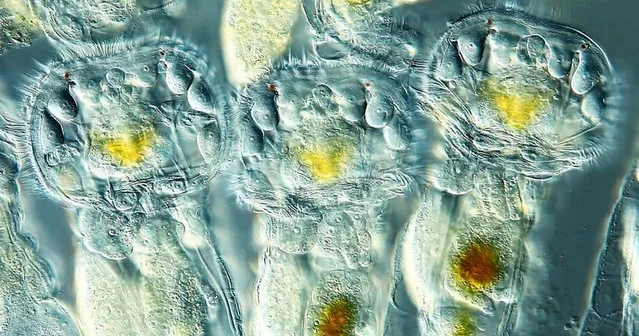
Microscope images forge an extraordinary bond between science and art, said Hidenao Tsuchiya, Olympus America's Vice President and General Manager for the Scientific Equipment Group. We founded this competition to focus on the fascinating stories coming out of today's life science research laboratories. The thousands of images that people have shared with the competition over the years reflect some of the most exciting work going on in research today – work that can help shed light on the living universe and ultimately save lives. We look at BioScapes and these beautiful images as sources of education and inspiration to us and the world
Details
23 Dec 2012 15:57:00
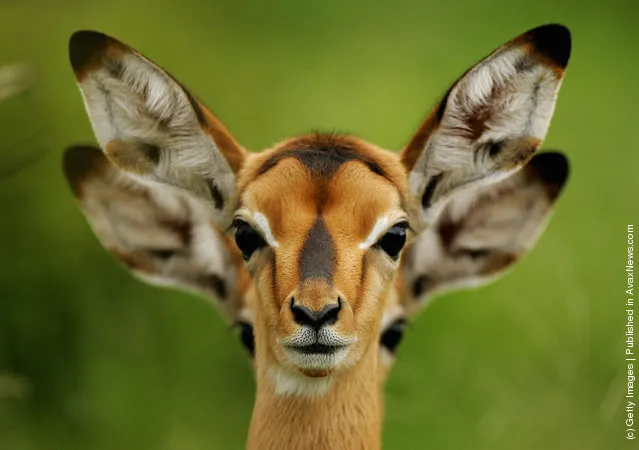
Impala pictured

Impala pictured in the Kruger National Park on December 7, 2007 in Mpumalanga, South Africa. (Photo by Warren Little/Getty Images)
Details
16 Aug 2011 12:20:00
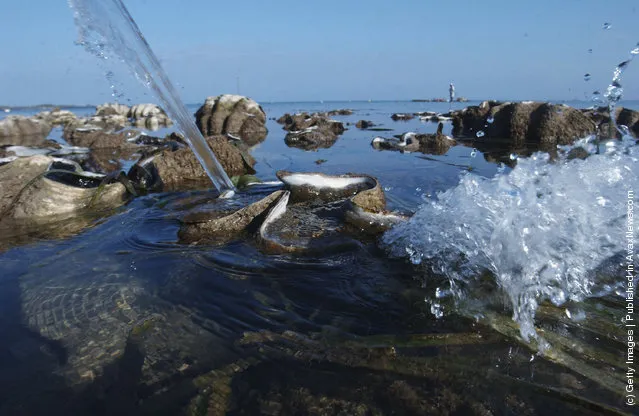
Tridacna Gigas, or Giant Clams

“The giant clam, Tridacna gigas (known as pā’ua in Cook Islands Māori), is the largest living bivalve mollusc. T. gigas is one of the most endangered clam species. It was mentioned as early as 1825 in scientific reports. One of a number of large clam species native to the shallow coral reefs of the South Pacific and Indian oceans, they can weigh more than 200 kilograms (440 lb) measure as much as 120 cm (47 in) across, and have an average lifespan in the wild of 100 years or more”. – Wikipedia

Photo: Tridacna Gigas, or Giant Clams spew water as a traditional fisherman passes by a small sanctuary on January 23, 2004 near Bolinao in the Northern Philippines. The clams, prime builders for coral reefs and providing shelter for spawning fish and other marine life, are exposed by low tides in the sanctuary. Overfishing and pollution throughout the country are not only threatening food security, but are also starting to choke one of the few working clam sanctuaries in the world. (Photo by David Greedy/Getty Images)
Details
01 Oct 2011 13:10:00
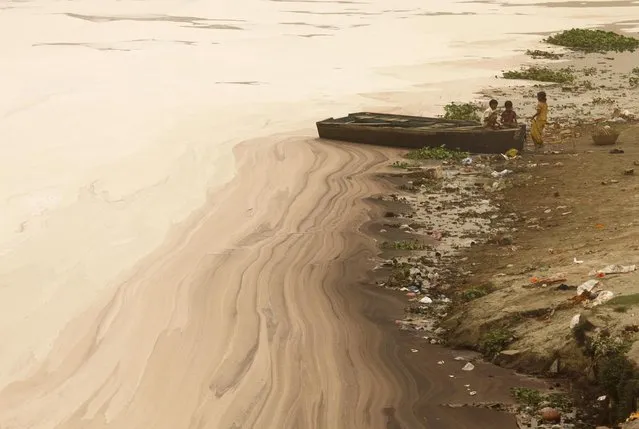
Children stand in a boat at the banks of the polluted Yamuna River during a dust haze as they wait to give a ride to worshippers in New Delhi during World Environment Day June 5, 2010. (Photo by Reinhard Krause/Reuters)

Children stand in a boat at the banks of the polluted Yamuna River during a dust haze as they wait to give a ride to worshippers in New Delhi during World Environment Day June 5, 2010. (Photo by Reinhard Krause/Reuters)
Details
10 Oct 2014 12:50:00
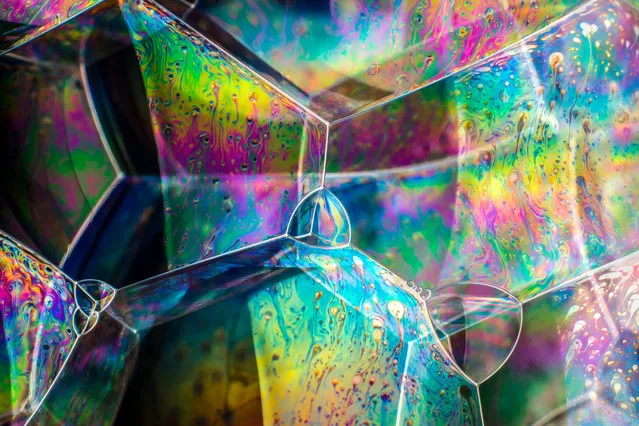
Soap Bubble Structures by Kym Cox. Bubbles optimise space and minimise their surface area for a given volume of air. This phenomenon makes them a useful tool in many areas of research, in particular, materials science and ‘packing’ – how things fit together. Bubble walls drain under gravity, thin at the top, thick at the bottom, which interferes with travelling lightwaves to create bands of colour. Black spots show the wall is too thin for interference colours, indicating the bubble is about to burst. (Photo by Kym Cox/2019 Science Photographer of the Year/RPS)

Soap Bubble Structures by Kym Cox. Bubbles optimise space and minimise their surface area for a given volume of air. This phenomenon makes them a useful tool in many areas of research, in particular, materials science and “packing” – how things fit together. Bubble walls drain under gravity, thin at the top, thick at the bottom, which interferes with travelling lightwaves to create bands of colour. Black spots show the wall is too thin for interference colours, indicating the bubble is about to burst. (Photo by Kym Cox/2019 Science Photographer of the Year/RPS)
Details
15 Aug 2019 00:03:00
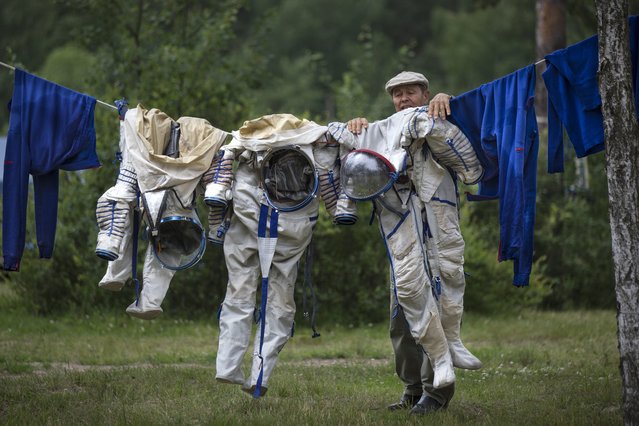
An employe of Russian Space Training Center hangs out to dry space suits of Russian cosmonaut Anatoly Ivanishin, NASA's U.S. flight engineer Kathleen Rubins, and Japanese space agency's flight engineer Takuya Onishi, right, after their undergoing  training near in Noginsk, 60 km (38 miles) east of Moscow, Russia, Wednesday, July 2, 2014. (Photo by Alexander Zemlianichenko/AP Photo)

An employe of Russian Space Training Center hangs out to dry space suits of Russian cosmonaut Anatoly Ivanishin, NASA's U.S. flight engineer Kathleen Rubins, and Japanese space agency's flight engineer Takuya Onishi, right, after their undergoing training near in Noginsk, 60 km (38 miles) east of Moscow, Russia, Wednesday, July 2, 2014. The training was intended to simulate the capsule landing on water. Russian cosmonaut Anatoly Ivanishin, Japanese space agency's flight engineer Takuya Onishi, and NASA's U.S. flight engineer Kathleen Rubins are being trained for a future mission to the International Space Station. (Photo by Alexander Zemlianichenko/AP Photo)
Details
05 Jul 2014 11:47:00
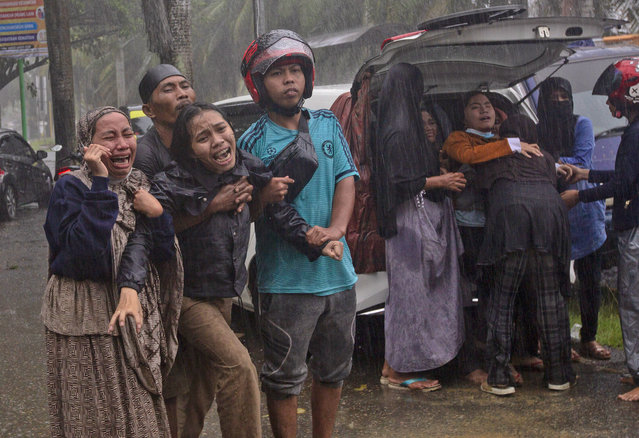
People react as the body of a relative is retrieved from the ruin of a building at an area affected by an earthquake in Mamuju, West Sulawesi, Indonesia, Friday, January 15, 2021. A strong, shallow earthquake shook Indonesia's Sulawesi island just after midnight Friday, toppling homes and buildings, triggering landslides and killing a number of people. (Photo by Yusuf Wahil/AP Photo)

People react as the body of a relative is retrieved from the ruin of a building at an area affected by an earthquake in Mamuju, West Sulawesi, Indonesia, Friday, January 15, 2021. A strong, shallow earthquake shook Indonesia's Sulawesi island just after midnight Friday, toppling homes and buildings, triggering landslides and killing a number of people. (Photo by Yusuf Wahil/AP Photo)
Details
17 Jan 2021 00:07:00
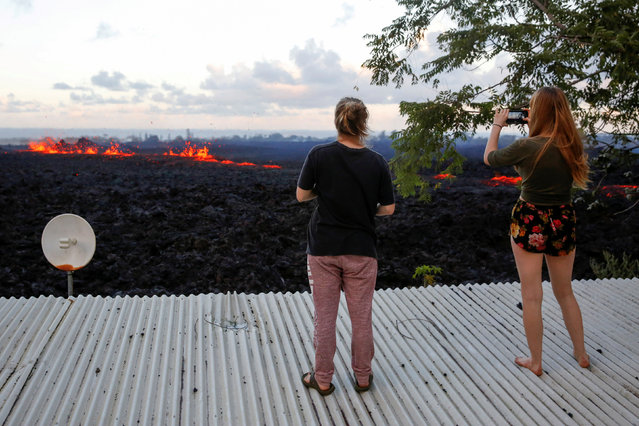
Jolon Clinton, 15, (L), and her sister, Halcy, 17, take photos of a fissure near their home on the outskirts of Pahoa during ongoing eruptions of the Kilauea Volcano in Hawaii, U.S., May 14, 2018. (Photo by Terray Sylvester/Reuters)

Jolon Clinton, 15, (L), and her sister, Halcy, 17, take photos of a fissure near their home on the outskirts of Pahoa during ongoing eruptions of the Kilauea Volcano in Hawaii, U.S., May 14, 2018. (Photo by Terray Sylvester/Reuters)
Details
16 May 2018 08:11:00