Loading...
Done
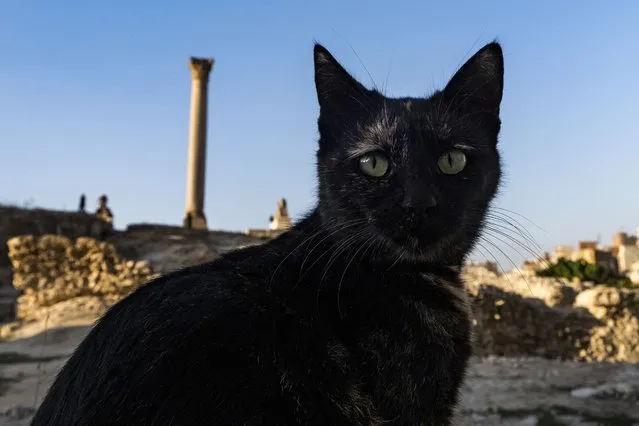
A cat looks on near the Victory Pillar at the ruins of the Serapeum of Alexandria, an ancient Greek temple dating to the Ptolemaic and Roman periods (246 BC – 391 AD) dedicated to the city's protector deity Serapis, in Egypt's northern coastal city of Alexandria on November 24, 2023. The giant Corinthian column, commonly misidentified as “Pompey's Pillar”, is a Roman triumphal column set up in honour of the Roman emperor Diocletian (298–302 AD), and originally supported a colossal porphyry statue of the emperor in armour. (Photo by Amir Makar/AFP Photo)

A cat looks on near the Victory Pillar at the ruins of the Serapeum of Alexandria, an ancient Greek temple dating to the Ptolemaic and Roman periods (246 BC – 391 AD) dedicated to the city's protector deity Serapis, in Egypt's northern coastal city of Alexandria on November 24, 2023. The giant Corinthian column, commonly misidentified as “Pompey's Pillar”, is a Roman triumphal column set up in honour of the Roman emperor Diocletian (298–302 AD), and originally supported a colossal porphyry statue of the emperor in armour. (Photo by Amir Makar/AFP Photo)
Details
13 Dec 2023 23:52:00
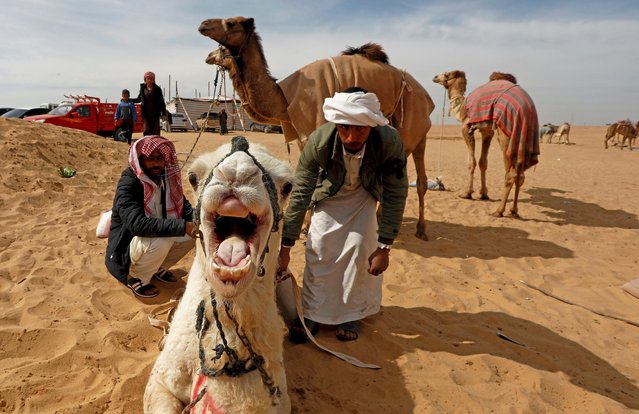
Bedouin breeders fix a robot jockey mounted on a camel before the 18th International Camel Racing festival at the Sarabium desert in Ismailia, Egypt, March 12, 2019. (Photo by Amr Abdallah Dalsh/Reuters)

Bedouin breeders fix a robot jockey mounted on a camel before the 18th International Camel Racing festival at the Sarabium desert in Ismailia, Egypt, March 12, 2019. Several Gulf countries have banned child jockeys from the traditional Bedouin sport after rights groups said the youngsters were often injured and some had been abducted or sold by their families. (Photo by Amr Abdallah Dalsh/Reuters)
Details
21 Mar 2019 00:01:00


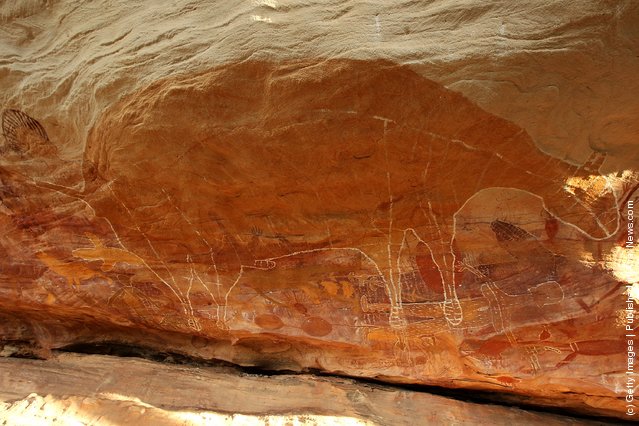
The artwork of Giant Horse Aboriginal rock art galleries in the Quinkan Country is seen on June 19, 2011 in Laura, Australia. The ancient aboriginal rock art in this region is some of the largest and oldest in the world, dating back over 15,000 years. Paintings, stencil art and engravings cover thelands traditionally home to the Kuku, Yalanji, Guugu Yimithirr and Kuku Thaypan people. As a UNESCO-identified top 10 rock art site in the world, international travelers visit the area to learn and understand the aboriginal culture through the artwork. (Photo by Mark Kolbe/Getty Images)
Details
23 Jun 2011 10:12:00
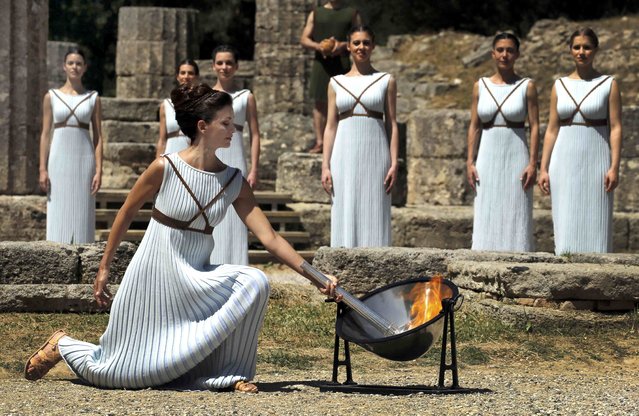
Greek actress Katerina Lehou , playing the role of High Priestess, lights a torch during the dress rehearsal for the Olympic flame lighting ceremony for the Rio 2016  Olympic Games at the site of ancient Olympia in Greece, April 20, 2016. Fire spurted from the concave mirror as a priestess, kneeling in her long, pleated dress before a ruined Greek temple, focused the blazing sun's rays on her metal torch. Come rain or shine on Thursday's official lighting ceremony, Rio de Janeiro has now secured its Olympic flame, which will burn in the main Olympic stadium throughout the Aug. 5-21 games. (Photo by Yannis Behrakis/Reuters)

Greek actress Katerina Lehou, playing the role of High Priestess, lights a torch during the dress rehearsal for the Olympic flame lighting ceremony for the Rio 2016 Olympic Games at the site of ancient Olympia in Greece, April 20, 2016. Fire spurted from the concave mirror as a priestess, kneeling in her long, pleated dress before a ruined Greek temple, focused the blazing sun's rays on her metal torch. Come rain or shine on Thursday's official lighting ceremony, Rio de Janeiro has now secured its Olympic flame, which will burn in the main Olympic stadium throughout the Aug. 5-21 games. (Photo by Yannis Behrakis/Reuters)
Details
21 Apr 2016 12:08:00
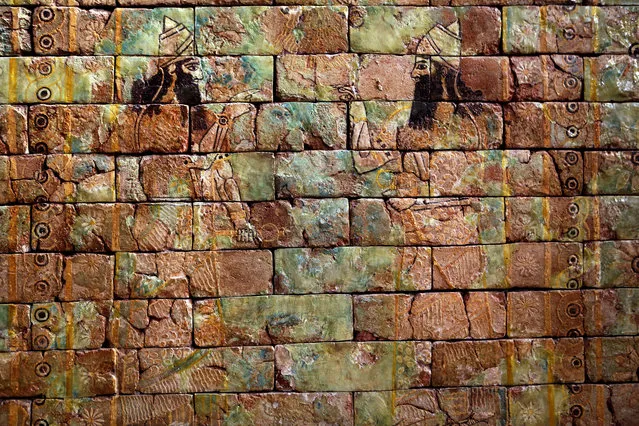
This Monday, September 15, 2014 photo shows glazed bricks displayed at the Iraqi National Museum in Baghdad. The Islamic State militants seek to purge society of all influences that don't conform with their strict, puritanical version of Islam. That means destroying not only relics seen as pagan but also Muslim sites they see as contradicting their ideology, particularly Sunni Muslim shrines they see as idolatrous as well as mosques used by Shiites, a branch of Islam they consider heretical. (Photo by Hadi Mizban/AP Photo)

This Monday, September 15, 2014 photo shows glazed bricks displayed at the Iraqi National Museum in Baghdad. The Islamic State militants seek to purge society of all influences that don't conform with their strict, puritanical version of Islam. That means destroying not only relics seen as pagan but also Muslim sites they see as contradicting their ideology, particularly Sunni Muslim shrines they see as idolatrous as well as mosques used by Shiites, a branch of Islam they consider heretical. (Photo by Hadi Mizban/AP Photo)
Details
21 Sep 2014 10:31:00
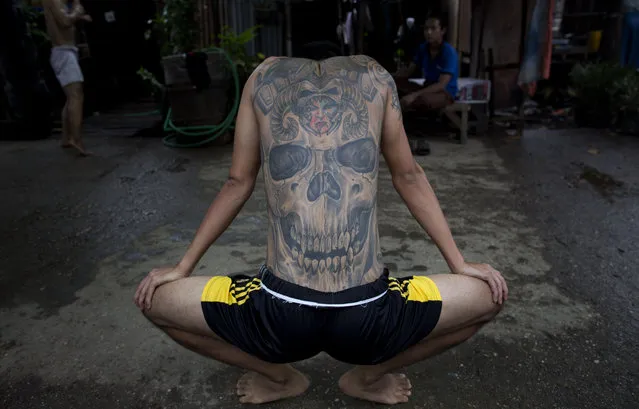
In this Tuesday, July 14, 2015, photo, Phoe Thaw, center, a member of the White New Blood lethwei fighters club, a Myanmar traditional martial-arts club which practices a rough form of kickboxing, stretches during a practice session in their gym on a street in Oakalarpa, north of Yangon, Myanmar. (Photo by Gemunu Amarasinghe/AP Photo)

In this Tuesday, July 14, 2015, photo, Phoe Thaw, center, a member of the White New Blood lethwei fighters club, a Myanmar traditional martial-arts club which practices a rough form of kickboxing, stretches during a practice session in their gym on a street in Oakalarpa, north of Yangon, Myanmar. Three of the club's members competed this summer on a stage a world away from the street gym: a mixed-martial-arts “One Championship” event broadcast globally on cable television networks, where fighters could receive $1,000 for each fight, according to coach Myint Zaw who started the traditional fighters' club 15 years ago. (Photo by Gemunu Amarasinghe/AP Photo)
Details
07 Sep 2015 14:00:00
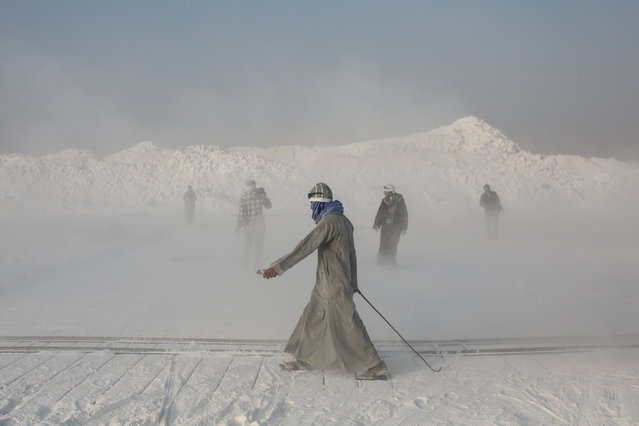
In this Wednesday, March 18, 2015 photo, limestone quarry workers walk through a cloud of dust spewed into the air by rotor blades of the stone-cutting machinery in the desert of Minya, southern Egypt. (Photo by Mosa'ab Elshamy/AP Photo)

In this Wednesday, March 18, 2015 photo, limestone quarry workers walk through a cloud of dust spewed into the air by rotor blades of the stone-cutting machinery in the desert of Minya, southern Egypt. Around 45,000 people, including children, work in an estimated 1,500 quarries, digging out stones that later will be used in construction or powdered to be used by pharmaceutical and ceramic companies. (Photo by Mosa'ab Elshamy/AP Photo)
Details
07 Apr 2015 11:41:00
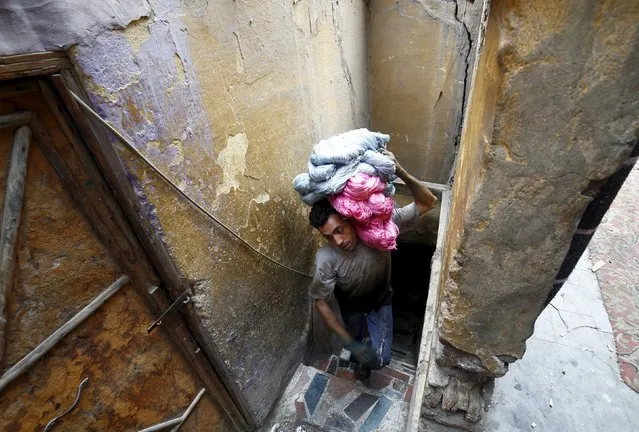
Mohamed Mostafa, 35, carries dyed yarns at a dye workshop in old Cairo, Egypt, March 17, 2016. (Photo by Amr Abdallah Dalsh/Reuters)

Mohamed Mostafa, 35, carries dyed yarns at a dye workshop in old Cairo, Egypt, March 17, 2016. Egypt's hard currency crisis and competition from modern factories in Asia and at home threaten one of the last dye workshops in Egypt. But one of its owners takes comfort in the trade's ancient resilience. Mohamed Mostafa boasts that the profession dates back 3,000 years, so it can survive anything. (Photo by Amr Abdallah Dalsh/Reuters)
Details
09 Apr 2016 13:26:00