Loading...
Done
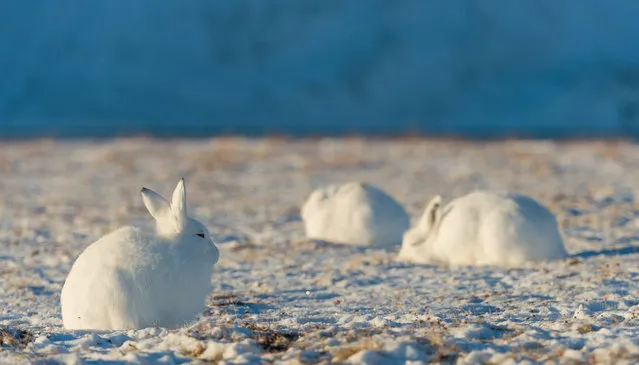
Arctic Hare

The arctic hare, or polar rabbit, is a species of hare which is adapted largely to polar and mountainous habitats. The arctic hare survives with a thick coat of fur and usually digs holes in the ground or under snow to keep warm and sleep. Arctic hares look like rabbits but have shorter ears, are taller when standing, and, unlike rabbits, can thrive in cold climates. They can travel together with many other hares, sometimes huddling with dozens or more, but are usually found alone, taking, in some cases, more than one partner. The arctic hare can run up to 60 kilometres per hour (40 mph). Its predators include the arctic wolf, arctic fox, and ermine.
Details
17 Mar 2014 13:56:00
Of all the species affected by river regulation in Australia, the ibis is one of the few that has changed its behaviour and moved to coastal cities. (Photo by Rick Stevens/The Guardian)

Tip turkey, dumpster chook, rubbish raptor – the Australian white ibis goes by many unflattering names. But it is a true urban success story, scavenging to survive in cities across Australia as wetlands have been lost. Wildlife photographer Rick Stevens captured them in Sydney. Here: Of all the species affected by river regulation in Australia, the ibis is one of the few that has changed its behaviour and moved to coastal cities. (Photo by Rick Stevens/The Guardian)
Details
11 Apr 2018 00:03:00
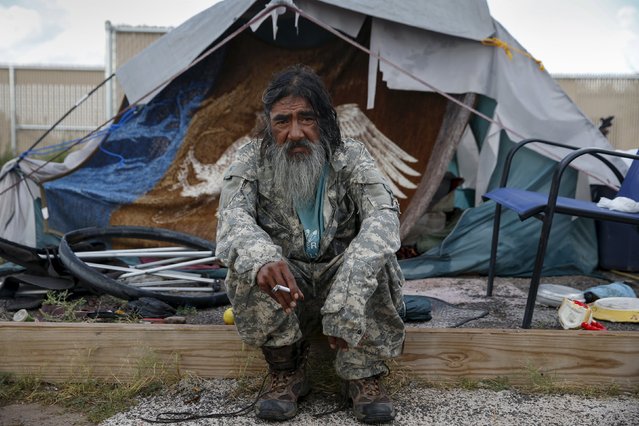
Daniel J. Wabsey, a 58-year-old war veteran, sits outside his tent at Camp Hope in Las Cruces, New Mexico October 6, 2015. “I've been traveling for 35 or 38 years. Getting inside would take a while to get used to. I just want to be able to eat, sleep and be safe. We all get along and understand in Camp Hope. We've all been there. With common sense you can survive out here”, Wabsey said. Camp Hope describe themselves as an “alternative transitional living project for the homeless”. Around 50 people live at the camp. (Photo by Shannon Stapleton/Reuters)

Daniel J. Wabsey, a 58-year-old war veteran, sits outside his tent at Camp Hope in Las Cruces, New Mexico October 6, 2015. “I've been traveling for 35 or 38 years. Getting inside would take a while to get used to. I just want to be able to eat, sleep and be safe. We all get along and understand in Camp Hope. We've all been there. With common sense you can survive out here”, Wabsey said. Camp Hope describe themselves as an “alternative transitional living project for the homeless”. Around 50 people live at the camp. (Photo by Shannon Stapleton/Reuters)
Details
19 Dec 2015 08:05:00
Wells Clock – World's Oldest Mechanical Clock

“Wells Cathedral is a Church of England cathedral in Wells, Somerset, England. Built between 1175 and 1490, Wells Cathedral has been described as “the most poetic of the English Cathedrals”. The Wells clock, an astronomical clock, is located in the north transept. The surviving mechanism, dated to between 1386 and 1392, was replaced in the 19th century, and was eventually moved to the Science Museum in London, where it continues to operate. It is the second-oldest surviving clock in England”. – Wikipedia

Photo: The clock face of world's oldest continually-working mechanical clock is seen as it is hand wound for the very last time on August 21, 2010 in Wells, England. (Photo by Matt Cardy/Getty Images)
Details
10 Aug 2011 11:23:00
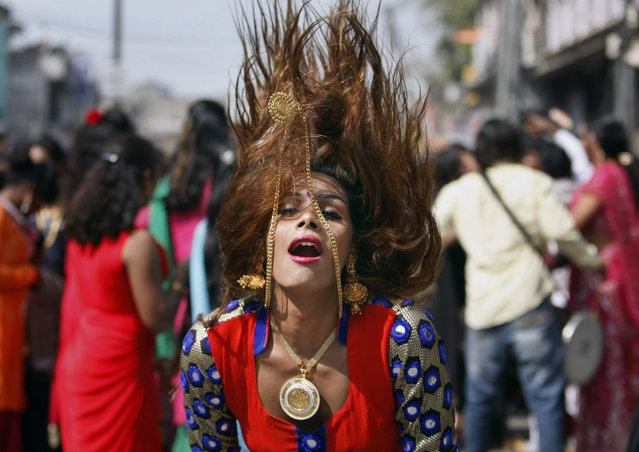
A eunuch dances during a rally to mark the congregation of thousands of eunuchs from different parts of India, in Jammu, India, Friday, March 13, 2015. The term eunuchs is used in India to describe transvestites, transsexuals and others who identify themselves as neither male nor female but as a member of a third gender. They traditionally survive by begging, dancing at weddings or blessing newborn babies and are frequently subjected to discrimination. (Photo by Channi Anand/AP Photo)

A eunuch dances during a rally to mark the congregation of thousands of eunuchs from different parts of India, in Jammu, India, Friday, March 13, 2015. The term eunuchs is used in India to describe transvestites, transsexuals and others who identify themselves as neither male nor female but as a member of a third gender. They traditionally survive by begging, dancing at weddings or blessing newborn babies and are frequently subjected to discrimination. (Photo by Channi Anand/AP Photo)
Details
21 Mar 2015 12:33:00
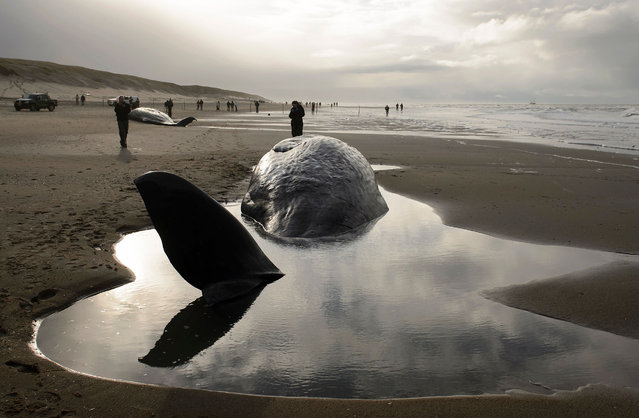
People stand near beached sperm whales on January 13, 2016, after they became stranded on the Dutch island of Texel the day before. Five sperm whales which became stranded on Texel have died, officials said January 13. Experts said the beached whales had already been badly injured and their chances of survival were poor. Volunteers tried to save them but called off their efforts late in the night because of bad weather and darkness, ANP news agency said. (Photo by Remko de Waal/AFP Photo/ANP)

People stand near beached sperm whales on January 13, 2016, after they became stranded on the Dutch island of Texel the day before. Five sperm whales which became stranded on Texel have died, officials said January 13. Experts said the beached whales had already been badly injured and their chances of survival were poor. Volunteers tried to save them but called off their efforts late in the night because of bad weather and darkness, ANP news agency said. (Photo by Remko de Waal/AFP Photo/ANP)
Details
17 Dec 2017 04:51:00
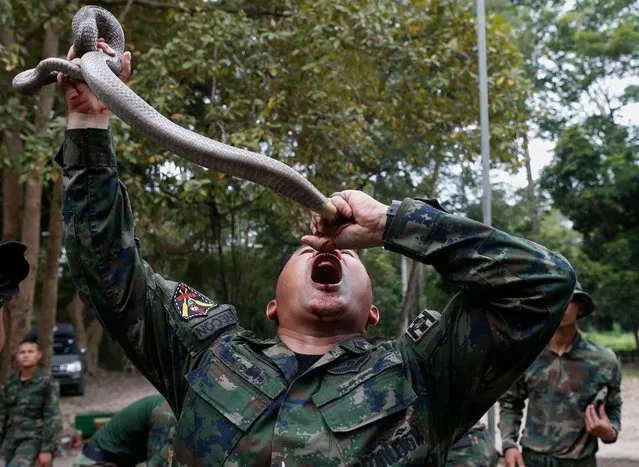
A Thai Marine instructor drinks a cobra's raw blood after killing it as he gives instruction to US Marines and South Korean Marines during jungle survival training as part of the multinational joint military exercise Cobra Gold 2018 at a Force Reconnaissance Battalion camp in the Royal Thai Naval Base, Sattahip district, Chonburi province, Thailand, 19 February 2018. (Photo by Rungroj Yongrit/EPA/EFE)

A Thai Marine instructor drinks a cobra's raw blood after killing it as he gives instruction to US Marines and South Korean Marines during jungle survival training as part of the multinational joint military exercise Cobra Gold 2018 at a Force Reconnaissance Battalion camp in the Royal Thai Naval Base, Sattahip district, Chonburi province, Thailand, 19 February 2018. (Photo by Rungroj Yongrit/EPA/EFE)
Details
21 Feb 2018 00:01:00
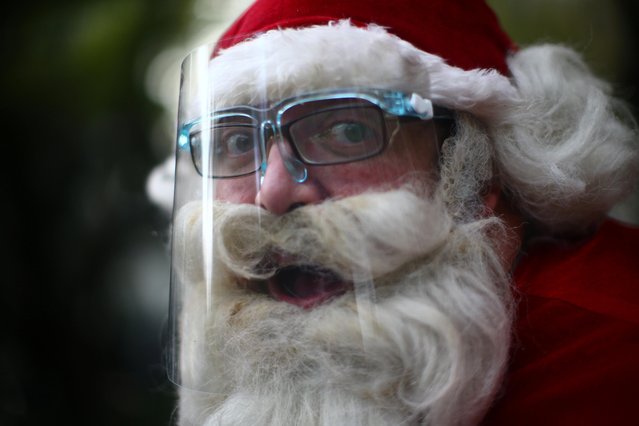
Alejandro Zelayaran, 43, dressed as Santa Claus, wears a protective face shield as he poses for a photograph on a street in Mexico City, Mexico, December 3, 2020. “Faith and hope must move the heart of the humanity”, said Zelayaran, who will don a face shield when he distributes dolls and other gifts at an orphanage in Mexico City. “I want to see families taking care of each other and knowing that even from afar, love and hope always survive”. (Photo by Edgard Garrido/Reuters)

Alejandro Zelayaran, 43, dressed as Santa Claus, wears a protective face shield as he poses for a photograph on a street in Mexico City, Mexico, December 3, 2020. “Faith and hope must move the heart of the humanity”, said Zelayaran, who will don a face shield when he distributes dolls and other gifts at an orphanage in Mexico City. “I want to see families taking care of each other and knowing that even from afar, love and hope always survive”. (Photo by Edgard Garrido/Reuters)
Details
28 Feb 2021 09:51:00