Loading...
Done
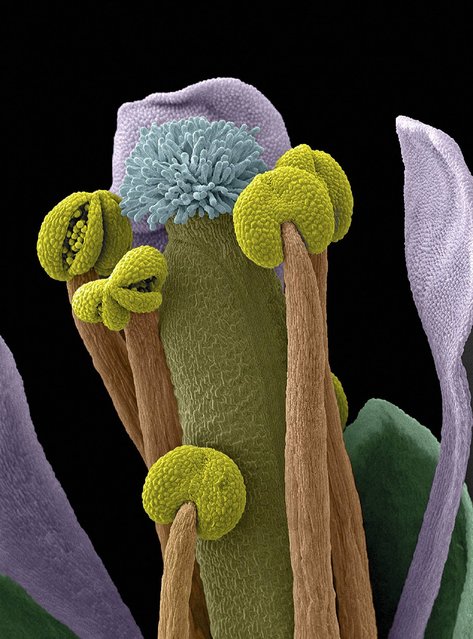
Scanning electron micrograph (SEM) of an Arabidopsis thaliana flower, also commonly known as thale cress. Some of the anthers are open, revealing pollen grains ready for dispersal. Arabidopsis was the first plant to have its entire genome sequenced and is widely used as a model organism in molecular and plant biology. Horizontal width of image is 1200 microns. Magnification 100x. (Photo by Stefan Eberhard/Wellcome Images)

Beautiful, strange and occasionally alarming pictures from the shortlist for this year’s Wellcome image awards – which celebrate the very best in science photography and imaging – from an x-ray of a bat to a micrograph of a kidney stone. The exhibition opens on 12 March at three science centres and the Museum of Science and Industry in Manchester. Photo: Scanning electron micrograph (SEM) of an Arabidopsis thaliana flower, also commonly known as thale cress. Some of the anthers are open, revealing pollen grains ready for dispersal. Arabidopsis was the first plant to have its entire genome sequenced and is widely used as a model organism in molecular and plant biology. Horizontal width of image is 1200 microns. Magnification 100x. (Photo by Stefan Eberhard/Wellcome Images)
Details
11 Mar 2014 05:58:00
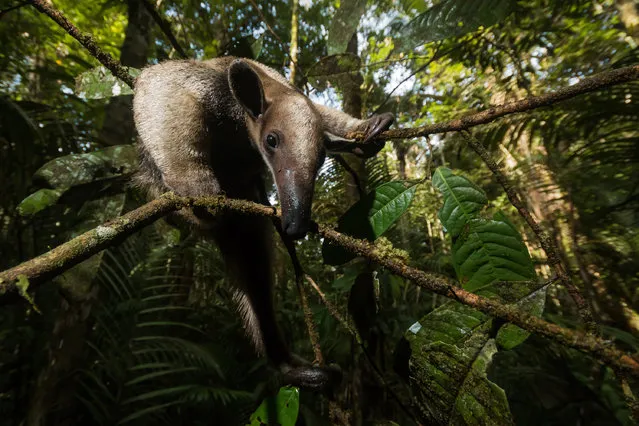
Individuals and populations student winner. Limbing in the Tropics, photographed in Manaus, Brazil. While walking in the Amazon rainforest looking for bat roosts to set up mist nets to capture bats for scientific research, a faint and almost imperceptible noise suddenly caught this photographer’s attention. An anteater was climbing with exceptional ability in a tangled mess of branches and lianas. With an unbelievable calmness, the animal watched the photographer at work and seemed to enjoy being the subject of an impromptu photography session in the most biodiverse ecosystem on Earth. (Photo by Adrià López Baucells/University of Lisbon/British Ecological Society)

Individuals and populations student winner. Limbing in the Tropics, photographed in Manaus, Brazil. While walking in the Amazon rainforest looking for bat roosts to set up mist nets to capture bats for scientific research, a faint and almost imperceptible noise suddenly caught this photographer’s attention. An anteater was climbing with exceptional ability in a tangled mess of branches and lianas. (Photo by Adrià López Baucells/University of Lisbon/British Ecological Society)
Details
05 Dec 2018 00:03:00
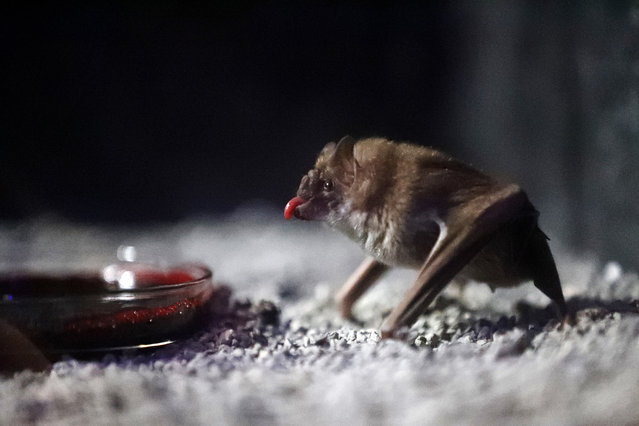
In this Tuesday, March 20, 2018 photo, a Vampire Bat drinks bovine blood in the Criaturas de la Noche (Creatures of the Night) Bat House, the Audubon Zoo's new night house in New Orleans. The various species are all from Central and South America, and the building's interior simulates an abandoned warehouse set up to protect Mayan artifacts during a dig. (Photo by Gerald Herbert/AP Photo)

In this Tuesday, March 20, 2018 photo, a Vampire Bat drinks bovine blood in the Criaturas de la Noche (Creatures of the Night) Bat House, the Audubon Zoo's new night house in New Orleans. The various species are all from Central and South America, and the building's interior simulates an abandoned warehouse set up to protect Mayan artifacts during a dig. (Photo by Gerald Herbert/AP Photo)
Details
25 Mar 2018 00:03:00
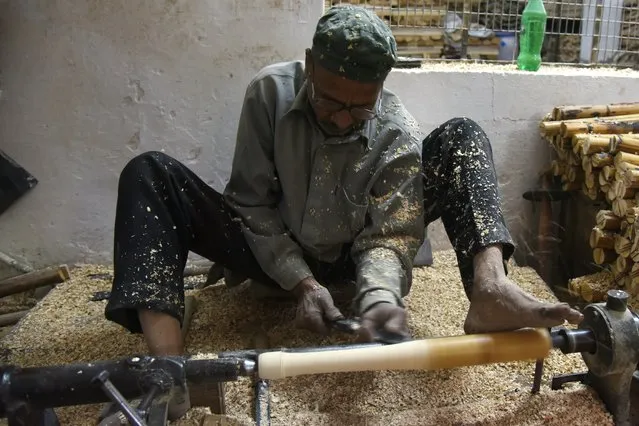
In this photograph taken on December 14, 2016, an Indian craftsman works on unfinished cricket bats in a factory in Meerut, some 70 kms north- east of New Delhi. As Indian factory worker Jitender Singh carves out another big- hitting slab of thick willow he insists MCC proposals to limit the size of cricket bats won' t tame Twenty20 marauders. “I don' t think the thickness matters. It' s more about the balance of the bat and the talent of the batsman”, says Singh, who has made bats for many stars, including South Africa's AB de Villiers. The World Cricket committee of the MCC, the guardians of the game, recommended in December 2016 that limitations be placed on the width and depth of bats because it had become too easy to smash fours and sixes. (Photo by Dominique Faget/AFP Photo)

In this photograph taken on December 14, 2016, an Indian craftsman works on unfinished cricket bats in a factory in Meerut, some 70 kms north- east of New Delhi. (Photo by Dominique Faget/AFP Photo)
Details
11 Jan 2017 14:32:00
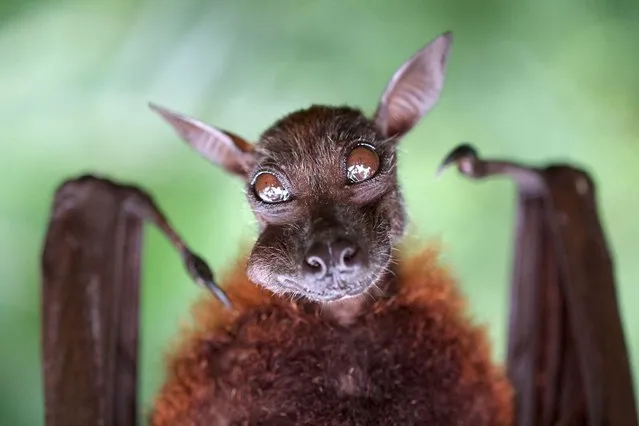
This bat gives a cheeky smile as he gobbles down his food at Singapore Zoo, on September 10, 2013. (Photo by Benny Iskander/HotSpot Media)

This bat gives a cheeky smile as he gobbles down his food at Singapore Zoo, on September 10, 2013. (Photo by Benny Iskander/HotSpot Media)
Details
14 Sep 2013 11:57:00
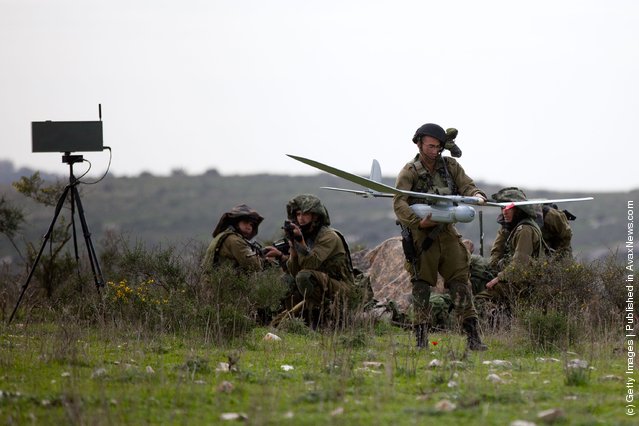
Israeli soldiers get ready to launch the Skylark drone

Israeli soldiers get ready to launch the Skylark drone during a drill on January 16, 2012 near Bat Shlomo, Israel. (Photo by Uriel Sinai/Getty Images)
Details
17 Jan 2012 10:38:00
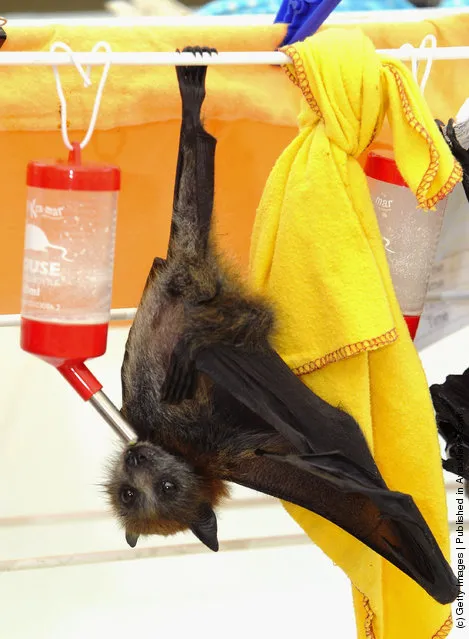
Baby Flying Foxes

A Baby Flying Fox (Pteropus) hangs from a clothes line at a temporary bat rehabilitation centre on December 3, 2008 on the Gold Coast, Australia. (Photo by David Hardenberg/Getty Images)
Details
26 Oct 2011 12:44:00
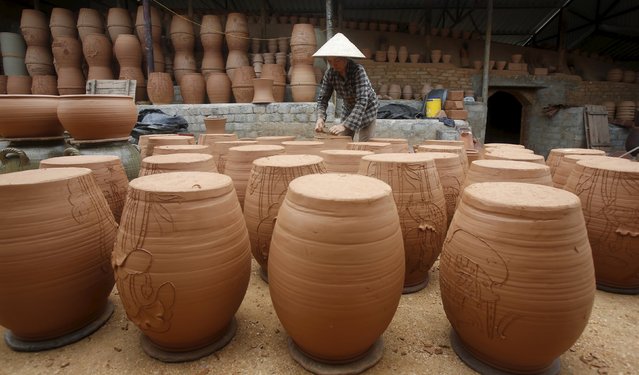
A woman works at a factory producing clay pots at Phu Lang pottery village in Bac Ninh province, Vietnam, May 14, 2015. The village is part of an old pottery triangle in northern Vietnam which includes Bat Trang and Tho Ha, and has been producing pottery since the 13th century, according to local media. (Photo by Reuters/Kham)

A woman works at a factory producing clay pots at Phu Lang pottery village in Bac Ninh province, Vietnam, May 14, 2015. The village is part of an old pottery triangle in northern Vietnam which includes Bat Trang and Tho Ha, and has been producing pottery since the 13th century, according to local media. (Photo by Reuters/Kham)
Details
15 May 2015 10:46:00