Loading...
Done
Devotees Practice Self Mutilation At Phuket Vegetarian Festival

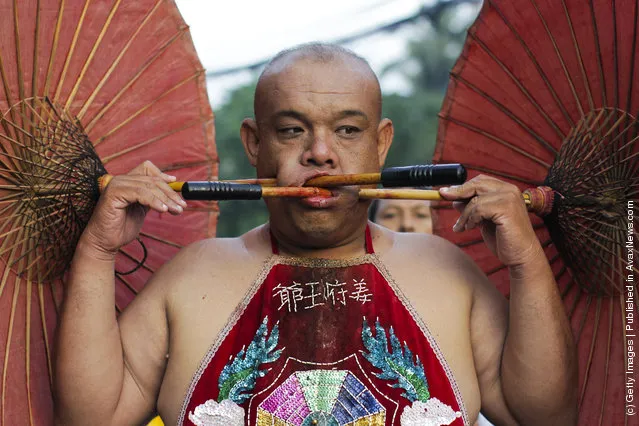
A devotee of the Chinese shrine of Kathu Shrine, pierces his cheeks with umbrellas during a procession of Vegetarian Festival on October 4, 2011 in Phuket, Thailand. Ritual Vegetarianism in Phuket Island traces it roots back to the early 1800's. The festival begins on the first evening of the ninth lunar month and lasts for nine days. Participants in the festival perform acts of body piercing as a means of shifting evil spirits from individuals onto themselves and bring the community good luck. (Photo by Athit Perawongmetha/Getty Images)
Details
04 Oct 2011 10:49:00
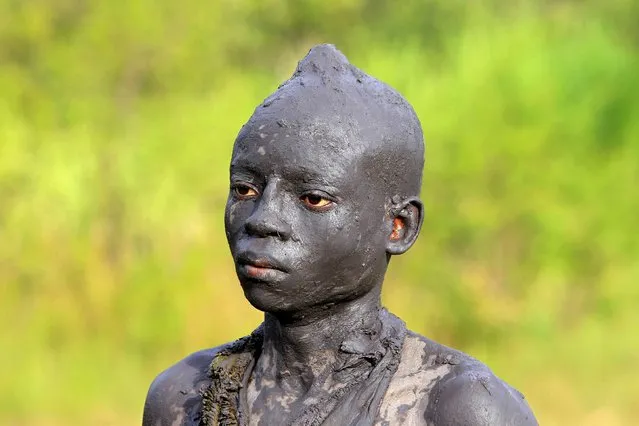
A Bukusu youth stands covered in mud in preparation for a circumcision ritual in Kenya's western region of Bungoma August 9, 2014. (Photo by Noor Khamis/Reuters)

A Bukusu youth stands covered in mud in preparation for a circumcision ritual in Kenya's western region of Bungoma August 9, 2014. Circumcision rituals, which take place in August, are celebrated amongst some Kenyan tribes as an annual rite of passage into adulthood. (Photo by Noor Khamis/Reuters)
Details
19 Sep 2014 09:27:00
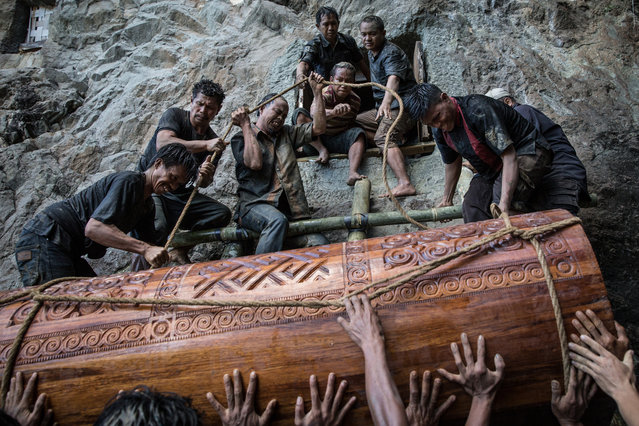
It is said that Torajans are people who “live to die”. For this Indonesian ethnic group, funerals are such extravagant events that they sometimes attract tourists. Families can postpone burials years (and the deceased are considered sick and hosted at home until the funeral) until the family can raise enough money and gather as many relatives as possible. And then it’s a jubilant multiday social event with a parade, dances and animal sacrifices. Agung Parameswara photographed these funerary practices when he traveled to South Sulawesi province, where the Torajans live. But often, their funeral isn’t the last time the dead are seen. In August, crypts are opened, coffins are slid back out and bodies delicately unsheathed. This tender ritual is known as Ma’Nene, which is customarily performed every few years. (Photo by Agung Parameswara/The Washington Post)

It is said that Torajans are people who “live to die”. For this Indonesian ethnic group, funerals are such extravagant events that they sometimes attract tourists. Families can postpone burials years (and the deceased are considered sick and hosted at home until the funeral) until the family can raise enough money and gather as many relatives as possible. And then it’s a jubilant multiday social event with a parade, dances and animal sacrifices. Agung Parameswara photographed these funerary practices when he traveled to South Sulawesi province, where the Torajans live. (Photo by Agung Parameswara/The Washington Post)
Details
06 Oct 2016 09:15:00
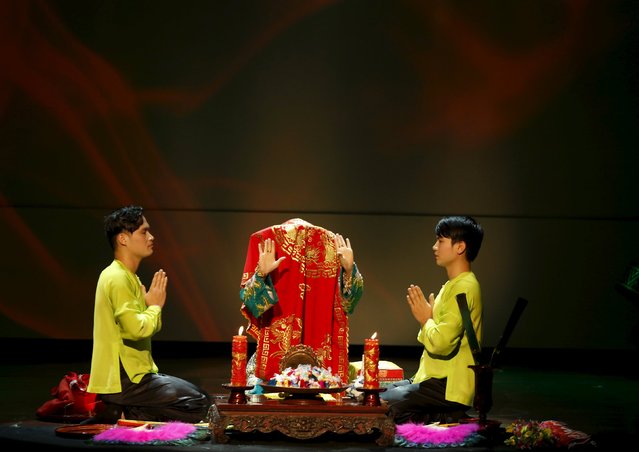
A Vietnamese artist acting as a medium, performs the "Hau Dong" ritual at Viet Theatre in Hanoi January 16, 2016. (Photo by Reuters/Kham)

A Vietnamese artist acting as a medium, performs the “Hau Dong” ritual at Viet Theatre in Hanoi January 16, 2016. For the first time, Vietnamese drama director Viet Tu has brought the ritual from religious temples to the theatre partly to draw tourists. The “Hau Dong” is a ritual where a medium puts on special costumes and tells stories of gods and heroes while being accompanied by “Chau Van” music, as part of the act of Dao Mau – the worship of mother goddesses in Vietnam. It is believed that the medium is capable of having a direct contact with spirits during the ritual. (Photo by Reuters/Kham)
Details
18 Jan 2016 08:00:00
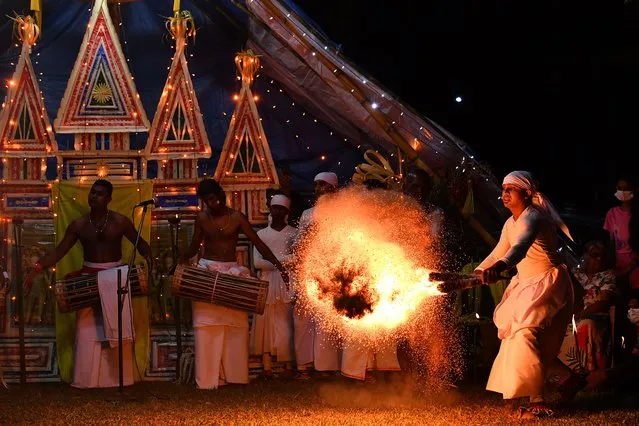
A Sri Lankan traditional dancer performs during a Gini Madu Shanthikarmaya, a traditional Sinhalese ritual in Batuwatta, Sri Lanka, on August 14, 2022. The Gini Madu Shanthikarmaya, is a ritual tradition that invokes the blessings of the goddess Pattini and lasts up to 12 hours. (Photo by Sanka Vidanagama/NurPhoto via Getty Images)

A Sri Lankan traditional dancer performs during a Gini Madu Shanthikarmaya, a traditional Sinhalese ritual in Batuwatta, Sri Lanka, on August 14, 2022. The Gini Madu Shanthikarmaya, is a ritual tradition that invokes the blessings of the goddess Pattini and lasts up to 12 hours. (Photo by Sanka Vidanagama/NurPhoto via Getty Images)
Details
09 Sep 2022 04:33:00
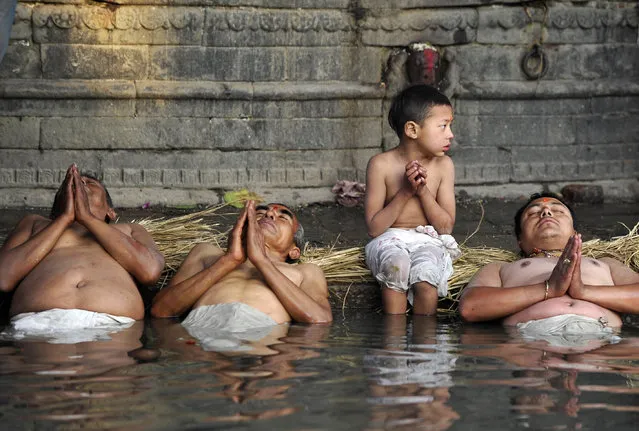
Nepalese Hindu devotees take part in a bathing ritual on the last day of the month-long Swasthani Festival in the Hanumante River at Bhaktapur on the outskirts of Kathmandu on February 22, 2016. Devotees mark the Swasthani Festival with fasting, and with women in particular undertaking rituals in the hope of a prosperous life for her family and conjugal happiness. (Photo by Prakash Mathema/AFP Photo)

Nepalese Hindu devotees take part in a bathing ritual on the last day of the month-long Swasthani Festival in the Hanumante River at Bhaktapur on the outskirts of Kathmandu on February 22, 2016. Devotees mark the Swasthani Festival with fasting, and with women in particular undertaking rituals in the hope of a prosperous life for her family and conjugal happiness. (Photo by Prakash Mathema/AFP Photo)
Details
23 Feb 2016 11:52:00
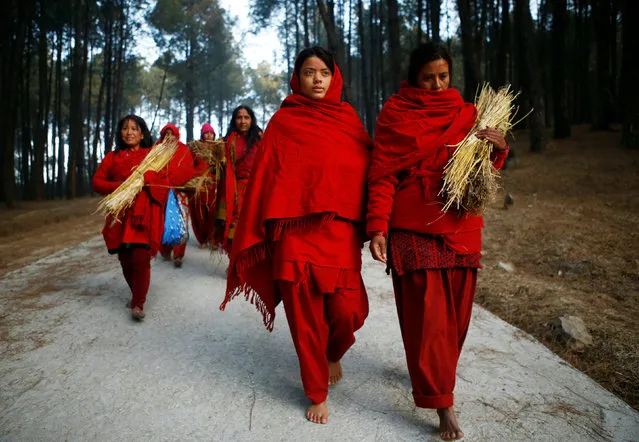
Devotees walk through the woods of Changu Narayan as they arrive to perform rituals and prayers during the Swasthani Bratakatha festival in Bhaktapur, Nepal February 8, 2017. (Photo by Navesh Chitrakar/Reuters)

Devotees walk through the woods of Changu Narayan as they arrive to perform rituals and prayers during the Swasthani Bratakatha festival in Bhaktapur, Nepal February 8, 2017. (Photo by Navesh Chitrakar/Reuters)
Details
12 Feb 2017 00:05:00
Shi'ite Muslim men and boys beat their chests as they practice self-flagellation during the religious ritual of Ashura in New Delhi, India

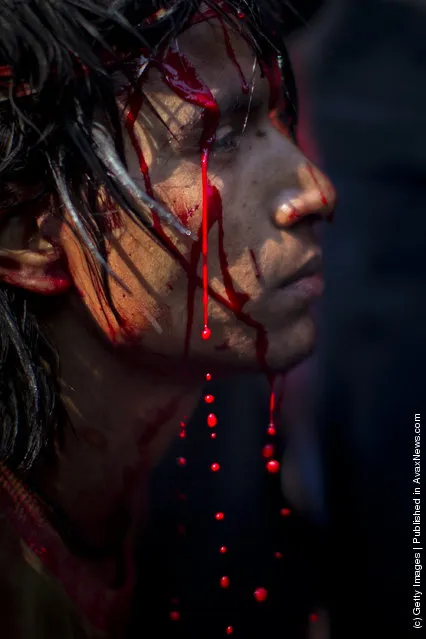
Blood drips down from the face of a Shi'ite Muslim boy after practicing a self-flagellation ritual during a religious procession of the Ashura mourning period on December 6, 2011 in New Delhi, India. (Photo by Daniel Berehulak/Getty Images)
Details
07 Dec 2011 13:56:00