Loading...
Done
Tridacna Gigas, or Giant Clams

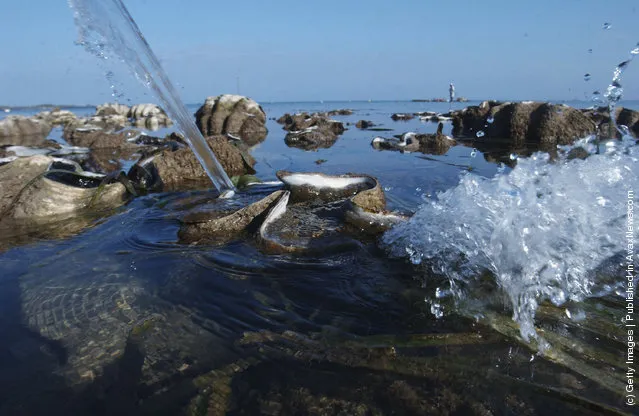
“The giant clam, Tridacna gigas (known as pā’ua in Cook Islands Māori), is the largest living bivalve mollusc. T. gigas is one of the most endangered clam species. It was mentioned as early as 1825 in scientific reports. One of a number of large clam species native to the shallow coral reefs of the South Pacific and Indian oceans, they can weigh more than 200 kilograms (440 lb) measure as much as 120 cm (47 in) across, and have an average lifespan in the wild of 100 years or more”. – Wikipedia

Photo: Tridacna Gigas, or Giant Clams spew water as a traditional fisherman passes by a small sanctuary on January 23, 2004 near Bolinao in the Northern Philippines. The clams, prime builders for coral reefs and providing shelter for spawning fish and other marine life, are exposed by low tides in the sanctuary. Overfishing and pollution throughout the country are not only threatening food security, but are also starting to choke one of the few working clam sanctuaries in the world. (Photo by David Greedy/Getty Images)
Details
01 Oct 2011 13:10:00
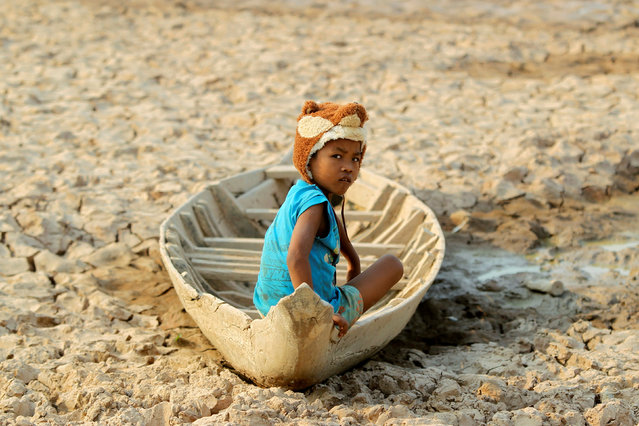
A girl sits on her boat at a Bak Angrout dried up pond at the drought-hit Kandal province in Cambodia May 13, 2016. (Photo by Samrang Pring/Reuters)

A girl sits on her boat at a Bak Angrout dried up pond at the drought-hit Kandal province in Cambodia May 13, 2016. (Photo by Samrang Pring/Reuters)
Details
17 May 2016 12:41:00
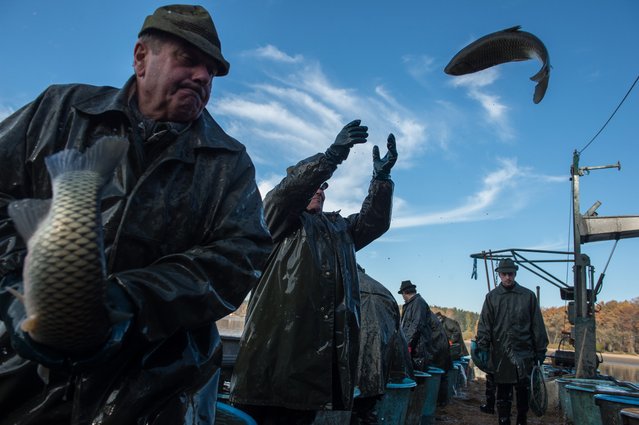
Czech fishermen sort fish during the traditional Carp haul at Lake of Dvoriste near Smrzov village, Czech Republic, 02 November 2015. Carp, the traditional Czech Christmas Eve dinner, is harvested primarly from the region of southern Bohemian lakes. (Photo by Filip Singer/EPA)

Czech fishermen sort fish during the traditional Carp haul at Lake of Dvoriste near Smrzov village, Czech Republic, 02 November 2015. Carp, the traditional Czech Christmas Eve dinner, is harvested primarly from the region of southern Bohemian lakes. (Photo by Filip Singer/EPA)
Details
05 Nov 2015 08:05:00
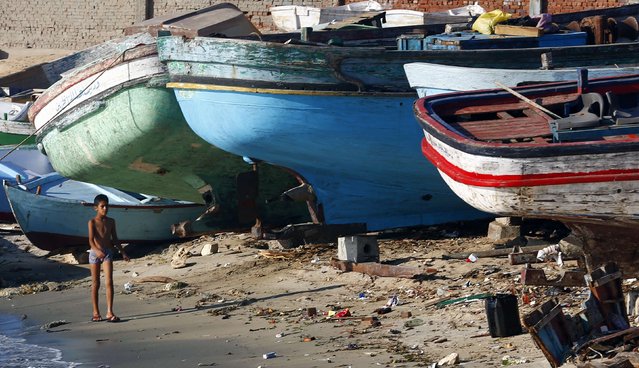
A boy walks past boats docked at the entrance gate of the fishermen's village in the El Max area of the Mediterranean city of Alexandria September 12, 2014.  El Max, where hundreds of boats dart through the canals, has been called the “Venice of Egypt” for its waterways and relaxed atmosphere. Its fishermen, however, worry about how they will make ends meet on meagre earnings they  say are being reduced further by polluted waters that are making fishing more difficult. (Photo by Amr Abdallah Dalsh/Reuters)

A boy walks past boats docked at the entrance gate of the fishermen's village in the El Max area of the Mediterranean city of Alexandria September 12, 2014. El Max, where hundreds of boats dart through the canals, has been called the “Venice of Egypt” for its waterways and relaxed atmosphere. Its fishermen, however, worry about how they will make ends meet on meagre earnings they say are being reduced further by polluted waters that are making fishing more difficult. While the government has tried to fix the state's bloated finances by cutting subsidies and reining in spending, some argue the reforms hurt Egypt's most vulnerable who have long relied on a generous system of fuel and food subsidies to supplement low incomes. (Photo by Amr Abdallah Dalsh/Reuters)
Details
12 Dec 2014 12:42:00
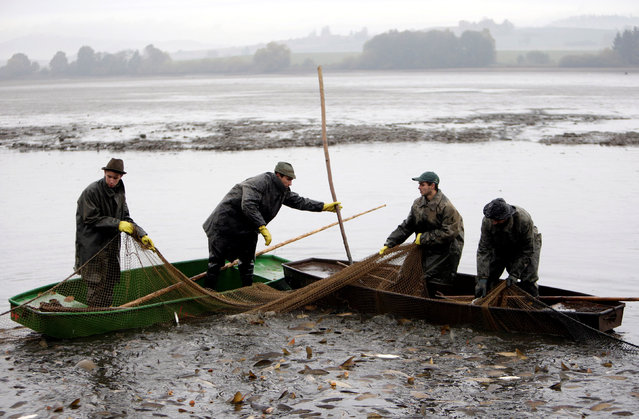
Fishermen pull a net containing fish from a pond during the traditional carp haul near the village of Belcice, Czech Republic, October 25, 2016. (Photo by David W. Cerny/Reuters)

Fishermen pull a net containing fish from a pond during the traditional carp haul near the village of Belcice, Czech Republic, October 25, 2016. Carp, the traditional Czech Christmas Eve dinner, is harvested primarly from the region of southern Bohemian lakes. (Photo by David W. Cerny/Reuters)
Details
26 Oct 2016 10:42:00
Boats of fishermen are seen on the dried Poopo lakebed in the Oruro Department, south of La Paz, Bolivia, December 17, 2015. (Photo by David Mercado/Reuters)

Boats of fishermen are seen on the dried Poopo lakebed in the Oruro Department, south of La Paz, Bolivia, December 17, 2015. Lake Poopo in Bolivia, the Andean nation's formerly second largest after the famed Titicaca, has dried up entirely. With the water now gone, animals have died off in the millions, according to studies. And the local families, having lost much of their sustenance, have been forced to migrate. (Photo by David Mercado/Reuters)
Details
20 Dec 2015 08:04:00
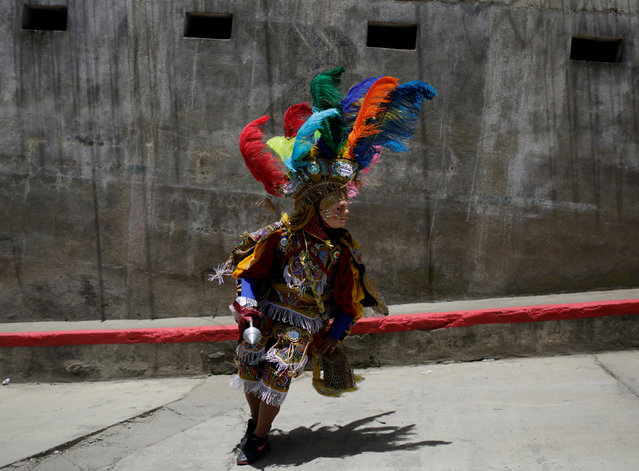
A dancer dressed for the annual procession honoring San Pedro, his town's patron saint, runs through the street of San Pedro Sacatepequez near Guatemala City June 29, 2016. (Photo by Saul Martinez/Reuters)

A dancer dressed for the annual procession honoring San Pedro, his town's patron saint, runs through the street of San Pedro Sacatepequez near Guatemala City June 29, 2016. (Photo by Saul Martinez/Reuters)
Details
01 Jul 2016 12:41:00
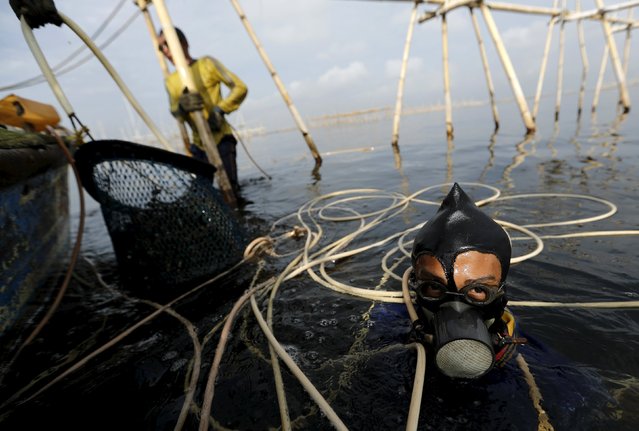
Eghy (L) uses his makeshift snorkel as his colleague lifts up green mussels to their boat in Jakarta Bay, Indonesia, April 20, 2016. (Photo by Reuters/Beawiharta)

Eghy (L) uses his makeshift snorkel as his colleague lifts up green mussels to their boat in Jakarta Bay, Indonesia, April 20, 2016. (Photo by Reuters/Beawiharta)
Details
21 Apr 2016 12:44:00