Loading...
Done
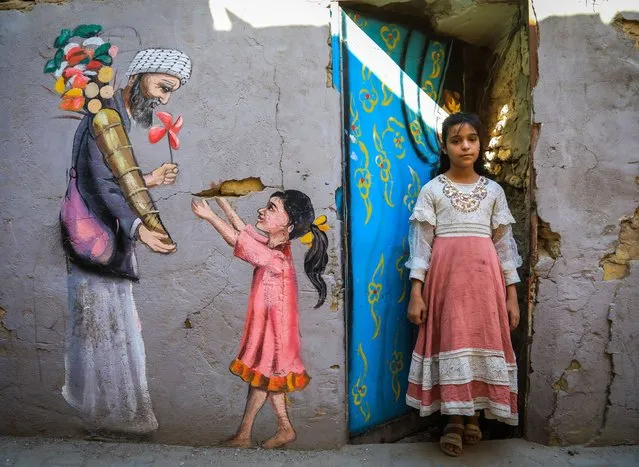
A colorful drawing is seen on a wall in Baghdad, Iraq on October 24, 2021. A group of volunteer painters tries to give hope and joy to the Iraqi residents by painting colorful murals on the walls of the houses and streets of the city, tired of violance. Seve-member group named “Butterfly Effect” is busy in drawing paintings to depict life in Baghdad and its cultural heritage on the buildings (Photo by Murtadha Al-Sudani/Anadolu Agency via Getty Images)

A colorful drawing is seen on a wall in Baghdad, Iraq on October 24, 2021. A group of volunteer painters tries to give hope and joy to the Iraqi residents by painting colorful murals on the walls of the houses and streets of the city, tired of violance. Seve-member group named “Butterfly Effect” is busy in drawing paintings to depict life in Baghdad and its cultural heritage on the buildings (Photo by Murtadha Al-Sudani/Anadolu Agency via Getty Images)
Details
04 Nov 2021 08:28:00
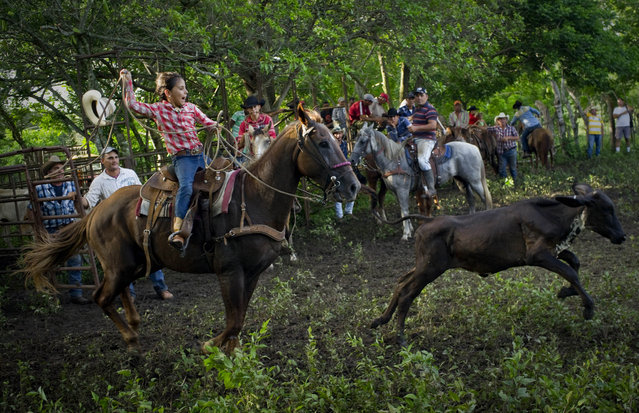
In this July 29, 2016 photo, cowgirl Dariadna Corujo winds up to lasso a calf during an improvised rodeo event at a farm in Sancti Spiritus, central Cuba. At the tender age of 6, Dariadna is already an expert barrel racer and calf roper. In the flat grasslands of Sancti Spiritus, a group of neighboring cattle ranchers founded a non-governmental organization called Future Ranchers more than a decade ago to revive Cuba’s rodeo culture, which dates back centuries to Spanish colonial times. (Photo by Ramon Espinosa/AP Photo)

In this July 29, 2016 photo, cowgirl Dariadna Corujo winds up to lasso a calf during an improvised rodeo event at a farm in Sancti Spiritus, central Cuba. At the tender age of 6, Dariadna is already an expert barrel racer and calf roper. In the flat grasslands of Sancti Spiritus, a group of neighboring cattle ranchers founded a non-governmental organization called Future Ranchers more than a decade ago to revive Cuba’s rodeo culture, which dates back centuries to Spanish colonial times. (Photo by Ramon Espinosa/AP Photo)
Details
03 Aug 2016 11:39:00
Participants of the annual “SlutWalk” march through the Israeli Mediterranean coastal city of Tel Aviv on May 4, 2018 to protest against rape culture, including sexual assault and harassment directed at women. The campaign, which has gained international notoriety, was inspired by group of Canadian women who launched the protest in 2011 in response to a policeman' s comment that if women want to avoid being attacked they should not dress like sl*ts. (Photo by Jack Guez/AFP Photo)

Participants of the annual “SlutWalk” march through the Israeli Mediterranean coastal city of Tel Aviv on May 4, 2018 to protest against rape culture, including sexual assault and harassment directed at women. The campaign, which has gained international notoriety, was inspired by group of Canadian women who launched the protest in 2011 in response to a policeman' s comment that if women want to avoid being attacked they should not dress like sl*ts. (Photo by Jack Guez/AFP Photo)
Details
06 May 2018 07:06:00
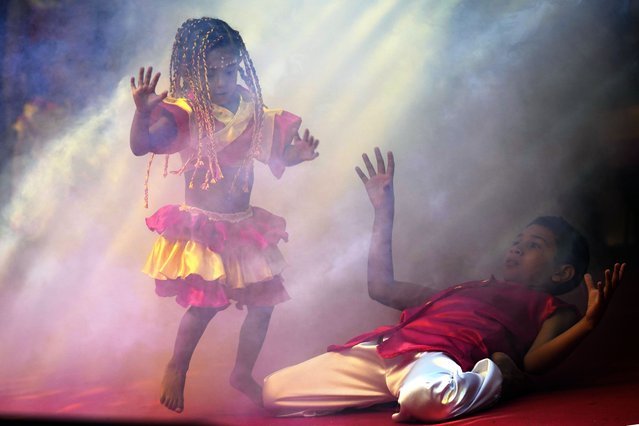
Members of the Paraguay-African cultural group Kamba Cua dance during celebrations in honor of Saint Balthazar, one of the Three Kings, on Epiphany in Fernando de la Mora, Paraguay, late Saturday, January 8, 2022, just days after the official holiday. The annual procession is a tradition that keeps Paraguay's Afro-descendants connected with their African roots through ancestral dance, drumming and customs. (Photo by Jorge Saenz/AP Photo)

Members of the Paraguay-African cultural group Kamba Cua dance during celebrations in honor of Saint Balthazar, one of the Three Kings, on Epiphany in Fernando de la Mora, Paraguay, late Saturday, January 8, 2022, just days after the official holiday. The annual procession is a tradition that keeps Paraguay's Afro-descendants connected with their African roots through ancestral dance, drumming and customs. (Photo by Jorge Saenz/AP Photo)
Details
29 Jan 2022 07:01:00
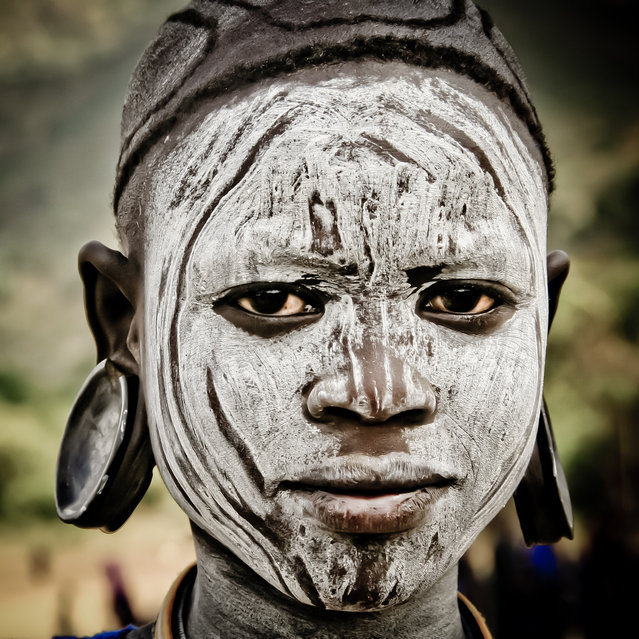
Omo River People, Ethiopia

“The Omo River is an important river of southern Ethiopia. Its course is entirely contained within the boundaries of Ethiopia, and empties into Lake Turkana on the border with Kenya. The lower valley of the Omo is currently believed by some to have been a crossroads for thousands of years as various cultures and ethnic groups migrated around the region. To this day, the people of the Lower Valley of the Omo, including the Mursi, Suri, Nyangatom, Dizi and Me'en, are studied for their diversity”. – Wikipedia (Photo by Hamerscat)

SEE ALSO: «Ethiopia By Brent Stirton»

Details
04 Oct 2012 09:05:00
Magazine Store By Farhad Moshiri

Farhad Moshiri, an Iranian artist working a lot with carpet media using it as a mean to joke about consumerism culture, was one of the participants of the group show Love Me Love Me Not of Yarat! pavilion curate by Dina Nasser-Khadivi (read on her curating Lalla Essaydi's Harem here) at Venice 2013 Art Biennial. The installation consists of more than 500 carpets depicting celebrities-covered magazines from all over the world.
Details
02 Oct 2014 12:15:00
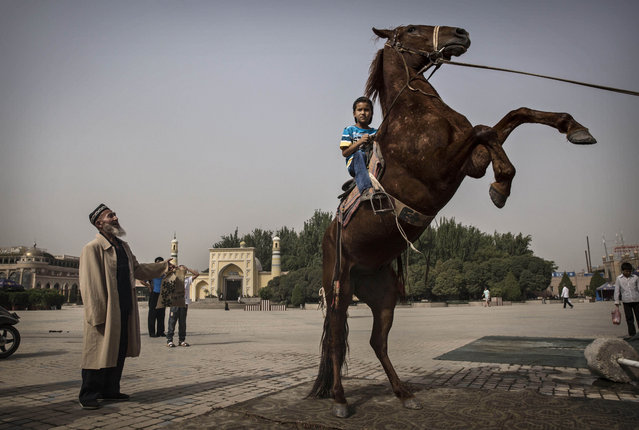
A Uyghur boy sits atop a horse as he has his picture taken outside the Id Kah Mosque before the Eid holiday  on July 28, 2014 in old Kashgar, Xinjiang Province, China. (Photo by Kevin Frayer/Getty Images)

A Uyghur boy sits atop a horse as he has his picture taken outside the Id Kah Mosque before the Eid holiday on July 28, 2014 in old Kashgar, Xinjiang Province, China. Nearly 100 people have been killed in unrest in the restive Xinjiang Province in the last week in what authorities say is terrorism but advocacy groups claim is a result of a government crackdown to silence opposition to its policies. China's Muslim Uyghur ethnic group faces cultural and religious restrictions by the Chinese government. Beijing says it is investing heavily in the Xinjiang region but Uyghurs are increasingly dissatisfied with the influx of Han Chinese and uneven economic development. (Photo by Kevin Frayer/Getty Images)
Details
10 Aug 2014 10:53:00
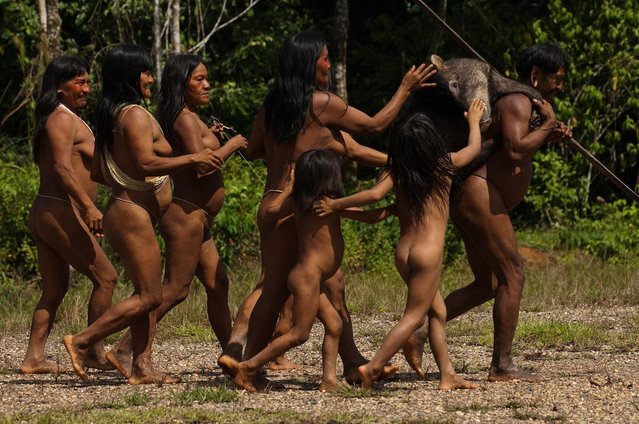
Spectacular images offering insight into the lives of the Huaorani people in the Ecuadorian Amazon have been revealed showing how they use traditional methods to hunt monkeys for food. The stunning pictures were taken by conservation photographer Pete Oxford from Torquay, Devon in the Ecuadorian Amazon. “The Huaorani Indians are a forest people highly in tune with their environment. Many are now totally acculturated since the 1950s by missionaries”, said Pete. “Today they face radical change to their culture to the proximity of oil exploration within their territory and the Yasuni National Park and Biosphere Reserve, they are vastly changed. Some still live very traditionally and for this shoot, through my Huaorani friend, a direct relative of those photographed he wanted to depict them as close to their original culture as possible. They still largely hunt with blow pipes and spears eating a lot of monkeys and peccaries”. The Huaorani are also known as the Waorani, Waodani or the Waos and are native Amerindians. Their lands are located between the Curaray and Napo rivers and speak the Huaorani language. Pete says that during his visit he was welcomed into the group and hopes that ancient cultures can be saved. Here: The tribe were seen celebrating after a hunter returned to camp with a wild pig. (Photo by Pete Oxford/Mediadrumworld.com)

Spectacular images offering insight into the lives of the Huaorani people in the Ecuadorian Amazon have been revealed showing how they use traditional methods to hunt monkeys for food. The stunning pictures were taken by conservation photographer Pete Oxford from Torquay, Devon in the Ecuadorian Amazon. Here: The tribe were seen celebrating after a hunter returned to camp with a wild pig. (Photo by Pete Oxford/Mediadrumworld.com)
Details
20 Jan 2017 07:58:00