Loading...
Done
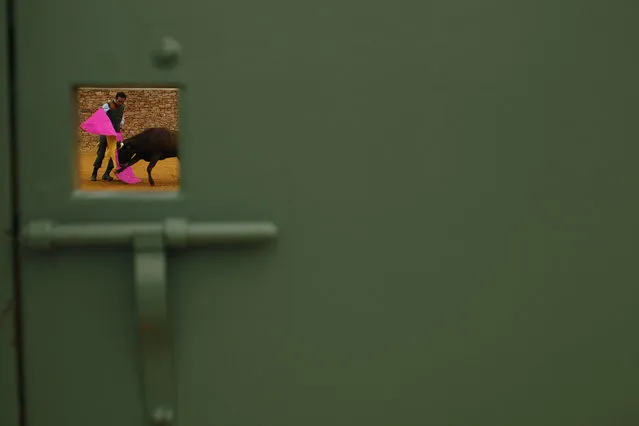
Spanish bullfighter Manuel Jesus “El Cid” is seen through a small window of a door as he performs a pass to a heifer during a “tentadero” (a small bullfight to check the bravery of calves and heifers which are not killed) during the first International Biennial of bullfighting at Reservatauro Ronda cattle ranch in Ronda, near Malaga February 17, 2013. Spain's parliament voted last Tuesday to consider protecting bullfighting as a national pastime, angering animal rights campaigners and politicians in two regions where the sport is banned. (Photo by Jon Nazca/Reuters)

Spanish bullfighter Manuel Jesus “El Cid” is seen through a small window of a door as he performs a pass to a heifer during a “tentadero” (a small bullfight to check the bravery of calves and heifers which are not killed) during the first International Biennial of bullfighting at Reservatauro Ronda cattle ranch in Ronda, near Malaga February 17, 2013. Spain's parliament voted last Tuesday to consider protecting bullfighting as a national pastime, angering animal rights campaigners and politicians in two regions where the sport is banned. (Photo by Jon Nazca/Reuters)
Details
22 Feb 2013 11:15:00
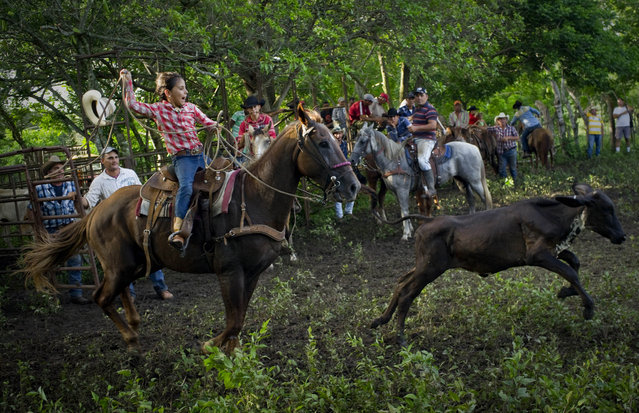
In this July 29, 2016 photo, cowgirl Dariadna Corujo winds up to lasso a calf during an improvised rodeo event at a farm in Sancti Spiritus, central Cuba. At the tender age of 6, Dariadna is already an expert barrel racer and calf roper. In the flat grasslands of Sancti Spiritus, a group of neighboring cattle ranchers founded a non-governmental organization called Future Ranchers more than a decade ago to revive Cuba’s rodeo culture, which dates back centuries to Spanish colonial times. (Photo by Ramon Espinosa/AP Photo)

In this July 29, 2016 photo, cowgirl Dariadna Corujo winds up to lasso a calf during an improvised rodeo event at a farm in Sancti Spiritus, central Cuba. At the tender age of 6, Dariadna is already an expert barrel racer and calf roper. In the flat grasslands of Sancti Spiritus, a group of neighboring cattle ranchers founded a non-governmental organization called Future Ranchers more than a decade ago to revive Cuba’s rodeo culture, which dates back centuries to Spanish colonial times. (Photo by Ramon Espinosa/AP Photo)
Details
03 Aug 2016 11:39:00
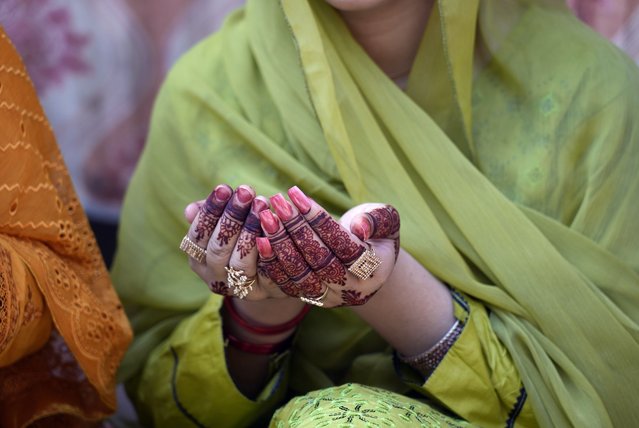
A woman has her hands painted with traditional henna as she attends Eid al-Adha prayers at historical Badshahi mosque in Lahore, Pakistan, Monday, June 17, 2024. Eid al-Adha or Feast of Sacrifice, the most important Islamic holiday, marks the willingness of the Prophet Ibrahim, Abraham to Christians and Jews, to sacrifice his son. During the holiday, which in most places lasts three days, Muslims slaughter goat, sheep or cattle, distribute part of the meat to the poor. (Photo by K.M. Chaudary/AP Photo)

A woman has her hands painted with traditional henna as she attends Eid al-Adha prayers at historical Badshahi mosque in Lahore, Pakistan, Monday, June 17, 2024. Eid al-Adha or Feast of Sacrifice, the most important Islamic holiday, marks the willingness of the Prophet Ibrahim, Abraham to Christians and Jews, to sacrifice his son. During the holiday, which in most places lasts three days, Muslims slaughter goat, sheep or cattle, distribute part of the meat to the poor. (Photo by K.M. Chaudary/AP Photo)
Details
06 Sep 2024 04:02:00
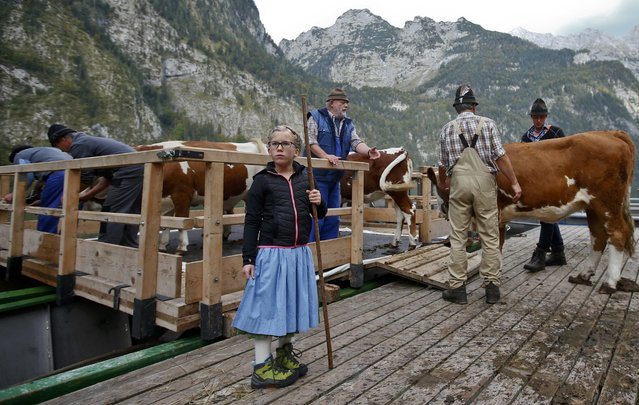
Bavarian farmers load their cows on a boat before they drive over the picturesque Lake Koenigssee, Germany, October 3, 2015. (Photo by Michael Dalder/Reuters)

Bavarian farmers load their cows on a boat before they drive over the picturesque Lake Koenigssee, Germany, October 3, 2015. Before the winter season approaches the farmers have to drive their cattle down from their Alpine meadows to a narrow valley that can only be reached by boat. (Photo by Michael Dalder/Reuters)
Details
06 Oct 2015 08:01:00
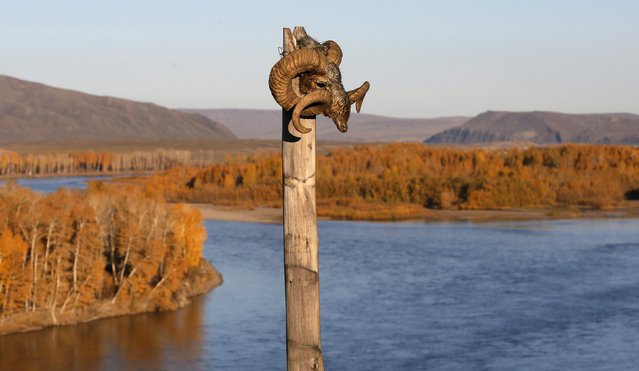
The head of a mountain ram is attached to a wooden column at the site used for shamans' rituals in the Aldyn Bulak area on the bank of the Yenisei River during sunset outside the village of Elegest, Tuva region, Southern Siberia, Russia, October 7, 2015. (Photo by Ilya Naymushin/Reuters)

The head of a mountain ram is attached to a wooden column at the site used for shamans' rituals in the Aldyn Bulak area on the bank of the Yenisei River during sunset outside the village of Elegest, Tuva region, Southern Siberia, Russia, October 7, 2015. The region is inhabited by Tuvans, historically cattle-herding nomads, who nowadays practise two main confessions – Buddhism and Shamanism. (Photo by Ilya Naymushin/Reuters)
Details
19 Oct 2015 08:05:00
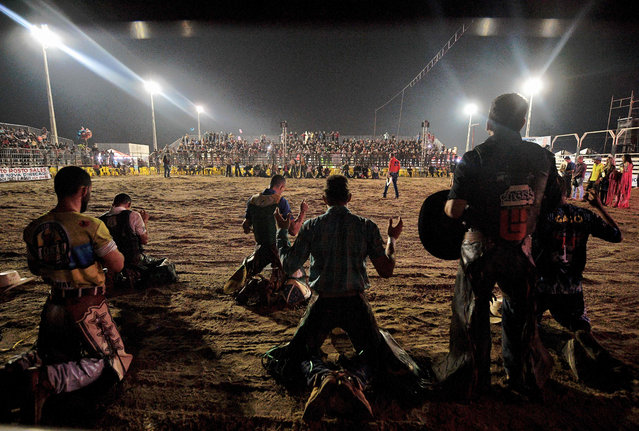
Riders pray before competing at a rodeo event in Monte Negro, south of the Amazon basin, Rondonia state, Brazil on August 30, 2019. (Photo by Carl De Souza/AFP Photo)

Riders pray before competing at a rodeo event in Monte Negro, south of the Amazon basin, Rondonia state, Brazil on August 30, 2019. In recent years, Monte Negro has expanded as a key cattle town with a strong cowboy culture. (Photo by Carl De Souza/AFP Photo)
Details
13 Sep 2019 00:03:00
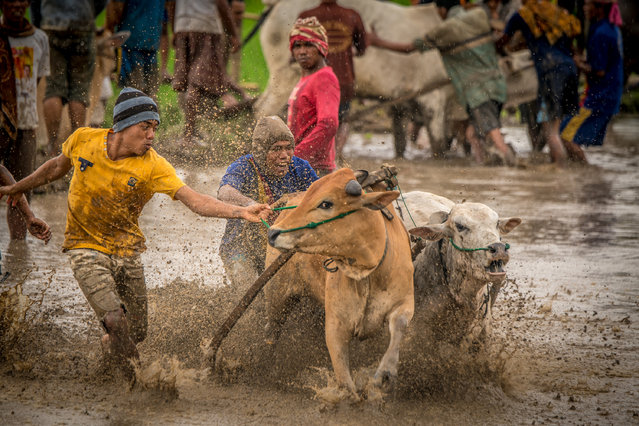
Cows rush through mud and water while jockey holds onto their tails, on March 12, 2016 in Padang, West Sumatra, Indonesia. (Photo by Teh Han Lin/Barcroft Images)

Cows rush through mud and water while jockey holds onto their tails, on March 12, 2016 in Padang, West Sumatra, Indonesia. For hundreds of years these farmers have competed in one of the worldís most oddest races in the hopes of showing off their cattle. Known as Pacu Jawi the traditional cow race takes place in Padang, West Sumatra, and has become the highlight of the year for locals. (Photo by Teh Han Lin/Barcroft Images)
Details
20 Jan 2017 08:07:00
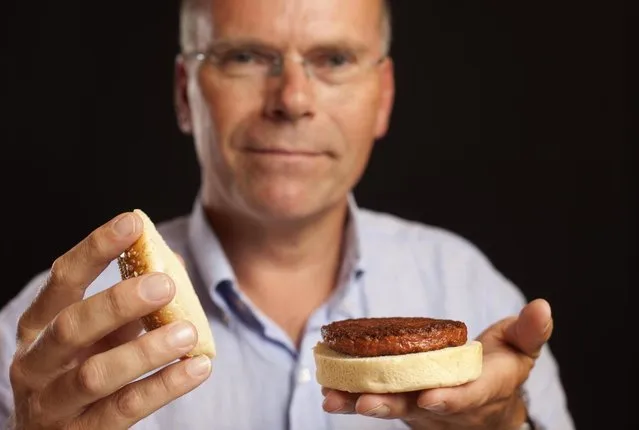
In this handout image provided by Ogilvy, a burger made from cultured beef, which has been developed by Professor Mark Post of Maastricht University in the Netherlands (pictured) is shown to the media during a press conference on August 5, 2013 in London, England. Cultured Beef could help solve the coming food crisis and combat climate change with commercial production of Cultured Beef beginning within ten to twenty years. (Photo by David Parry via Getty Images)

In this handout image provided by Ogilvy, a burger made from cultured beef, which has been developed by Professor Mark Post of Maastricht University in the Netherlands (pictured) is shown to the media during a press conference on August 5, 2013 in London, England. The in-vitro burger, cultured from cattle stem cells, the first example of what its creator says could provide an answer to global food shortages and help combat climate change, was fried in a pan and tasted by two volunteers. The burger is the result of years of research by Dutch scientist Mark Post, a vascular biologist at the University of Maastricht, who is working to show how meat grown in petri dishes might one day be a true alternative to meat from livestock.The meat in the burger has been made by knitting together around 20,000 strands of protein that has been cultured from cattle stem cells in Post's lab. (Photo by David Parry)
Details
06 Aug 2013 08:48:00