Loading...
Done
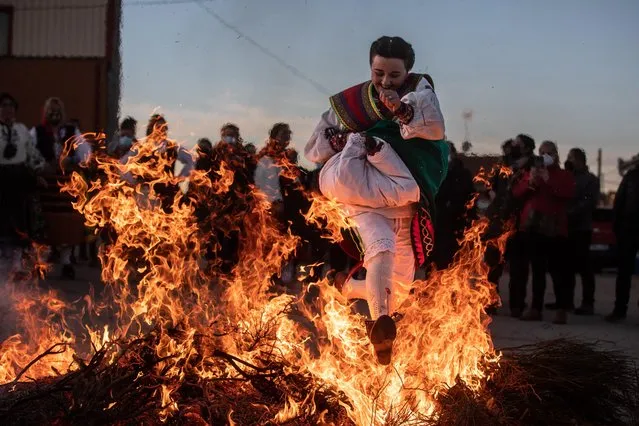
People celebrate the traditional Fiesta de las Aguedas on February 6, 2022 in Andavias, Zamora, Castilla y Leon, Spain. This celebration, also known as “El dia de las mujeres”, is a deep-rooted tradition in Castilla y Leon, especially in rural areas. The day of the Aguedas has its origin in the cult of Santa Agueda, and is celebrated every February 5. During this day, women are the protagonists and take over the city. For their part, the town councils give them the baton as a sign of authority. Around seven days of festivities are celebrated where the attendees dance, eat, sing, and even jump over a bonfire. (Photo By Emilio Fraile/Europa Press via Getty Images)

People celebrate the traditional Fiesta de las Aguedas on February 6, 2022 in Andavias, Zamora, Castilla y Leon, Spain. This celebration, also known as “El dia de las mujeres”, is a deep-rooted tradition in Castilla y Leon, especially in rural areas. The day of the Aguedas has its origin in the cult of Santa Agueda, and is celebrated every February 5. (Photo By Emilio Fraile/Europa Press via Getty Images)
Details
31 Mar 2022 06:18:00
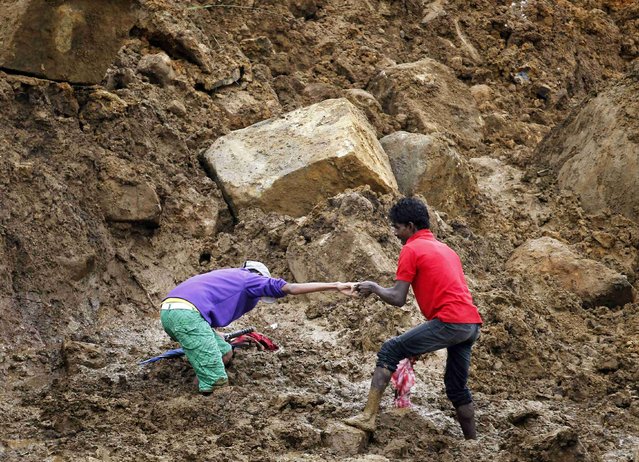
A man helps another make his way through deep mud at the site of a landslide at the Koslanda tea plantation near Haldummulla October 30, 2014. Hopes of finding survivors under the mud and rubble of a landslide in south-central Sri Lanka had run out by first light on Thursday, though a government minister cut the estimated death toll to more than 100 from 300 the previous night. (Photo by Dinuka Liyanawatte/Reuters)

A man helps another make his way through deep mud at the site of a landslide at the Koslanda tea plantation near Haldummulla October 30, 2014. Hopes of finding survivors under the mud and rubble of a landslide in south-central Sri Lanka had run out by first light on Thursday, though a government minister cut the estimated death toll to more than 100 from 300 the previous night. (Photo by Dinuka Liyanawatte/Reuters)
Details
30 Oct 2014 13:32:00
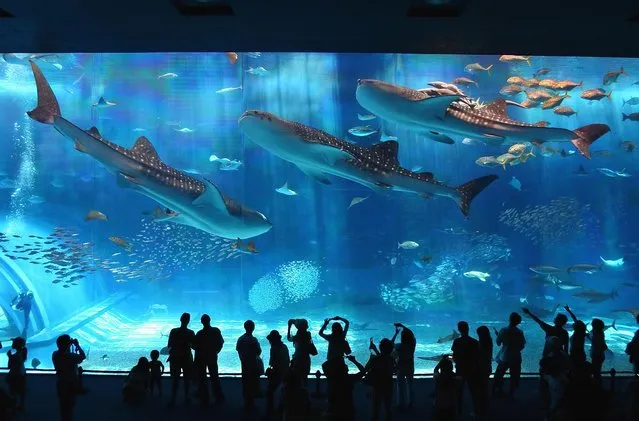
Okinawa Churaumi Aquarium

The aquarium is a part of the Ocean Expo Commemorative National Government Park located in Motobu, Okinawa. The aquarium is made up of four floors, with tanks containing deep sea creatures, sharks, coral and tropical fish. The aquarium is set on 19,000 m² of land, with a total of 77 tanks containing 10,000 m³ of water. Water for the saltwater exhibits is pumped into the aquarium from a source 350m offshore, 24 hours a day.
Details
21 Aug 2012 12:45:00
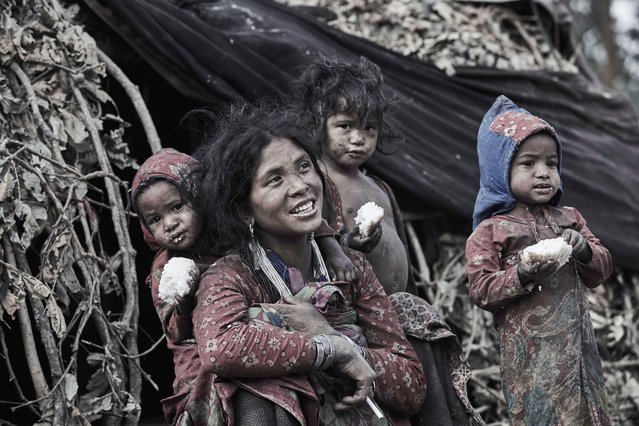
Only 156 people remained in the tribe when Jan visited in Accham District, Nepal, January 2016. (Photo by Jan Moller Hansen/Barcroft Images)

Only 156 people remained in the tribe when Jan visited in Accham District, Nepal, January 2016. Hidden deep in the Himalayan forest is one of the world’s last enduring nomadic tribes who are resisting attempts to move them into permanent settlements. (Photo by Jan Moller Hansen/Barcroft Images)
Details
14 Jan 2017 12:35:00
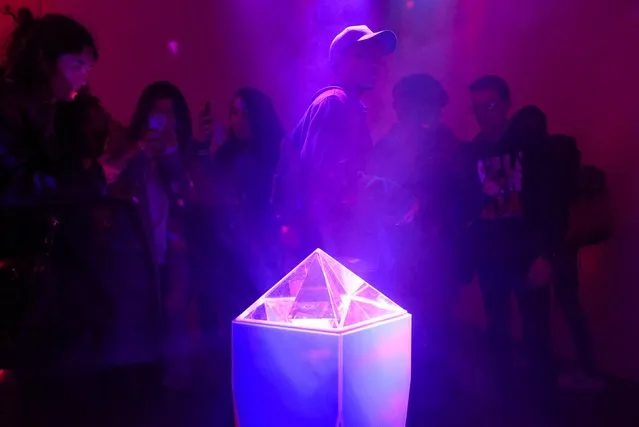
The Museum of Feelings doesn't really have “exhibits" in the conventional sense; rather, visitors move from one themed alcove to another, five in total, each with its own distinctive aroma.  (Photo by Stephanie Keith/Reuters)

The Museum of Feelings doesn't really have “exhibits" in the conventional sense; rather, visitors move from one themed alcove to another, five in total, each with its own distinctive aroma. The “Optimistic Room," bathed in vivid pink and purple light, is little more than a lightshow, with patrons using small reflective panels to bounce light around the room. Here: People interact in the “optimistic” room at the Museum of Feelings, a pop-up installation in New York, December 15, 2015. (Photo by Stephanie Keith/Reuters)
Details
19 Dec 2015 08:00:00
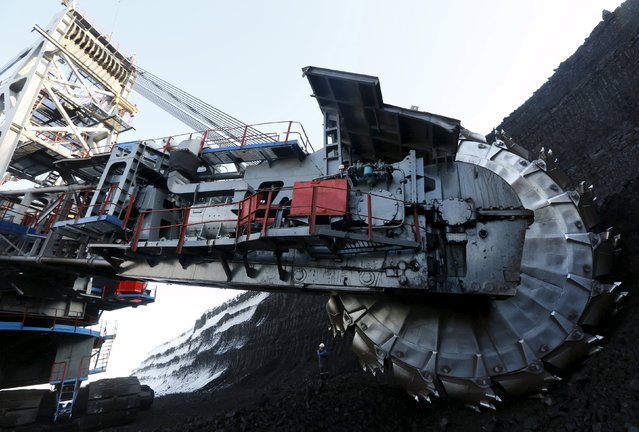
Master Sergey Suprun uses a portable radio set as he stands near a rotary dredge which works on the coal face of the Borodinsky opencast colliery, near the Siberian town of Borodino, east of Krasnoyarsk, Russia October 27, 2015. The Borodinsky colliery, 9 km (5.6 miles) long and more than 100 meters (328 feet) deep, annually produces more than 20 million tons of coal and is considered to be the biggest opencast coal mine in Russia, according to official representatives. (Photo by Ilya Naymushin/Reuters)

Master Sergey Suprun uses a portable radio set as he stands near a rotary dredge which works on the coal face of the Borodinsky opencast colliery, near the Siberian town of Borodino, east of Krasnoyarsk, Russia October 27, 2015. The Borodinsky colliery, 9 km (5.6 miles) long and more than 100 meters (328 feet) deep, annually produces more than 20 million tons of coal and is considered to be the biggest opencast coal mine in Russia, according to official representatives. (Photo by Ilya Naymushin/Reuters)
Details
31 Oct 2015 08:01:00
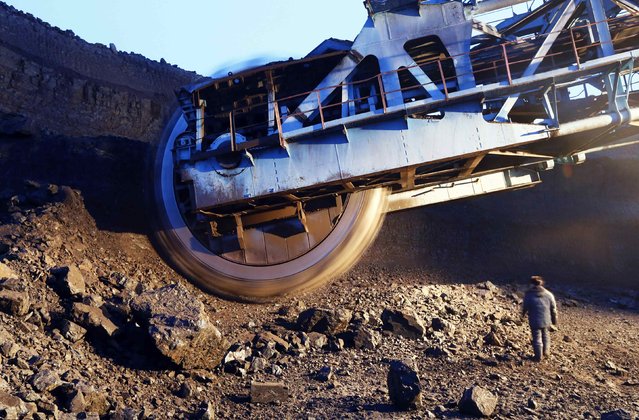
An employee walks near a rotary dredge which works on the coal face of the Borodinsky opencast colliery, near the Siberian town of Borodino, east of Krasnoyarsk, December 9, 2014. The Borodinsky colliery, 9 km (5.6 miles) long and more than 100 meters (328 feet) deep, annually produces more than 20 million tons of coal and is considered to be the biggest opencast coal mine in Russia, according to official representatives. (Photo by Ilya Naymushin/Reuters)

An employee walks near a rotary dredge which works on the coal face of the Borodinsky opencast colliery, near the Siberian town of Borodino, east of Krasnoyarsk, December 9, 2014. The Borodinsky colliery, 9 km (5.6 miles) long and more than 100 meters (328 feet) deep, annually produces more than 20 million tons of coal and is considered to be the biggest opencast coal mine in Russia, according to official representatives. (Photo by Ilya Naymushin/Reuters)
Details
11 Dec 2014 13:29:00
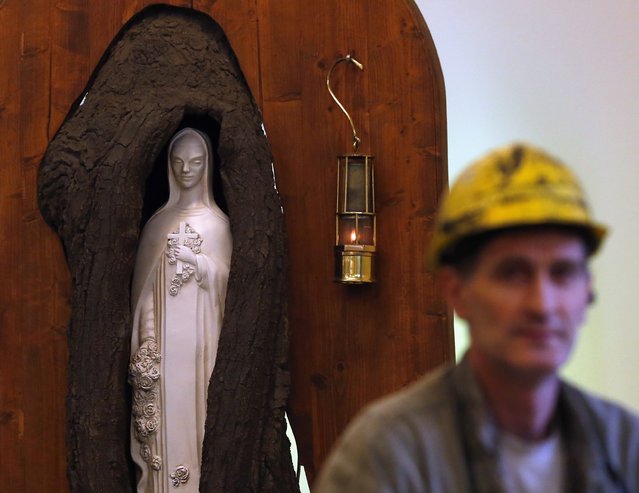
A miner sits front of the statue of St. Barbara, saint of the miners, during last working day at Hungary's last hard coal deep-cast mine at Markushegy December 23, 2014.The underground mine, west of the capital city Budapest, has to stop producing coal at the end of this year in line with a European Union effort to shut down uncompetitive hard coal mines. (Photo by Laszlo Balogh/Reuters)

A miner sits front of the statue of St. Barbara, saint of the miners, during last working day at Hungary's last hard coal deep-cast mine at Markushegy December 23, 2014.The underground mine, west of the capital city Budapest, has to stop producing coal at the end of this year in line with a European Union effort to shut down uncompetitive hard coal mines. (Photo by Laszlo Balogh/Reuters)
Details
24 Dec 2014 13:36:00