Men at work at the Cardiff Institute, making huge baskets, unique in size and construction, for loading oil cake in South Africa. (Photo by Maeers/Getty Images). 1938
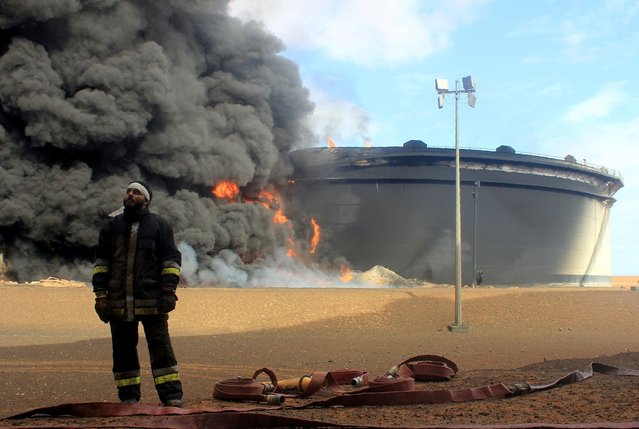
A Libyan fireman stands in front of smoke and flames rising from an oil storage tank at an oil facility in northern Libya's Ras Lanouf region on January 23, 2016, after it was set ablaze earlier in the week following attacks launched by Islamic State (IS) group jihadists to seize key port terminals. (Photo by AFP Photo/Stringer)
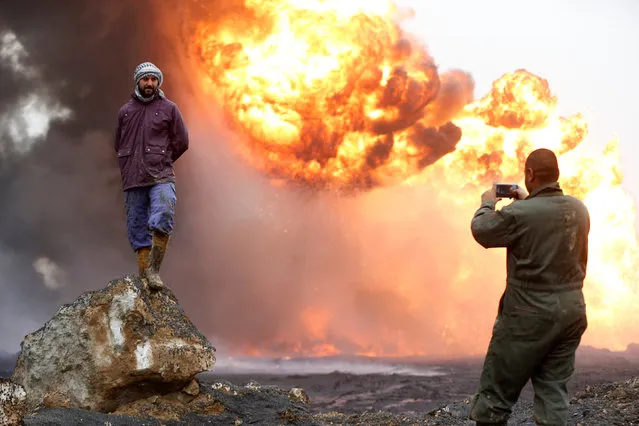
A man takes a photograph of his friend as thick smoke rises from a fire, which broke out at oil wells set ablaze by Islamic State militants before they fled the oil-producing region of Qayyara, Iraq, January 28, 2017. (Photo by Muhammad Hamed/Reuters)
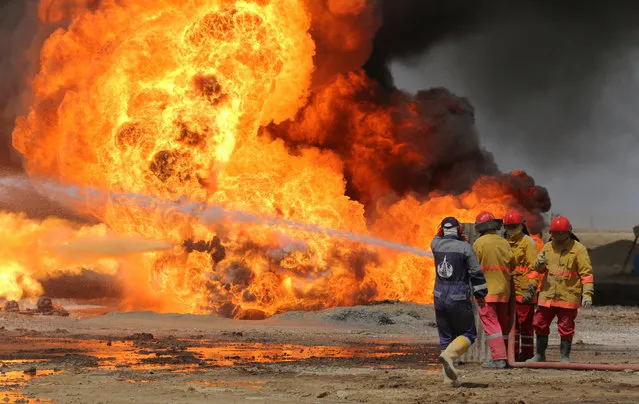
Iraqi firefighters try to stop the fire of burning oil wells in Kirkuk, northern Iraq, 02 June 2016. Two Khabbaz oil field wells in Kirkuk Province, northern Iraq, exploded by suspected insurgents, a security official said. (Photo by EPA/Stringer)
Katie Handler, veterinary technician with the New England Wildlife Center, reaches to try to capture an oil-covered goose along the Muddy River, Monday, December 9, 2024, in Brookline, Mass., as wildlife rescuers tended to dozens of birds that were soaked in oil after an apparent spill. (Photo by Charles Krupa/AP Photo)
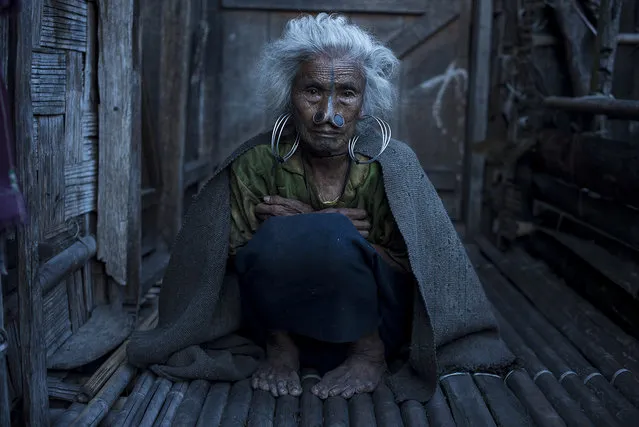
“YagYang”. The Apatani are tribal people living in north east of India in the region of Arunachal Pradesh. Tattooing and stuffing of large nose plugs is the particularity of these women. YagYang 75 years old, her husband passed away few months ago and she feels very alone, during my visit I was very fond of this woman and I wanted to spend some more time with her, so I asked her which was her favorite dish. The next day i returned with the fresh fish, as she mentioned, and when she saw me she was very happy and welcomed me with a big smile. Photo location: India. (Photo and caption by Passarini Mattia/National Geographic Photo Contest)
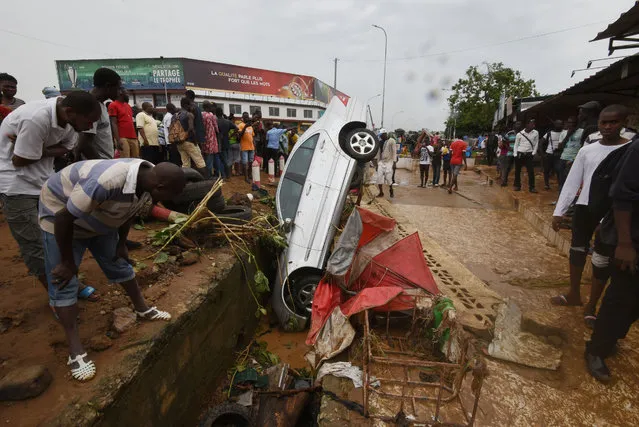
Pedestrians look at the wreckage of a vehicle lodged in a storm drain on a street in Abidjan on June 19, 2018, in which a man was reportedly found dead after floodwaters receded following an overnight downpour in the city. Fifteen people have died in Abidjan, Ivory Coast' s economic capital, during flooding caused by torrential rain overnight, Interior Minister Sidiki Diakite said. Rain poured down overnight on June 19, causing flash floods up to 2.5 metres (more than eight feet) deep, he said. (Photo by Sia Kambou/AFP Photo)