Loading...
Done
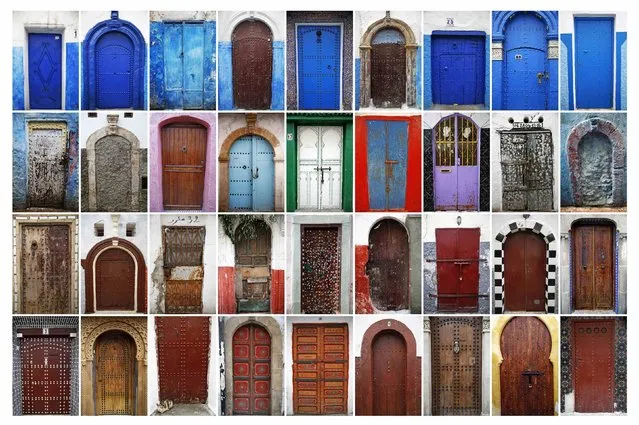
A combination photo shows some of the colourful doors seen in Rabat's Medina and Kasbah of the Udayas, September 2014. UNESCO made Rabat a World Heritage Site two years ago and media and tour operators call it a “must-see destination”. (Photo by Damir Sagolj/Reuters)

A combination photo shows some of the colourful doors seen in Rabat's Medina and Kasbah of the Udayas, September 2014. UNESCO made Rabat a World Heritage Site two years ago and media and tour operators call it a “must-see destination”. But it seems the tourist hordes have yet to find out. While visitors are getting squeezed through the better-known sites of Marrakesh and Fez, the old part of Rabat - with its beautiful Medina and Kasbah of the Udayas - remains an almost unspoiled oasis of calm. Smaller and more compact, its labyrinths of streets, passages and dead ends are a treasure trove of shapes and colours, of moments begging to be caught by the photographer's lens. (Photo by Damir Sagolj/Reuters)
Details
08 Oct 2014 12:08:00
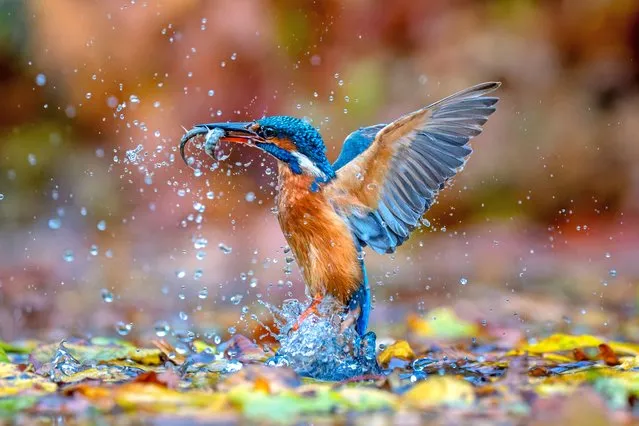
A kingfisher dives into the leafy water of the River Alde near Rendham, Suffolk in the second decade of November 2022 and catches two fish. Kingfishers must be able to see the fish they want to catch before making their dive, so for this bird to be successful when leaves covered the surface of the water shows its true skill for survival. (Photo by Ivor Ottley/Animal News Agency)

A kingfisher dives into the leafy water of the River Alde near Rendham, Suffolk in the second decade of November 2022 and catches two fish. Kingfishers must be able to see the fish they want to catch before making their dive, so for this bird to be successful when leaves covered the surface of the water shows its true skill for survival. (Photo by Ivor Ottley/Animal News Agency)
Details
20 Nov 2022 05:49:00
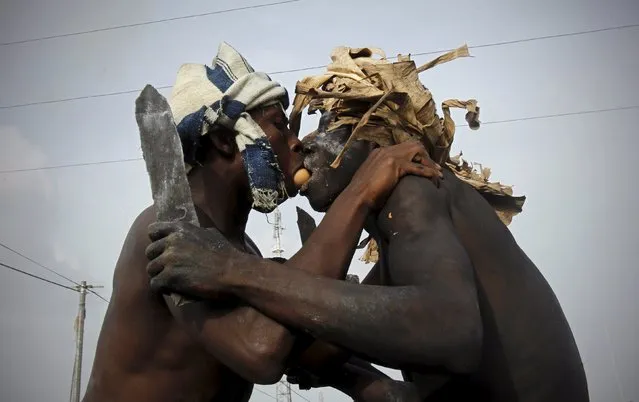
Participants pass an egg using their mouths during a religious ritual as they play the role of traditional fighters in a parade during the Popo (Mask) Carnival of Bonoua, in the east of Abidjan, April 18, 2015. The carnival has its origins in the changes that Aboure youths in Bonoua introduced to the annual festival of yams. (Photo by Luc Gnago/Reuters)

Participants pass an egg using their mouths during a religious ritual as they play the role of traditional fighters in a parade during the Popo (Mask) Carnival of Bonoua, in the east of Abidjan, April 18, 2015. The carnival has its origins in the changes that Aboure youths in Bonoua introduced to the annual festival of yams. (Photo by Luc Gnago/Reuters)
Details
20 Apr 2015 13:36:00
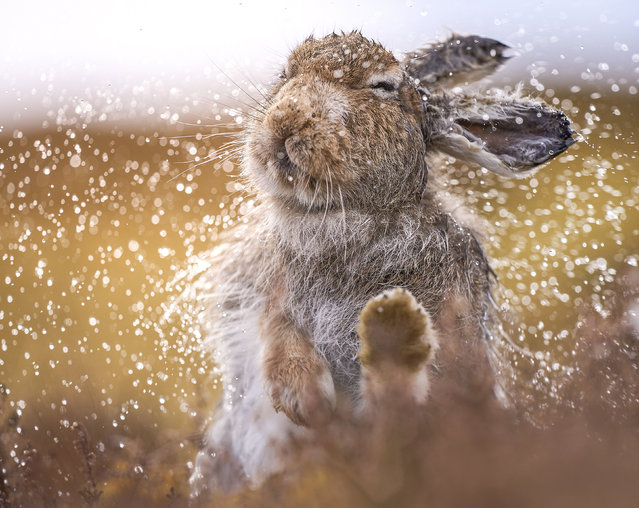
A mountain hare shakes off rain from its fur, in Findhorn Valley, Moray, Scotland in the second decade of August 2024. In summer, the hare’s coat is a grey-brown colour with a tinge of blue, making them hard to spot against the heather moorland. In winter, it changes to almost completely white for camouflage in the snow. (Photo by Will Hall/Solent News)

A mountain hare shakes off rain from its fur, in Findhorn Valley, Moray, Scotland in the second decade of August 2024. In summer, the hare’s coat is a grey-brown colour with a tinge of blue, making them hard to spot against the heather moorland. In winter, it changes to almost completely white for camouflage in the snow. (Photo by Will Hall/Solent News)
Details
25 Aug 2024 03:50:00
Of all the species affected by river regulation in Australia, the ibis is one of the few that has changed its behaviour and moved to coastal cities. (Photo by Rick Stevens/The Guardian)

Tip turkey, dumpster chook, rubbish raptor – the Australian white ibis goes by many unflattering names. But it is a true urban success story, scavenging to survive in cities across Australia as wetlands have been lost. Wildlife photographer Rick Stevens captured them in Sydney. Here: Of all the species affected by river regulation in Australia, the ibis is one of the few that has changed its behaviour and moved to coastal cities. (Photo by Rick Stevens/The Guardian)
Details
11 Apr 2018 00:03:00
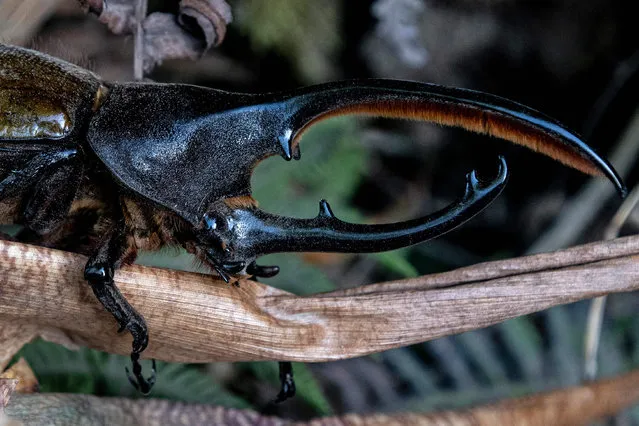
A Hercules beetle, one of the largest species of its kind, in seen at the Monteverde Cloud Forest Biological Reserve, in Puntarenas, Costa Rica, on May 23, 2023. In the Monteverde cloud forest, dense fog among the lush vegetation is increasingly rare and temperatures are increasing each year due to climate change. (Photo by Ezequiel Becerra/AFP Photo)

A Hercules beetle, one of the largest species of its kind, in seen at the Monteverde Cloud Forest Biological Reserve, in Puntarenas, Costa Rica, on May 23, 2023. In the Monteverde cloud forest, dense fog among the lush vegetation is increasingly rare and temperatures are increasing each year due to climate change. (Photo by Ezequiel Becerra/AFP Photo)
Details
21 Sep 2023 03:34:00
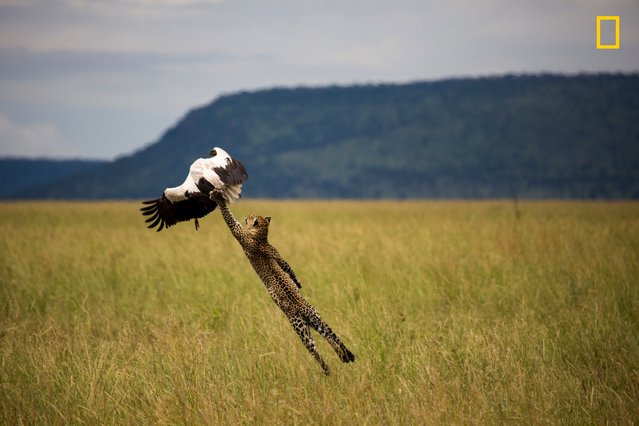
“Leopard Hunting a Stork”. “One-shot capture. I watched the leopard stalking the stork, I only had time to focus at 400mm, no time to change to high speed, I watched the stork, and as soon as it flapped its wings, I shot one shot”. (Photo by Paul Rifkin/National Geographic Travel Photographer of the Year Contest)

“Leopard Hunting a Stork”. “One-shot capture. I watched the leopard stalking the stork, I only had time to focus at 400mm, no time to change to high speed, I watched the stork, and as soon as it flapped its wings, I shot one shot”. (Photo by Paul Rifkin/National Geographic Travel Photographer of the Year Contest)
Details
04 Jun 2018 00:03:00
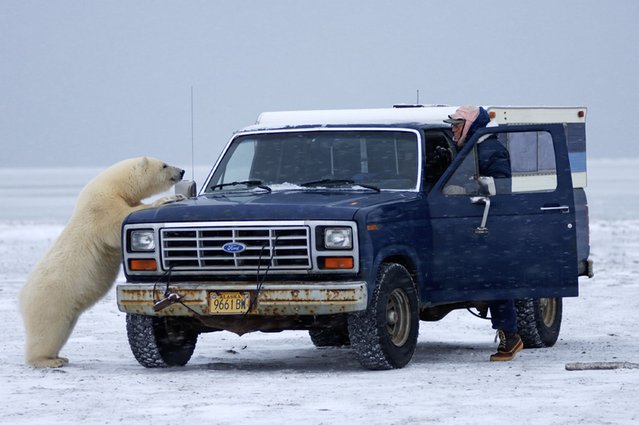
“Awright mate, any chance of a lift to the North Pole?” (Photo by Steven Kazlowski/Barcroft Media)

“This cheeky polar bear tried to hitch a lift off an unsuspecting driver by clambering into the back of his pick-up truck. The curious creature spent about half an hour inspecting the vehicle and its owner before casually trying to climb aboard. However, the truck must not have been up to scratch because the 7ft bear, weighing approximately 300lbs, promptly jumped back out and sauntered off”. – Barcroft Media. Photo: “Awright mate, any chance of a lift to the North Pole?” (Photo by Steven Kazlowski/Barcroft Media)
Details
03 Nov 2013 09:22:00