Loading...
Done
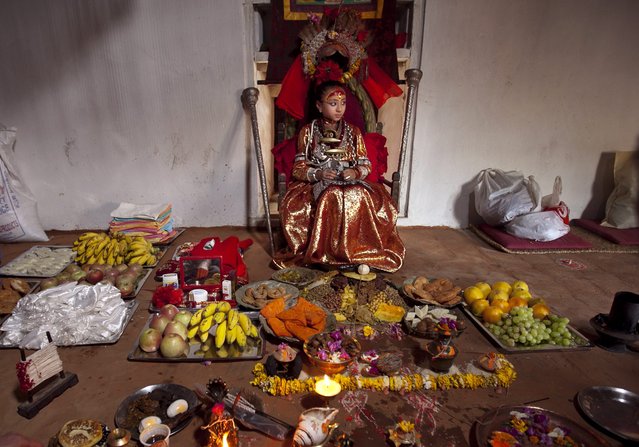
Kumari Samita Bajracharya sits in front of devotees offers during a special puja at Kumari Ghar in Patan, Nepal, 09 April 2011. It is believed that worshipping Kumari and receiving tika from her reduces illness and avoid problems. Kumari, or Kumari Devi, is a “living goddess”. The word literally means virgin in Nepali. The Living Goddesses are young pre-pubescent girls that are considered to be incarnations of the Hindu Goddess of Power, Kali. The Kumari retires when she reaches puberty. (Photo by Narendra Shrestha/EPA)

Kumari Samita Bajracharya sits in front of devotees offers during a special puja at Kumari Ghar in Patan, Nepal, 09 April 2011. It is believed that worshipping Kumari and receiving tika from her reduces illness and avoid problems. Kumari, or Kumari Devi, is a “living goddess”. The word literally means virgin in Nepali. The Living Goddesses are young pre-pubescent girls that are considered to be incarnations of the Hindu Goddess of Power, Kali. The Kumari retires when she reaches puberty. (Photo by Narendra Shrestha/EPA)
Details
18 Jun 2014 12:31:00
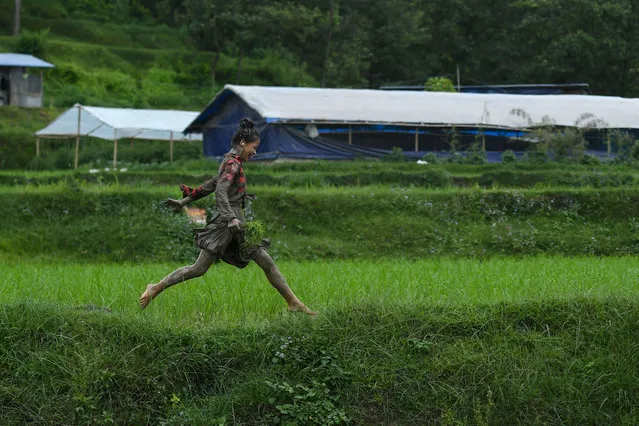
A girl walks along rice paddy fields during “National Paddy Day”, which marks the start of the annual rice planting season, in Tokha village on the outskirts of Kathmandu on June 29, 2020. Splashing mud and drinking local rice beer, Nepali farmers this week celebrated National Paddy Day to mark the beginning of the rice-planting season, despite some coronavirus lockdown measures still in place. Traditional farming songs and laughter echoed in the air as farmers waded into waterlogged fields to sow green paddy. (Photo by Prakash Mathema/AFP Photo)

A girl walks along rice paddy fields during “National Paddy Day”, which marks the start of the annual rice planting season, in Tokha village on the outskirts of Kathmandu on June 29, 2020. Splashing mud and drinking local rice beer, Nepali farmers this week celebrated National Paddy Day to mark the beginning of the rice-planting season, despite some coronavirus lockdown measures still in place. Traditional farming songs and laughter echoed in the air as farmers waded into waterlogged fields to sow green paddy. (Photo by Prakash Mathema/AFP Photo)
Details
02 Aug 2020 00:01:00
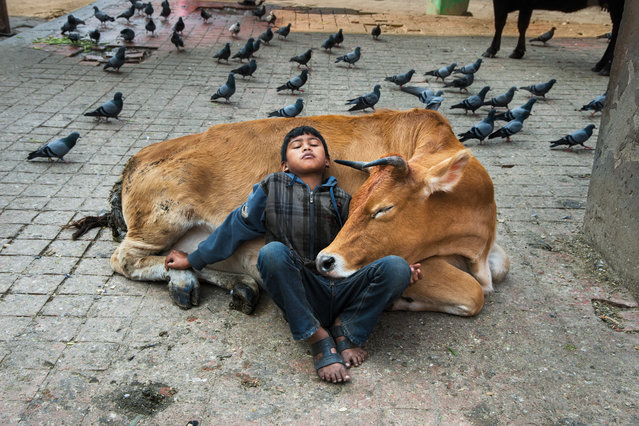
A boy rests against a cow, Kathmandu, Nepal, 2013. “Cows have been designated the national animal in Nepal. They roam freely, and are considered sacred by the 80% of Nepalis who are Hindu”. (Photo by Steve McCurry/The Guardian)

The legendary US photographer’s favourite shots of creatures and how they interact with humans feature in “Animals”, his latest book. Here: A boy rests against a cow, Kathmandu, Nepal, 2013. “Cows have been designated the national animal in Nepal. They roam freely, and are considered sacred by the 80% of Nepalis who are Hindu”. (Photo by Steve McCurry/The Guardian)
Details
07 Nov 2019 00:01:00
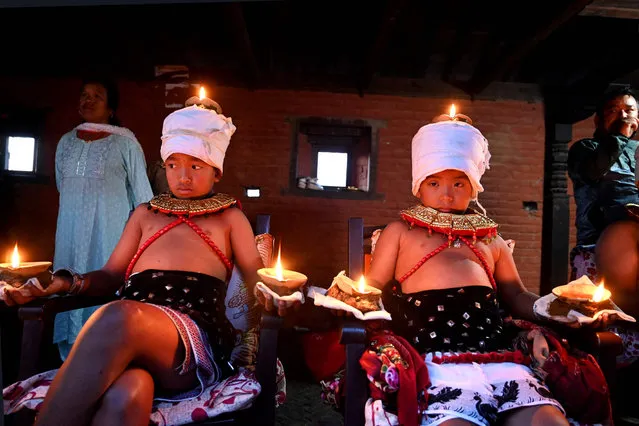
Young devotees carry oil lamps in the early morning of the tenth day celebrations of Hindu Nepali festival “Dashain” at a temple in Bhaktapur on the outskirts of Kathmandu on October 24, 2023. (Photo by Prakash Mathema/AFP Photo)

Young devotees carry oil lamps in the early morning of the tenth day celebrations of Hindu Nepali festival “Dashain” at a temple in Bhaktapur on the outskirts of Kathmandu on October 24, 2023. (Photo by Prakash Mathema/AFP Photo)
Details
10 Nov 2023 05:20:00
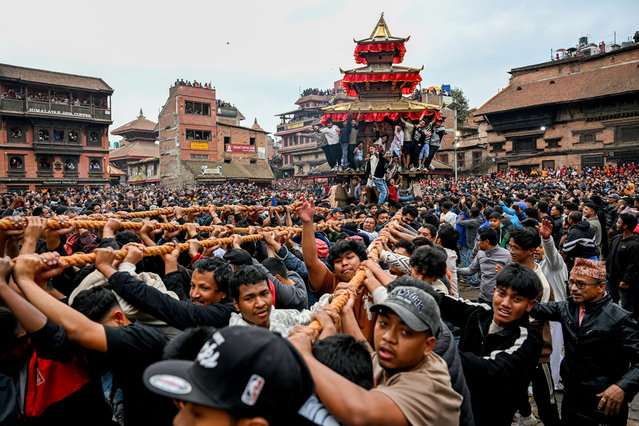
Devotees pull a wooden chariot carrying an idol of the Hindu deity Bhairav during 'Bisket Jatra' festival to mark the Nepali New Year, in Bhaktapur, on the outskirts of Kathmandu, on April 10, 2025. (Photo by Prakash Mathema/AFP Photo)

Devotees pull a wooden chariot carrying an idol of the Hindu deity Bhairav during 'Bisket Jatra' festival to mark the Nepali New Year, in Bhaktapur, on the outskirts of Kathmandu, on April 10, 2025. (Photo by Prakash Mathema/AFP Photo)
Details
26 Apr 2025 02:12:00
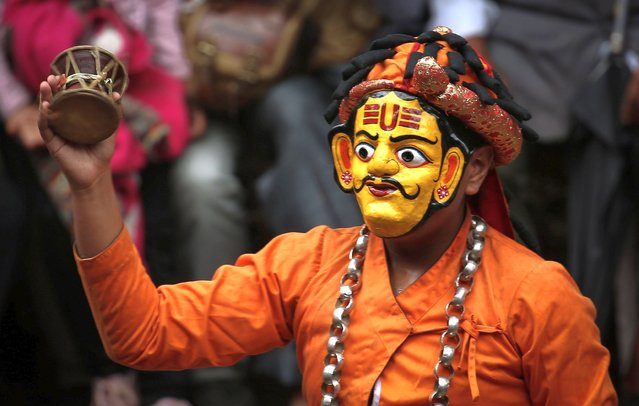
A masked dancer performs as part of “Devi Pyankha” (Devi Dance) to mark the beginning of the Indra Jatra Festival in Kathmandu, Nepal on September 15, 2021. Nepali celebrate the Indra Jatra festival to worship “Indra”, the god of rain and to mark the end of monsoon season. (Photo by Sunil Sharma/ZUMA Press Wire/Rex Features/Shutterstock)

A masked dancer performs as part of “Devi Pyankha” (Devi Dance) to mark the beginning of the Indra Jatra Festival in Kathmandu, Nepal on September 15, 2021. Nepali celebrate the Indra Jatra festival to worship “Indra”, the god of rain and to mark the end of monsoon season. (Photo by Sunil Sharma/ZUMA Press Wire/Rex Features/Shutterstock)
Details
23 Sep 2021 08:21:00
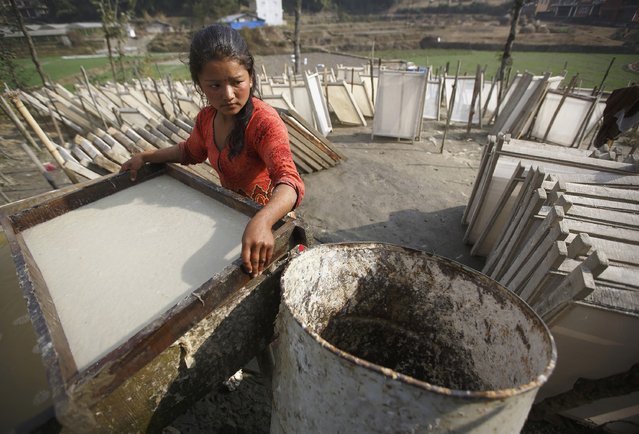
A woman works to create handmade Nepali Lokta paper in Kathmandu January 7, 2015. Lokta papers are made from the fibrous inner bark of Lokta bushes that are found over 5,000 metres above sea level. (Photo by Navesh Chitrakar/Reuters)

A woman works to create handmade Nepali Lokta paper in Kathmandu January 7, 2015. Lokta papers are made from the fibrous inner bark of Lokta bushes that are found over 5,000 metres above sea level. (Photo by Navesh Chitrakar/Reuters)
Details
15 Jan 2015 14:09:00
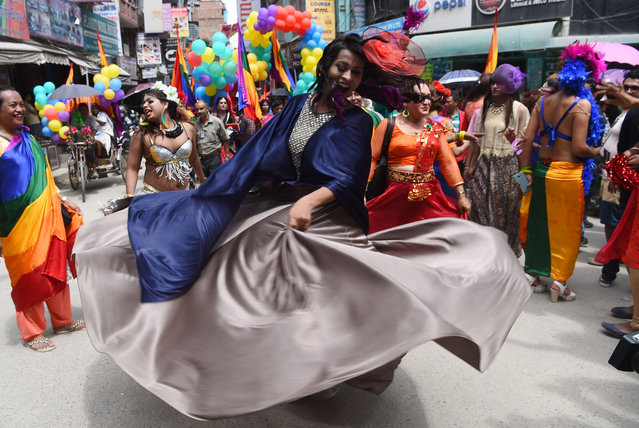
Nepali members of the LGBT community take part in a Gay Pride parade in Kathmandu on August 8, 2017. Scores of gays, lesbians, transvestites and transsexuals from across the country took part in the rally to spread their campaign for sexual rights in the country. In 2013 Nepal introduced citizenships with a third gender option and began issuing passports reflecting the same in 2015. (Photo by Prakash Mathema/AFP Photo)

Nepali members of the LGBT community take part in a Gay Pride parade in Kathmandu on August 8, 2017. Scores of gays, lesbians, transvestites and transsexuals from across the country took part in the rally to spread their campaign for sexual rights in the country. In 2013 Nepal introduced citizenships with a third gender option and began issuing passports reflecting the same in 2015. (Photo by Prakash Mathema/AFP Photo)
Details
09 Aug 2017 07:43:00