Loading...
Done
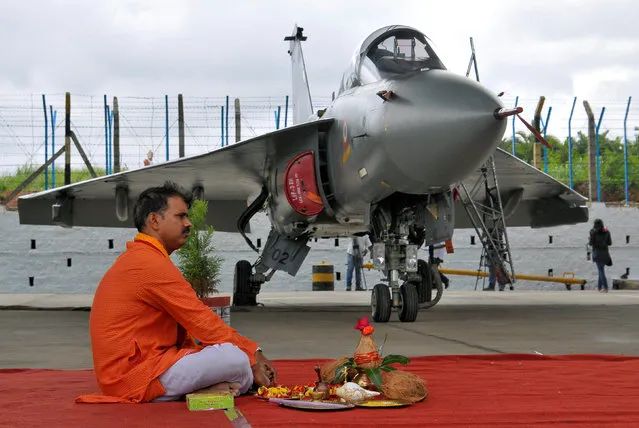
A Hindu priest waits to perform prayers next to Tejas, India's first locally-built Light Combat Aircraft (LCA), before its induction into the Indian Air Force at the Hindustan Aeronautics Limited (HAL) Airport in Bengaluru, India, July 1, 2016. (Photo by Abhishek N. Chinnappa/Reuters)

A Hindu priest waits to perform prayers next to Tejas, India's first locally-built Light Combat Aircraft (LCA), before its induction into the Indian Air Force at the Hindustan Aeronautics Limited (HAL) Airport in Bengaluru, India, July 1, 2016. (Photo by Abhishek N. Chinnappa/Reuters)
Details
02 Jul 2016 13:01:00
A young lady poses for the camera as police steward boozers away from pubs and bars in Newcastle, United Kingdom on October 23, 2020. The extra restrictions which servely limits social mixing in hospitality venues will come into effect on October 23, 2020. (Photo by North News and Pictures/The Sun)

A young lady poses for the camera as police steward boozers away from pubs and bars in Newcastle, United Kingdom on October 23, 2020. The extra restrictions which servely limits social mixing in hospitality venues will come into effect on October 23, 2020. (Photo by North News and Pictures/The Sun)
Details
25 Oct 2020 00:07:00
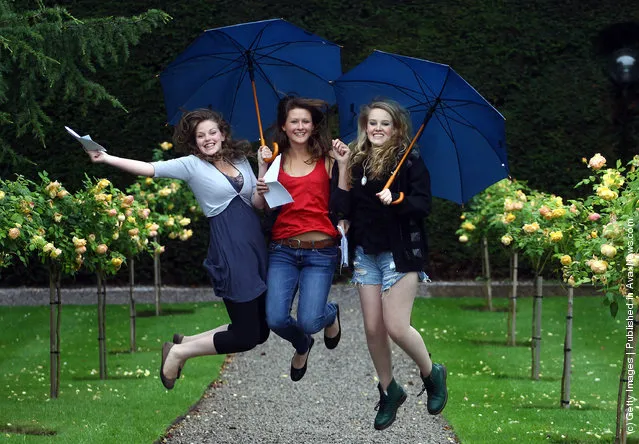
Students Throughout The UK Receive Their A Level Results

Badminton School sixth form pupils (L-R) Lucy Warden, who got 3 A* and is off to study English at Durham, Sam Crumpton, who got 1 A* and 2 A's and is off to study to be a vet at Cambridge and Madeline Sunter, who got 2 A* and 1 B, and is off to study fashion at St. Martins, celebrate their A-level results on August 18, 2011 in Bristol, England. With another record year for A-level results, sixth-form students face a scramble for university places in the final year before tuition fees rise. According to the examination bodies the pass rate rose for the 29th successive year to hit 97.8 percent, while around one in 12 exams achieved the top A* grade. (Photo by Matt Cardy/Getty Images)

Details
19 Aug 2011 09:00:00


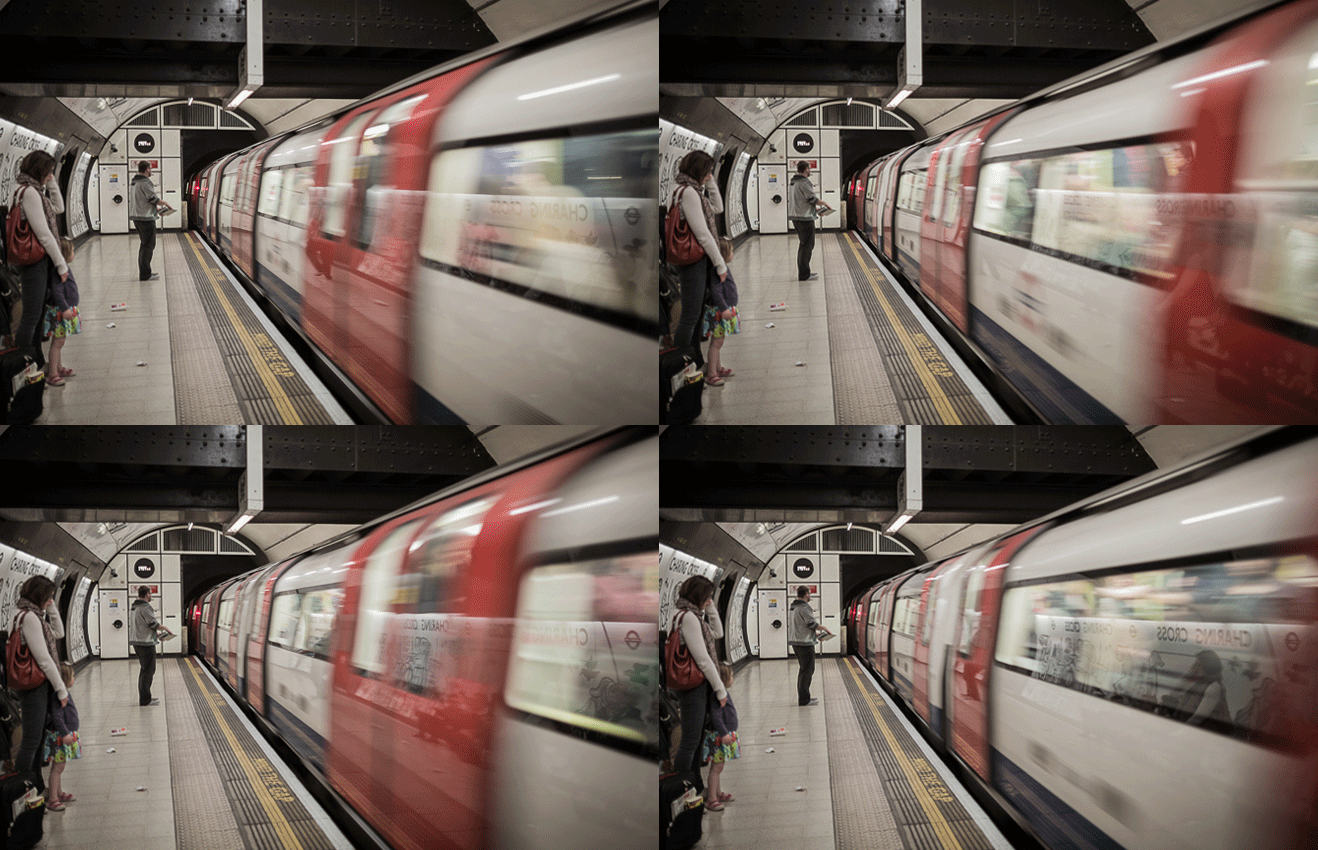
Look at the image for long enough and you can make the train change direction simply by thinking about it. Freaky.
Details
21 May 2013 10:55:00
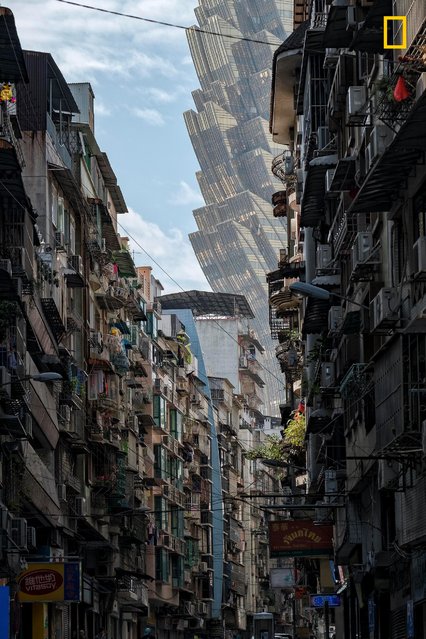
The Invasion. A quiet street in Macau. Modernization around is quickly changing the city, as documented by Paul Tsui. (Photo by Paul Tsui/National Geographic Travel Photographer of the Year Contest)

The Invasion. A quiet street in Macau. Modernization around is quickly changing the city, as documented by Paul Tsui. (Photo by Paul Tsui/National Geographic Travel Photographer of the Year Contest)
Details
30 Jun 2018 00:03:00
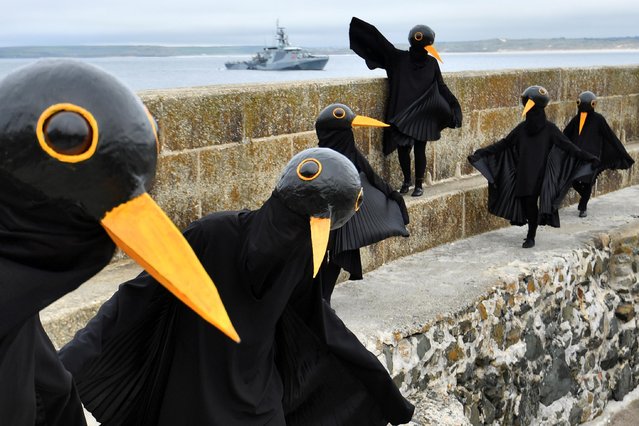
Climate change activists dressed up as black birds protest in St. Ives, on the sidelines of the G7 summit in Cornwall, Britain, June 11, 2021. (Photo by Dylan Martinez/Reuters)

Climate change activists dressed up as black birds protest in St. Ives, on the sidelines of the G7 summit in Cornwall, Britain, June 11, 2021. (Photo by Dylan Martinez/Reuters)
Details
12 Jun 2021 09:33:00
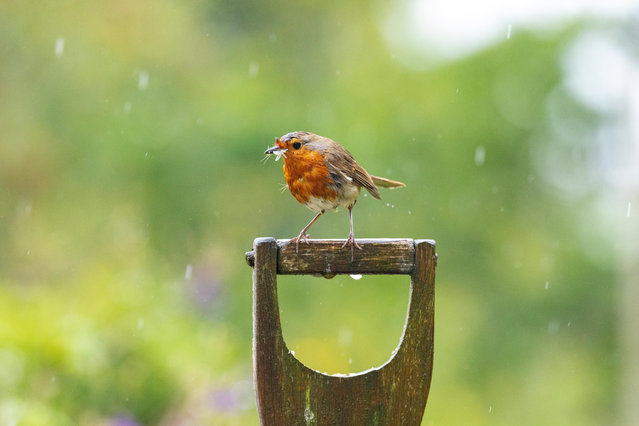
A robin perches on a spade handle in a garden on a rainy day in Lixwm, north Wales. Researchers said this week that when European robins are subjected to human-produced noise, their behaviour changes. (Photo by DGDImages/Alamy Live News)

A robin perches on a spade handle in a garden on a rainy day in Lixwm, north Wales. Researchers said this week that when European robins are subjected to human-produced noise, their behaviour changes. (Photo by DGDImages/Alamy Live News)
Details
28 Jul 2019 00:03:00
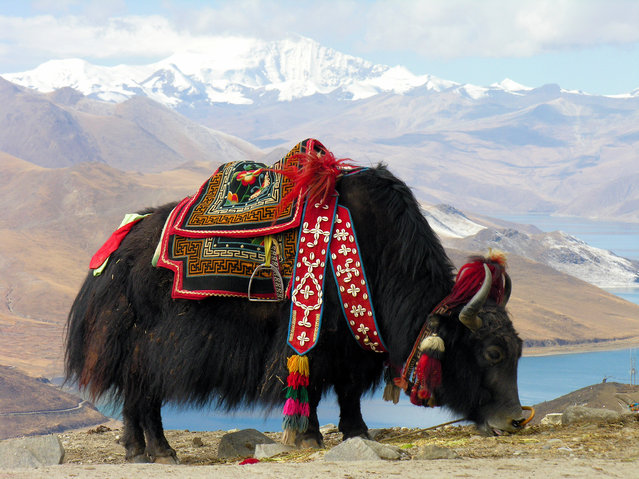
Yak near Yamdrok lake, Tibet. It is a long-haired bovinae found throughout the Himalayan region of south Central Asia, the Tibetan Plateau and as far north as Mongolia and Russia. The Tibetan economy is dominated by subsistence agriculture. Due to limited arable land, the primary occupation of the Tibetan Plateau is raising livestock, such as sheep, cattle, goats, camels, yaks, dzo, and horses. The Tibetan yak is an integral part of Tibetan life. (Photo by Dennis Jarvis)

Yak near Yamdrok lake, Tibet. It is a long-haired bovinae found throughout the Himalayan region of south Central Asia, the Tibetan Plateau and as far north as Mongolia and Russia. The Tibetan economy is dominated by subsistence agriculture. Due to limited arable land, the primary occupation of the Tibetan Plateau is raising livestock, such as sheep, cattle, goats, camels, yaks, dzo, and horses. The Tibetan yak is an integral part of Tibetan life. (Photo by Dennis Jarvis)
Details
10 Jun 2015 10:48:00