Loading...
Done
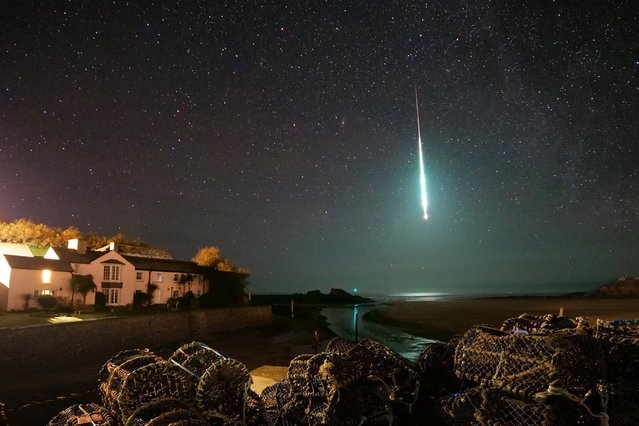
A brightly burning magnesium-rich meteor known as a bolide was captured near Bude, Cornwall on January 24, 2020. (Photo by Chris Small/Apex News)

A brightly burning magnesium-rich meteor known as a bolide was captured near Bude, Cornwall on January 24, 2020. (Photo by Chris Small/Apex News)
Details
14 Jul 2020 00:03:00
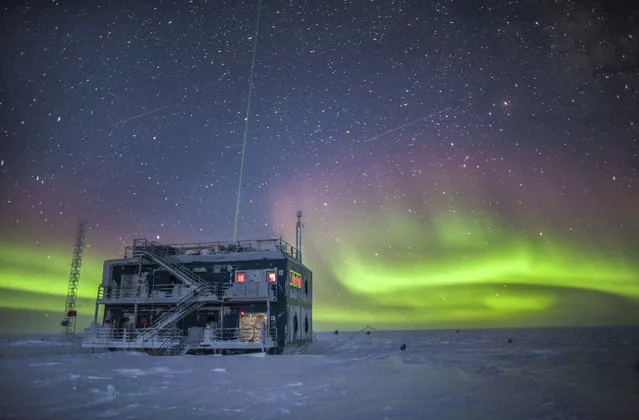
This undated photo provided by NOAA in May 2018 shows aurora australis near the South Pole Atmospheric Research Observatory in Antarctica. When a hole in the ozone formed over Antarctica, countries around the world in 1987 agreed to phase out several types of ozone-depleting chemicals called chlorofluorocarbons (CFCs). Production was banned, emissions fell and the hole shriveled. But according to a study released on Wednesday, May 16, 2018, scientists say since 2013, there’s more of a banned CFC going into the atmosphere. (Photo by Patrick Cullis/NOAA via AP Photo)

This undated photo provided by NOAA in May 2018 shows aurora australis near the South Pole Atmospheric Research Observatory in Antarctica. When a hole in the ozone formed over Antarctica, countries around the world in 1987 agreed to phase out several types of ozone-depleting chemicals called chlorofluorocarbons (CFCs). Production was banned, emissions fell and the hole shriveled. But according to a study released on Wednesday, May 16, 2018, scientists say since 2013, there’s more of a banned CFC going into the atmosphere. (Photo by Patrick Cullis/NOAA via AP Photo)
Details
15 Aug 2018 00:05:00
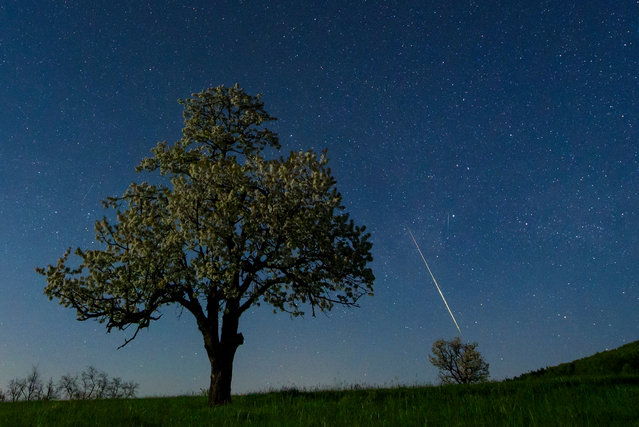
Tiny pieces of space rocks, called meteorites, are seen burning in the atmosphere over the night sky near Salgótarján, some 109km northeast of Budapest, Hungary, 21 April 2018 (issued 22 April 2018). (Photo by Peter Komka/EPA/EFE)

Tiny pieces of space rocks, called meteorites, are seen burning in the atmosphere over the night sky near Salgótarján, some 109km northeast of Budapest, Hungary, 21 April 2018 (issued 22 April 2018). (Photo by Peter Komka/EPA/EFE)
Details
24 Apr 2018 00:03:00
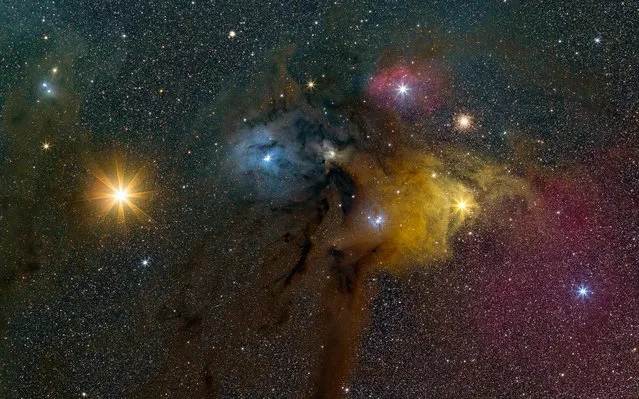
Mars and its Rival Antares and the Rho Ophiuchi cloud complex. (Photo by Phil Hart/CWAS/The Guardian)

These spectacular images of the universe are the finalists in the 2016 CWAS “David Malin” awards. The annual competition, which celebrates the best astronomy images taken by Australian photographers, is part of AstroFest 2016. The winners will be announced on 16 July. An associated exhibition opens the following day at the CSIRO Parkes Observatory visitors centre, and a second exhibition will also travel to selected venues around Australia. Here: Mars and its Rival Antares and the Rho Ophiuchi cloud complex. (Photo by Phil Hart/CWAS/The Guardian)
Details
12 Jul 2016 12:08:00
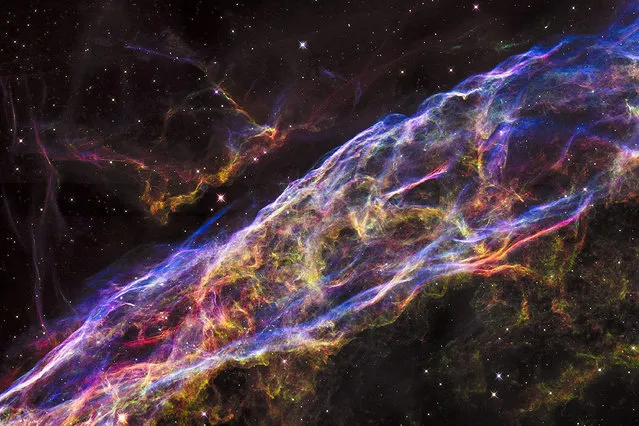
A small section of the expanding remains of the Veil Nebula, a massive star that exploded about 8,000 years ago. The entire nebula is 110 light-years across, covering six full moons on the sky as seen from Earth, and resides about 2,100 light-years away in the constellation Cygnus, the Swan. (Photo by Reuters/NASA/ESA/Hubble)

A small section of the expanding remains of the Veil Nebula, a massive star that exploded about 8,000 years ago. The entire nebula is 110 light-years across, covering six full moons on the sky as seen from Earth, and resides about 2,100 light-years away in the constellation Cygnus, the Swan. (Photo by Reuters/NASA/ESA/Hubble)
Details
29 Feb 2016 11:30:00
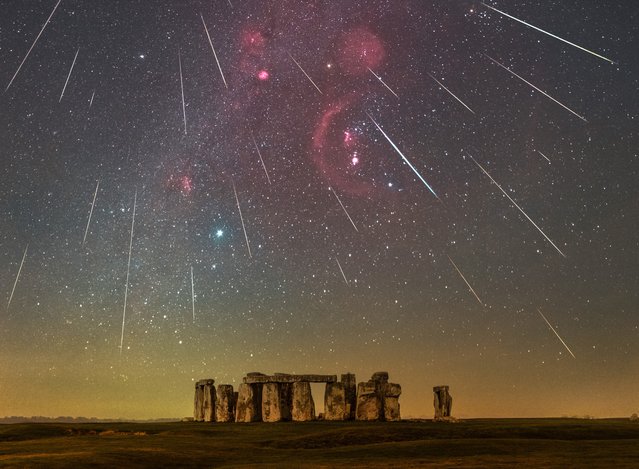
Nick Bull captured the Geminid meteor shower above Stonehenge in Wiltshire, UK on December 14, 2023. (Photo by Nick Bull/Picture Eexclusive)

Nick Bull captured the Geminid meteor shower above Stonehenge in Wiltshire, UK on December 14, 2023. (Photo by Nick Bull/Picture Eexclusive)
Details
19 Aug 2024 04:00:00
Celebrity Mugshots Part 1

Worth 1000`s photoshop contest for making the best celebrity mug shot
Details
03 Jun 2014 11:00:00
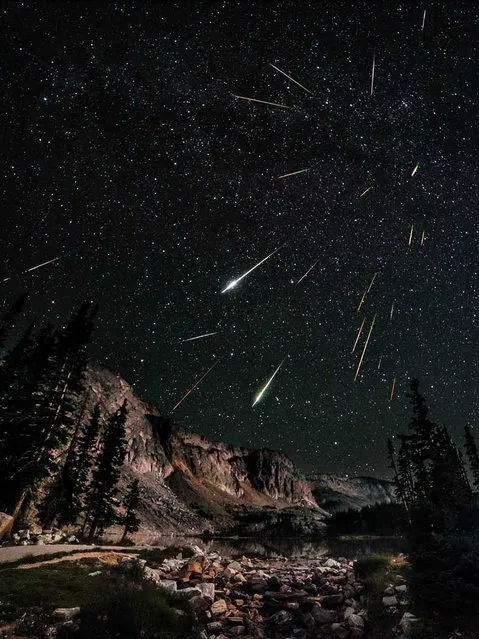
Photographer David Kingham created this composite image from 23 photos on August 12, 2012. He writes, “Last night I went out to Snowy Range in Wyoming in search of dark skies for the Perseid meteor shower.”. (Photo by David Kingham)

Starting on Monday, August 12, Perseid meteors will streak across the summer sky for a couple of nights, offering casual stargazers and serious nighttime photographers a chance to capture a glimpse of the annual meteor shower. Photo: Photographer David Kingham created this composite image from 23 photos on August 12, 2012. (Photo by David Kingham)
Details
08 Aug 2013 12:50:00