Loading...
Done
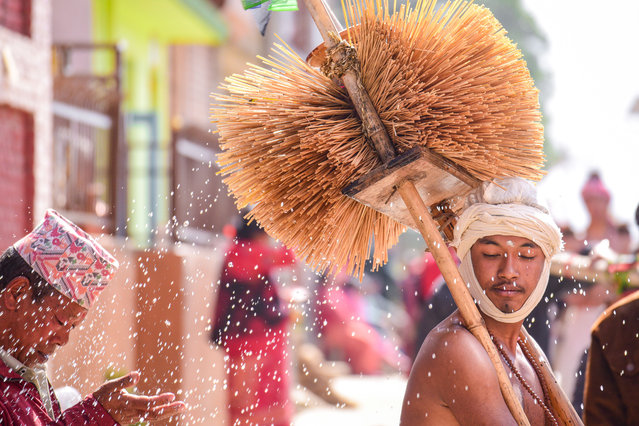
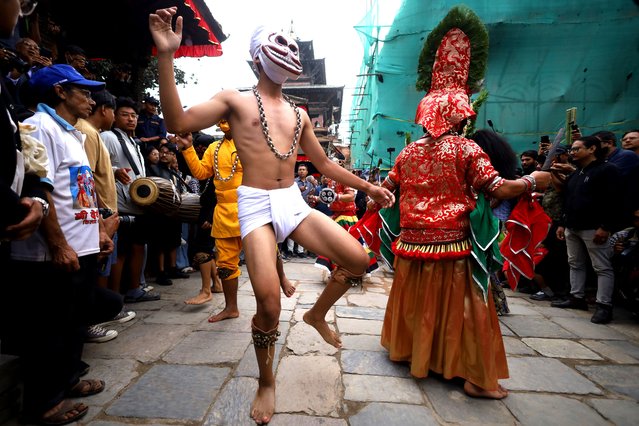
Masked dancers perform a ritualistic dance at Kathmandu Durbar Square during the procession of erecting a sacred pole locally called “Ya: Shi”, marking the formal start of Indra Jatra dedicated to rain god Indra in Kathmandu, Nepal, on September 15, 2024. The festival lasts for eight days with singing, mask dancing, and other rituals. Indra Jatra festival falls on the fourth day of the waxing moon in the month of Bhadra as per the lunar calendar. Legends say that the Indra Jatra festival observes the victory of the gods over the demons to release Jayanta, the son of Lord Indra. Indra, the god of rain, is worshiped in this festival primarily celebrated by the Newar communities following both Hinduism and Buddhism. (Photo by Subaas Shrestha/NurPhoto/Rex Features/Shutterstock)

Masked dancers perform a ritualistic dance at Kathmandu Durbar Square during the procession of erecting a sacred pole locally called “Ya: Shi”, marking the formal start of Indra Jatra dedicated to rain god Indra in Kathmandu, Nepal, on September 15, 2024. (Photo by Subaas Shrestha/NurPhoto/Rex Features/Shutterstock)
Details
24 Sep 2024 03:27:00
Devotees perform religious rituals by splashing holy water during the Madhav Narayan Festival, a month-long event dedicated to Lord Madhav Narayan, an incarnation of Lord Vishnu in Thacho, Lalitpur, Nepal on February 10, 2025. Devotees also carry butter lamps and blow conch shells (shankha) as part of the sacred observance. (Photo by Safal Prakash Shrestha/ZUMA Press Wire)

Devotees perform religious rituals by splashing holy water during the Madhav Narayan Festival, a month-long event dedicated to Lord Madhav Narayan, an incarnation of Lord Vishnu in Thacho, Lalitpur, Nepal on February 10, 2025. Devotees also carry butter lamps and blow conch shells (shankha) as part of the sacred observance. (Photo by Safal Prakash Shrestha/ZUMA Press Wire)
Details
08 Mar 2025 03:54:00
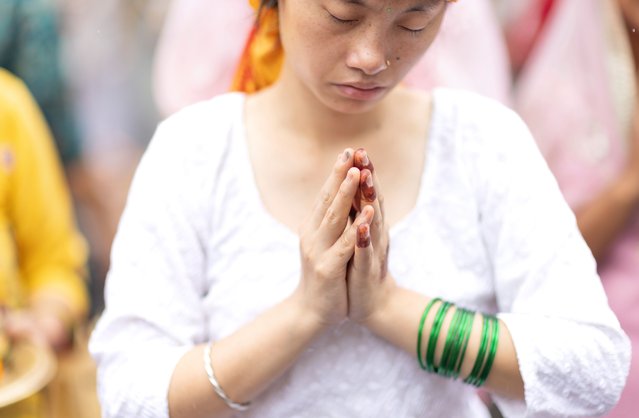
A woman prays during a Sarwan Brata (fast) offering to Lord Shiva, the Hindu god of creation and destruction, at the Pashupatinath Temple in Kathmandu, Nepal, 21 July 2025. Nepalese Hindu women wearing red, yellow and green attire, flock to temples during Sarwan month to pray for a long and prosperous life for their husbands, or to find a good husband. (Photo by Narendra Shrestha/EPA)

A woman prays during a Sarwan Brata (fast) offering to Lord Shiva, the Hindu god of creation and destruction, at the Pashupatinath Temple in Kathmandu, Nepal, 21 July 2025. Nepalese Hindu women wearing red, yellow and green attire, flock to temples during Sarwan month to pray for a long and prosperous life for their husbands, or to find a good husband. (Photo by Narendra Shrestha/EPA)
Details
01 Aug 2025 03:53:00
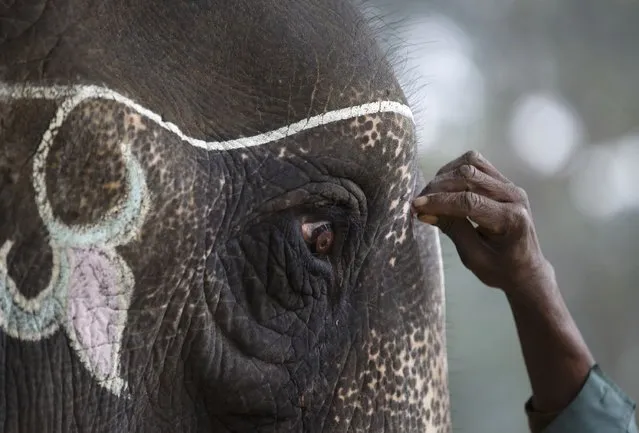
A mahout decorates his elephant using chalk while preparing for the Elephant Festival at Sauraha in Chitwan, south of Kathmandu, December 26, 2014. (Photo by Navesh Chitrakar/Reuters)

A mahout (a person who rides an elephant) decorates his elephant using chalk while preparing for the Elephant Festival at Sauraha in Chitwan, south of Kathmandu, December 26, 2014. Elephants and mahouts from Chitwan will participate in the Elephant festival, which involves elephant races, elephants playing an exhibition soccer match and taking part in various other sporting activities. The event will start from 26 December and will end on 30 December, 2014. (Photo by Navesh Chitrakar/Reuters)
Details
28 Dec 2014 11:38:00
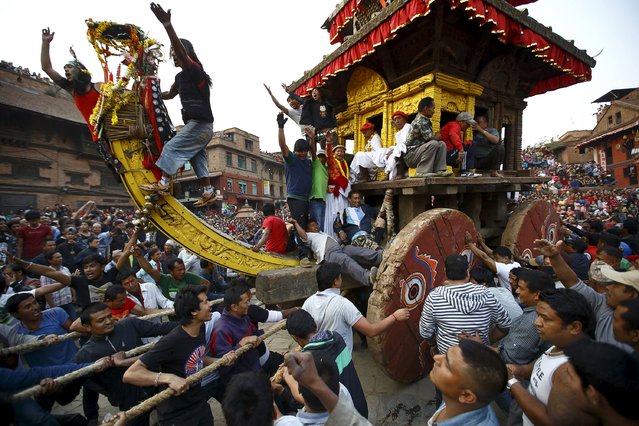
The chariot of God Bhairab is pulled through the city centre of Bhaktapur near Kathmandu during the Bisket festival April 10, 2015. The festival, which runs for more than a week and coincides with the Nepalese New Year, involves devotees offering prayers and the pulling of two chariots, one carrying the idol of God Bhairab and the other with the idol of Goddess Bhadrakali, around the ancient city of Bhaktapur. (Photo by Navesh Chitrakar/Reuters)

The chariot of God Bhairab is pulled through the city centre of Bhaktapur near Kathmandu during the Bisket festival April 10, 2015. The festival, which runs for more than a week and coincides with the Nepalese New Year, involves devotees offering prayers and the pulling of two chariots, one carrying the idol of God Bhairab and the other with the idol of Goddess Bhadrakali, around the ancient city of Bhaktapur. Devotees participate in the festival with the belief that they will be blessed with good health, fortune and harvest for the coming year. (Photo by Navesh Chitrakar/Reuters)
Details
12 Apr 2015 07:52:00
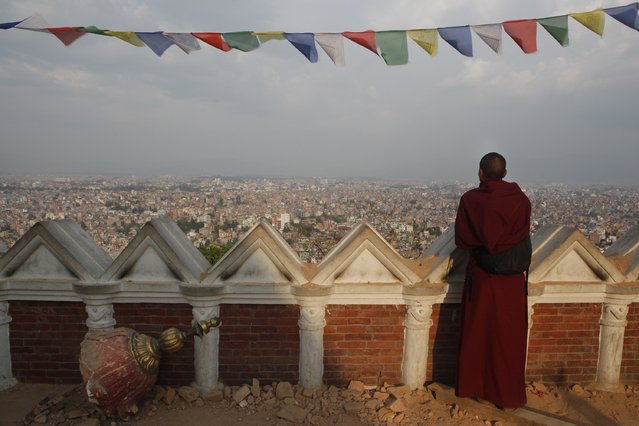
A Buddhist monk catches an aerial view of Kathmandu from the damaged Swayambhunath Stupa premises in Kathmandu, Nepal, Wednesday, May 6, 2015. The April 25 earthquake killed thousands and injured many more as it flattened mountain villages and destroyed buildings and archaeological sites in Kathmandu. (Photo by Niranjan Shrestha/AP Photo)

A Buddhist monk catches an aerial view of Kathmandu from the damaged Swayambhunath Stupa premises in Kathmandu, Nepal, Wednesday, May 6, 2015. The April 25 earthquake killed thousands and injured many more as it flattened mountain villages and destroyed buildings and archaeological sites in Kathmandu. (Photo by Niranjan Shrestha/AP Photo)
Details
08 May 2015 13:20:00
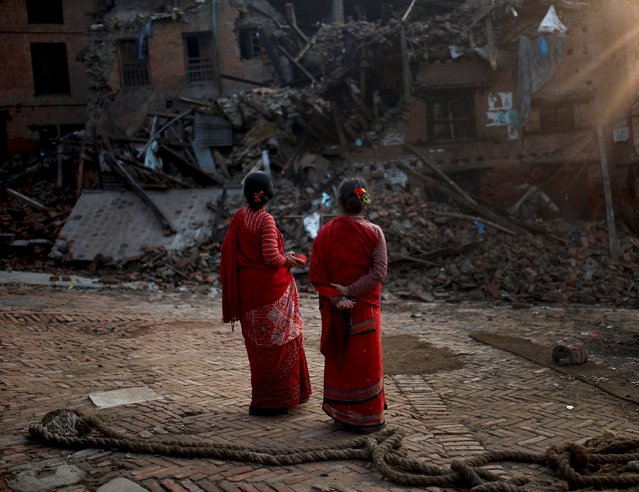
Women look at a collapsed building caused by earthquakes, in  Bhaktapur, Nepal, May 18, 2015. (Photo by Ahmad Masood/Reuters)

Women look at a collapsed building caused by earthquakes, in Bhaktapur, Nepal, May 18, 2015. Nepal is facing billions in reconstruction costs with almost 745,600 buildings and homes damaged or destroyed, including at least 87,700 in the capital, according to Nepal's emergency authority. (Photo by Ahmad Masood/Reuters)
Details
21 May 2015 11:39:00
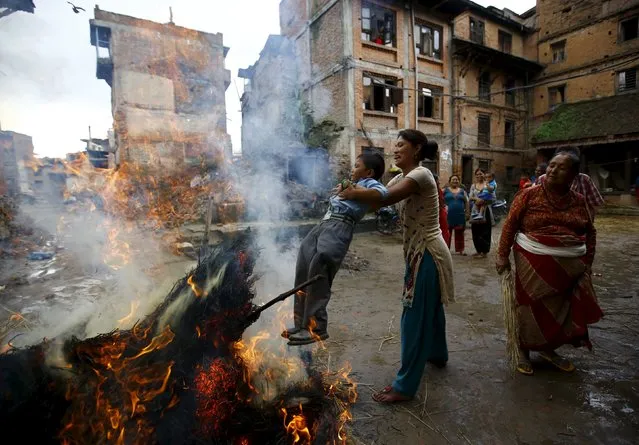
A woman swings a child around a fire, where an effigy of the demon Ghantakarna was burnt to symbolize the destruction of evil, during the Ghantakarna festival at the ancient city of Bhaktapur, Nepal August 12, 2015. (Photo by Navesh Chitrakar/Reuters)

A woman swings a child around a fire, where an effigy of the demon Ghantakarna was burnt to symbolize the destruction of evil, during the Ghantakarna festival at the ancient city of Bhaktapur, Nepal August 12, 2015. According to local folklore, the demon is believed to “steal” children and women from their homes and localities. (Photo by Navesh Chitrakar/Reuters)
Details
13 Aug 2015 11:48:00