Loading...
Done
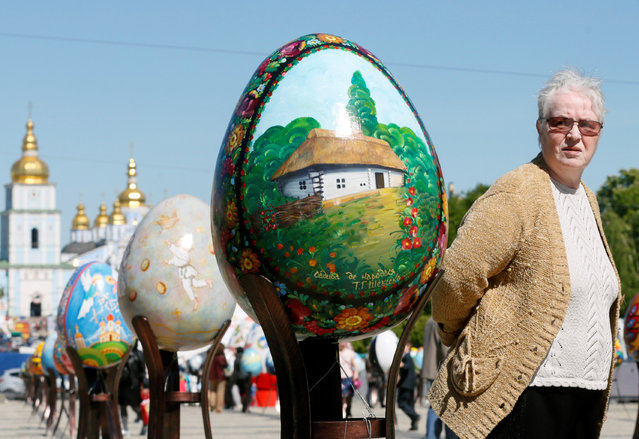
A woman looks at traditional Ukrainian Easter eggs “Pysanka”, installed as part of the upcoming celebrations of Easter, in central Kiev, Ukraine, April 29, 2016. A pysanka is a Ukrainian Easter egg, decorated with traditional Ukrainian folk designs using a wax-resist (batik) method. The word pysanka comes from the verb pysaty, “to write”, as the designs are not painted on, but written with beeswax. Many other eastern European ethnic groups decorate eggs using wax resist for Easter. These include the Belarusians, Bulgarians, Croats, Czechs, Hungarians, Lithuanians, Poles, Romanians, Serbs, Slovaks, Slovenes and Sorbs. (Photo by Valentyn Ogirenko/Reuters)

A woman looks at traditional Ukrainian Easter eggs “Pysanka”, installed as part of the upcoming celebrations of Easter, in central Kiev, Ukraine, April 29, 2016. A pysanka is a Ukrainian Easter egg, decorated with traditional Ukrainian folk designs using a wax-resist (batik) method. The word pysanka comes from the verb pysaty, “to write”, as the designs are not painted on, but written with beeswax. Many other eastern European ethnic groups decorate eggs using wax resist for Easter. These include the Belarusians, Bulgarians, Croats, Czechs, Hungarians, Lithuanians, Poles, Romanians, Serbs, Slovaks, Slovenes and Sorbs. (Photo by Valentyn Ogirenko/Reuters)
Details
30 Apr 2016 09:00:00
A young girl takes selfie with Easter rabbit sculpture during the Easter eggs (Pysanka) and rabbit exhibition in front of St. Sophia Cathedral in Kiev, Ukraine, 05 April 2018. Ukrainians will mark Orthodox Easter on 08 April 2018, according to Julian calendar. (Photo by Sergey Dolzhenko/EPA/EFE/Rex Features/Shutterstock)

A young girl takes selfie with Easter rabbit sculpture during the Easter eggs (Pysanka) and rabbit exhibition in front of St. Sophia Cathedral in Kiev, Ukraine, 05 April 2018. Ukrainians will mark Orthodox Easter on 08 April 2018, according to Julian calendar. (Photo by Sergey Dolzhenko/EPA/EFE/Rex Features/Shutterstock)
Details
10 Apr 2018 09:03:00
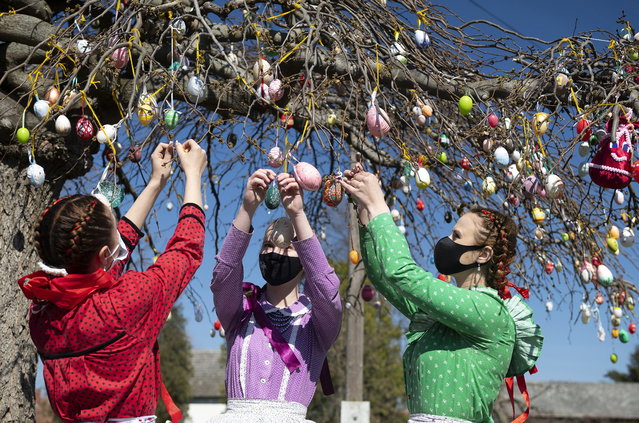
Dressed in folk costumes, young women decorate a tree with painted Easter eggs in Dombrad, Hungary, Monday, April 5, 2021. (Photo by Attila Balazs/MTI via AP Photo)

Dressed in folk costumes, young women decorate a tree with painted Easter eggs in Dombrad, Hungary, Monday, April 5, 2021. (Photo by Attila Balazs/MTI via AP Photo)
Details
06 Apr 2021 10:30:00
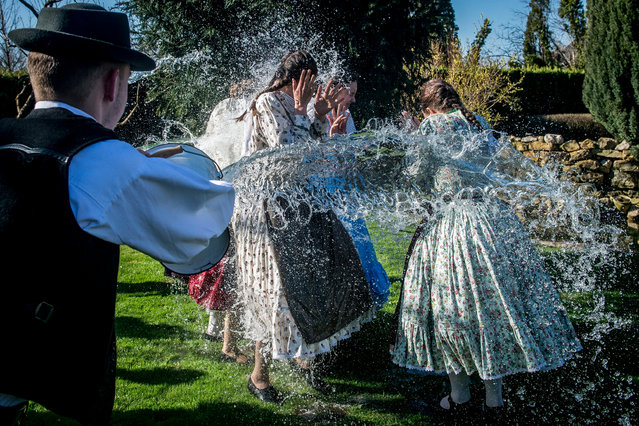
Members of the Mayossa Folk Dance Group pour water on young women in Kiskunmajsa, some 140 kms southeast of Budapest, Hungary, Monday, April 2, 2018. According to a several hundred years old tradition of Hungarian villages young men pour water on young women who in exchange present their sprinklers with beautifully colored eggs on Easter Monday. (Photo by Sandor Ujvari/MTI via AP Photo)

Members of the Mayossa Folk Dance Group pour water on young women in Kiskunmajsa, some 140 kms southeast of Budapest, Hungary, Monday, April 2, 2018. According to a several hundred years old tradition of Hungarian villages young men pour water on young women who in exchange present their sprinklers with beautifully colored eggs on Easter Monday. (Photo by Sandor Ujvari/MTI via AP Photo)
Details
03 Apr 2018 08:21:00
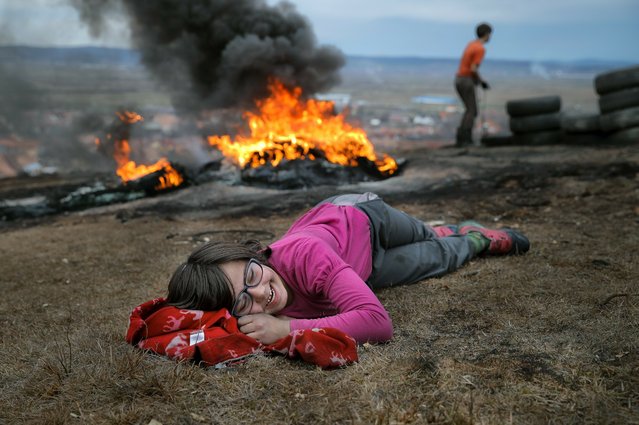
In this photo taken on Sunday, March 10, 2019, a little girl laughs during a ritual marking the upcoming Clean Monday, the beginning of the Great Lent, 40 days ahead of Orthodox Easter, on the hills surrounding the village of Poplaca, in central Romania's Transylvania region. Romanian villagers burn piles of used tires then spin them in the Transylvanian hills in a ritual they believe will ward off evil spirits as they begin a period of 40 days of abstention, when Orthodox Christians cut out meat, fish, eggs, and dairy. (Photo by Vadim Ghirda/AP Photo)

In this photo taken on Sunday, March 10, 2019, a little girl laughs during a ritual marking the upcoming Clean Monday, the beginning of the Great Lent, 40 days ahead of Orthodox Easter, on the hills surrounding the village of Poplaca, in central Romania's Transylvania region. Romanian villagers burn piles of used tires then spin them in the Transylvanian hills in a ritual they believe will ward off evil spirits as they begin a period of 40 days of abstention, when Orthodox Christians cut out meat, fish, eggs, and dairy. (Photo by Vadim Ghirda/AP Photo)
Details
01 Jun 2019 00:03:00
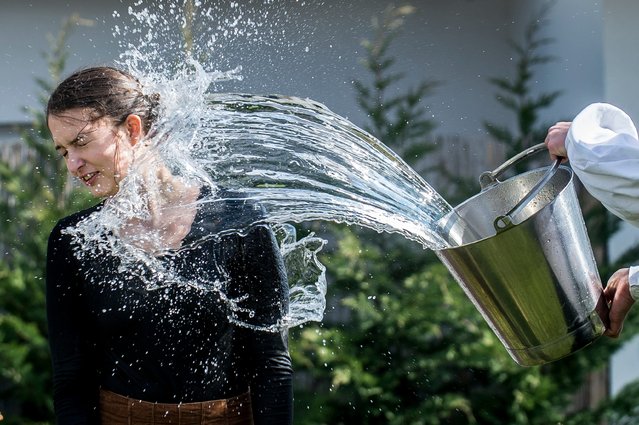
Members of the Mayossa folk dance group pour water on a young woman in Kiskunmajsa, Hungary on April 2, 2018. According to an old Hungarian tradition, celebrated for several hundred years, young men pour water on young women, who in exchange present their sprinklers with beautifully colored eggs on Easter Monday. (Photo by Sandor Ujvari/EPA/EFE/Rex Features/Shutterstock)

Members of the Mayossa folk dance group pour water on a young woman in Kiskunmajsa, Hungary on April 2, 2018. According to an old Hungarian tradition, celebrated for several hundred years, young men pour water on young women, who in exchange present their sprinklers with beautifully colored eggs on Easter Monday. (Photo by Sandor Ujvari/EPA/EFE/Rex Features/Shutterstock)
Details
08 Apr 2018 07:48:00
A woman adjusts the mirror of a retro tram KTM-1 (1948-1950) during the street exhibition “Retro Tram Parade” as part of marking the 125th anniversary of the city tramway service in Moscow, Russia on 13 July 2024. (Photo by Yuri Kochetkov/EPA/EFE)

A woman adjusts the mirror of a retro tram KTM-1 (1948-1950) during the street exhibition “Retro Tram Parade” as part of marking the 125th anniversary of the city tramway service in Moscow, Russia on 13 July 2024. (Photo by Yuri Kochetkov/EPA/EFE)
Details
29 Jul 2024 03:48:00
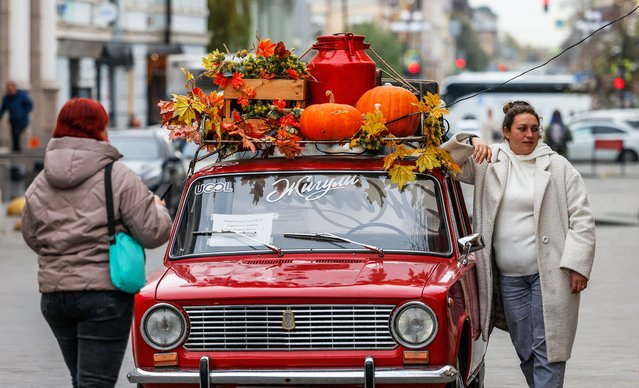
A woman poses with a retro VAZ 2101 car during the annual BRICS summit in Kazan, Russia on October 22, 2024. (Photo by Maxim Shemetov/Reuters)

A woman poses with a retro VAZ 2101 car during the annual BRICS summit in Kazan, Russia on October 22, 2024. (Photo by Maxim Shemetov/Reuters)
Details
27 Nov 2024 03:38:00