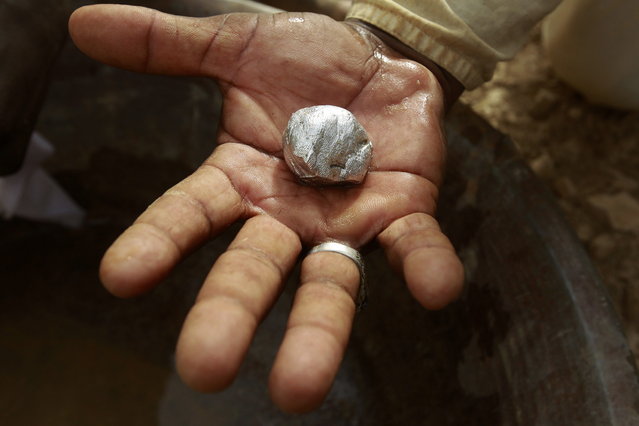
A gold mine worker displays gold in a local mine in Al-Ibedia locality at River Nile State, July 30, 2013. (Photo by Mohamed Nureldin Abdallah/Reuters)
This aerial image shows a gossan reservoir at the Riotinto mines in Minas de Riotinto, near of Huelva on September 30, 2022. Although the Rio Tinto Company began to exploit these mines in 1873, this mining site already supplied minerals to the ancient Greeks and Romans. (Photo by Jorge Guerrero/AFP Photo)
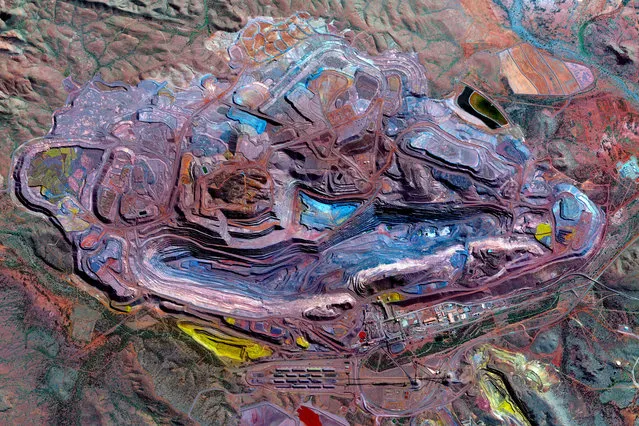
Mount Whaleback iron ore mine 23°21’32.3”S, 119°40’40.1”E. The Mount Whaleback Iron Ore Mine in the Pilbara region of Western Australia. Roughly 98% of the world’s mined iron ore is used to make steel and is thus a significant component in the construction of buildings, automobiles, and appliances such as refrigerators. (Photo by Daily Overview/DigitalGlobe, a Maxar Company)
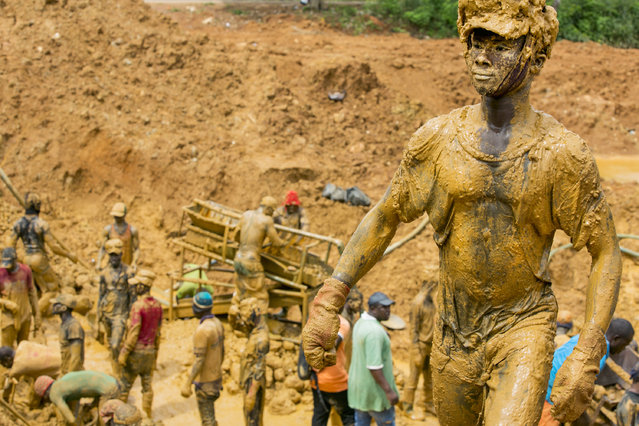
Miners work extremely long days under the hot sun and the hours are often longer in illegal mines in Ghana, West Africa, 2014. An Australian photographer has captured the harsh reality of illegal mining under the unforgiving sun with these Ghanaian miners. (Photo by Heidi Woodman/Barcroft Images)
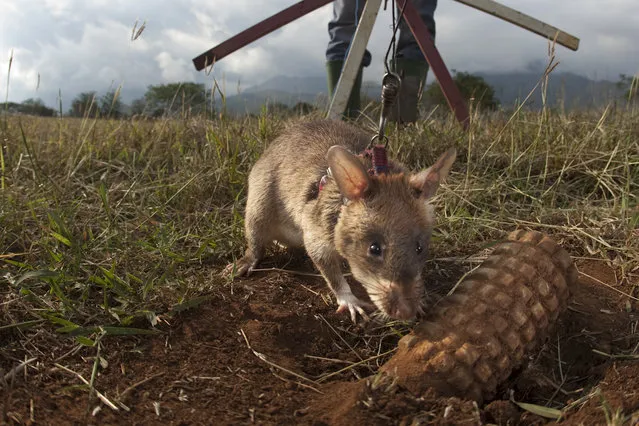
“APOPOs Training Center, situated on Sokoine Univeristy of Agriculture (SUA) in Tanzania, was established in 2000 to accommodate training and testing of mine detection rats in near-to-real conditions”. – APOPO
Photo: MDR (Mine Detection Rat) learn to look for mines. (Photo by APOPO's HeroRATs)
A worker walks through a salt pan on the eve of May Day or Labour Day on the outskirts of the southern Indian city of Chennai April 30, 2014. India is the third largest salt producing country in the world after China and U.S. with global annual production about 230 million tonnes, according to government data. (Photo by Reuters/Babu)
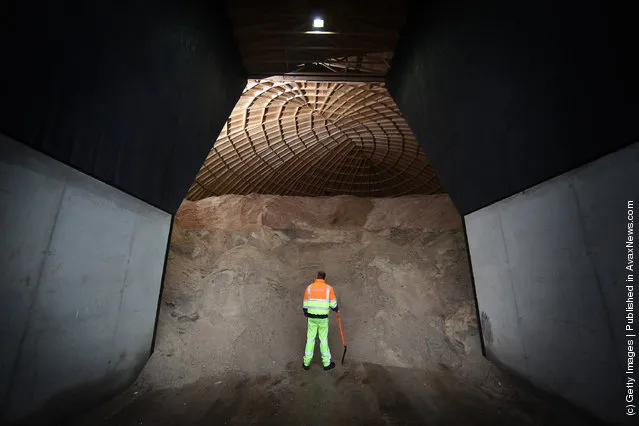
Route engineer Richard Winter stands in front of a pile of road salt at the Birchanger Depot on November 8, 2011 near Bishop's Stortford, England. (Photo by Peter Macdiarmid/Getty Images)