Loading...
Done
The Lun-class Ekranoplane was used by the Soviet Navy starting in 1987, and wasn't retired until the late 1990s, after the Soviet Union's fall. (Igor113)

“The Lun-class ekranoplan (NATO reporting name Duck) was a ground effect vehicle (GEV) designed by Rostislav Evgenievich Alexeev and used by the Soviet and Russian navies from 1987 until sometime in the late 1990s. It “flew” using the lift generated by the ground effect of its large wings when close to the surface of the water – about four metres or less. Although they might look similar and/or have related technical characteristics, ekranoplans like the Lun are not aircraft, seaplanes, hovercraft, or hydrofoils – ground effect is a separate technology altogether. The International Maritime Organization classifies these vehicles as maritime ships. The name Lun comes from the Russian for harrier”. – Wikipedia (Photo by Igor113)
Details
08 Aug 2014 10:51:00
16th Avenue Tiled Step Project

The 16th Avenue Tiled Steps project is a wonderful display of community effort and artistic vision. 163 steps are tiled with mosaic panels set into the risers which were designed by artists Aileen Barr and Colette Crutcher. Over 300 neighbors helped in the making of the panels with over 220 neighbors sponsoring handmade animal, bird, and fish name tiles which are imbedded within the mosaics. KZ Tile, a major San Franciscan tile-setting company generously agreed to set the mosaic panels into the risers and to tile the step treads with rough, nonslip tile.
Details
03 Nov 2012 13:14:00
TSA, New Automated Target Recognition software

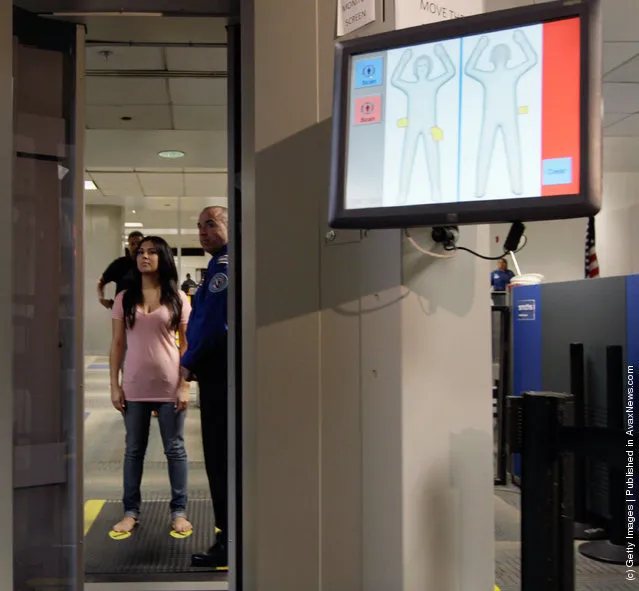
A screen shows the new Automated Target Recognition software as a TSA employee, who couldn't provide her name, waits to walk into the advanced imaging technology unit to demostrate the new software that has been installed at Miami International Airport on August 23, 2011 in Miami, Florida. The new software is designed to enhance passenger privacy by eliminating passenger-specific images and instead auto-detecting potential threat items and indicating their location on a screen which shows a generic outline of a person. (Photo by Joe Raedle/Getty Images)
Details
24 Aug 2011 09:58:00
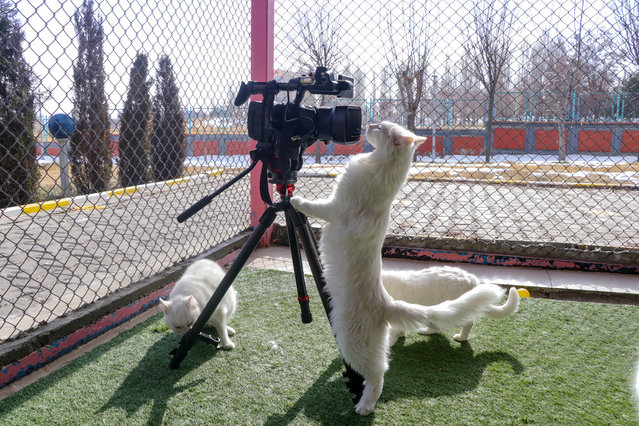
Van cats, relatively large, have a chalky white coat, sometimes with ruddy coloration on the head and hindquarters, and have blue or amber eyes or have heterochromia, are seen at “Cat Villa”, established to protect the cats in Van, Turkey on January 20, 2021. Internationally valid “health certificate” is prepared for Van cats, visited by local and foreign tourists, within a project to protect their generations and increasing their numbers. Health certificates with information such as name, breed, gender, eye color, date of birth, tail feature, color, hearing status and identity are given to people who want to adopt cats. (Photo by Mesut Varol/Anadolu Agency via Getty Images)

Van cats, relatively large, have a chalky white coat, sometimes with ruddy coloration on the head and hindquarters, and have blue or amber eyes or have heterochromia, are seen at “Cat Villa”, established to protect the cats in Van, Turkey on January 20, 2021. Internationally valid “health certificate” is prepared for Van cats, visited by local and foreign tourists, within a project to protect their generations and increasing their numbers. Health certificates with information such as name, breed, gender, eye color, date of birth, tail feature, color, hearing status and identity are given to people who want to adopt cats. (Photo by Mesut Varol/Anadolu Agency via Getty Images)
Details
29 Jan 2021 09:43:00
North Korean leader Kim Jong Il inspects a military unit in North Korea

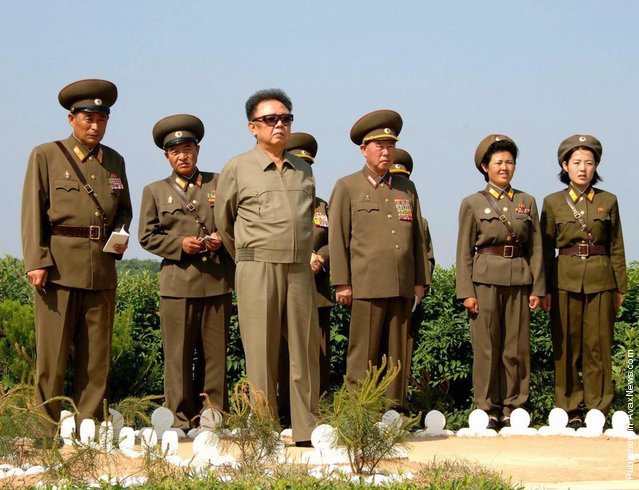
“Kim Jong-il, also written as Kim Jong Il, birth name Yuri Irsenovich Kim (according to Soviet records) (16 February 1941/2 – 17 December 2011), was the supreme Leader of the Democratic People's Republic of Korea (North Korea). He was the General Secretary of the Workers' Party of Korea, the ruling party since 1948, Chairman of the the National Defence Commission of North Korea, and the Supreme Commander of the Korean People's Army, the fourth-largest standing army in the world”. – Wikipedia

Photo: North Korean leader Kim Jong Il inspects a military unit in North Korea. (Photo by Korean Central Television/Yonhap)
Details
19 Dec 2011 10:38:00


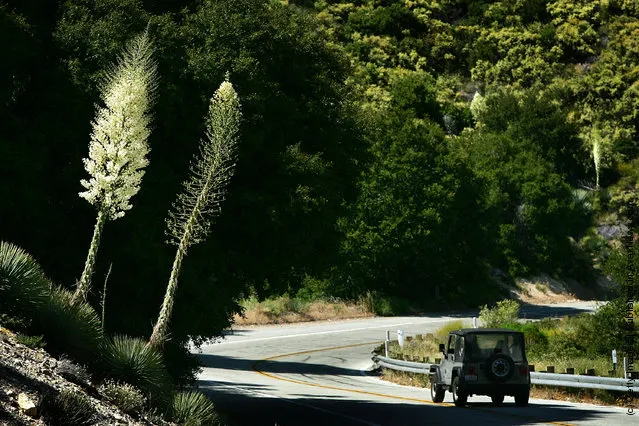
“Yucca is a genus of perennial shrubs and trees in the agave family, Agavaceae. Its 40-50 species are notable for their rosettes of evergreen, tough, sword-shaped leaves and large terminal panicles of white or whitish flowers. They are native to the hot and dry (arid) parts of North America, Central America, South America, and the Caribbean. Early reports of the species were confused with the cassava (Manihot esculenta). Consequently, Linnaeus mistakenly derived the generic name from the Carib word for the latter, yuca. It is also colloquially known in the midwest United States as “Ghosts in the graveyard”, as it is commonly found growing in rural graveyards and when in bloom the flowers appear as an apparition floating.” – Wikipedia

Photo: A yucca standing among flowers bursts forth a very large stalk of flowers as a heavy wildflower bloom on June 21, 2005 in the Angeles National Forest northwest of La Canada, California. (Photo by David McNew/Getty Images)
Details
29 Mar 2011 07:31:00


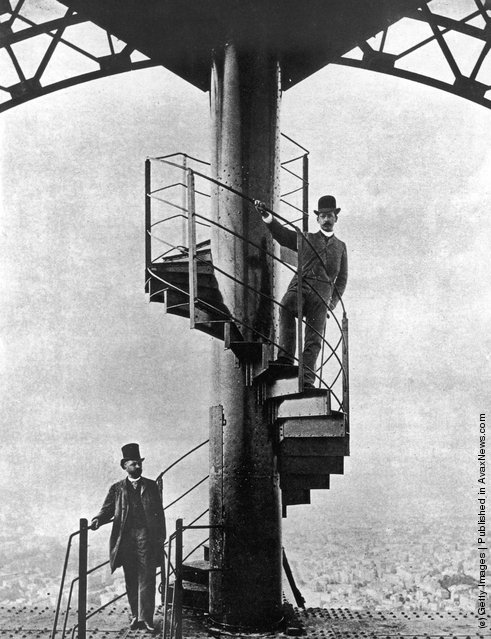
“The Eiffel Tower (French: La Tour Eiffel, nickname La dame de fer, the iron lady) is a puddle iron lattice tower located on the Champ de Mars in Paris. Built in 1889, it has become both a global icon of France and one of the most recognizable structures in the world. The tower is the tallest building in Paris and the most-visited paid monument in the world. Named for its designer, engineer Gustave Eiffel, the tower was built as the entrance arch to the 1889 World's Fair. The tower stands 324 metres (1,063 ft) tall, about the same height as an 81-storey building”. – Wikipedia

Photo: French engineer Alexandre Gustave Eiffel (1832–1923), left, poses high on the steps of the completed Eiffel Tower, which he designed for the 1889 Paris Exposition. (Photo by General Photographic Agency/Getty Images)
Details
08 May 2011 09:56:00


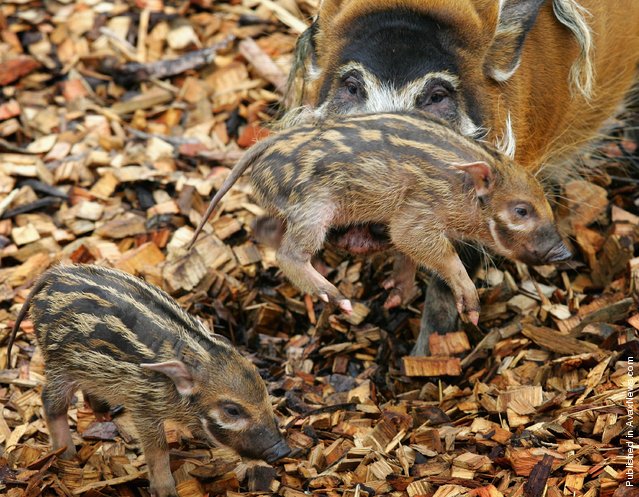
“The Red River Hog (Potamochoerus porcus), also known as the Bush Pig (but not to be confused with P. larvatus, common name “Bushpig”), is a wild member of the pig family living in Africa, with most of its distribution in the Guinean and Congolian forests. It is rarely seen away from rainforests, and generally prefers areas near rivers or swamps.

Red River Hogs eat grass, berries, roots, insects, molluscs, small vertebrates and carrion. They are capable of causing damage to plantations. Red River Hogs typically live in herds of 6-20 members led by a dominant boar. Sows rear 3-6 piglets at a time.”

Photo: Two 17 day old red river hoglet twins forage for food next to their mother Bahiti at London Zoo on August 23, 2007 in London, England. Red River hoglets inhabit the forests and swamps of West and Central Africa. The recent additions to the London Zoo pig pen have been eagerly awaited by zoo keepers. (Photo by Chris Jackson/Getty Images)
Details
18 Mar 2011 15:15:00