Loading...
Done


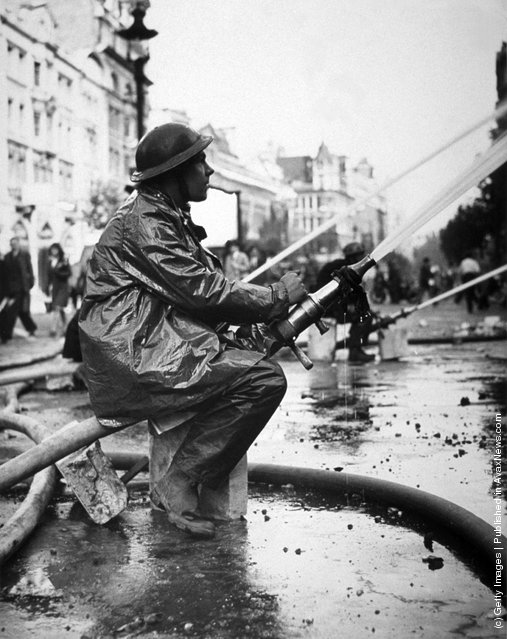
“The Blitz (from German, “Lightning”) was the sustained strategic bombing of Britain by Nazi Germany between 7 September 1940 and 10 May 1941, during the Second World War. The city of London was bombed by the Luftwaffe for 76 consecutive nights and many towns and cities across the country followed. More than one million London houses were destroyed or damaged, and more than 40,000 civilians were killed, half of them in London”. – Wikipedia

Photo: A fireman attempts to check the flames from a gas explosion, after an air raid in Central London the previous night. (Photo by Central Press/Getty Images). 1940
Details
21 Jun 2011 12:08:00
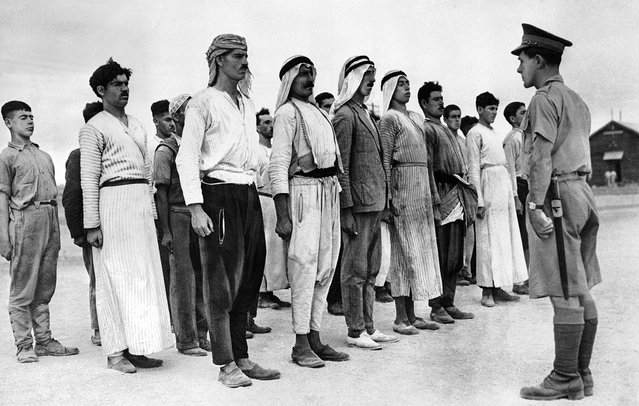
These Arab recruits line up in a barracks square in the British Mandate of Palestine, on December 28, 1940, for their first drill under a British solider. Some 6,000 Palestinian Arabs signed up with the British Army during the course of World War II

These Arab recruits line up in a barracks square in the British Mandate of Palestine, on December 28, 1940, for their first drill under a British solider. Some 6,000 Palestinian Arabs signed up with the British Army during the course of World War II. (AP Photo)
Details
06 May 2012 11:15:00
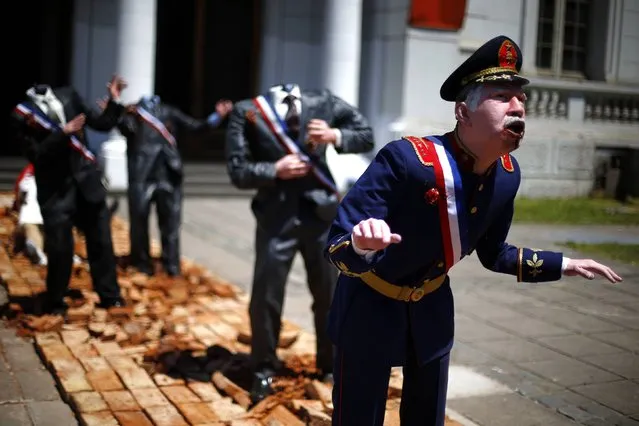
A sculptural artwork depicting former Chilean dictator Augusto Pinochet and headless presidents shot by a hooded high school student (not pictured) is seen at the Contemporary Art Museum in Santiago, December 2, 2014. (Photo by Ivan Alvarado/Reuters)

A sculptural artwork depicting former Chilean dictator Augusto Pinochet and headless presidents shot by a hooded high school student (not pictured) is seen at the Contemporary Art Museum in Santiago, December 2, 2014. The artwork, part of the “El ladrillo angular” (The angular brick) exhibition, portrays a student fighting against the ongoing continuity of dictatorship because of a political and economic system which has been impossible to destroy, according to “Papas Fritas” the artwork's creator. (Photo by Ivan Alvarado/Reuters)
Details
03 Dec 2014 14:45:00
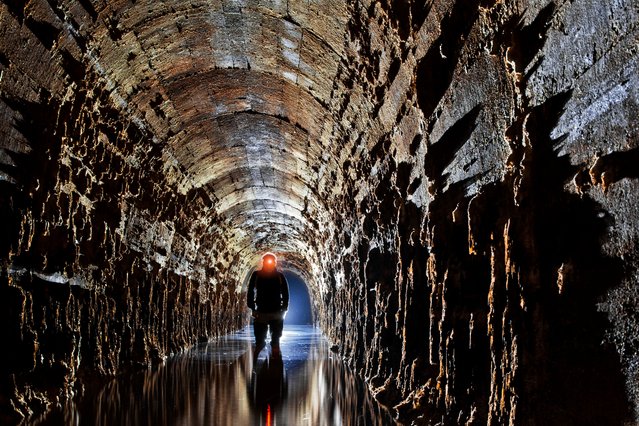
Regenwurmlager, Poland. The Regenwurmlager is an extensive underground fortification area constructed by Germany in 1920s-1940s, now in western Poland, near the city of Międzyrzecz. (Photo by Anna Arinova/Caters News)

Stunning silhouettes under European cities reveal the size and splendor of the continent’s urban foundations. Photographer and content-manager Anna Arinova, 28, from Moscow, captured the awe-inspiring labyrinths in Russia and Germany. Here: Regenwurmlager, Poland. The Regenwurmlager is an extensive underground fortification area constructed by Germany in 1920s-1940s, now in western Poland, near the city of Międzyrzecz. (Photo by Anna Arinova/Caters News)
Details
29 Dec 2016 07:53:00
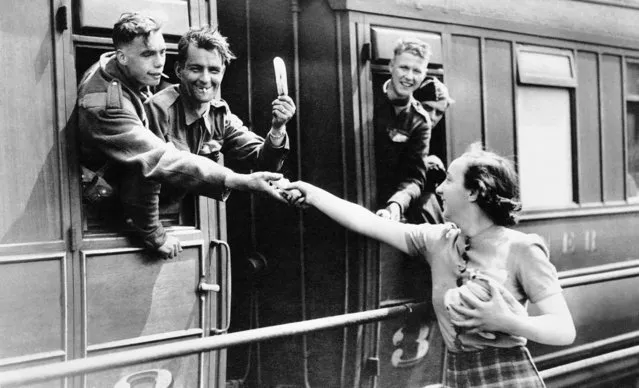
British troops arriving in England on June 6, 1940 after fleeing Flanders received all kinds of fruit and food from women who passed it out to them as they halted in railroad stations. A soldier holds aloft a banana he received from the woman. (Photo by AP Photo)

British troops arriving in England on June 6, 1940 after fleeing Flanders received all kinds of fruit and food from women who passed it out to them as they halted in railroad stations. A soldier holds aloft a banana he received from the woman. (Photo by AP Photo)
Details
05 Aug 2017 08:29:00


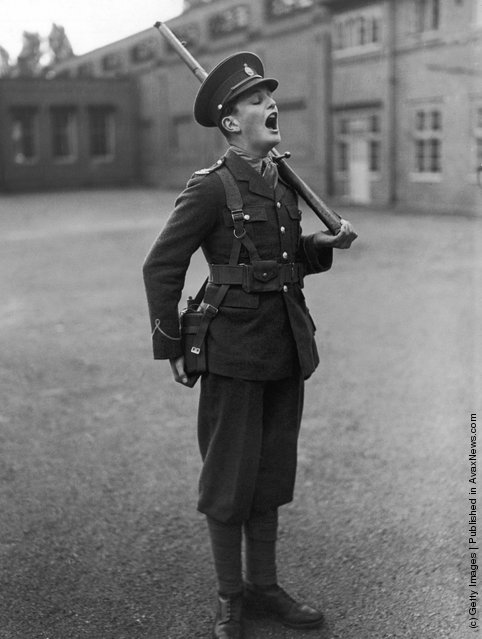
A member of the Eton public school O.T.C. (Officers Training Corps) practising shouting out orders during a training session, 20th January 1940. (Photo by Hulton Archive/Getty Images)
Details
04 Jun 2011 06:46:00
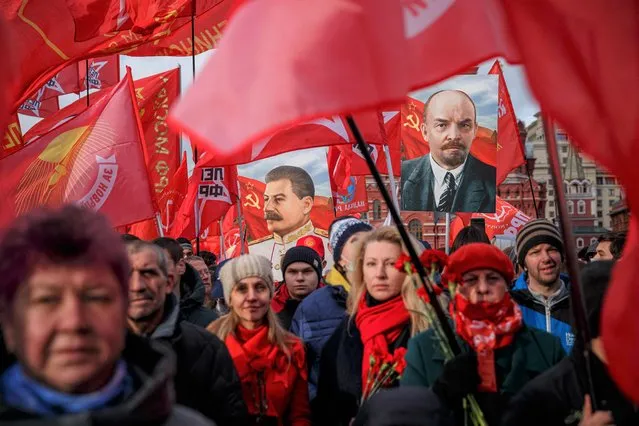
Russian Communist party activists and supporters carry portraits of Soviet founder Vladimir Lenin (R) and Soviet dictator Josef Stalin (L) as they attend a flowers-laying ceremony at the Lenin's Mausoleum on Red Square in downtown Moscow on November 7, 2021, marking the 104th anniversary of the Bolshevik Revolution also known as the October Revolution. (Photo by Dimitar Dilkoff/AFP Photo)

Russian Communist party activists and supporters carry portraits of Soviet founder Vladimir Lenin (R) and Soviet dictator Josef Stalin (L) as they attend a flowers-laying ceremony at the Lenin's Mausoleum on Red Square in downtown Moscow on November 7, 2021, marking the 104th anniversary of the Bolshevik Revolution also known as the October Revolution. (Photo by Dimitar Dilkoff/AFP Photo)
Details
18 Nov 2021 08:34:00
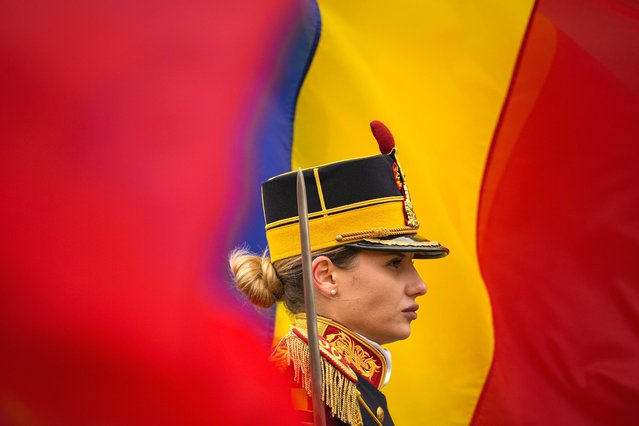
A honor guard soldier stands at attention during a memorial religious service for those killed in the 1989 anti-communist uprising in University Square, in Bucharest, Romania, Wednesday, December 21, 2022. Participants and relatives of those killed marked the 33rd anniversary of the anti-communist uprising which started in Bucharest on Dec. 21, 1989 and left more than one thousand people dead and ended the rule of dictator Nicolae Ceausescu. (Photo by Andreea Alexandru/AP Photo)

A honor guard soldier stands at attention during a memorial religious service for those killed in the 1989 anti-communist uprising in University Square, in Bucharest, Romania, Wednesday, December 21, 2022. Participants and relatives of those killed marked the 33rd anniversary of the anti-communist uprising which started in Bucharest on Dec. 21, 1989 and left more than one thousand people dead and ended the rule of dictator Nicolae Ceausescu. (Photo by Andreea Alexandru/AP Photo)
Details
22 Dec 2022 22:33:00