Loading...
Done
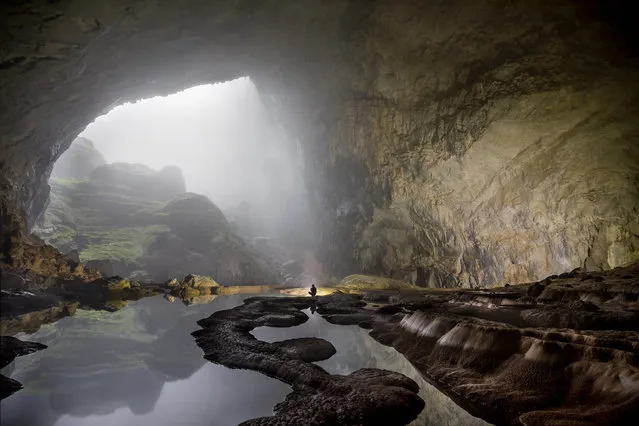
Vietnam’s Son Doong cave, the largest in the world, could hold a 40-story skyscraper inside. The pristine ecosystem has its own river and jungle. Despite its size, Son Doong wasn’t discovered until 1991. It was lost again for nearly two decades and was fully explored for the first time in 2009. (Photo by Jason Speth/HuffPost)

Vietnam’s Son Doong cave, the largest in the world, could hold a 40-story skyscraper inside. The pristine ecosystem has its own river and jungle. Despite its size, Son Doong wasn’t discovered until 1991. It was lost again for nearly two decades and was fully explored for the first time in 2009. (Photo by Jason Speth/HuffPost)
Details
27 Mar 2017 08:37:00
Anamorphic Art By Jonty Hurwitz

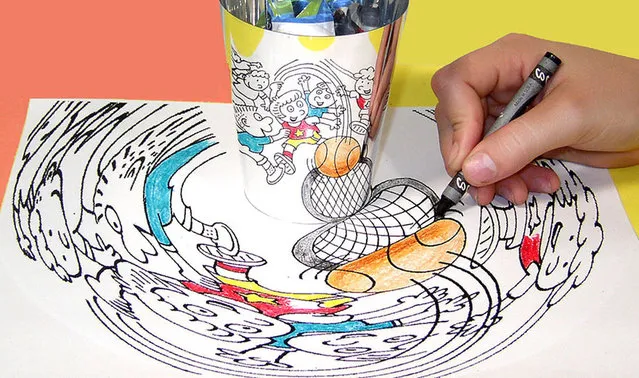
The truth can never be seen right away. Only by looking from a certain angle can we view the true nature of things. At other times, only with the help of some special object can we discern order in chaos. Anamorphosis is a form of art that allows us to see an object only by viewing it from a certain angle or by using cylindrical or conical mirror. Unsurprisingly, the first person in history to ever use this type of technique was the Leonardo Da Vinci. During late Renaissance period this technique was popularized as a children’s toy. Now, however, few people use this form of imagery due to its intricacy. Istvan Orosz, born in 1951, is one of the few people who specialize in anamorphosis. In our opinion, his most stunning piece of art is the one where a shipwreck scene turns into a portrait when viewed through a cylindrical mirror. (Photo by Jonty Hurwitz)

Details
05 Jan 2015 13:07:00
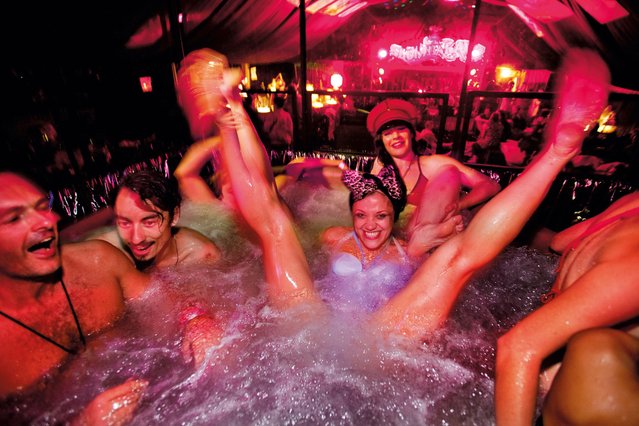
Spa in Slumbarave’s Hotel Metropolis, Shangri-La, Glastonbury, 2009. (Photo by Barry Lewis/The Guardian)

Award-winning photographer Barry Lewis has been picturing the weird and wonderful late-night Glastonbury experience for more than a decade. Shangri-La is a festival of contemporary performing arts held each year at Glastonbury festival, and Barry Lewis has documented its denizens. Here: Spa in Slumbarave’s Hotel Metropolis, Shangri-La, Glastonbury, 2009. (Photo by Barry Lewis/The Guardian)
Details
20 Jun 2017 07:08:00


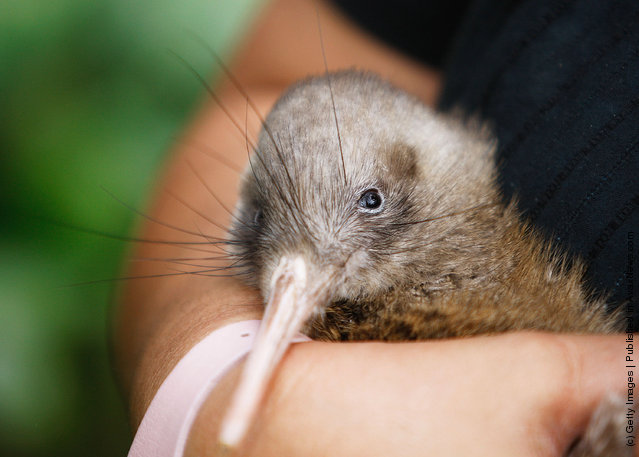
One of ten little spotted kiwi is released on Motuihe Island, a conservation pest-free island close to Auckland, on March 21, 2009 in Auckland, New Zealand. Eventually up to 40 endangered kiwi birds will be relocated to the island. (Photo by Hannah Johnston/Getty Images)
Details
03 Apr 2011 15:13:00


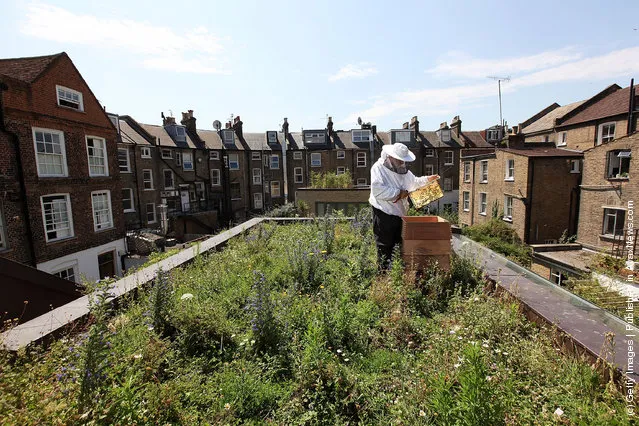
Beekeeper and Chairman of The London Beekeepers Association John Chapple installs a new bee hive on an urban rooftop garden in Hackney on July 1, 2009 in London, England. (Photo by Dan Kitwood/Getty Images)
Details
28 May 2011 08:21:00


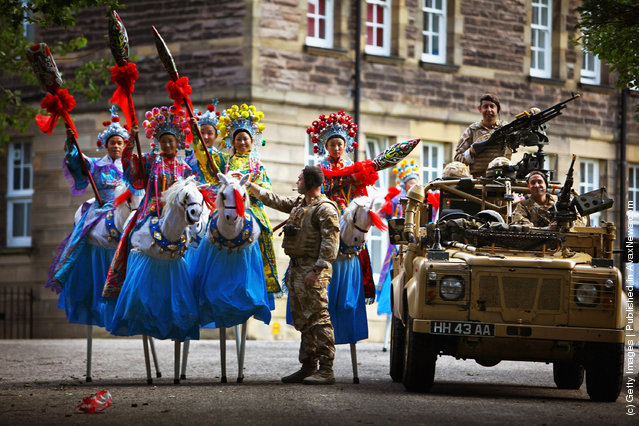
Entertainers from the She Huo cultural troupe rehearse for the Edinburgh Military Tattoo at Redford barracks on August 5, 2009 in Edinburgh, Scotland. (Photo by Jeff J Mitchell/Getty Images)
Details
12 Jun 2011 10:24:00
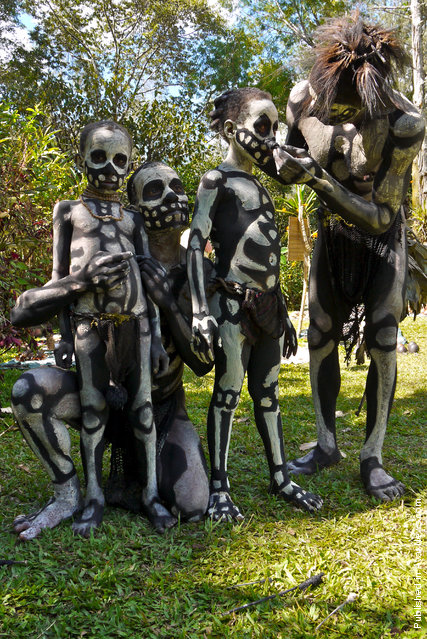
Chimbu Tribe And The Skeleton Body Painting

Skeleton bodypainting in Chimbu tribe. Village Mindima, Simbu (a Highlands Region province in Papua New Guinea), September 14, 2009. (Photo by Rita Willaert; Source: Flickr)
Details
26 Apr 2012 13:39:00
Magical Contamination By Antoine Bridier-Nahmias

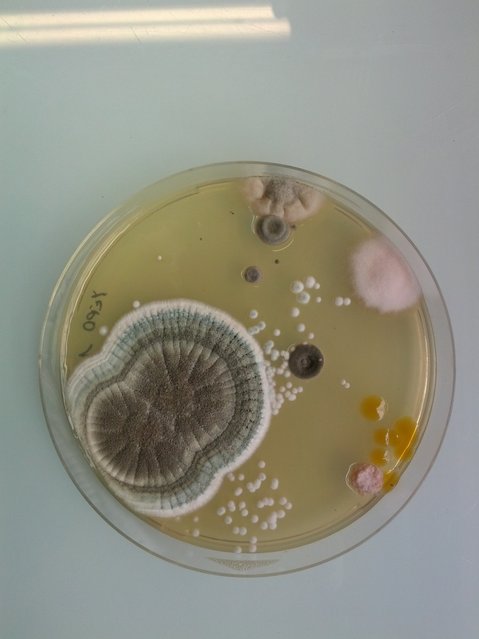
Modern art is truly fascinating. Not in a way that it produces some novel things that will fascinate future generations for decades and even centuries to come. No, that is very far from the truth. On the contrary, modern art is essentially anything (yes, any little thing) that is a bit unusual and was created by a famous person. Let’s take the creation of Antoine Bridier-Nahmias for example. His brainchild is a set of pictures of petri dishes that were contaminated by various cultures of fungi. If this is art, I missed my chance of becoming famous when I accidentally left a piece of bread in a bag in a cupboard for about six months, and didn’t take a picture of the rather shocking results that awaited me when I finally discovered it. (Photo by Antoine Bridier-Nahmias)
Details
12 Dec 2014 13:03:00