Loading...
Done
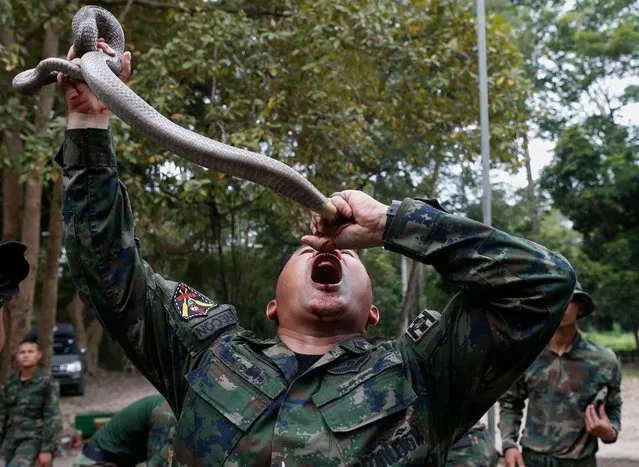
A Thai Marine instructor drinks a cobra's raw blood after killing it as he gives instruction to US Marines and South Korean Marines during jungle survival training as part of the multinational joint military exercise Cobra Gold 2018 at a Force Reconnaissance Battalion camp in the Royal Thai Naval Base, Sattahip district, Chonburi province, Thailand, 19 February 2018. (Photo by Rungroj Yongrit/EPA/EFE)

A Thai Marine instructor drinks a cobra's raw blood after killing it as he gives instruction to US Marines and South Korean Marines during jungle survival training as part of the multinational joint military exercise Cobra Gold 2018 at a Force Reconnaissance Battalion camp in the Royal Thai Naval Base, Sattahip district, Chonburi province, Thailand, 19 February 2018. (Photo by Rungroj Yongrit/EPA/EFE)
Details
21 Feb 2018 00:01:00
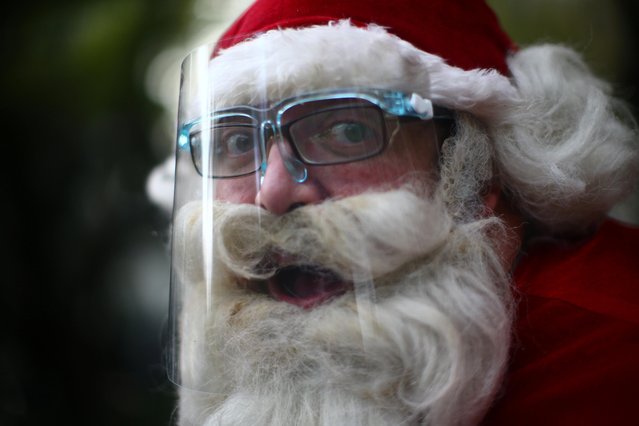
Alejandro Zelayaran, 43, dressed as Santa Claus, wears a protective face shield as he poses for a photograph on a street in Mexico City, Mexico, December 3, 2020. “Faith and hope must move the heart of the humanity”, said Zelayaran, who will don a face shield when he distributes dolls and other gifts at an orphanage in Mexico City. “I want to see families taking care of each other and knowing that even from afar, love and hope always survive”. (Photo by Edgard Garrido/Reuters)

Alejandro Zelayaran, 43, dressed as Santa Claus, wears a protective face shield as he poses for a photograph on a street in Mexico City, Mexico, December 3, 2020. “Faith and hope must move the heart of the humanity”, said Zelayaran, who will don a face shield when he distributes dolls and other gifts at an orphanage in Mexico City. “I want to see families taking care of each other and knowing that even from afar, love and hope always survive”. (Photo by Edgard Garrido/Reuters)
Details
28 Feb 2021 09:51:00
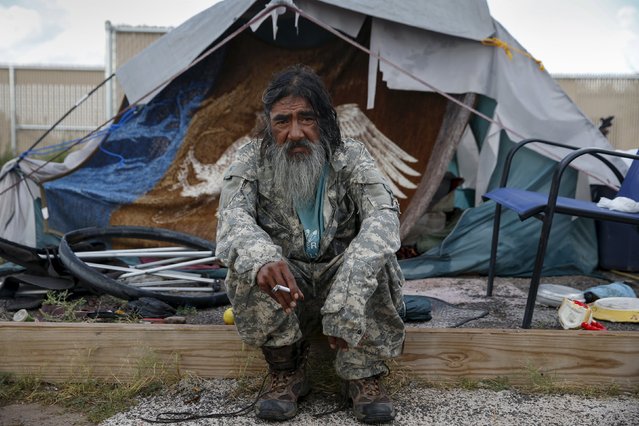
Daniel J. Wabsey, a 58-year-old war veteran, sits outside his tent at Camp Hope in Las Cruces, New Mexico October 6, 2015. “I've been traveling for 35 or 38 years. Getting inside would take a while to get used to. I just want to be able to eat, sleep and be safe. We all get along and understand in Camp Hope. We've all been there. With common sense you can survive out here”, Wabsey said. Camp Hope describe themselves as an “alternative transitional living project for the homeless”. Around 50 people live at the camp. (Photo by Shannon Stapleton/Reuters)

Daniel J. Wabsey, a 58-year-old war veteran, sits outside his tent at Camp Hope in Las Cruces, New Mexico October 6, 2015. “I've been traveling for 35 or 38 years. Getting inside would take a while to get used to. I just want to be able to eat, sleep and be safe. We all get along and understand in Camp Hope. We've all been there. With common sense you can survive out here”, Wabsey said. Camp Hope describe themselves as an “alternative transitional living project for the homeless”. Around 50 people live at the camp. (Photo by Shannon Stapleton/Reuters)
Details
19 Dec 2015 08:05:00
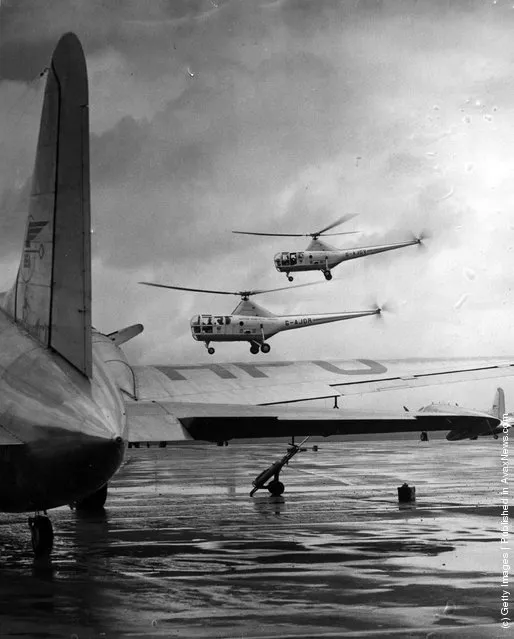
Sikorsky H-5 helicopters

“Igor Sikorsky (May 25, 1889 – October 26, 1972), born Igor Ivanovich Sikorsky was a Russian American pioneer of aviation in both helicopters and fixed-wing aircraft. He designed and flew the world's first multi-engine fixed-wing aircraft, the Russky Vityaz in 1913, and the first airliner, Ilya Muromets, in 1914. After immigrating to the United States in 1919, Sikorsky founded the Sikorsky Aircraft Corporation in 1923, and developed the first of Pan American Airways' ocean-conquering flying boats in the 1930s. In 1939 Sikorsky designed and flew the Vought-Sikorsky VS-300, the first viable American helicopter, which pioneered the rotor configuration used by most helicopters today. Sikorsky would modify the design into the Sikorsky R-4, which became the world's first mass-produced helicopter in 1942”. – Wikipedia

Photo: Westland Sikorsky H-5's, used by British European Airways Helicopters, which fly between London and Birmingham. The Sikorsky H-5, (aka R-5, S-51, HO3S-1, or Horse) (R-5 until 1948; company designation VS-327) is a helicopter built by Sikorsky Aircraft Corporation, formerly used by the United States Air Force, and its predecessor, the United States Army Air Forces, as well as the United States Navy and United States Coast Guard (with the designations HO2S and HO3S). (Photo by Harrison /Topical Press Agency/Getty Images). 22nd May 1951

Details
06 Sep 2011 10:18:00
Of all the species affected by river regulation in Australia, the ibis is one of the few that has changed its behaviour and moved to coastal cities. (Photo by Rick Stevens/The Guardian)

Tip turkey, dumpster chook, rubbish raptor – the Australian white ibis goes by many unflattering names. But it is a true urban success story, scavenging to survive in cities across Australia as wetlands have been lost. Wildlife photographer Rick Stevens captured them in Sydney. Here: Of all the species affected by river regulation in Australia, the ibis is one of the few that has changed its behaviour and moved to coastal cities. (Photo by Rick Stevens/The Guardian)
Details
11 Apr 2018 00:03:00
How swimming, and lots of love, saved Harper the puppy’s life

On August 31, 2011, a puppy was rescued from a garbage bag in Central Florida. She was afflicted by a condition dubbed “swimmer puppy syndrome”, formally, pectus excavatum. It's rare in puppies, but when it happens it causes them to lie flat on their chests with their legs perpetually splayed out. It's usually a symptom of serious neurological problems that most puppies cannot survive. Veterinarians recommended putting her to sleep... (Photo by Flyin Fur Pet Photography)
Details
23 Jun 2012 09:10:00
Maori  People New Zealand

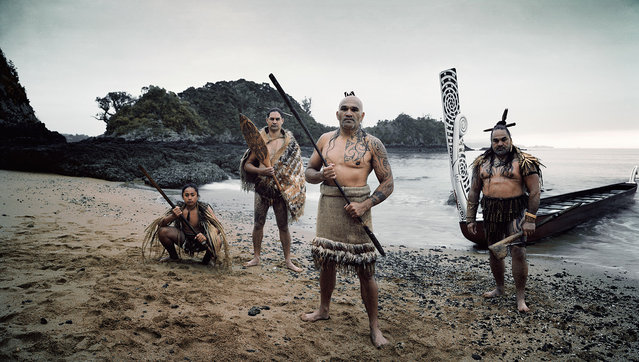
The long and intriguing story of the origine of the indigenous Maori people can be traced back to the 13th century, the mythical homeland Hawaiki, Eastern Polynesia. Due to centuries of isolation, the Maori established a distinct society with characteristic art, a separate language and unique mythology. Defining aspects of Maori traditional culture include art, dance, legends, tattoos and community. While the arrival of European colonists in the 18th centure had a profound impact on the Maori way of life, many aspects of traditional society have survived into the 21th century.
Details
11 Mar 2014 14:40:00
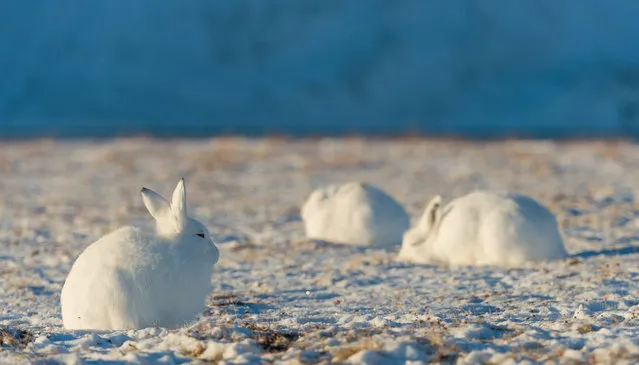
Arctic Hare

The arctic hare, or polar rabbit, is a species of hare which is adapted largely to polar and mountainous habitats. The arctic hare survives with a thick coat of fur and usually digs holes in the ground or under snow to keep warm and sleep. Arctic hares look like rabbits but have shorter ears, are taller when standing, and, unlike rabbits, can thrive in cold climates. They can travel together with many other hares, sometimes huddling with dozens or more, but are usually found alone, taking, in some cases, more than one partner. The arctic hare can run up to 60 kilometres per hour (40 mph). Its predators include the arctic wolf, arctic fox, and ermine.
Details
17 Mar 2014 13:56:00