Loading...
Done
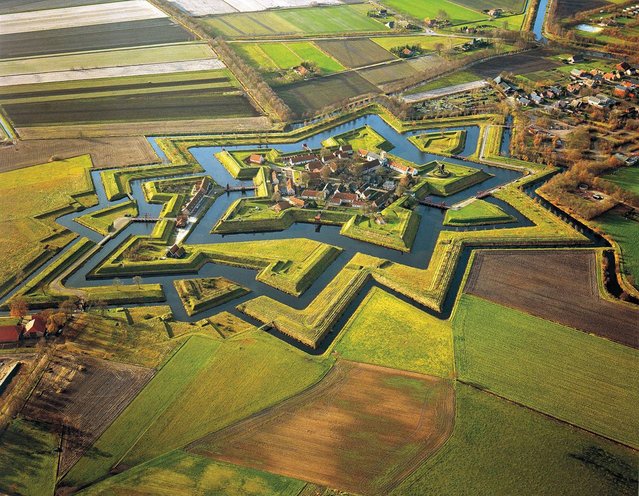
Fort Bourtange In Netherlands

Fort Bourtange is a star fort located in the village of Bourtange, Groningen, Netherlands. It was built in 1593 under the orders of William the Silent. Its original purpose was to control the only road between Germany and the city of Groningen, which was controlled by the Spaniards during the time of the Eighty Years' War.
Details
18 Jun 2014 10:41:00
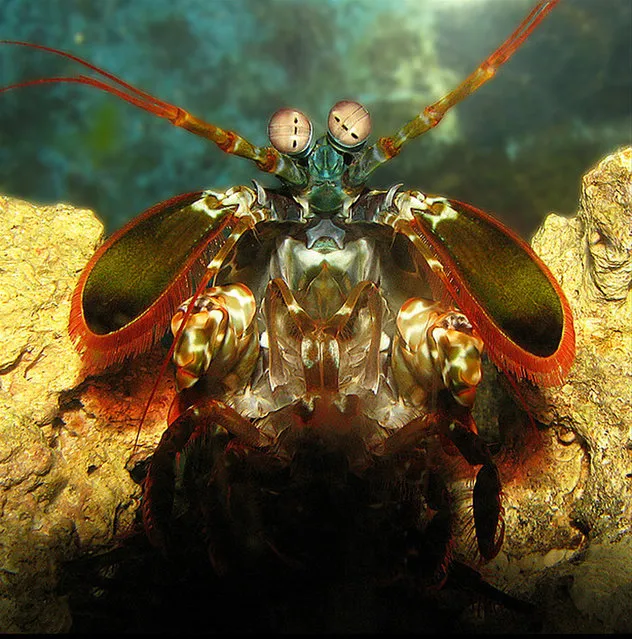
Peacock Mantis Shrimp

Odontodactylus scyllarus, known as the peacock mantis shrimp, harlequin mantis shrimp or painted mantis shrimp, is a large mantis shrimp native to the Indo-Pacific from Guam to East Africa.

Details
22 Jan 2013 12:29:00
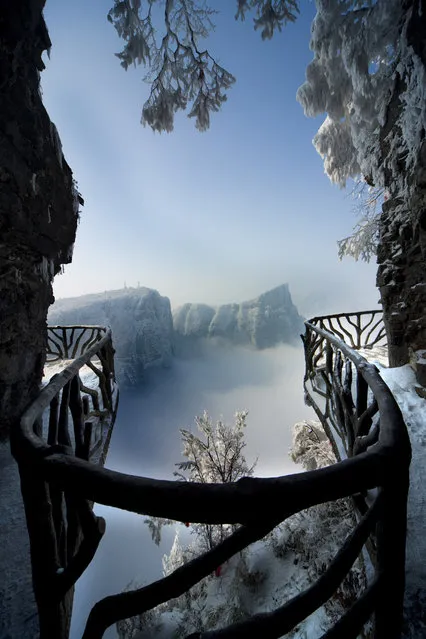
Tianmen Mountain

Tianmen Mountain (Chinese: 天门山; pinyin: Tiānmén Shān) is a mountain located within Tianmen Mountain National Park, Zhangjiajie, in northwestern Hunan Province, China.
Details
03 Mar 2013 11:09:00
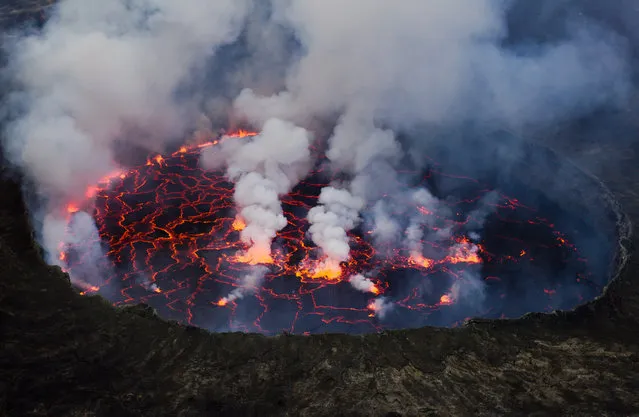
Nyiragongo Crater

Mount Nyiragongo is an active stratovolcano On the Virunga Mountains associated with the Albertine Rift. It is located inside Virunga National Park, in the Democratic Republic of the Congo, about 20 km (12 mi) north of the town of Goma and Lake Kivu and just west of the border with Rwanda. The main crater is about two km wide and usually contains a lava lake.
Details
08 Aug 2013 12:38:00
A model presents a creation of Peruvian designer Ani Alvarez Calderon during Fashion Week in Lima, Peru, April 25, 2017. (Photo by Guadalupe Pardo/Reuters)

A model presents a creation of Peruvian designer Ani Alvarez Calderon during Fashion Week in Lima, Peru, April 25, 2017. (Photo by Guadalupe Pardo/Reuters)
Details
01 May 2017 09:47:00
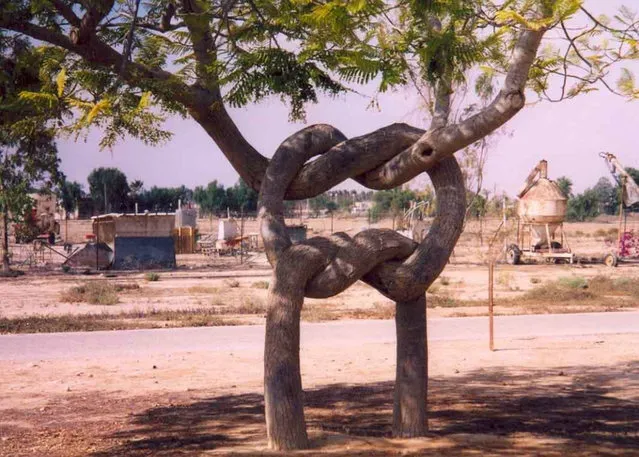
The Weird Shaped Trees Of Axel Erlandson

Axel Erlandson (December 15, 1884 – April 28, 1964) was a Swedish American farmer who shaped trees as a hobby, and opened a horticultural attraction in 1947 advertised as "See the World's Strangest Trees Here," and named "The Tree Circus."
The trees appeared in the column of Robert Ripley's Believe It or Not! twelve times. Erlandson sold his attraction shortly before his death. The trees were moved to Gilroy Gardens in 1985.
Details
20 Sep 2013 11:38:00
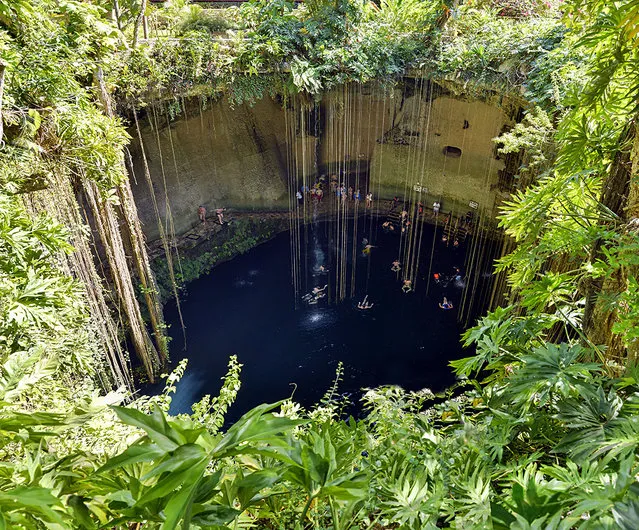
Cenote In Mexico

A cenote is a natural phenomenon, a sinkhole in the Earth’s surface. The Yucatan Peninsula in Mexico has an estimated 7,000 cenotes because it is primarily made up of porous limestone. For millions of years, rainfall slowly ate away at the limestone and a huge system of underground caves and caverns was formed. Many filled with water from rain or from the underground water table. When the roof of a water filled cave collapses, a cenote is born. The water found in a cenote may be fresh water, salt water, or both. Structurally it may be completely open, like a lake, almost completely closed with just a small opening at the top, or somewhere in between.
Details
06 Oct 2013 09:45:00
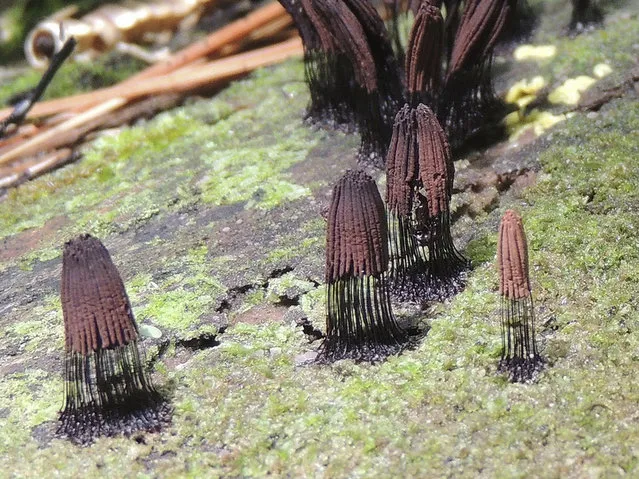
Stemonitis  Axifera

Stemonitis axifera is a species of slime mold. It fruits in clusters on dead wood, and has distinctive tall reddish-brown sporangia, supported on slender stalks. The species was first described as Trichia axifera by Jean Baptiste François Pierre Bulliard in 1791. Thomas Huston MacBride transferred it to the genus Stemonitis in 1889. Stemonitis fasciculata and Stemonitis smithii are synonyms.
Details
08 Feb 2014 10:30:00