Loading...
Done
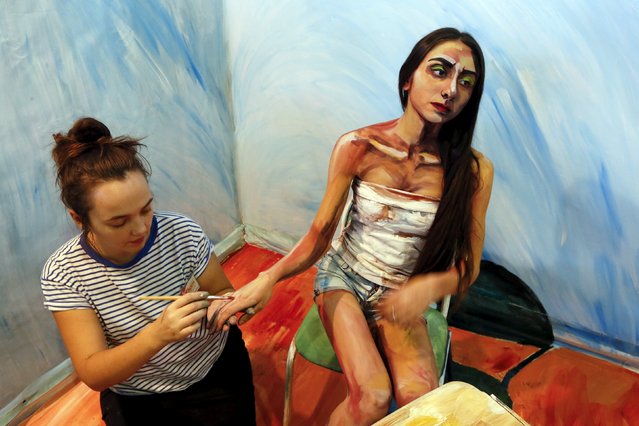
Russian artist Maria Gazanova (L) works on her "The Alive Painting" art work during the Art Krasnoyarsk annual festival in Siberian city of Krasnoyarsk, Russia November 4, 2015. (Photo by Ilya Naymushin/Reuters)

Russian artist Maria Gazanova (L) works on her "The Alive Painting" art work during the Art Krasnoyarsk annual festival in Siberian city of Krasnoyarsk, Russia November 4, 2015. (Photo by Ilya Naymushin/Reuters)
Details
06 Nov 2015 15:07:00
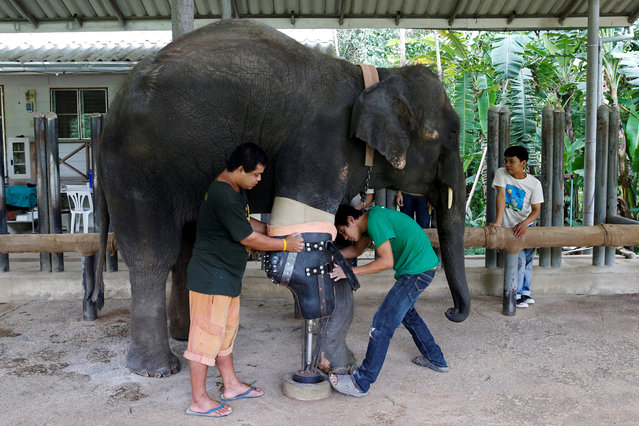
Mosha, the elephant that was injured by a landmine, has her prosthetic leg attached at the Friends of the Asian Elephant Foundation in Lampang, Thailand, June 29, 2016. Mosha was 7 months old when she stepped on a land mine near Thailand’s border with Myanmar and lost a front leg. That was a decade ago. Mosha is one of more than a dozen elephants who have been wounded by land mines in the border region, where rebels have been fighting the Myanmar government for decades. She was the first elephant to be fitted with a prosthetic limb at the hospital near Lampang. Mosha weighed about 1,300 pounds (590 kg) when she was wounded. (Photo by Athit Perawongmetha/Reuters)

Mosha, the elephant that was injured by a landmine, has her prosthetic leg attached at the Friends of the Asian Elephant Foundation in Lampang, Thailand, June 29, 2016. Mosha was 7 months old when she stepped on a land mine near Thailand’s border with Myanmar and lost a front leg. That was a decade ago... (Photo by Athit Perawongmetha/Reuters)
Details
24 Aug 2016 11:19:00
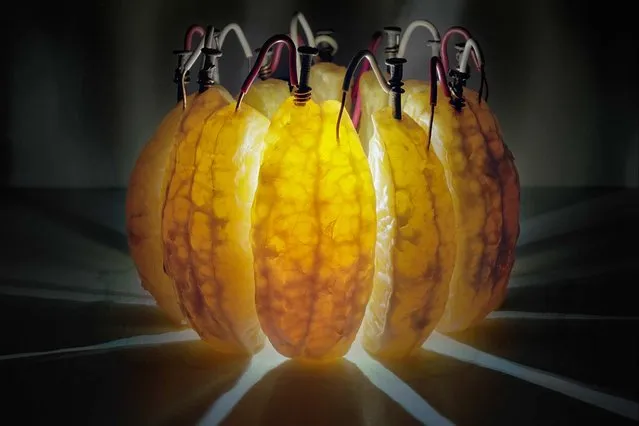
Wedges of an orange generate enough current and electrical juice – 3.5 volts – to power an LED. The fruit’s citric acid helps electrons flow from galvanized nails to copper wire in this 14-hour exposure. This image was published in September’s Visions of Earth, a trio of photos that appear in each issue of National Geographic. (Photo by Caleb Charland/National Geographic)

Wedges of an orange generate enough current and electrical juice – 3.5 volts – to power an LED. The fruit’s citric acid helps electrons flow from galvanized nails to copper wire in this 14-hour exposure. This image was published in September’s Visions of Earth, a trio of photos that appear in each issue of National Geographic. (Photo by Caleb Charland/National Geographic)
Details
06 Jan 2014 12:09:00
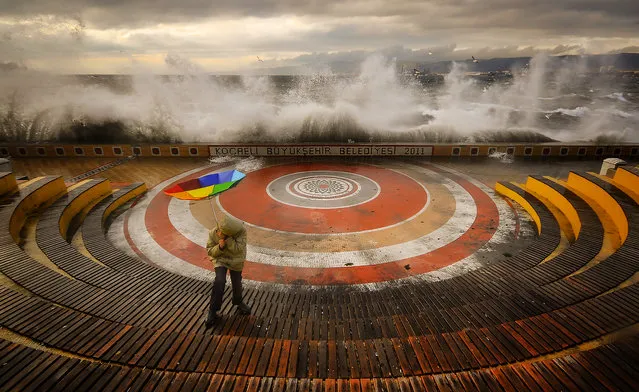
“The Storm”. During I was taking photo with my nephew, the storm came and I caught this beautiful moment. Photo location: Kocaeli, Turkey. (Photo and caption by Aytül Akbaş/National Geographic Photo Contest)

Honorable Mention: “The Storm”. During I was taking photo with my nephew, the storm came and I caught this beautiful moment. Photo location: Kocaeli, Turkey. (Photo and caption by Aytül Akbaş/National Geographic Photo Contest)
Details
28 Dec 2014 10:58:00
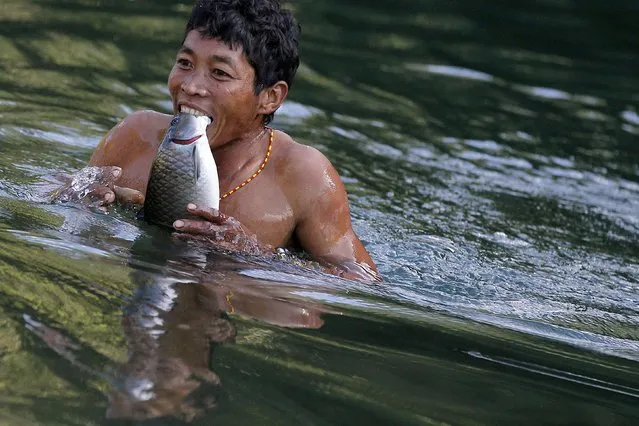
A Naga man carries fish in his teeth after it was stunned by dynamite, which fishermen threw in a creek between Donhe and Lahe township, in the Naga Self-Administered Zone in northwest Myanmar December 27, 2014. (Photo by Soe Zeya Tun/Reuters)

A Naga man carries fish in his teeth after it was stunned by dynamite, which fishermen threw in a creek between Donhe and Lahe township, in the Naga Self-Administered Zone in northwest Myanmar December 27, 2014. (Photo by Soe Zeya Tun/Reuters)
Details
11 Jan 2015 13:18:00
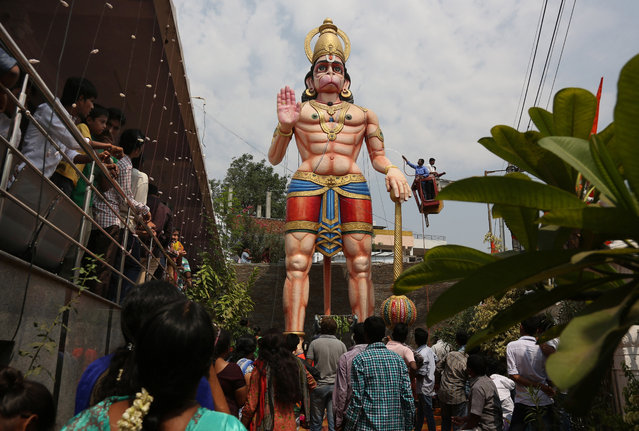
Hindu devotees watch as a 12 meter (40 feet) high statue of Hindu monkey-god Hanuman is washed during Hanuman Jayanti, the birthday of Lord Hanuman in Hyderabad, India, Friday, April 22, 2016. Hanuman is one of the most popular gods in the crowded pantheon of Hindu deities, and devout Hindus ascribe great strength and valor to him. (Photo by Mahesh Kumar A./AP Photo)

Hindu devotees watch as a 12 meter (40 feet) high statue of Hindu monkey-god Hanuman is washed during Hanuman Jayanti, the birthday of Lord Hanuman in Hyderabad, India, Friday, April 22, 2016. Hanuman is one of the most popular gods in the crowded pantheon of Hindu deities, and devout Hindus ascribe great strength and valor to him. (Photo by Mahesh Kumar A./AP Photo)
Details
25 Apr 2016 09:28:00
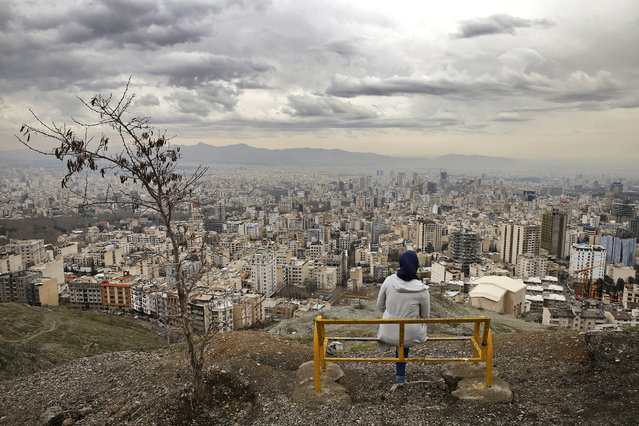
A woman spends her time outdoors to observe the ancient festival of Sizdeh Bedar, an annual public picnic day on the 13th day of the Iranian new year, at the Tochal mountainous area northern Tehran, Iran, Sunday, April, 2, 2017. Sizdeh Bedar, which comes from the Farsi words for “thirteen” and “day out”, is a legacy from Iran's pre-Islamic past that hard-liners in the Islamic Republic never managed to erase from calendars. (Photo by Ebrahim Noroozi/AP Photo)

A woman spends her time outdoors to observe the ancient festival of Sizdeh Bedar, an annual public picnic day on the 13th day of the Iranian new year, at the Tochal mountainous area northern Tehran, Iran, Sunday, April, 2, 2017. Sizdeh Bedar, which comes from the Farsi words for “thirteen” and “day out”, is a legacy from Iran's pre-Islamic past that hard-liners in the Islamic Republic never managed to erase from calendars. (Photo by Ebrahim Noroozi/AP Photo)
Details
21 Apr 2017 07:38:00
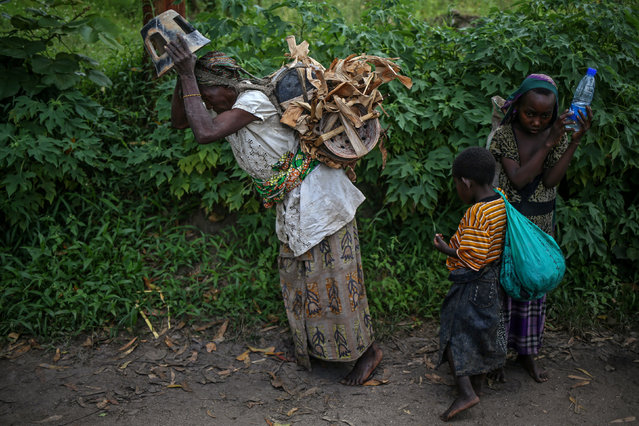
Habimana, 45, and her children walk to market to sell pottery on Idjwi island in the Democratic Republic of Congo, November 23, 2016. (Photo by Therese Di Campo/Reuters)

Habimana, 45, and her children walk to market to sell pottery on Idjwi island in the Democratic Republic of Congo, November 23, 2016. (Photo by Therese Di Campo/Reuters)
Details
13 Jan 2017 08:24:00