Loading...
Done
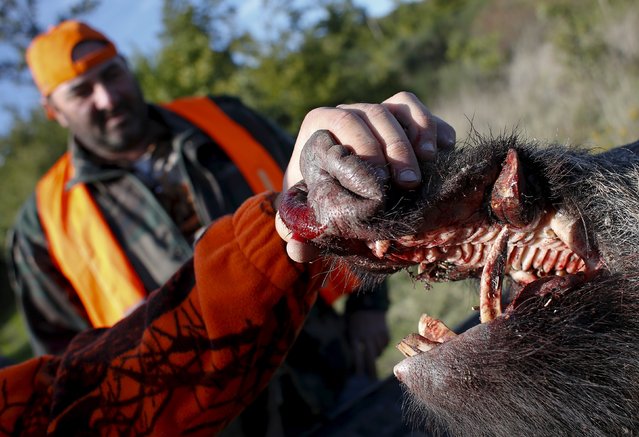
A dead wild boar is seen during a hunt in Castell'Azzara, Tuscany, central Italy, October 23, 2015. (Photo by Max Rossi/Reuters)

A dead wild boar is seen during a hunt in Castell'Azzara, Tuscany, central Italy, October 23, 2015. Extinct across much of the country by the end of the 1800s, the number of wild boar in Italy has almost doubled over the past decade and there are now about a million roaming the country, environmental and agricultural associations say. (Photo by Max Rossi/Reuters)
Details
08 Nov 2015 08:04:00
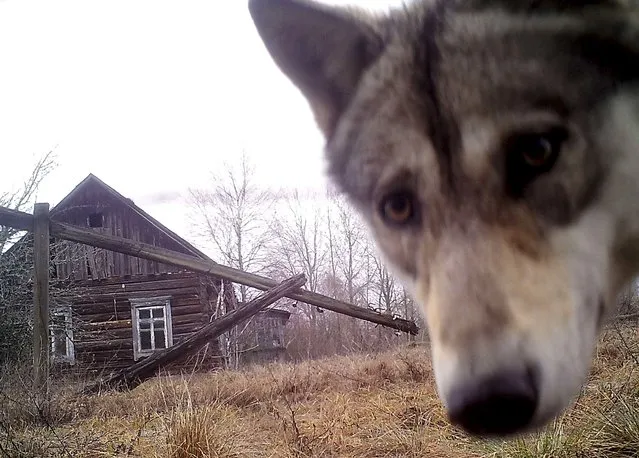
A wolf looks into the camera at the 30 km (19 miles) exclusion zone around the Chernobyl nuclear reactor in the abandoned village of Orevichi, Belarus, March 2, 2016. (Photo by Vasily Fedosenko/Reuters)

A wolf looks into the camera at the 30 km (19 miles) exclusion zone around the Chernobyl nuclear reactor in the abandoned village of Orevichi, Belarus, March 2, 2016. What happens to the environment when humans disappear? Thirty years after the Chernobyl nuclear disaster, booming populations of wolf, elk and other wildlife in the vast contaminated zone in Belarus and Ukraine provide a clue. (Photo by Vasily Fedosenko/Reuters)
Details
08 Apr 2016 15:13:00
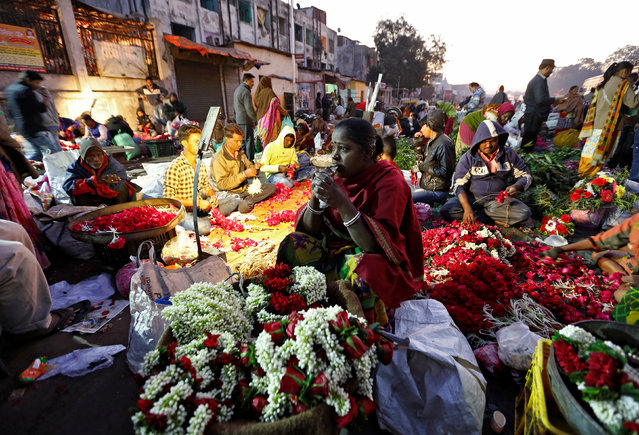
A vendor drinks water as she waits for customers at a roadside flower market in Ahmedabad, India, February 8, 2017. (Photo by Amit Dave/Reuters)

A vendor drinks water as she waits for customers at a roadside flower market in Ahmedabad, India, February 8, 2017. (Photo by Amit Dave/Reuters)
Details
10 Feb 2017 00:05:00
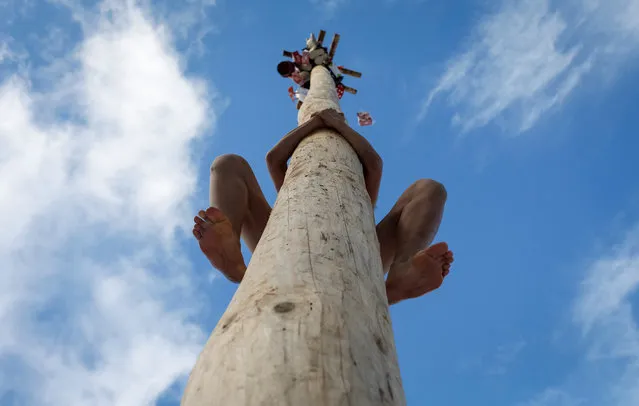
A man climbs up a wooden pole to get a prize during celebration of Maslenitsa, or Pancake Week, a pagan holiday marking the end of winter, near Rumyantsevo, Moscow region, Russia, February 26, 2017. (Photo by Sergei Karpukhin/Reuters)

A man climbs up a wooden pole to get a prize during celebration of Maslenitsa, or Pancake Week, a pagan holiday marking the end of winter, near Rumyantsevo, Moscow region, Russia, February 26, 2017. (Photo by Sergei Karpukhin/Reuters)
Details
28 Feb 2017 00:05:00
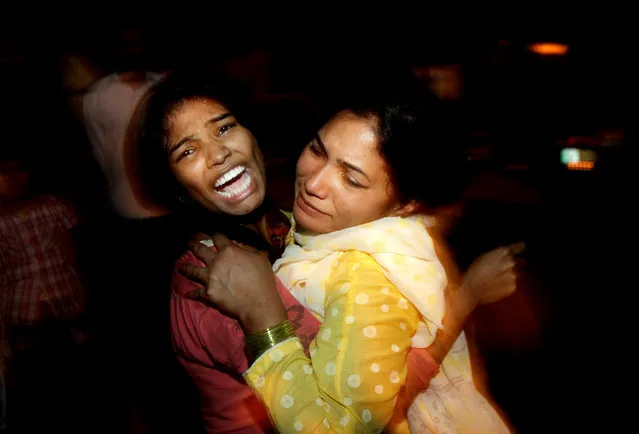
Women comfort each other as they mourn over the death of a family member who was killed in a bomb blast, at a local hospital in Lahore, Pakistan, Sunday, March, 27, 2016. (Photo by K.M. Chuadary/AP Photo)

Women comfort each other as they mourn over the death of a family member who was killed in a bomb blast, at a local hospital in Lahore, Pakistan, Sunday, March, 27, 2016. A bomb blast in a park in the eastern Pakistani city of Lahore has killed tens of people and wounded scores, a health official said. (Photo by K.M. Chuadary/AP Photo)
Details
28 Mar 2016 10:12:00
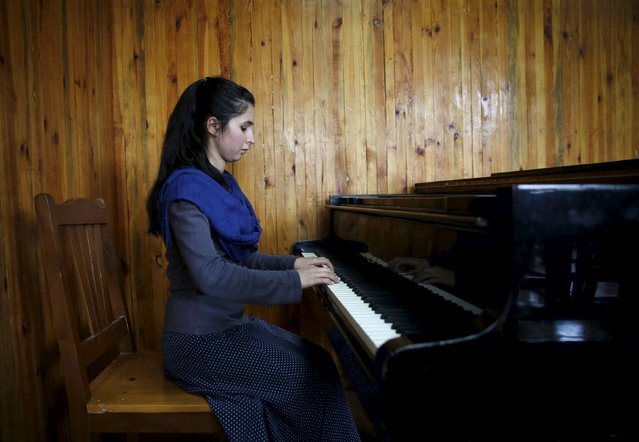
Negin Ekhpulwak, leader of the Zohra orchestra, an ensemble of 35 women, practises on a piano at Afghanistan's National Institute of Music, in Kabul, Afghanistan April 9, 2016. (Photo by Ahmad Masood/Reuters)

Negin Ekhpulwak, leader of the Zohra orchestra, an ensemble of 35 women, practises on a piano at Afghanistan's National Institute of Music, in Kabul, Afghanistan April 9, 2016. Playing instruments was banned under Taliban rule in Afghanistan, and even today, many conservative Muslims frown on most forms of music. Living in an orphanage in the capital, Kabul, 19-year-old Negin Ikhpolwak leads an ensemble of 35 women that plays both Western and Afghan musical instruments. In a country notorious internationally for harsh restrictions on women in most areas of life, Negin's story highlights a double challenge. (Photo by Ahmad Masood/Reuters)
Details
19 Apr 2016 13:47:00
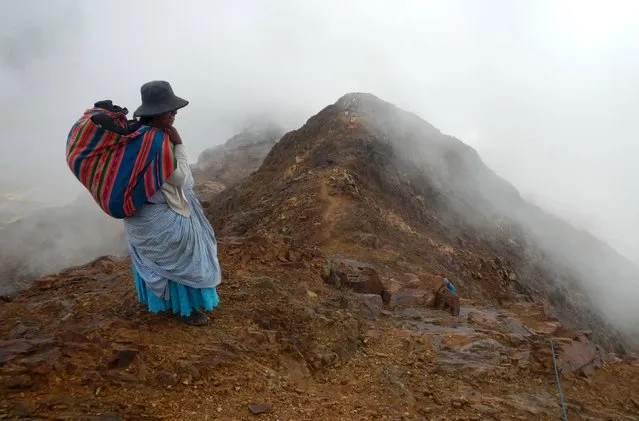
A porter stands at the bottom of the Illimani mountain, on the outskirts of La Paz, Bolivia, April 16, 2016. (Photo by David Mercado/Reuters)

A porter stands at the bottom of the Illimani mountain, on the outskirts of La Paz, Bolivia, April 16, 2016. For years, Lydia Huayllas, 48, has worked as a cook at base camps and mountain-climbing refuges on the steep, glacial slopes of Huayna Potosi, a 19,974-foot (6,088-meter) Andean peak outside of La Paz, Bolivia. But two years ago, she and 10 other Aymara indigenous women, ages 42 to 50, who also worked as porters and cooks for mountaineers, put on crampons – spikes fixed to a boot for climbing – under their wide traditional skirts and started to do their own climbing. (Photo by David Mercado/Reuters)
Details
22 Apr 2016 12:33:00
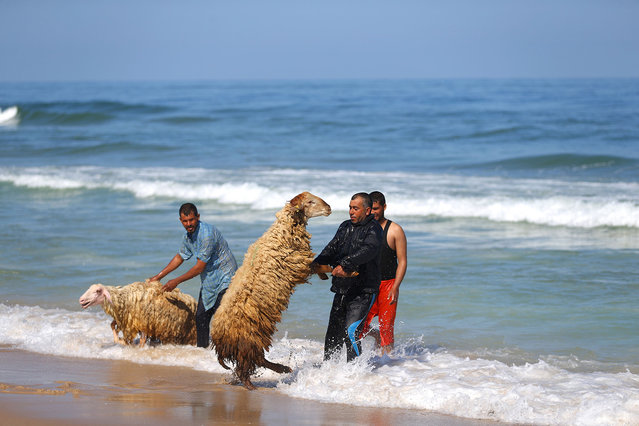
Palestinian bedouin shepherds pull their lambs into the water to wash them, in Gaza City, on April 29, 2016. Every year before the beginning of the summer, shepherds wash their herds in the sea. (Photo by Mohammed Abed/AFP Photo)

Palestinian bedouin shepherds pull their lambs into the water to wash them, in Gaza City, on April 29, 2016. Every year before the beginning of the summer, shepherds wash their herds in the sea. (Photo by Mohammed Abed/AFP Photo)
Details
07 Jun 2016 13:20:00