Loading...
Done
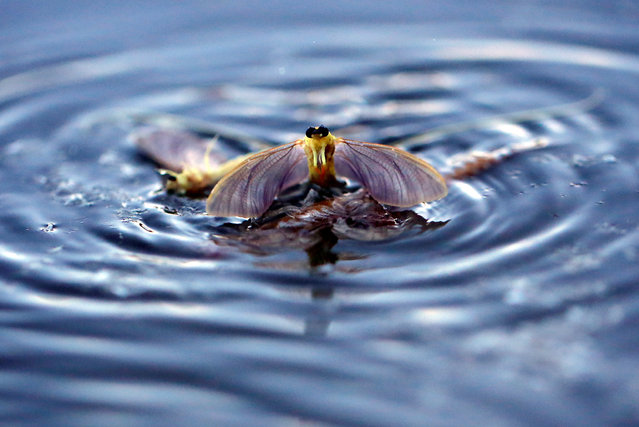
Long-tailed mayflies (Palingenia longicauda) mate on the surface of the Tisza river near Tiszakurt, Hungary, June 14, 2016. Millions of these short-lived mayflies engage in a frantic rush to mate and reproduce before they perish in just a few hours during “Tiszaviragzas” or Tisza blooming season from late spring to early summer every year. (Photo by Laszlo Balogh/Reuters)

Long-tailed mayflies (Palingenia longicauda) mate on the surface of the Tisza river near Tiszakurt, Hungary, June 14, 2016. Millions of these short-lived mayflies engage in a frantic rush to mate and reproduce before they perish in just a few hours during “Tiszaviragzas” or Tisza blooming season from late spring to early summer every year. (Photo by Laszlo Balogh/Reuters)
Details
15 Jun 2016 15:12:00
Young Palestinians form an obstacle to be jumped over during a military-style exercise graduation ceremony organised by the Hamas movement, in Gaza City August 5, 2015. Thousands of young Palestinians joined Hamas military-style summer camps during school vacation in the Gaza Strip to prepare them to “confront any possible Israeli attack”, organisers said. (Photo by Suhaib Salem/Reuters)

Young Palestinians form an obstacle to be jumped over during a military-style exercise graduation ceremony organised by the Hamas movement, in Gaza City August 5, 2015. Thousands of young Palestinians joined Hamas military-style summer camps during school vacation in the Gaza Strip to prepare them to “confront any possible Israeli attack”, organisers said. (Photo by Suhaib Salem/Reuters)
Details
06 Aug 2015 11:31:00
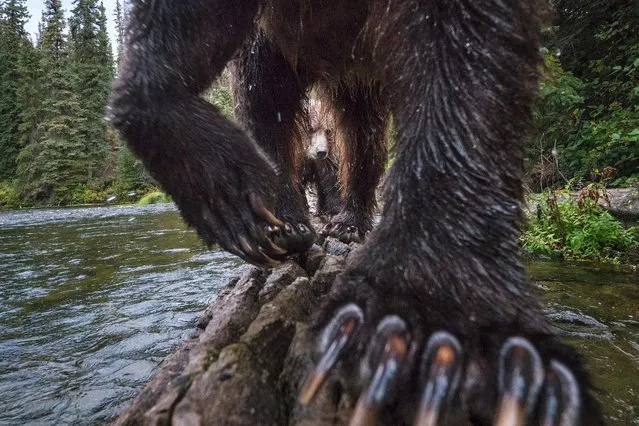
“The Salmon Catchers”. Terrestrial Wildlife. To capture this view of a mother grizzly bear and her cub, photographer Peter Mather set up a camera trap on a log that he knew the bears tended to traverse while fishing for salmon, in the Yukon River watershed in Canada. (Photo by Peter Mather/BigPicture Natural World Photography Competition 2017)

The fourth annual BigPicture Natural World Photography Competition aims to celebrate the diversity of life on Earth, and encourages people to protect and conserve it. Here: “The Salmon Catchers”. Terrestrial Wildlife. To capture this view of a mother grizzly bear and her cub, photographer Peter Mather set up a camera trap on a log that he knew the bears tended to traverse while fishing for salmon, in the Yukon River watershed in Canada. (Photo by Peter Mather/BigPicture Natural World Photography Competition 2017)
Details
02 Jul 2017 07:25:00
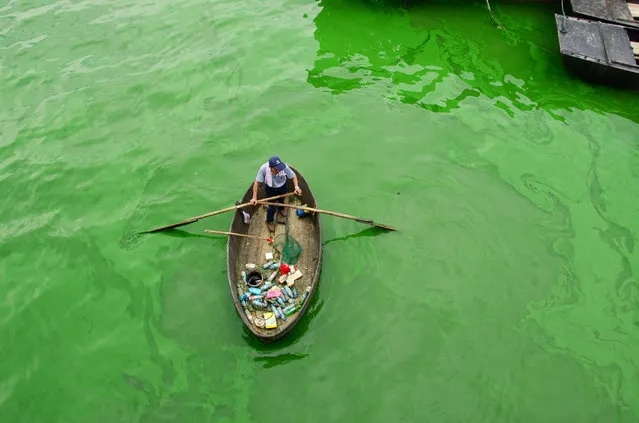
A fisherman boats in Chao Lake where thick cyanobacteria gather on the surface on August 5, 2015 in Chaohu, Anhui Province of China. As high temperature came in summar, part of water in Anhui Province's Chao Lake breeds large tracts of cyanobacteria which not only brought pollution to sense of smell, but also affected people's life. (Photo by ChinaFotoPress/ChinaFotoPress via Getty Images)

A fisherman boats in Chao Lake where thick cyanobacteria gather on the surface on August 5, 2015 in Chaohu, Anhui Province of China. As high temperature came in summar, part of water in Anhui Province's Chao Lake breeds large tracts of cyanobacteria which not only brought pollution to sense of smell, but also affected people's life. (Photo by ChinaFotoPress/ChinaFotoPress via Getty Images)
Details
06 Aug 2015 11:36:00
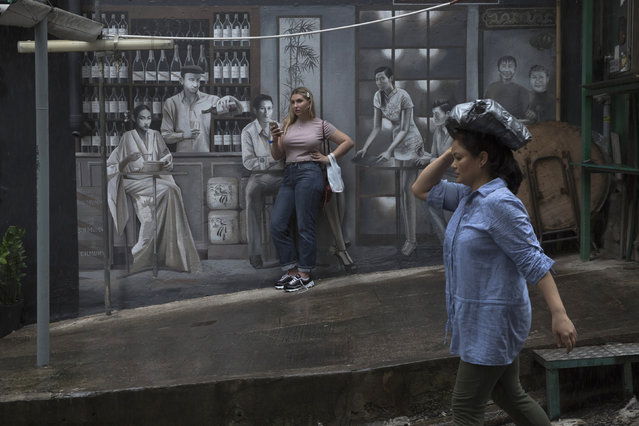
In this June 12, 2017 photo, a woman stands in front of a mural on the slope in Central district, Hong Kong. (Photo by Kin Cheung/AP Photo)

In this June 12, 2017 photo, a woman stands in front of a mural on the slope in Central district, Hong Kong. Once known as Victoria after the British queen, Hong Kong island's waterfront formed the core of the British settlement after Hong Kong island was handed over as a colony in 1842. Today as Hong Kong approaches the 20th anniversary of its return to China, it remains a bustling commercial and financial center as well as the location of the main government offices. However, along the streets that angle sharply upward toward the mountains above, a more relaxed pace of life endures. (AP Photo/Kin Cheung)
Details
28 Jun 2017 08:18:00
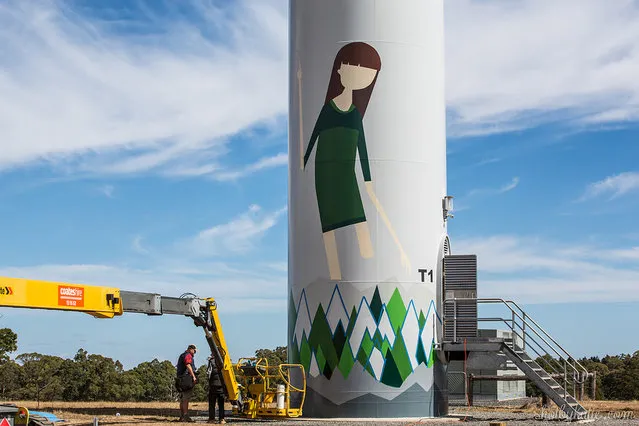
Art By Hepburn Wind

Sleep under the Stars, hosted by Hepburn Wind, has given us an opportunity to enrich our daily life with art. Thanks to this festival, a regular wind turbine was turned into a marvelous peace of art. The artwork is especially noticeable, since its theme greatly contrasts with the background behind the wind turbine. Moreover, the idea of drawing a woman-giantess walking over the mountain tops on a large conical object is quite extraordinary. Nevertheless, the grey and green colors of the picture were very well chosen for this particular image. You can only imagine the obstacles that the artists had to face when making a picture on such a large object. However, nowadays, people never cease to amaze with their ingenuity, leaving us gaping in awe at their creations.
Details
08 Jan 2015 14:41:00
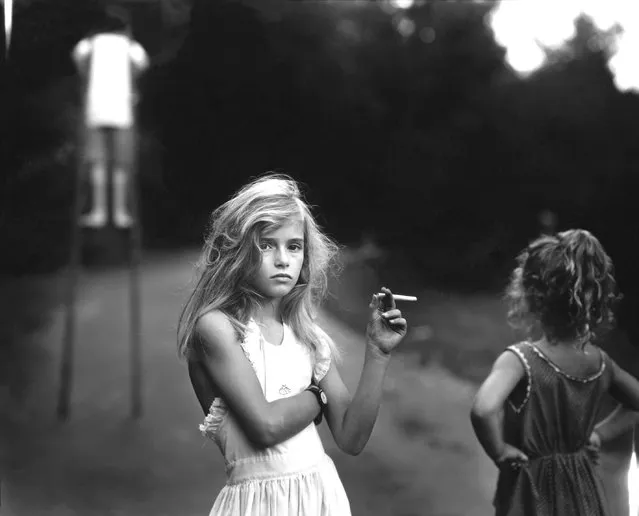
Candy Cigarette, 1989. (Photo by Sally Mann)

“Sally Mann (born in Lexington, Virginia, 1951) is one of America’s most renowned photographers. She has received numerous awards, including NEA, NEH, and Guggenheim Foundation grants, and her work is held by major institutions internationally. Her many books include Second Sight (1983), At Twelve (1988), Immediate Family (1992), Still Time (1994), What Remains (2003), Deep South (2005), Proud Flesh (2009), and The Flesh and the Spirit (2010). A feature film about her work, What Remains, debuted to critical acclaim in 2006. Mann is represented by Gagosian Gallery, New York. She lives in Virginia”.

Photo: Candy Cigarette, 1989. (Photo by Sally Mann)
Details
28 Apr 2012 11:32:00
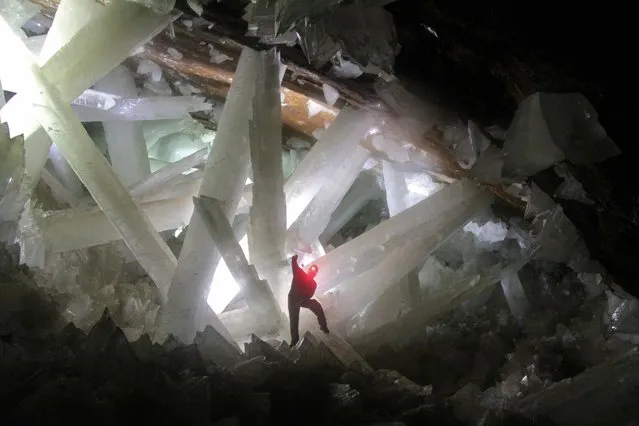
Giant Crystal Cave in Naica, Mexico

Cave of the Crystals or Giant Crystal Cave is a cave connected to the Naica Mine 300 metres (980 ft) below the surface in Naica, Chihuahua, Mexico. The main chamber contains giant selenite crystals (gypsum, CaSO4·2 H2O), some of the largest natural crystals ever found. The cave's largest crystal found to date is 12 m (39 ft) in length, 4 m (13 ft) in diameter and 55 tons in weight. The cave is extremely hot with air temperatures reaching up to 58 °C (136 °F) with 90 to 99 percent humidity. The cave is relatively unexplored due to these factors. Without proper protection people can only endure approximately ten minutes of exposure at a time.
Details
20 May 2014 07:56:00