Loading...
Done
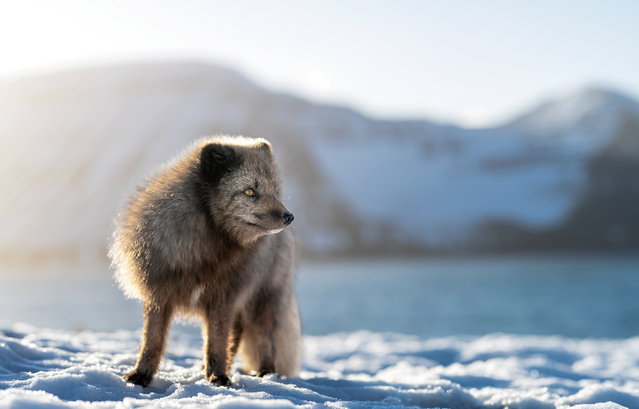
An arctic fox in Iceland spotted on March 19, 2025 by Marc Freebrey, a marketing officer from Gloucestershire. (Photo by Marc Freebrey/South West News Service)

An arctic fox in Iceland spotted on March 19, 2025 by Marc Freebrey, a marketing officer from Gloucestershire. (Photo by Marc Freebrey/South West News Service)
Details
30 Mar 2025 03:47:00
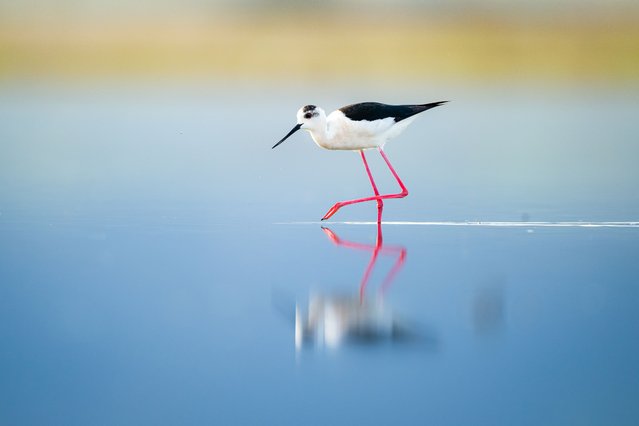
Black Winged Stilt is seen on Kavak Delta, a natural and ecologically important wetland for many migratory birds, in Canakkale, Turkiye on May 13, 2025. (Photo by Alper Tuydes/Anadolu via Getty Images)

Black Winged Stilt is seen on Kavak Delta, a natural and ecologically important wetland for many migratory birds, in Canakkale, Turkiye on May 13, 2025. (Photo by Alper Tuydes/Anadolu via Getty Images)
Details
25 May 2025 03:33:00
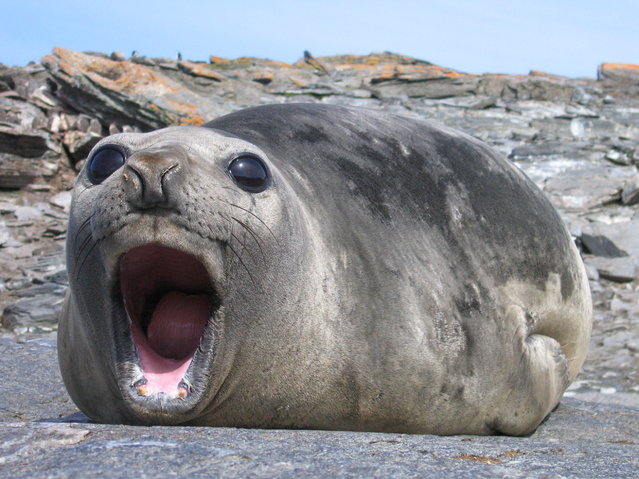
Weddell seal numbers in 2025 have declined sharply on Signy Island, part of the South Orkney Islands in the Southern Ocean, where British Antarctic Survey researchers have tracked seal populations for nearly 50 years to understand the impact of melting sea ice. (Photo by Michael Dunn/The Times)

Weddell seal numbers in 2025 have declined sharply on Signy Island, part of the South Orkney Islands in the Southern Ocean, where British Antarctic Survey researchers have tracked seal populations for nearly 50 years to understand the impact of melting sea ice. (Photo by Michael Dunn/The Times)
Details
06 Jul 2025 03:34:00
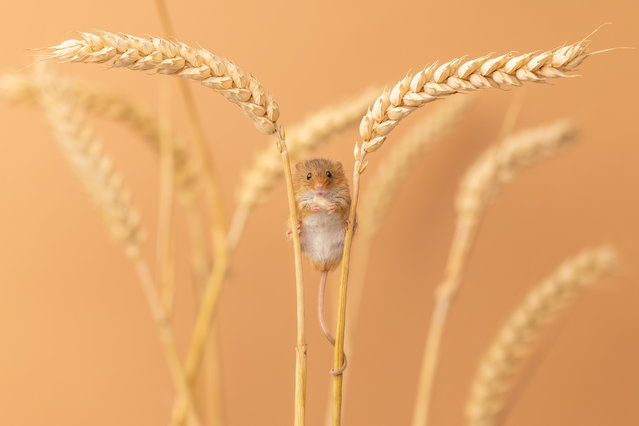
Stunning image capture the moment a tiny harvest mouse uses wheat stems as stilts as he munches on a kernel in UK in August 2025. The minute-mouse, who weighs as much as a 2p coin and is only two-inches-long, uses his prehensile tail to keep himself perfectly level. (Photo by Tony Nellis/South West News Service)

Stunning image capture the moment a tiny harvest mouse uses wheat stems as stilts as he munches on a kernel in UK in August 2025. The minute-mouse, who weighs as much as a 2p coin and is only two-inches-long, uses his prehensile tail to keep himself perfectly level. (Photo by Tony Nellis/South West News Service)
Details
24 Aug 2025 04:16:00
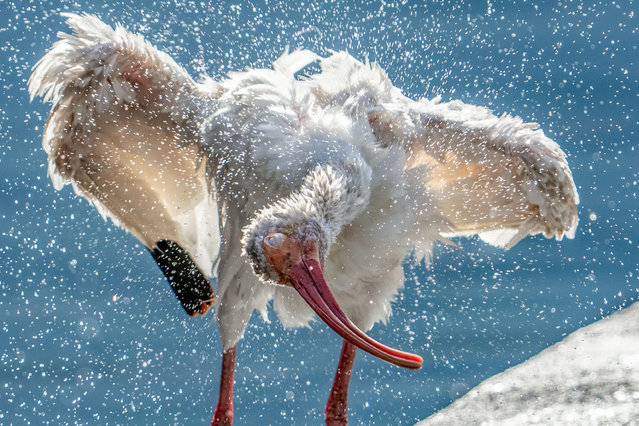
A white ibis takes a shower at Lake Eola in Orlando, Florida, US on September 29, 2025. (Photo byRonen Tivony/NurPhoto/Rex Features/Shutterstock)

A white ibis takes a shower at Lake Eola in Orlando, Florida, US on September 29, 2025. (Photo byRonen Tivony/NurPhoto/Rex Features/Shutterstock)
Details
12 Oct 2025 04:36:00
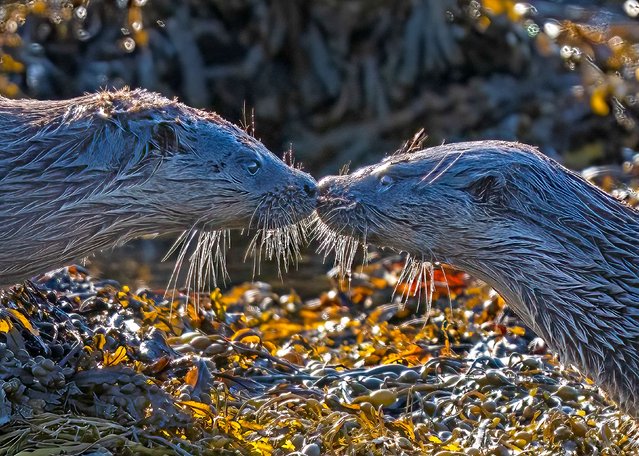
A pair of otters share a soft kiss over seaweed on the Isle of Mull, Scotland in the first decade of October 2025. (Photo by David Akers/Solent News & Photo Agency)

A pair of otters share a soft kiss over seaweed on the Isle of Mull, Scotland in the first decade of October 2025. (Photo by David Akers/Solent News & Photo Agency)
Details
26 Oct 2025 05:20:00
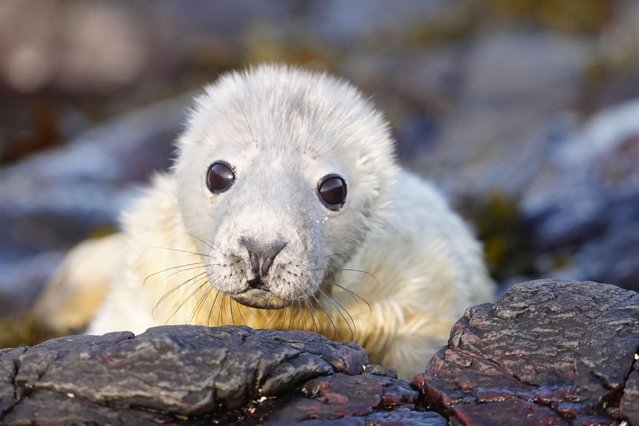
Seals on Wednesday, November 12, 2025 on the Farne Islands during the annual census of pup numbers at one of England's largest grey seal colonies. The islands, off the Northumberland coast, is an important haven for thousands of seabirds and hundreds of adult seals, and are looked after by the National Trust. (Photo by Owen Humphreys/PA Wire)

Seals on Wednesday, November 12, 2025 on the Farne Islands during the annual census of pup numbers at one of England's largest grey seal colonies. The islands, off the Northumberland coast, is an important haven for thousands of seabirds and hundreds of adult seals, and are looked after by the National Trust. (Photo by Owen Humphreys/PA Wire)
Details
23 Nov 2025 06:39:00


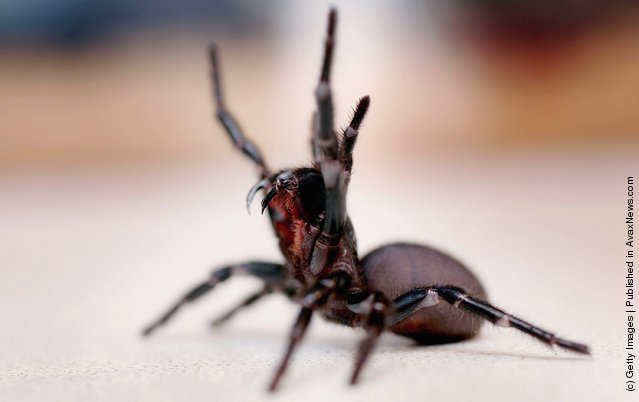
A Funnel Web spider is pictured at the Australian Reptile Park January 23, 2006 in Sydney, Australia. The Funnel Web is one of Australia's deadliest animals, with a venom that is packed with at least 40 different toxic proteins. A bite from a Funnel Web causes massive electrical over-load in the body's nervous system. Finally, fatalities occur from either heart attack or a pulmonary oedema, where the capillaries around the lungs begin to leak fluid and the patient effectively drowns. Death can come as quickly as two hours after a bite if no medical treatment is sought. Due to advances in anti-venom, there has been no death from a Funnel Web bite in Australia since 1980. Australia is home to some of the most deadly and poisonous animals on earth. (Photo by Ian Waldie/Getty Images)
Details
25 Apr 2011 07:49:00