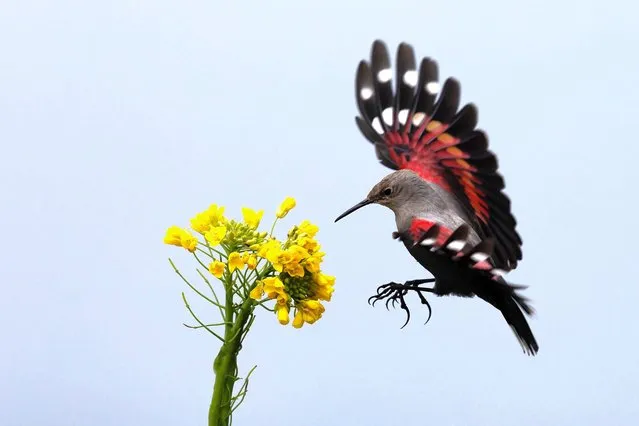
A Wallcreeper (aka Tichodroma muraria) flies to a flower on January 28, 2024 in Leshan, Sichuan Province of China. (Photo by Zhou Zhiyong/VCG via Getty Images)
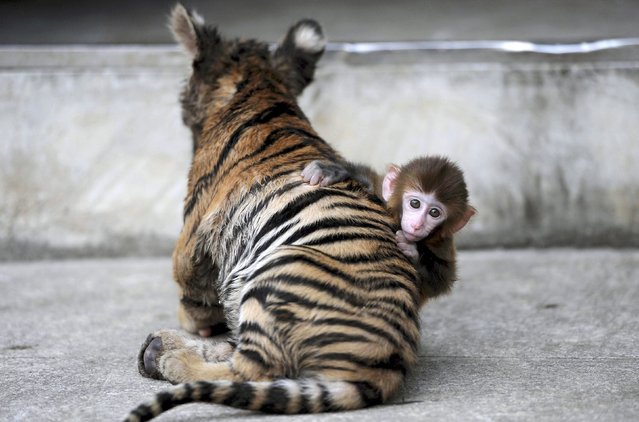
A baby rhesus macaque (Macaca mulatta) looks up as it plays with a tiger cub at a zoo in Hefei, Anhui province, August 2, 2012. (Photo by Jianan Yu/Reuters)
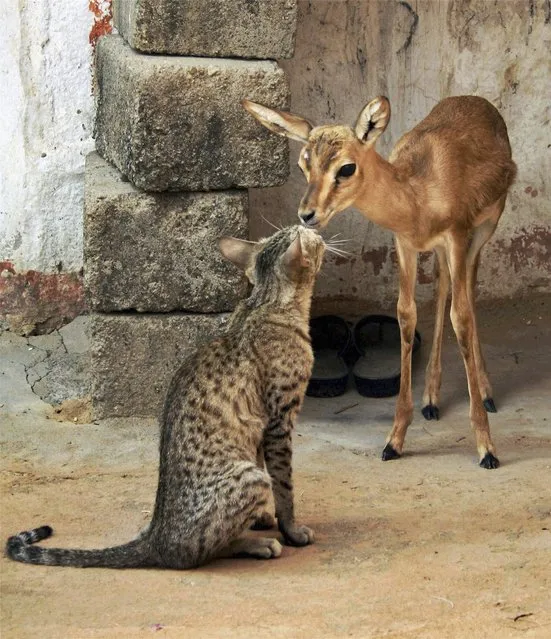
In this Wednesday, May 23, 2012 photograph, a young deer and a cat share a moment in Feench village near Jodhpur, Rajasthan state, India. (Photo by AP Photo)
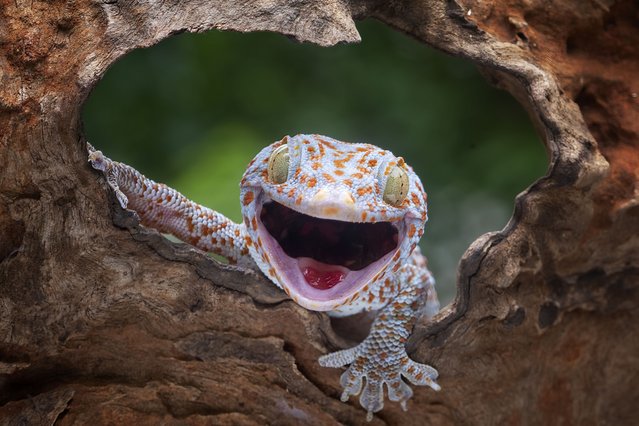
A smiling gecko bursts through a gap in the bark to surprise photographer in West Java, Indonesia in the last decade of March 2025. (Photo by Dzul Duzulfikri/Animal News Agency)
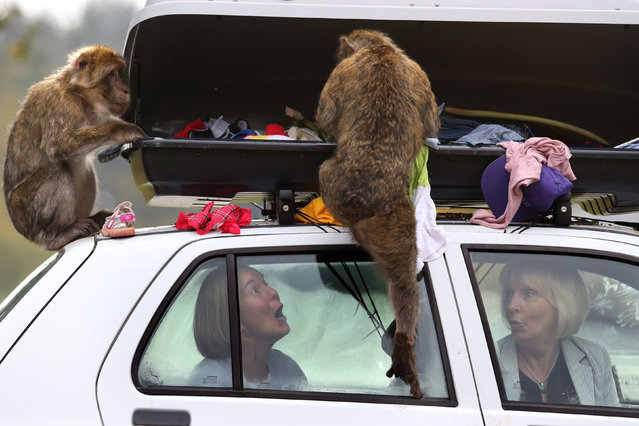
Sasha Muir and Margaret Davidson sit in a car as some of the 30 barbary macaques, known as the Middle Hill Troop after living between the top of Gibraltar rock and the town, show what happens when motorists forget to lock their luggage compartments, as Scotland’s only monkey drive-through section opens at Blair Drummond safari park in Stirling, Scotland on October 8, 2015. (Photo by Andrew Milligan/PA Wire)
Edinburgh mask maker Lorraine Pritchard on Sunday, January 28, 2024 alongside some of her Venetian masks which will be worn and displayed at the Venice Carnival, which starts on Saturday February 3. Lorraine studied model making at Glasgow College of Building and Printing and Venetian mask making in Florence, Italy. She travels to Venice each year to be a “mask” herself, wearing different masks she has designed as a live exhibit of her work. (Photo by Jane Barlow/PA Images via Getty Images)
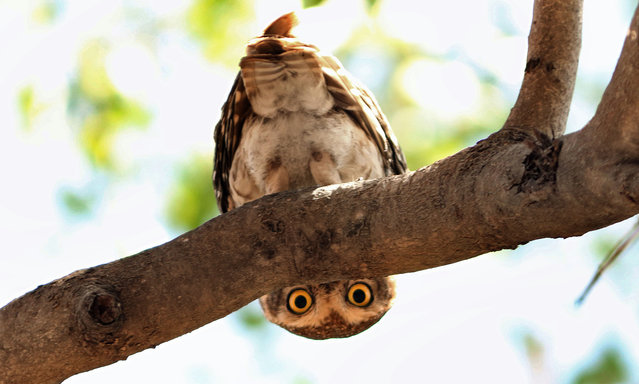
A spotted owlet appears to be playing peek-a-boo near Rancharda Lake in Ahmedabad, India on February 9, 2016. The species is common across the Indian subcontinent. (Photo by Caters News Agency)
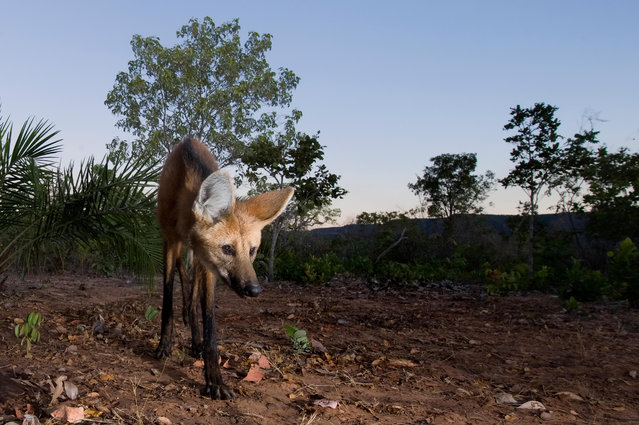
Global wildlife populations will decline by 67% by 2020 unless urgent action is taken to reduce human impact on species and ecosystems, warns the biennial Living Planet Index report from WWF (World Wide Fund for Nature) and ZSL (Zoological Society of London). From elephants to eels, here are some of the wildlife populations most affected by human activity. Here: The maned wolf is among the large mammals in the Brazilian Cerrado that are threatened by the increasing conversion of grasslands into farmland for grazing and growing crops. (Photo by Ben Cranke/Nature Picture Library/Alamy Stock Photo)