Loading...
Done
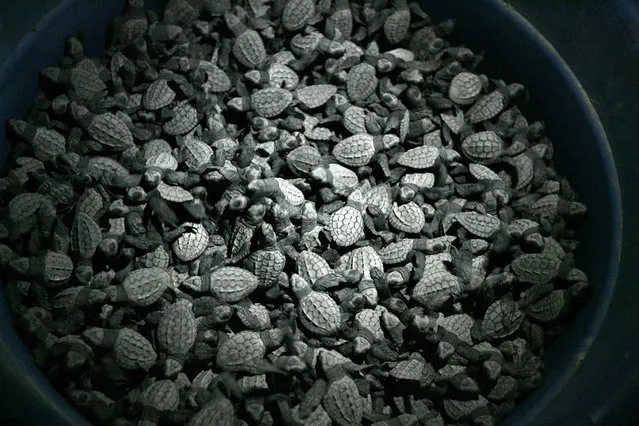
Olive Ridley turtle hatchlings (Lepidochelys olivacea) sit in baskets and trays at the turtle camp La Gloria, before their release into the ocean in Tomatlan November 15, 2013. (Photo by Alejandro Acosta/Reuters)

Olive Ridley turtle hatchlings (Lepidochelys olivacea) sit in baskets and trays at the turtle camp La Gloria, before their release into the ocean in Tomatlan November 15, 2013. Twenty years ago, Mexico's government implemented ecological plans to protect the sea turtles from being hunted for their leather and meat and established conservation areas and a pay system for local residents to protect turtle nests. Millions of baby turtles hatch on the shores in November and December, according to an environmental group. It is estimated that in 2012, there were 20 million newborns. Hatching season is still underway, but officials say they expect there will be even more turtles born this year. (Photo by Alejandro Acosta/Reuters)
Details
25 Nov 2013 08:54:00
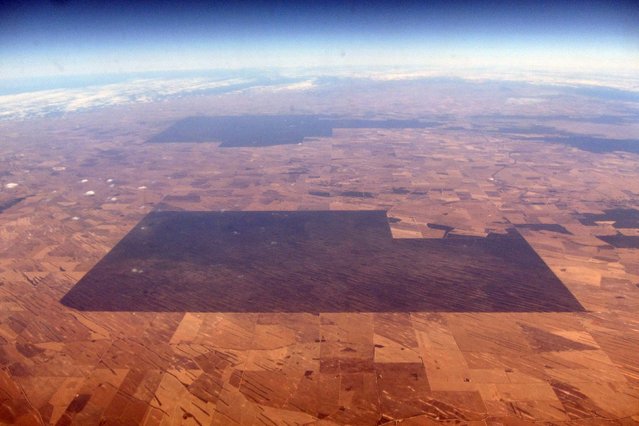
An area of vegetation can be seen amongst drought effected farmland in South Australia, November 12, 2015. (Photo by David Gray/Reuters)

An area of vegetation can be seen amongst drought effected farmland in South Australia, November 12, 2015. A pioneering Australian scheme to improve the management of water in the world's driest inhabited continent is facing its first real test as an intensifying El Nino threatens crops and builds tensions between farmers and environmentalists. An El Nino, a warming of sea-surface temperatures in the Pacific, is already causing drought and other extreme weather, affecting millions of people across parts of the world, and experts warn that the intensifying weather pattern could emerge as one of the strongest on record. (Photo by David Gray/Reuters)
Details
15 Nov 2015 08:01:00
Santiago Eneme (second left) and his Equatorial Guinea teammates can’t watch during their last 16 penalty shoot-out with Mali, although they did go on to win at Limbe Omnisport Stadium in Limbe, Cameroon on January 26, 2022. (Photo by Thaier Al-Sudani/Reuters)

Santiago Eneme (second left) and his Equatorial Guinea teammates can’t watch during their last 16 penalty shoot-out with Mali, although they did go on to win at Limbe Omnisport Stadium in Limbe, Cameroon on January 26, 2022. (Photo by Thaier Al-Sudani/Reuters)
Details
17 Mar 2023 03:11:00
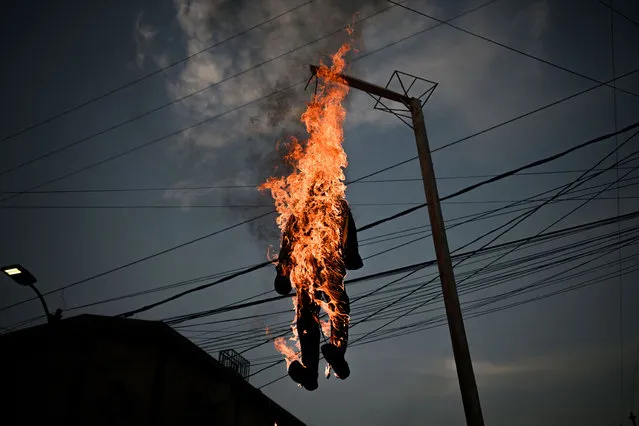
A dummy representing “the abuser” is burnt during the traditional “burning of Judas”, the biblical figure who supposedly betrayed Jesus, during Easter celebrations, at El Cementerio neighbourhood in Caracas, on March 31, 2024. (Photo by Federico Parra/AFP Photo)

A dummy representing “the abuser” is burnt during the traditional “burning of Judas”, the biblical figure who supposedly betrayed Jesus, during Easter celebrations, at El Cementerio neighbourhood in Caracas, on March 31, 2024. (Photo by Federico Parra/AFP Photo)
Details
10 Apr 2024 05:04:00
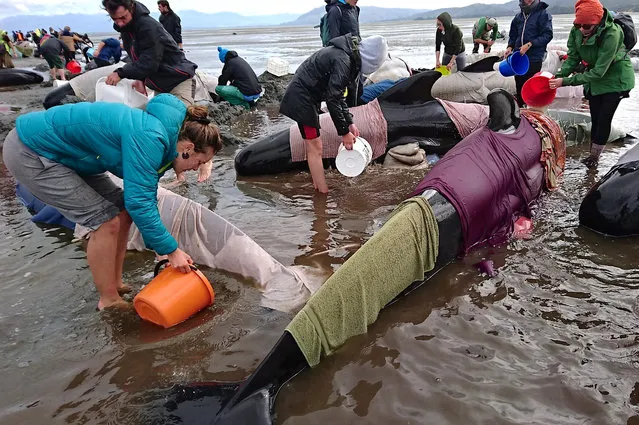
Volunteers try to keep alive some of the hundreds of stranded pilot whales after one of the country's largest recorded mass whale strandings, in Golden Bay, at the top of New Zealand's south island, February 10, 2017. (Photo by Ross Wearing/Reuters)

Volunteers try to keep alive some of the hundreds of stranded pilot whales after one of the country's largest recorded mass whale strandings, in Golden Bay, at the top of New Zealand's south island, February 10, 2017. Volunteers in New Zealand managed to refloat about 100 surviving pilot whales on Saturday, February 11, 2017 and are hoping they will swim back out to sea after more than 400 of the creatures swam aground at a remote beach. (Photo by Ross Wearing/Reuters)
Details
12 Feb 2017 00:06:00
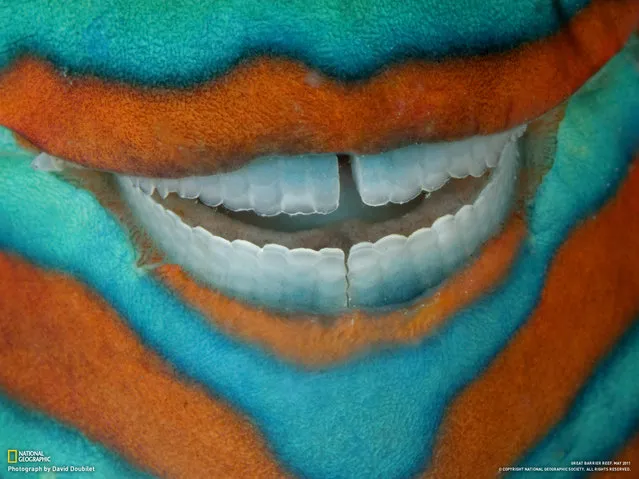
Photographers: David Doubilet

“David Doubilet (born 28 November 1946) is a well known underwater photographer known primarily for his work published in National Geographic Magazine. He was born in New York and started taking photos underwater at the young age of 12. He started with a Brownie Hawkeye in a rubber anesthesiologist's bag to keep the water out of the camera. During his summer holidays, he spent his time along the New Jersey coast. He later worked as a diver and photographer for the Sandy Hook Marine Laboratories in New Jersey. He also spent much time in the Caribbean. While a dive instructor in the Bahamas he found his motivation to capture the beauty of the sea and everything in it”. – Wikipedia. (Photo by David Doubilet/National Geographic)
Details
16 May 2012 12:21:00


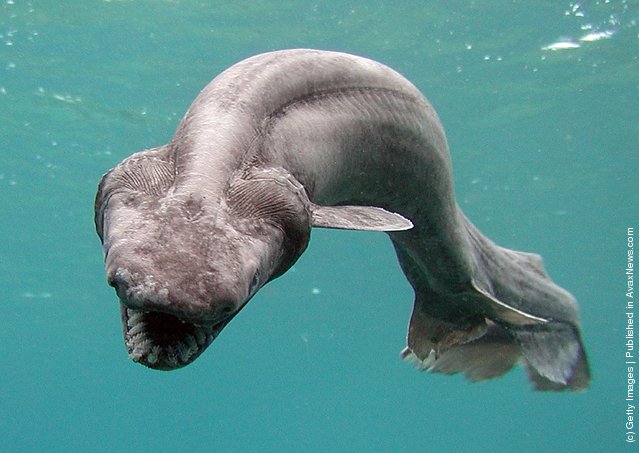
“The frilled shark (Chlamydoselachus anguineus) is one of two extant species of shark in the family Chlamydoselachidae, with a wide but patchy distribution in the Atlantic and Pacific Oceans. This uncommon species is found over the outer continental shelf and upper continental slope, generally near the bottom though there is evidence of substantial upward movements. It has been caught as deep as 1,570 m (5,150 ft), whereas in Suruga Bay, Japan it is most common at depths of 50–200 m (160–660 ft). Exhibiting several “primitive” features, the frilled shark has often been termed a «living fossil»”. – Wikipedia

Photo: A 1.6 meter long Frill shark swims in a tank after being found by a fisherman at a bay in Numazu, on January 21, 2007 in Numazu, Japan. The frill shark, also known as a Frilled shark usually lives in waters of a depth of 600 meters and so it is very rare that this shark is found alive at sea-level. It's body shape and the number of gill are similar to fossils of sharks which lived 350,000,000 years ago. (Photo by Awashima Marine Park/Getty Images)
Details
05 May 2011 10:01:00
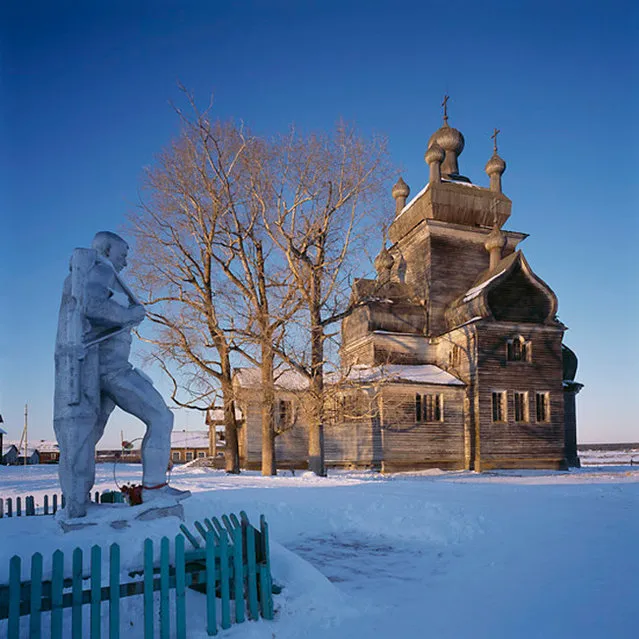
Wooden Churches - Travelling In The Russian North By Richard Davies Part 2

While communism, collectivism, worms, dry rot and casual looting failed to destroy the majestic wooden churches of Russia, it may be ordinary neglect that finally does them in. Dwindled now to several hundred remaining examples, these glories of vernacular architecture lie scattered amid the vastness of the world’s largest country. Just over a decade ago, Richard Davies, a British architectural photographer, struck out on a mission to record the fragile and poetic structures. Austerely beautiful and haunting, “Wooden Churches: Traveling in the Russian North” (White Sea Publishing; $132) is the result. Covering thousands of miles, Mr. Davies described how he and the writer Matilda Moreton tracked down the survivors from among the thousands of onion-domed structures built after Prince Vladimir converted to Christianity in 988.

See also: Wooden Churches Part1
Details
28 Nov 2013 12:13:00