Women walk past a mannequin with a covered face as they shop ahead of the Muslim festival of Eid-al-Adha in Aleppo, Syria September 23, 2015. (Photo by Hamid Khatib/Reuters)
No. 10: Sphynx. A suede-like coat is the sphynx's most unmistakable feature, but he's also curious, smart and a clown who craves applause for his antics. In fact, he loves attention so much that you may want to consider getting him a fellow sphynx playmate. (Photo by Quentin Descotte)
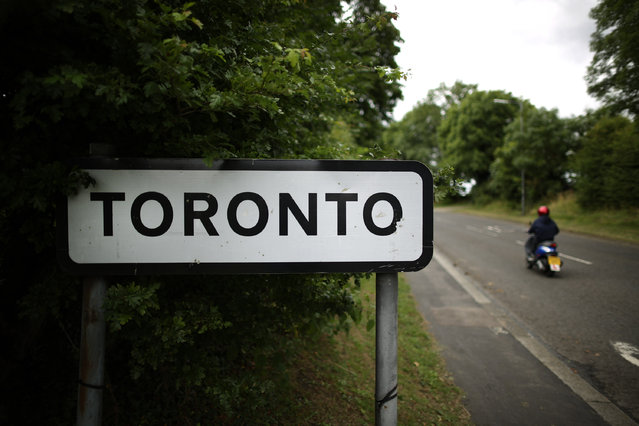
A handful of villages in the U.K. share the same name as cities or countries from around the world, and they’re spending life in the shadows of their more famous namesakes. Photo: A road sign points the way on August 6, 2013 in Toronto, England. Originally called Newton Cap in the county of Durham, built for workers at the nearby colliery, owner Henry Stobart re-named the village Toronto after visiting Canada. (Photo by Peter Macdiarmid/Getty Images)
Papier-mache sculptures, also known as “ninots”, burn during the “Nit de la Crema” (Fire Night) of the Fallas Festival in Valencia, eastern Spain, 19 March 2024. Fallas is a fortnight-long fiesta in which installations of parodic papier-mache, cardboard, and wooden sculptures are traditionally burnt every year on the last day of the event in the so-called “Crema” to end the festivities. (Photo by Biel Alino/EPA/EFE)
People walk passed sculptures by Chinese artist Minjun Yue on a street outside a museum in Beijing, China on July 5, 2018. (Photo by Nicolas Asfouri/AFP Photo)
People celebrate France' s victory in the Russia 2018 World Cup final football match between France and Croatia, on July 15, 2018 in Toulouse' s city centre. (Photo by Eric Cabanis/AFP Photo)
A man lies in the sea grass at a beach on July 18, 2016 in Qingdao, Shandong Province of China. The enteromorpha prolifera spread on the beaches in Qingdao and were under clearing. (Photo by VCG/VCG via Getty Images)
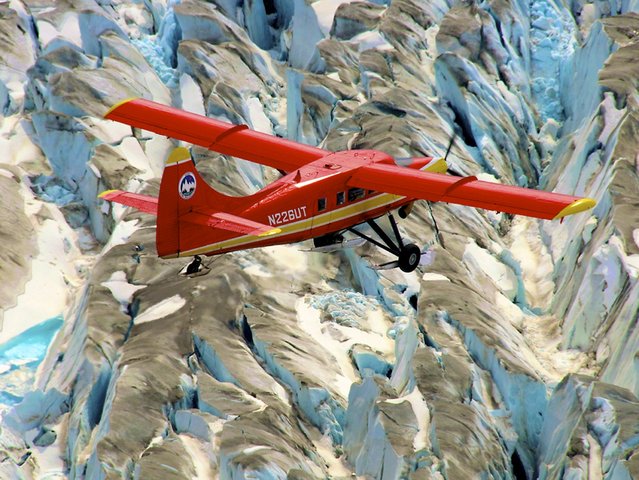
NASA's DHC-3 Otter plane flies in Operation IceBridge-Alaska surveys of mountain glaciers in Alaska in this image released on September 18, 2014. Over the past few decades, average global temperatures have been on the rise, and this warming is happening two to three times faster in the Arctic. (Photo by Chris Larsen/Reuters/NASA/University of Alaska-Fairbanks)