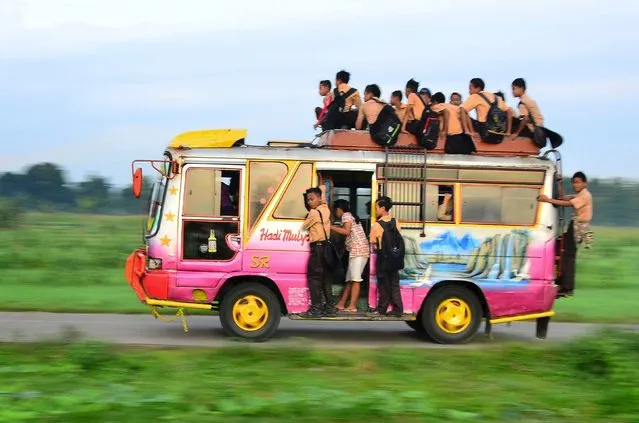
A group of students sit on top of a bus at Kemusu street in Boyolali, Central Java of Indonesia, March 20, 2015 in this picture taken by Antara Foto. (Photo by Yusuf Nugroho/Reuters/Antara Foto)
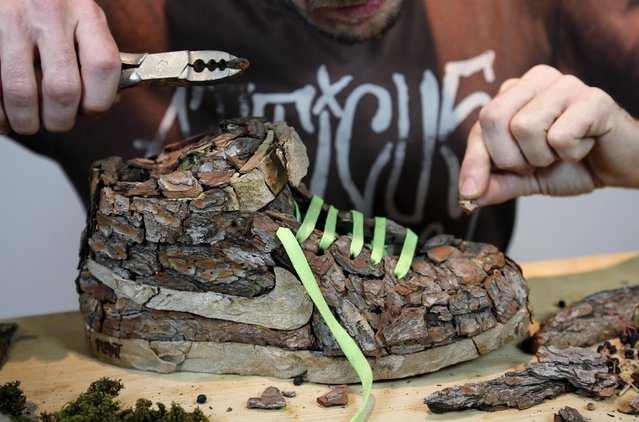
French artist Christophe Guinet, also known as “Mr Plant”, works on his plant shoe creation “Wood”, part of the artistic project “Just Grow It”, in his art gallery in Marseille, November 25, 2014. Guinet transforms name-brand Nike sneakers, cult footwear for urban youth, into vegetable compositions, creating a collection of artwork with trainers modified with tree bark, foam and flowers. (Photo by Jean-Paul Pelissier/Reuters)
(L-R) Models Jasmine Tookes, Paloma Elsesser, Barbara Palvin and Ashley Graham prepare backstage at the Victoria's Secret Fashion Show 2024 on October 15, 2024 in New York City. (Photo by Arturo Holmes/Getty Images for Victoria's Secret)
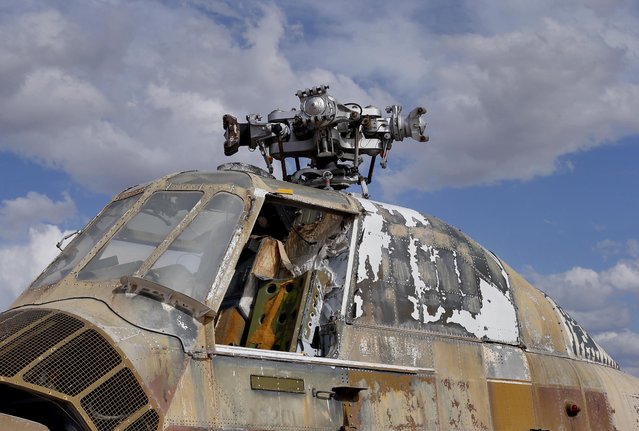
An Army Sikorsky VH-34s Choctaw helicopter once used to transport President Dwight D. Eisenhower sits in a field at the 309th Aerospace Maintenance and Regeneration Group boneyard Thursday, May 14, 2015 at Davis-Monthan Air Force Base in Tucson, Ariz. President Eisenhower became the first chief executive to be transported by helicopter. Presidents Eisenhower and John F. Kennedy were transported in VH-34 helicopters and VH-34's served as “Army One” from 1958 through 1963. (Photo by Matt York/AP Photo)
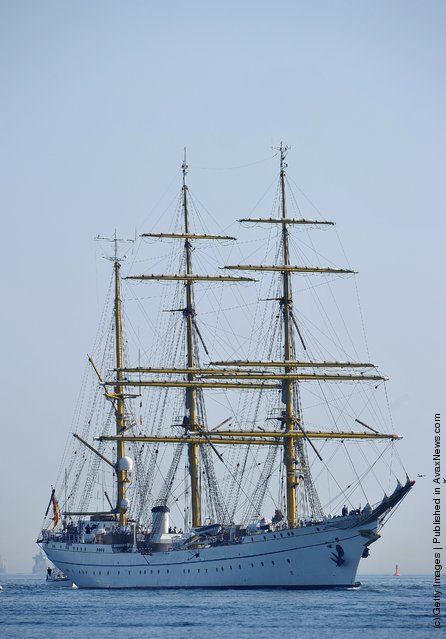
“The Gorch Fock is a tall ship of the German Navy (Deutsche Marine). She is the second ship of that name and a sister ship of the Gorch Fock built in 1933. Both ships are named in honor of the German writer Johann Kinau who wrote under the pseudonym "Gorch Fock" and died in the battle of Jutland/Skagerrak in 1916. The modern-day Gorch Fock was built in 1958 and has since then undertaken 146 cruises (as of October 2006), including one tour around the world in 1988. She is sometimes referred to (unofficially) as the Gorch Fock II to distinguish her from her older sister ship”. – Wikipedia
Photo: The “Gorch Fock” German Navy tall ship sails towards Kiel on May 6, 2011 in Kiel, Germany. The ship returns to Germany following investigations in January while it was in port in Ushuia, Argentina, into allegations of attempted mutiny following the death of a female crew member. German Defense Minister at the time Karl-Theodor zu Guttenberg suspended Captain Norbert Schatz, and though investigators absolved Schatz of wrongdoing, critics charge the investigation was inadequate. The "Gorch Fock" is the German Navy's flagship training vessel. (Photo by Stuart Franklin/Getty Images)
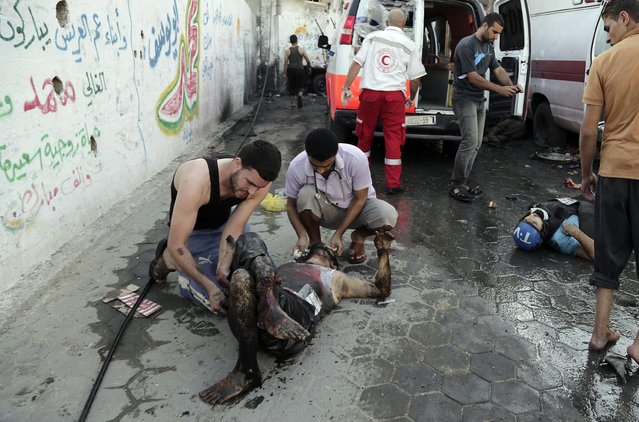
In this July 30, 2014 photo, neighbors help gravely injured Mohammed al-Selek, 39, wounded by an Israeli mortar strike as he lays next to the body of Palestinian journalist Rami Reyan who was killed, in the Shijaiyah neighborhood of the northern Gaza Strip. Al-Selek's life changed forever last July 30, when the shells slammed into his home killing all his three children, his father and six other relatives. A year later, al-Selek, who lost his leg during the airstrike, still struggles to recover and come to terms with his family's loss in the 50-day Israel-Hamas war. (Photo by Adel Hana/AP Photo)
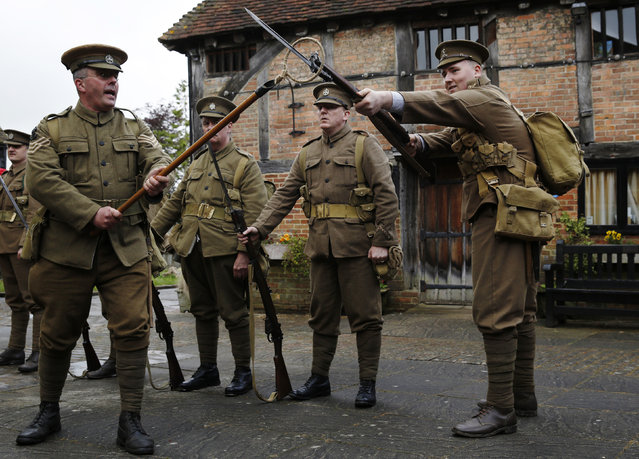
Factory landlord Lawrence Taylor (L), portraying a Colour Sergeant from the King's Royal Rifle Corps, part of the Rifles Living History Society, performs a drill with Connor Young (R) of the Queen's Own Royal West Kent Regiment Living History Group as they recreate the life of a First World War soldier at the Eden Valley Museum in Edenbridge in southeast England May 10, 2014. Lawrence has always had an interest in military history and specifically “The Rifles” – his veteran father's WWII regiment. When he became a re-enactor he chose not to re-enact WWII as many of the veterans are still alive, and he felt uncomfortable as he remembers his father would have flashbacks and nightmares about the war. United by a fascination with military history and a fondness for dressing up, groups such as the Rifles Living History Society and the Queen's Own Royal West Kent Regiment Living History Group get together to recreate aspects of life during the First World War. Reuters photographer Luke MacGregor photographed members of the groups, both as they took part in living history events and at their day jobs. (Photo by Luke MacGregor/Reuters)
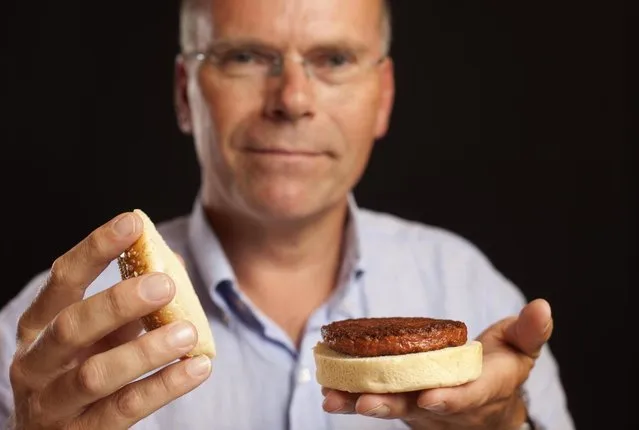
In this handout image provided by Ogilvy, a burger made from cultured beef, which has been developed by Professor Mark Post of Maastricht University in the Netherlands (pictured) is shown to the media during a press conference on August 5, 2013 in London, England. The in-vitro burger, cultured from cattle stem cells, the first example of what its creator says could provide an answer to global food shortages and help combat climate change, was fried in a pan and tasted by two volunteers. The burger is the result of years of research by Dutch scientist Mark Post, a vascular biologist at the University of Maastricht, who is working to show how meat grown in petri dishes might one day be a true alternative to meat from livestock.The meat in the burger has been made by knitting together around 20,000 strands of protein that has been cultured from cattle stem cells in Post's lab. (Photo by David Parry)