Loading...
Done
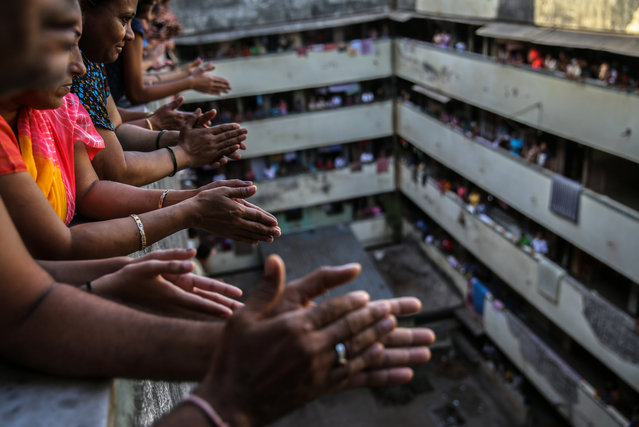
Indian people bang utensils and clap from the balconies of a residential building in Mumbai, India, 22 March 2020. Prime Minister Narendra Modi asks citizens to impose self-curfew to fight Coronavirus COVID-19 and also ask them to clap, bang the bells and utensils at 5pm Indian time to mark of respect and to thank the medical staff and others working 24 hours, during Covid-19 outbreak to keeping the Indians safe. (Photo by Divyakant Solanki/EPA/EFE)

Indian people bang utensils and clap from the balconies of a residential building in Mumbai, India, 22 March 2020. Prime Minister Narendra Modi asks citizens to impose self-curfew to fight Coronavirus COVID-19 and also ask them to clap, bang the bells and utensils at 5pm Indian time to mark of respect and to thank the medical staff and others working 24 hours, during Covid-19 outbreak to keeping the Indians safe. (Photo by Divyakant Solanki/EPA/EFE)
Details
29 Mar 2020 00:05:00
A bull rams inmates seated at a card table in the Convict Poker event at the Angola Prison Rodeo in Angola, La., Saturday, April 26, 2014. Those competing in the rodeo have to pass a physical to be deemed strong and healthy enough, and thousands of others work year-round making arts and crafts to sell at the event, according to the prison's athletic director. (Photo by Gerald Herbert/AP Photo)

A bull rams inmates seated at a card table in the Convict Poker event at the Angola Prison Rodeo in Angola, La., Saturday, April 26, 2014. Those competing in the rodeo have to pass a physical to be deemed strong and healthy enough, and thousands of others work year-round making arts and crafts to sell at the event, according to the prison's athletic director. (Photo by Gerald Herbert/AP Photo)
Details
28 Apr 2014 08:34:00
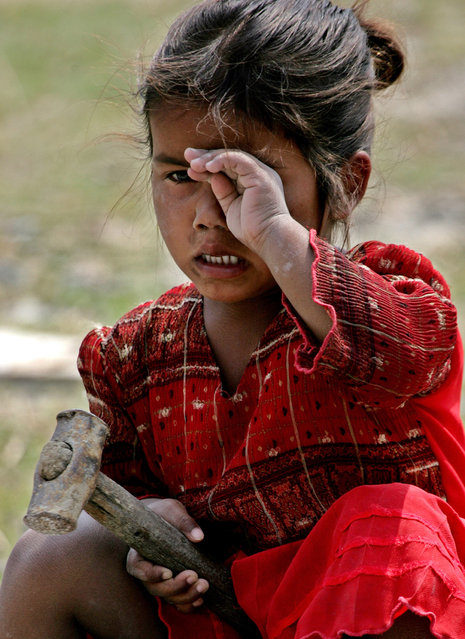
5-year-old Rina Kumari rubs her eye while cracking stones on the banks of Mahananda river in Siliguri, northeast India, March 5, 2005. Over 400 million people in India live below the internationally agreed poverty line (living on less than US $1 per day). According to estimates, several hundred thousand children work as labourers and beg on the streets in India. Photo taken on March 5, 2005. (Photo by Desmond Boylan/Reuters)

5-year-old Rina Kumari rubs her eye while cracking stones on the banks of Mahananda river in Siliguri, northeast India, March 5, 2005. Over 400 million people in India live below the internationally agreed poverty line (living on less than US $1 per day). According to estimates, several hundred thousand children work as labourers and beg on the streets in India. (Photo by Desmond Boylan/Reuters)
Details
13 Jun 2014 12:07:00
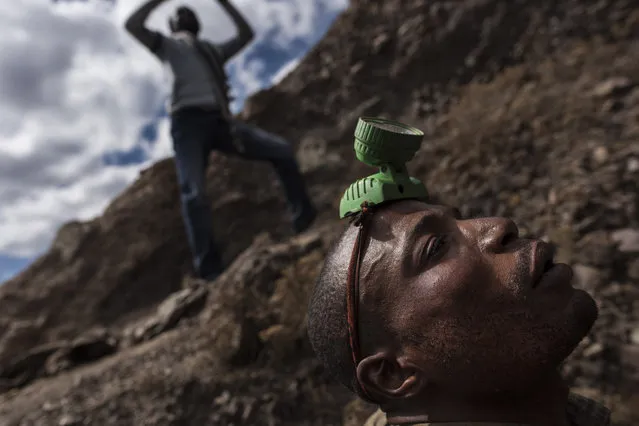
A “creuseur”, or digger, a plastic lantern on his head, readies to enter a copper and cobalt mine in Kawama, Democratic Republic of Congo on June 8, 2016. Cobalt is used in the batteries for electric cars and mobile phones. Working conditions are dangerous, often with no safety equipment or structural support for the tunnels. The diggers say they are paid on average US$2-3/day. (Photo by Michael Robinson Chavez/The Washington Post)

A “creuseur”, or digger, a plastic lantern on his head, readies to enter a copper and cobalt mine in Kawama, Democratic Republic of Congo on June 8, 2016. Cobalt is used in the batteries for electric cars and mobile phones. Working conditions are dangerous, often with no safety equipment or structural support for the tunnels. The diggers say they are paid on average US$2-3/day. (Photo by Michael Robinson Chavez/The Washington Post)
Details
30 Dec 2016 10:29:00
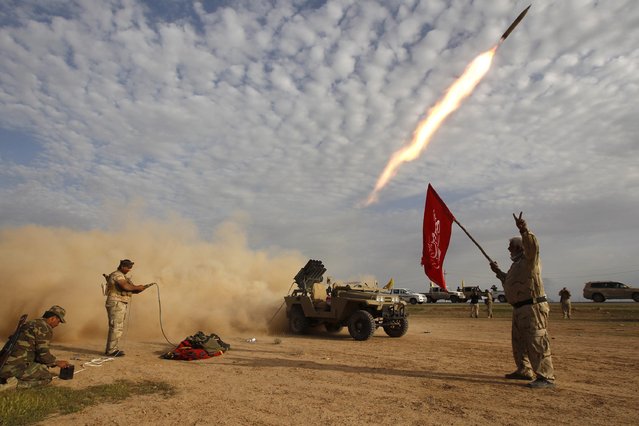
Shi'ite fighters launch a rocket during clashes with Islamic State militants on the outskirts of al-Alam March 8, 2015. Thaier Al-Sudani: “It was me and a few other Iraqi journalists working for local outlets. (Photo by Thaier Al-Sudani/Reuters)

Shi'ite fighters launch a rocket during clashes with Islamic State militants on the outskirts of al-Alam March 8, 2015. Thaier Al-Sudani: “It was me and a few other Iraqi journalists working for local outlets. We went to the frontlines in coordination with the Iraqi government forces and supporting militias. The press officer would come in the morning and take us to the frontline in a convoy. Whenever an area was won from Islamic State, the fighters would chant and pray and show victory signs. Most of the areas we were in didn't have residents, so after the battle they would resemble ghost towns; nothing but burnt cars and charred bodies of Islamic State fighters. Al-Alam was an exception as it had some residents who chanted for the government forces after their victory”. (Photo by Thaier Al-Sudani/Reuters)
Details
14 Mar 2015 14:33:00
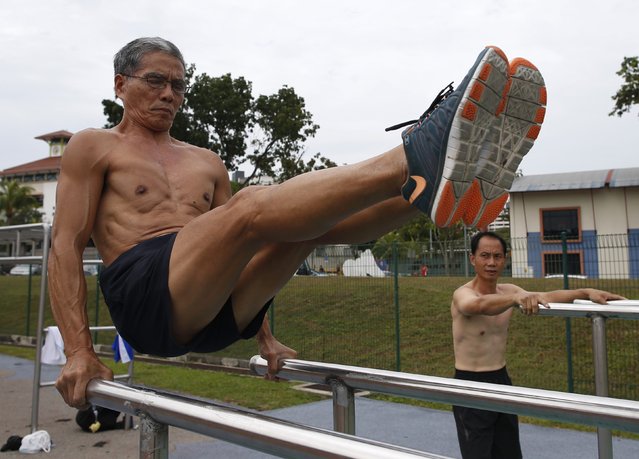
Team Strong Silvers member Ngai Hin Kwok, 66, works out as teammate Ng Siu Chi, 57, watches at a stadium in Singapore March 15, 2015. Team Strong Silvers, is a group of senior citizens who train in calisthenics. The trio trains individually at least three times a week, and meets up for joint calisthenics at least twice a month. (Photo by Edgar Su/Reuters)

Team Strong Silvers member Ngai Hin Kwok, 66, works out as teammate Ng Siu Chi, 57, watches at a stadium in Singapore March 15, 2015. Team Strong Silvers, is a group of senior citizens who train in calisthenics. The trio trains individually at least three times a week, and meets up for joint calisthenics at least twice a month. (Photo by Edgar Su/Reuters)
Details
16 Mar 2015 10:25:00
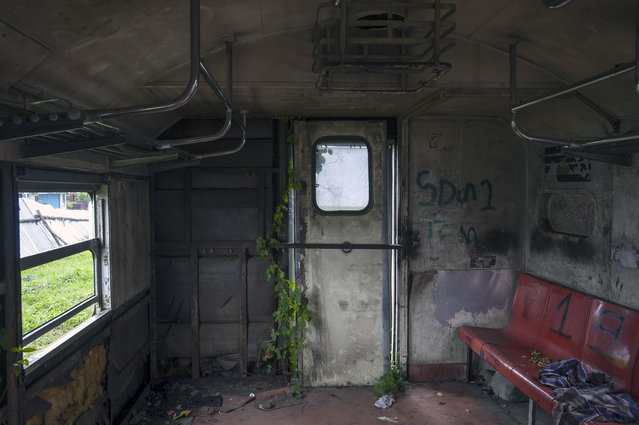
The carriages have decayed over time, on February 27, 2015, in Purwakarta, Indonesia. Dozens of trains are stacked on top of each other in what looks like a post-apocalyptic world. The old electric trains that travelled in and out of Jakarta, Indonesia, are weathered and decayed over time. The trains were used everyday since the 1980s and carried thousands of people to work. (Photo by HKV/Barcroft Media)

The carriages have decayed over time, on February 27, 2015, in Purwakarta, Indonesia. Dozens of trains are stacked on top of each other in what looks like a post-apocalyptic world. The old electric trains that travelled in and out of Jakarta, Indonesia, are weathered and decayed over time. The trains were used everyday since the 1980s and carried thousands of people to work. Now the carriages, which were once the lifeblood of public transport in the south-Asian city, have been left to rust among shrubbery. (Photo by HKV/Barcroft Media)
Details
21 Apr 2015 11:13:00
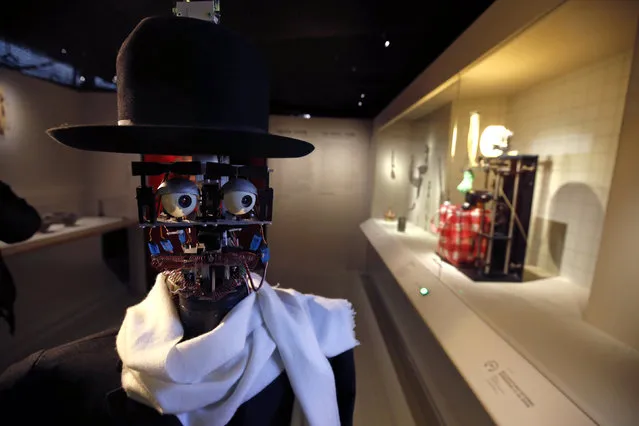
The Berenson robot strolls among visitors during the exhibition “Persona : Oddly Human” at the Quai Branly museum in Paris, France, February 23, 2016. The Berenson robot, developed in France in 2011, is the brainchild of anthropologist Denis Vidal and robotics engineer Philippe Gaussier. Its programming allows it to record reactions of museum visitors to certain pieces of art and then use the data to develop its own unique taste, which allows “Berenson” to judge whether or not it likes a certain work of art within an exhibition. (Photo by Philippe Wojazer/Reuters)

The Berenson robot strolls among visitors during the exhibition “Persona : Oddly Human” at the Quai Branly museum in Paris, France, February 23, 2016. The Berenson robot, developed in France in 2011, is the brainchild of anthropologist Denis Vidal and robotics engineer Philippe Gaussier. Its programming allows it to record reactions of museum visitors to certain pieces of art and then use the data to develop its own unique taste, which allows “Berenson” to judge whether or not it likes a certain work of art within an exhibition. (Photo by Philippe Wojazer/Reuters)
Details
25 Feb 2016 12:26:00