Loading...
Done
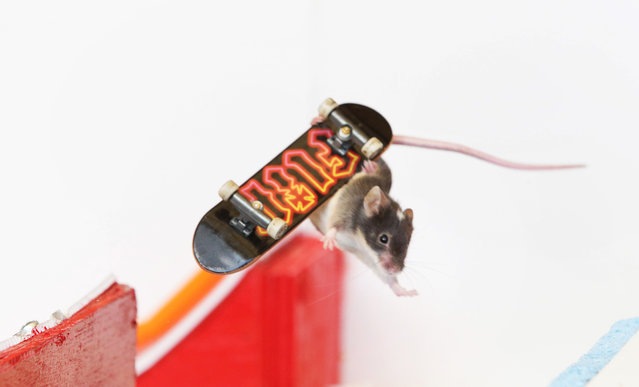
Skateboarding Mice By Shane Willmott

Three years ago, Shane Willmott wowed the world with his surfing mice. Now, the Australian has taken on a new challenge - training his radical rodents to skateboard. Mr Willmott, who lives in the Gold Coast area of eastern Australia, near Brisbane, has even built his furry friends a mini skate park. Fearless mice Harvey and Pedro take on ramps, half-pipes and even a deadly ring of fire.
Details
14 Aug 2013 12:54:00
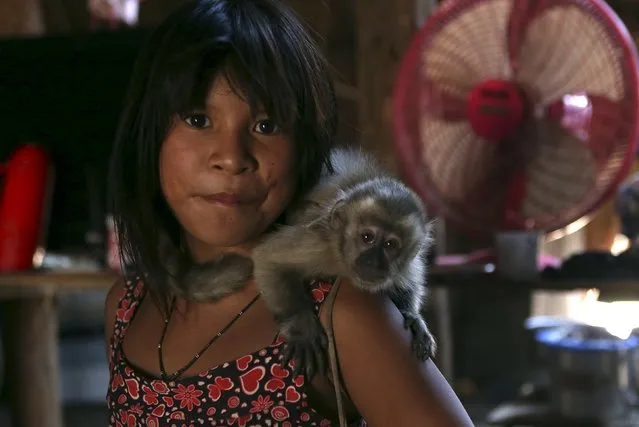
An indigenous girl carries a monkey inside her house in their village at Xingu national park in Mato Grosso, Brazil, October 2, 2015. (Photo by Paulo Whitaker/Reuters)

An indigenous girl carries a monkey inside her house in their village at Xingu national park in Mato Grosso, Brazil, October 2, 2015. The Kamayura tribe consists of around 300 people, and is one of the 16 ethnic groups living in the indigenous Xingu national park. (Photo by Paulo Whitaker/Reuters)
Details
18 Oct 2015 08:03:00
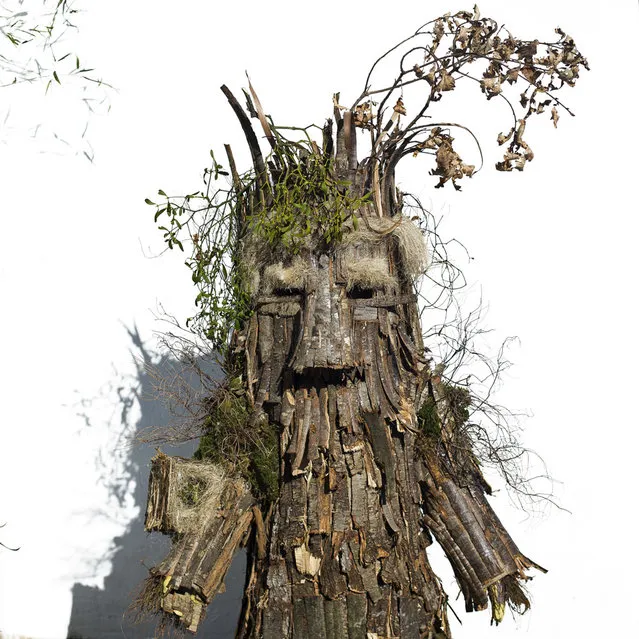
A man dressed as a  “Trapajon”, representing entities of nature, poses for a picture after taking part in the Vijanera Festival in Silio, northern Spain, Sunday, Jan. 6, 2013. The Vijanera masquerade, of pre-Roman origin, is the first carnival of the year in Europe symbolizing the triumph of good over evil and involving the participation of crowds of residents wearing different masks, animal skins and brightly colored clothing with its own complex function and symbolism and becoming the living example of the survival of archaic cults to nature. (Photo by Daniel Ochoa de Olza/AP Photo)

A man dressed as a “Trapajon”, representing entities of nature, poses for a picture after taking part in the Vijanera Festival in Silio, northern Spain, Sunday, Jan. 6, 2013. The Vijanera masquerade, of pre-Roman origin, is the first carnival of the year in Europe symbolizing the triumph of good over evil and involving the participation of crowds of residents wearing different masks, animal skins and brightly colored clothing with its own complex function and symbolism and becoming the living example of the survival of archaic cults to nature. (Photo by Daniel Ochoa de Olza/AP Photo)
Details
19 Jan 2013 13:01:00
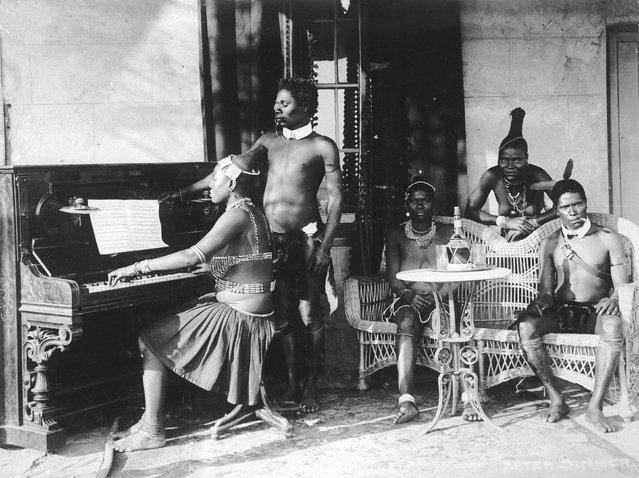
circa 1925:  A Zulu woman playing the piano while a group of others sit and listen.  (Photo by General Photographic Agency/Getty Images)

“The Zulu are the largest South African ethnic group, with an estimated 10–11 million people living mainly in the province of KwaZulu-Natal. Small numbers also live in Zimbabwe, Zambia, and Mozambique. Their language, Zulu, is a Bantu language; more specifically, part of the Nguni subgroup. The Zulu Kingdom played a major role in South African history during the 19th and 20th centuries. Under apartheid, Zulu people were classed as third-class citizens and suffered from state-sanctioned discrimination. They remain today the most numerous ethnic group in South Africa, and now have equal rights along with all other citizens”. – Wikipedia.

Photo: A Zulu woman playing the piano while a group of others sit and listen (to put it briefly, Englishmen scoff over Zulu). South Africa, circa 1925. (Photo by General Photographic Agency)

Details
03 Feb 2014 09:40:00
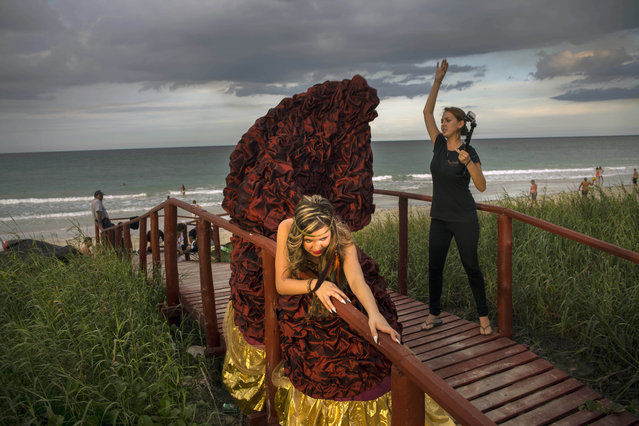
In this November 21, 2015 photo, Camila Lopez Rivas, 14, poses for portraits on a beach in Havana, Cuba, as an assistant lifts the train of her dress to make it look like its flying in the wind. Camila lives in Miami, the daughter of a truck driver who left Cuba when she was a baby. She doesn't remember the island, but wanted to return for the photographs and videos that Latin American girls typically take for their 15th birthdays. (Photo by Ramon Espinosa/AP Photo)

In this November 21, 2015 photo, Camila Lopez Rivas, 14, poses for portraits on a beach in Havana, Cuba, as an assistant lifts the train of her dress to make it look like its flying in the wind. Camila lives in Miami, the daughter of a truck driver who left Cuba when she was a baby. She doesn't remember the island, but wanted to return for the photographs and videos that Latin American girls typically take for their 15th birthdays. (Photo by Ramon Espinosa/AP Photo)
Details
01 Jan 2016 08:05:00
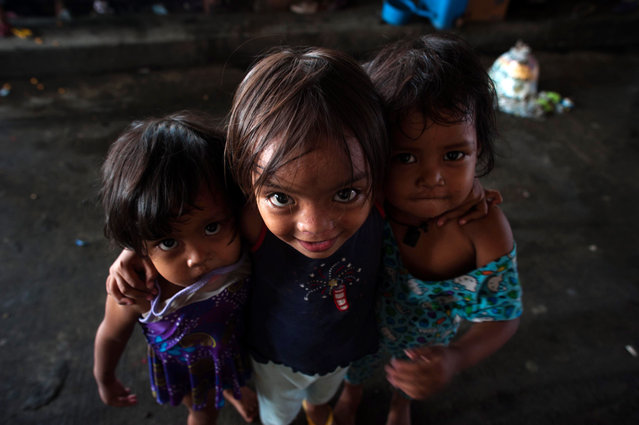
Children beg for alms in a street on August 11, 2014 in Manila, Philippines. The Philippines has one of the fastest growing populations in Southeast Asia with around 100 million people. (Photo by Dondi Tawatao/Getty Images)

Children beg for alms in a street on August 11, 2014 in Manila, Philippines. The Philippines has one of the fastest growing populations in Southeast Asia with around 100 million people. At least 12 million people live in the capital city of Manila alone, making it one of the most densely populated and largest cities in the world. Lack of space and economic opportunities has pushed around four million people to live informally along waterways, bridges and even cemeteries further straining the already weak infrastructure and straining the resources of the city. (Photo by Dondi Tawatao/Getty Images)
Details
12 Aug 2014 12:21:00
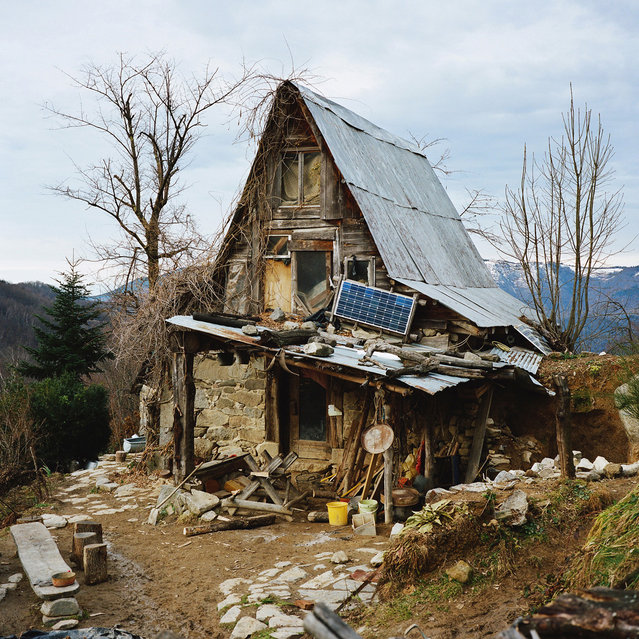
This property in the French Pyrenees is owned by a German man, who moved with his family here 25 years ago. He has since renovated the shack to be a completely self-sufficient house. There are no electrical appliances, but the solar panel powers small lights in the house. (Photo by Antoine Bruy)

Back in 2010, French photographer Antoine Bruy began hitchhiking around Europe without any fixed route. Along his travels, he met people who had entirely abandoned city life in favour of an isolated country existence they found more fulfilling. Bruy began seeking out people who lived off-the-grid. After three years on the road, staying in makeshift houses and on community farms, he has released Scrublands, a documentation of the lifestyle. While each living situation is different, Bruy found that all the people he met shared a common desire to escape the rat race and achieve a quieter life in harmony with nature. (Photo by Antoine Bruy)
Details
13 Aug 2014 09:45:00
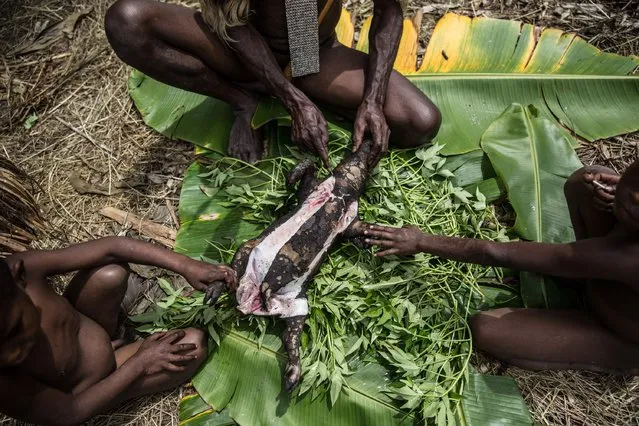
A man from the Dani tribe cuts the head of a pig after cooked by traditional way which is use burned hot stones at Obia Village on August 9, 2014 in Wamena, Papua, Indonesia. The stone-age Dani tribe live a traditional existence in the Baliem Valley, which is situated 1600 metres above sea level in the heart of the Cyclops Mountains. (Photo by Agung Parameswara/Getty Images)

A man from the Dani tribe cuts the head of a pig after cooked by traditional way which is use burned hot stones at Obia Village on August 9, 2014 in Wamena, Papua, Indonesia. The stone-age Dani tribe live a traditional existence in the Baliem Valley, which is situated 1600 metres above sea level in the heart of the Cyclops Mountains. (Photo by Agung Parameswara/Getty Images)
Details
14 Aug 2014 10:30:00