Loading...
Done
Cave Diver, Anhumas Abyss, Bonito, Brazil: The Anhumas Abyss is an underground cavern with a crystal-clear lake below, more than 260 feet (79 m) deep. A visitor must enter through a narrow opening at the top of the chamber and rappel into the cave. Snorkeling and scuba diving in the lake reveal amazing scenery. Distinctive, conical limestone stalagmites and stalactites occupy the lake and the surrounding area, some reaching 65 feet (20 m) high. “One must rappel about 235 feet (72 m) to get down into this deep lake. The photo was taken at a depth of 50 feet (15 m). It was a challenge to create the image because of the high contrast, plus the diver could not see into the darkness, making communication impossible”. (Photo by Marcio Cabral/Nature’s Best Photography Awards 2017)

Cave Diver, Anhumas Abyss, Bonito, Brazil: The Anhumas Abyss is an underground cavern with a crystal-clear lake below, more than 260 feet (79 m) deep. A visitor must enter through a narrow opening at the top of the chamber and rappel into the cave. Snorkeling and scuba diving in the lake reveal amazing scenery. Distinctive, conical limestone stalagmites and stalactites occupy the lake and the surrounding area, some reaching 65 feet (20 m) high. (Photo by Marcio Cabral/Nature’s Best Photography Awards 2017)
Details
26 Oct 2017 08:10:00
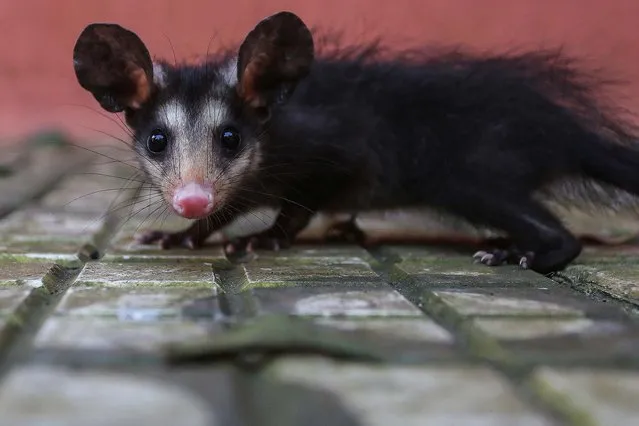
Photo taken on September 19, 2015 shows a baby Brazilian opossum at the “Parque Estoril” zoo in Sao Bernardo do Campo of Sao Paulo, Brazil. According to local press, the “Parque Estoril” zoo houses currently 23 orphan cubs of wild animals rescued in the south region of Sao Paulo, victims of illegal wildlife trade or problems caused by urban growth. (Photo by Rahel Patrasso/Xinhua via ZUMA Wire)

Photo taken on September 19, 2015 shows a baby Brazilian opossum at the “Parque Estoril” zoo in Sao Bernardo do Campo of Sao Paulo, Brazil. According to local press, the “Parque Estoril” zoo houses currently 23 orphan cubs of wild animals rescued in the south region of Sao Paulo, victims of illegal wildlife trade or problems caused by urban growth. According to the zoo, all the animals arrived in the last three months, and many of them, not being able to be reintroduced to their natural habitat, will be used as examples in environmental education classes. (Photo by Rahel Patrasso/Xinhua via ZUMA Wire)
Details
26 Sep 2015 08:00:00
A barber cuts hair of his client at a shuttered market during the countrywide traders strike in Lahore on October 29, 2019. Pakistani traders have joined hands to observe a nationwide shutterdown strike against the government over its “anti-business” policies, seeking to bring trade and economic activities across the country to a standstill on October 29 and 30. (Photo by Arif Ali/AFP Photo)

A barber cuts hair of his client at a shuttered market during the countrywide traders strike in Lahore on October 29, 2019. Pakistani traders have joined hands to observe a nationwide shutterdown strike against the government over its “anti-business” policies, seeking to bring trade and economic activities across the country to a standstill on October 29 and 30. (Photo by Arif Ali/AFP Photo)
Details
06 Nov 2019 00:03:00
Members of Imperio Serrano samba school get ready prior to their entrance during 2023 Carnival parades at Marquês de Sapucaí Sambodrome on February 19, 2023 in Rio de Janeiro, Brazil. (Photo by Buda Mendes/Getty Images)

Members of Imperio Serrano samba school get ready prior to their entrance during 2023 Carnival parades at Marquês de Sapucaí Sambodrome on February 19, 2023 in Rio de Janeiro, Brazil. (Photo by Buda Mendes/Getty Images)
Details
30 Jun 2024 03:13:00
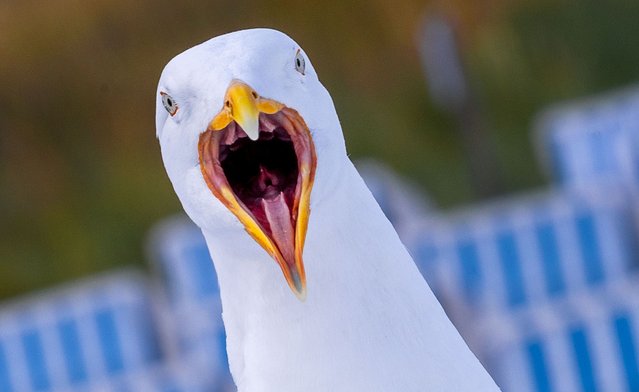
A gull gives its familiar cry on the roof of a beach bar on the Baltic coast on July 16, 2024. (Photo by Jens Büttner/dpa)

A gull gives its familiar cry on the roof of a beach bar on the Baltic coast on July 16, 2024. (Photo by Jens Büttner/dpa)
Details
28 Jul 2024 04:59:00
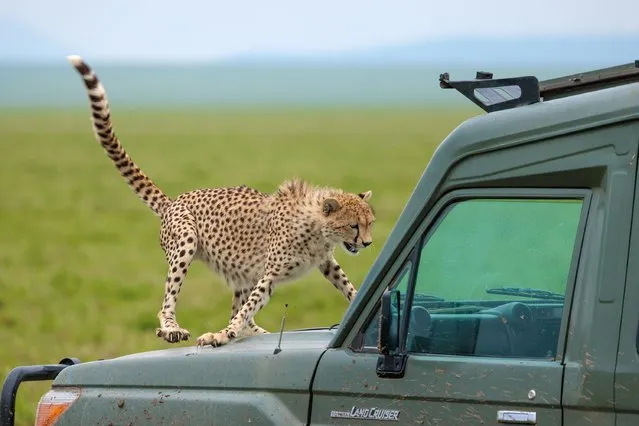
Tourists in the Serengeti, Tanzania in the second decade of February 2024, get more than they bargained for as a cheetah jumps on the bonnet of their jeep to make their acquaintance. (Photo by Ann Aveyard/Animal News Agency)

Tourists in the Serengeti, Tanzania in the second decade of February 2024, get more than they bargained for as a cheetah jumps on the bonnet of their jeep to make their acquaintance. (Photo by Ann Aveyard/Animal News Agency)
Details
10 Mar 2024 07:30:00
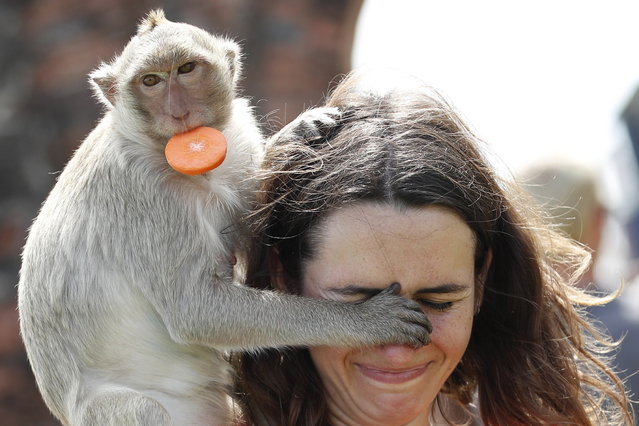
A monkey is being fed by a foreign tourist during the annual Monkey Banquet at Phra Prang Sam Yod ancient temple in Lopburi, some 180km from Bangkok, central Thailand, 24 November 2024. The annual gala has been organized since 1989 by Lopburi's entrepreneur Yongyuth Kitwatananusont, offering all-you-can-eat fruits, vegetables, and desserts for monkeys to honor the long-tailed macaques to attract tourists to visit the town to promote tourism. According to the Wildlife Department, more than 2,000 urban monkeys were captured in 2024 by authorities to control the monkey population after the growing complaints of residents that the macaques maraud food, frequently confront residents, causing accidents as well as their properties, assets, and the ancient city to be overrun and damaged by the monkeys. (Photo by Rungroj Yongrit/EPA)

A monkey is being fed by a foreign tourist during the annual Monkey Banquet at Phra Prang Sam Yod ancient temple in Lopburi, some 180km from Bangkok, central Thailand, 24 November 2024. The annual gala has been organized since 1989 by Lopburi's entrepreneur Yongyuth Kitwatananusont, offering all-you-can-eat fruits, vegetables, and desserts for monkeys to honor the long-tailed macaques to attract tourists to visit the town to promote tourism. (Photo by Rungroj Yongrit/EPA)
Details
08 Dec 2024 04:22:00
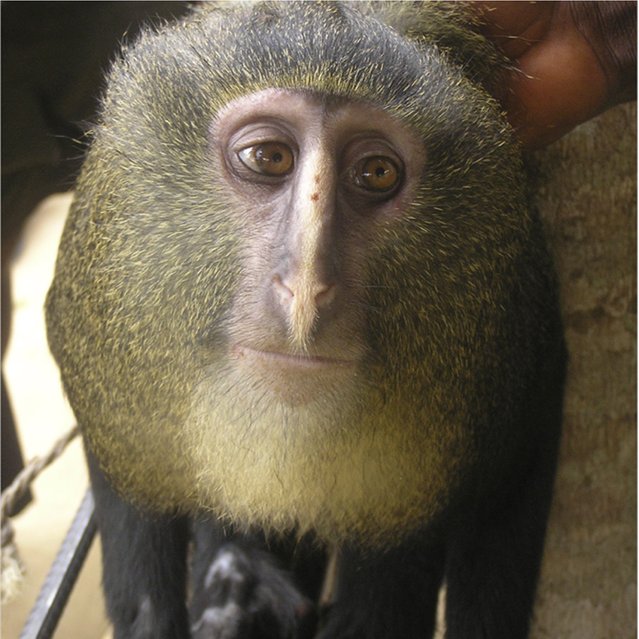
A new species of monkey found in the Democratic Republic of the Congo and identified as Lesula (Cercopithecus lomamiensis) is seen in this undated photograph from an article published September 12, 2012 in the science journal PLOS One. (Photo by Hart J. A., Detwiler K. M., Gilbert C. C./Reuters)

A new species of monkey found in the Democratic Republic of the Congo and identified as Lesula (Cercopithecus lomamiensis) is seen in this undated photograph from an article published September 12, 2012 in the science journal PLOS One. The monkey was first seen in 2007 by researchers John and Terese Hart of the Peabody Museum of Natural History at Yale Research Project. The finding of C. lomamiensis represents only the second new species of African monkey to be discovered in the past 28 years, according to the research article. (Photo by Hart J. A., Detwiler K. M., Gilbert C. C./Reuters)
Details
27 Sep 2012 08:17:00