Loading...
Done
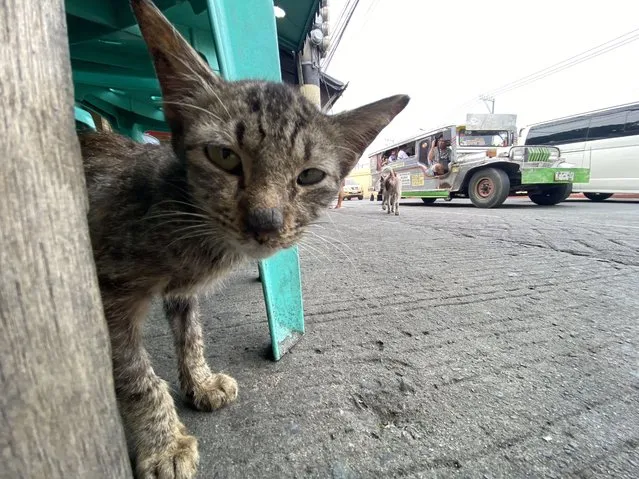
A cat and a dog stray along a side street in Las Pinas city, Metro Manila, Philippines, 02 July 2023. A significant number of dogs and cats left wandering in streets could lead to potential health hazard due to rabies. Amidst Covid-19 pandemic, displaced pet owners who lost their job because their employers closed or lost business were forced to leave their animals in the city as they migrate elsewhere. (Photo by Francis R. Malasig/EPA)

A cat and a dog stray along a side street in Las Pinas city, Metro Manila, Philippines, 02 July 2023. A significant number of dogs and cats left wandering in streets could lead to potential health hazard due to rabies. Amidst Covid-19 pandemic, displaced pet owners who lost their job because their employers closed or lost business were forced to leave their animals in the city as they migrate elsewhere. (Photo by Francis R. Malasig/EPA)
Details
18 Jul 2023 04:18:00
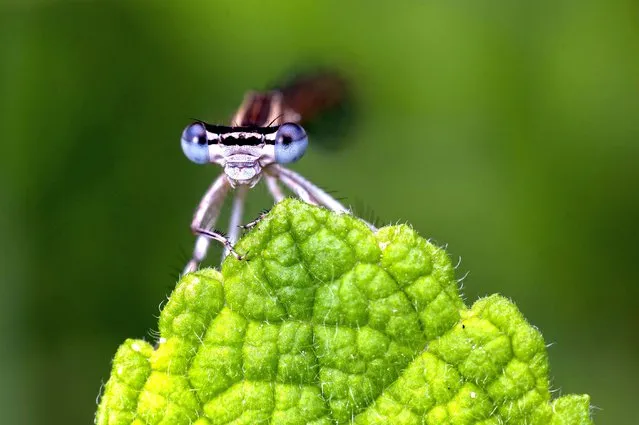
A dragonfly rests on a leaf in Hinojedo, Cantabria, northern Spain, 01 June 2023. (Photo by Pedro Puente Hoyos/EPA/EFE/Rex Features/Shutterstock)

A dragonfly rests on a leaf in Hinojedo, Cantabria, northern Spain, 01 June 2023. (Photo by Pedro Puente Hoyos/EPA/EFE/Rex Features/Shutterstock)
Details
26 Jul 2023 04:23:00
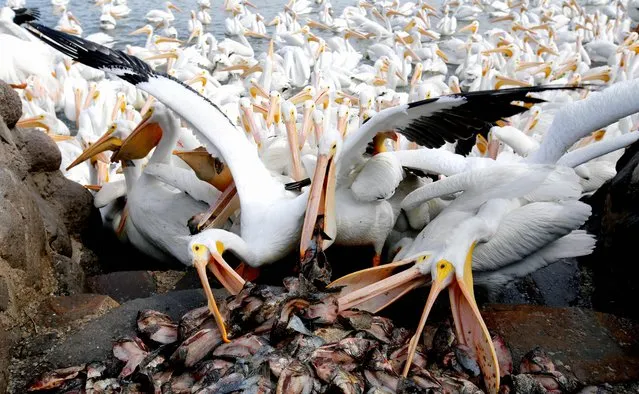
A pod of white pelicans, one of the largest birds in Canada and the US, are seen on the shore of the Chapala lagoon in Cojumatlan de Regules, Mexico, on January 28, 2022. White pelicans travel thousands of kilometers migrating from the cold temperatures of North America. (Photo by Ulises Ruiz/AFP Photo)

A pod of white pelicans, one of the largest birds in Canada and the US, are seen on the shore of the Chapala lagoon in Cojumatlan de Regules, Mexico, on January 28, 2022. White pelicans travel thousands of kilometers migrating from the cold temperatures of North America. (Photo by Ulises Ruiz/AFP Photo)
Details
06 Feb 2022 06:20:00
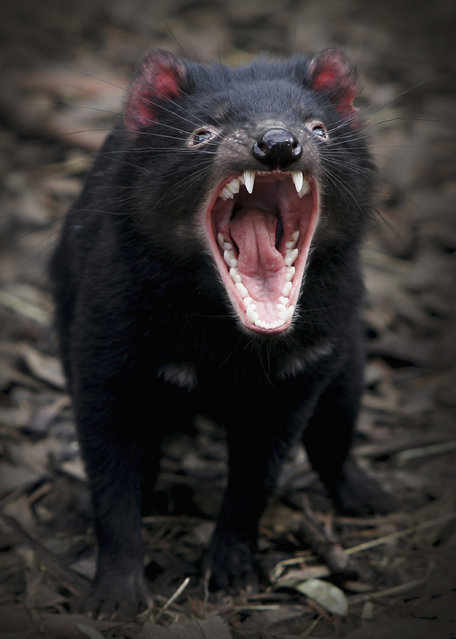
A Tasmanian Devil bears it's teeth at a quarantine facility August 31, 2005 in Hobart, Australia. The Devil, a native marsupial unique to Tasmania, is under threat from Devil Facial Tumor Disease (DFTD) which is decimating numbers throughout Tasmania. (Photo by Ian Waldie/Getty Images)

“The Tasmanian devil (Sarcophilus harrisii) is a carnivorous marsupial of the family Dasyuridae now found in the wild only in the Australian island state of Tasmania. The size of a small dog, it became the largest carnivorous marsupial in the world following the extinction of the thylacine in 1936. It is characterised by its stocky and muscular build, black fur, pungent odour, extremely loud and disturbing screech, keen sense of smell, and ferocity when feeding”. – Wikipedia. Photo: A Tasmanian Devil bears it's teeth at a quarantine facility August 31, 2005 in Hobart, Australia. (Photo by Ian Waldie/Getty Images)
Details
27 Jan 2014 09:45:00
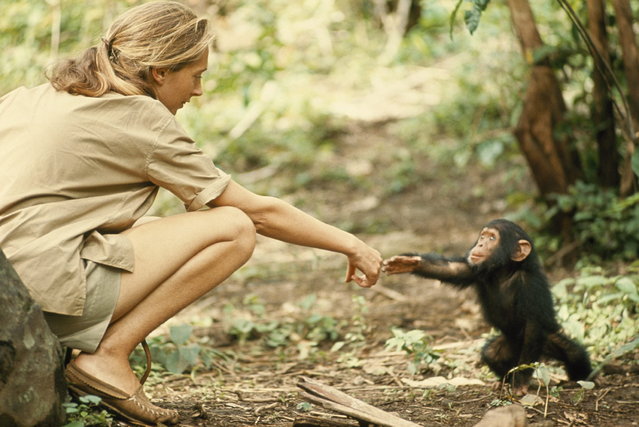
Tanzania, 1964. A touching moment between primatologist and National Geographic grantee Jane Goodall and young chimpanzee Flint at Tanzania's Gombe Stream Reserve. (Photo by Hugo van Lawick

Tanzania, 1964. A touching moment between primatologist and National Geographic grantee Jane Goodall and young chimpanzee Flint at Tanzania's Gombe Stream Reserve. (Photo by Hugo van Lawick via National Geographic)
Details
16 Jan 2013 09:59:00
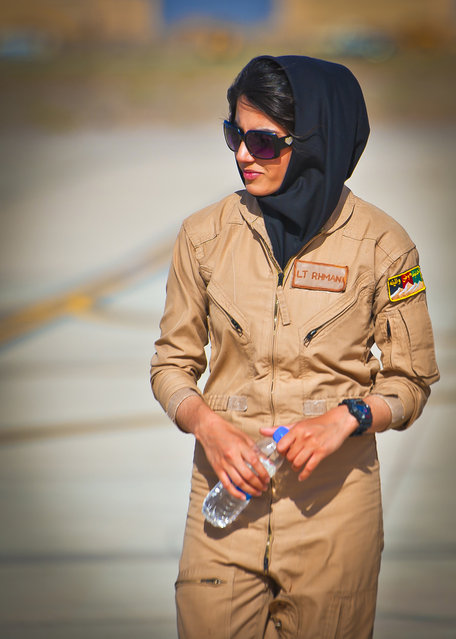
Afghan air force 2nd Lt. Niloofar Rhmani walks the flight line at Shindand Air Base, Afghanistan, prior to her graduation from undergraduate pilot training, on May 13, 2013. Rhmani made history on May 14, when she became the first female to successfully complete undergraduate pilot training and earn the status of pilot in more than 30 years. She will continue her service as she joins the Kabul Air Wing as a Cessna 208 pilot. (Photo by Senior Airman Scott Saldukas/USAF)

Afghan air force 2nd Lt. Niloofar Rhmani walks the flight line at Shindand Air Base, Afghanistan, prior to her graduation from undergraduate pilot training, on May 13, 2013. Rhmani made history on May 14, when she became the first female to successfully complete undergraduate pilot training and earn the status of pilot in more than 30 years. She will continue her service as she joins the Kabul Air Wing as a Cessna 208 pilot. (Photo by Senior Airman Scott Saldukas/USAF)
Details
04 Jun 2013 08:33:00
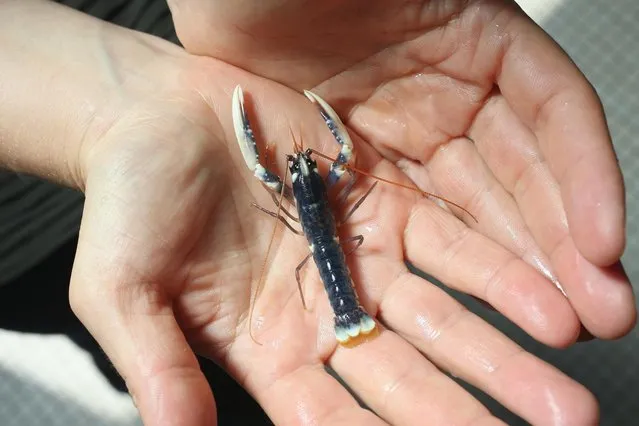
Isabel Schmalenbach, an environmental scientist with the Helgoland Biological Institute (Biologische Anstalt Helgoland), part of the Alfred Wegener Institute for Polar and Marine Research, holds a one-year old baby European lobster (Homarus gammarus) raised at the institute on August 3, 2013 on Helgoland Island, Germany. (Photo by Sean Gallup/Getty Images)

Isabel Schmalenbach, an environmental scientist with the Helgoland Biological Institute (Biologische Anstalt Helgoland), part of the Alfred Wegener Institute for Polar and Marine Research, holds a one-year old baby European lobster (Homarus gammarus) raised at the institute on August 3, 2013 on Helgoland Island, Germany. Later in the day Schmalenbach and her colleagues released a total of 415 one-year old lobsters into the North Sea as part of an effort to repopulate the lobster population around Helgoland (also called Heligoland). In the 19th century local fishermen caught up to 80,000 lobsters a year in the surrounding waters, combined with the heavy allied bombing of the island during and after World War II, as well as other environmental factors, decimated the lobster population. (Photo by Sean Gallup)
Details
05 Aug 2013 08:39:00
Passengers climb to board an overcrowded train at a railway station in Dhaka August 8, 2013. Millions of residents in Dhaka are travelling home from the capital city to celebrate the Muslim Eid al-Fitr holiday, which marks the end of the Muslim holy fasting month of Ramadan. (Photo by Andrew Biraj/Reuters)

Passengers climb to board an overcrowded train at a railway station in Dhaka August 8, 2013. Millions of residents in Dhaka are travelling home from the capital city to celebrate the Muslim Eid al-Fitr holiday, which marks the end of the Muslim holy fasting month of Ramadan. (Photo by Andrew Biraj/Reuters)
Details
09 Aug 2013 08:48:00