Loading...
Done
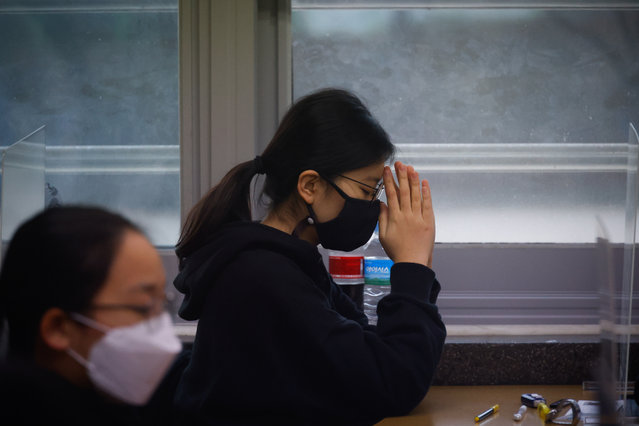
A student  wearing a face mask prays before the start of the annual college entrance examination amid the coronavirus pandemic at an exam hall in Seoul, South Korea, Thursday, December 3, 2020. South Korean officials are urging people to remain at home if possible and cancel gatherings as about half a million students prepare for a crucial national college exam. (Photo by Kim Hong-Ji/Pool Photo via AP Photo)

A student wearing a face mask prays before the start of the annual college entrance examination amid the coronavirus pandemic at an exam hall in Seoul, South Korea, Thursday, December 3, 2020. South Korean officials are urging people to remain at home if possible and cancel gatherings as about half a million students prepare for a crucial national college exam. (Photo by Kim Hong-Ji/Pool Photo via AP Photo)
Details
06 Dec 2020 00:01:00
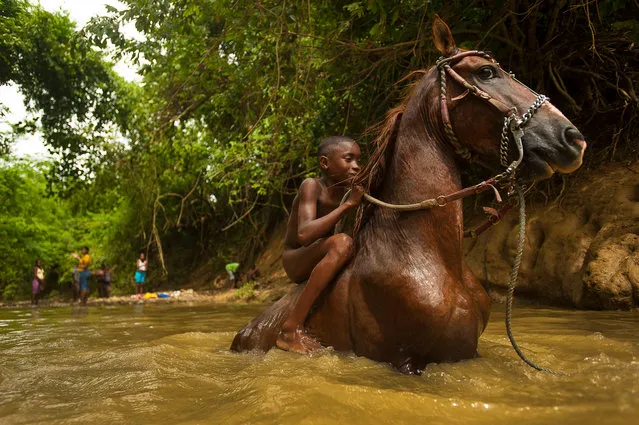
This image of a young bareback rider was taken in the village of Palenque de San Basilio, in Colombia’s Bolívar department. Founded by freed slaves in the 17th century, it became the first free town in the Americas, following a decree by the Spanish crown. Most of today’s inhabitants are direct descendants of those slaves and have preserved many of their customs, including their own language, Palenquero. (Photo by Sebastián Suki Beláustegui/The Guardian)

This image of a young bareback rider was taken in the village of Palenque de San Basilio, in Colombia’s Bolívar department. Founded by freed slaves in the 17th century, it became the first free town in the Americas, following a decree by the Spanish crown. Most of today’s inhabitants are direct descendants of those slaves and have preserved many of their customs, including their own language, Palenquero. (Photo by Sebastián Suki Beláustegui/The Guardian)
Details
07 Sep 2017 09:13:00
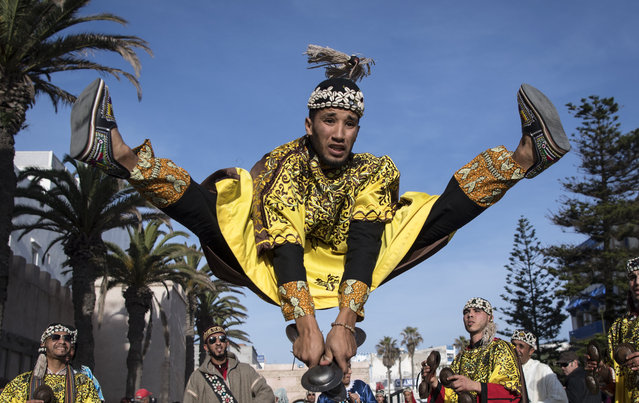
A Gnawa traditional group performs in the city of Essaouira on December 14, 2019, to celebrate the decision of adding the Gnawa culture to UNESCO's list of Intangible Cultural Heritage of Humanity. Gnawa culture, a centuries-old Moroccan practice rooted in music, African rituals and Sufi traditions, was added to UNESCO's list of Intangible Cultural Heritage of Humanity earlier in the week. Gnawa refers to a “set of musical productions, fraternal practices and therapeutic rituals where the secular mixes with the sacred”, according to the nomination submitted by Morocco. Often dressed in colourful outfits, Gnawa musicians play the guenbri, a type of lute with three strings, accompanied by steel castanets called krakebs. (Photo by Fadel Senna/AFP Photo)

A Gnawa traditional group performs in the city of Essaouira on December 14, 2019, to celebrate the decision of adding the Gnawa culture to UNESCO's list of Intangible Cultural Heritage of Humanity. Gnawa culture, a centuries-old Moroccan practice rooted in music, African rituals and Sufi traditions, was added to UNESCO's list of Intangible Cultural Heritage of Humanity earlier in the week. Gnawa refers to a “set of musical productions, fraternal practices and therapeutic rituals where the secular mixes with the sacred”, according to the nomination submitted by Morocco. Often dressed in colourful outfits, Gnawa musicians play the guenbri, a type of lute with three strings, accompanied by steel castanets called krakebs. (Photo by Fadel Senna/AFP Photo)
Details
18 Dec 2019 00:05:00
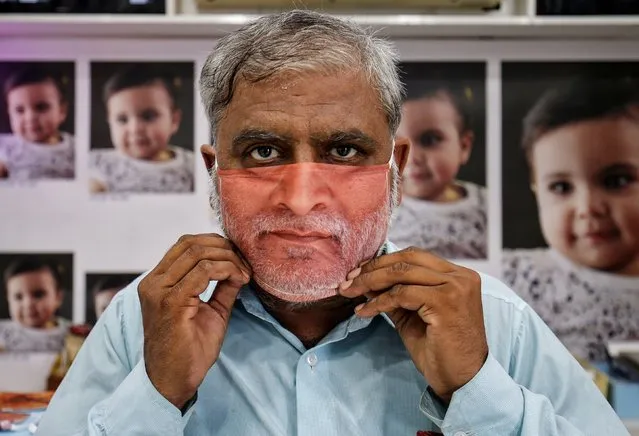
A man tries on a face mask with his portrait printed on it, amid the spread of the coronavirus disease (COVID-19), at a photo studio in Gandhinagar, India, May 27, 2020. (Photo by Amit Dave/Reuters)

A man tries on a face mask with his portrait printed on it, amid the spread of the coronavirus disease (COVID-19), at a photo studio in Gandhinagar, India, May 27, 2020. (Photo by Amit Dave/Reuters)
Details
04 Jun 2020 00:03:00
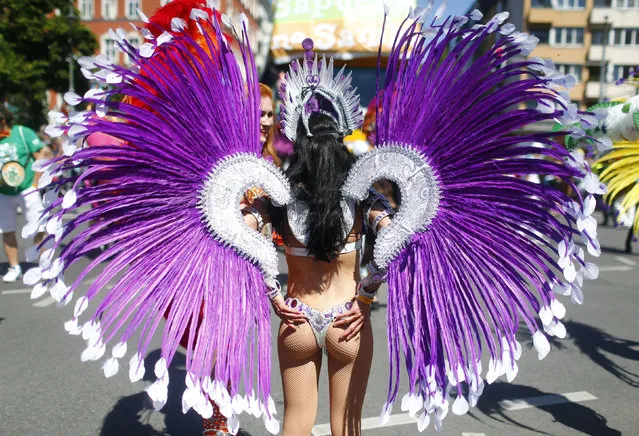
A performer takes part in the annual street parade, which is part of the Carnival of Cultures celebrating the multi-ethnic diversity of the city, in Berlin, Germany May 20, 2018. (Photo by Hannibal Hanschke/Reuters)

A performer takes part in the annual street parade, which is part of the Carnival of Cultures celebrating the multi-ethnic diversity of the city, in Berlin, Germany on May 20, 2018. (Photo by Hannibal Hanschke/Reuters)
Details
21 May 2018 08:16:00
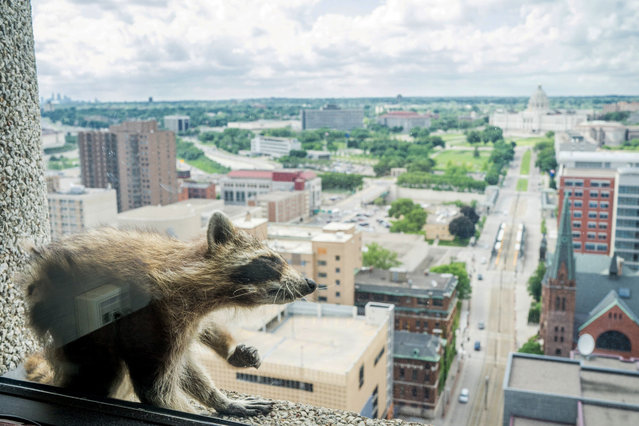
A raccoon scratches herself on the window sill of the Paige Donnelly Law Firm on the 23rd floor of the UBS Plaza building in St. Paul, Minnesota, U.S., June 12, 2018, in this image obtained from social media. (Photo by Evan Frost/MPR News via Reuters)

A raccoon scratches herself on the window sill of the Paige Donnelly Law Firm on the 23rd floor of the UBS Plaza building in St. Paul, Minnesota, U.S., June 12, 2018, in this image obtained from social media. (Photo by Evan Frost/MPR News via Reuters)
Details
16 Jun 2018 07:14:00
Kim Kardashian heads out in Miami wearing a see-through nude color top on September 17, 2016. (Photo by Splash News and Pictures)

Kim Kardashian heads out in Miami wearing a see-through nude color top on September 17, 2016. (Photo by Splash News and Pictures)
Details
18 Sep 2016 07:53:00
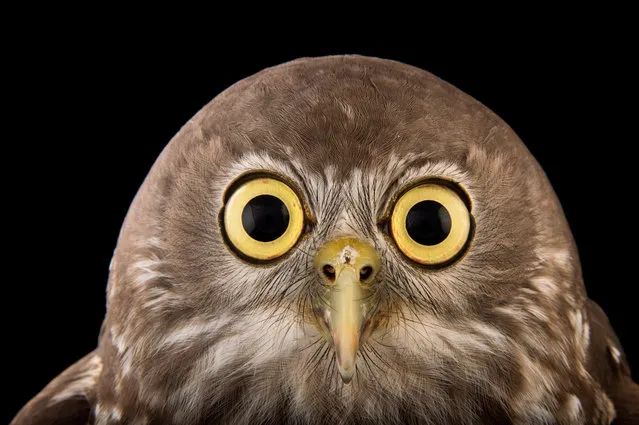
The National Geographic Photo Ark is a travelling exhibition of photographer Joel Sartore’s quest to create a photo archive of biodiversity around the world. So far, Sartore has captured studio portraits of more than 6,000 species – a number that he hopes to double. On 1 July, the ark will open at Melbourne zoo – the first time it has been exhibited in the southern hemisphere. More than 50 portraits will be on display, including many of Australian endangered animals being protected by programs at the zoo itself. These captions have been edited from text supplied by Melbourne zoo. Here: Barking owl. So-named because its call sounds like a barking dog, these birds are native to Australia, Indonesia and Papua New Guinea. In Victoria they are listed as an endangered species, and in 2003 there were estimated to be fewer than 50 breeding pairs. The main threat to the species in Victoria is loss of habitat, especially large trees with hollows in which they can nest and on which many of their prey depend. Apart from a bark, they may utter a chilling scream when they feel threatened. (Photo by Joel Sartore/National Geographic Photo Ark/The Guardian)

The National Geographic Photo Ark is a travelling exhibition of photographer Joel Sartore’s quest to create a photo archive of biodiversity around the world. So far, Sartore has captured studio portraits of more than 6,000 species – a number that he hopes to double. On 1 July, the ark will open at Melbourne zoo – the first time it has been exhibited in the southern hemisphere. More than 50 portraits will be on display, including many of Australian endangered animals being protected by programs at the zoo itself. These captions have been edited from text supplied by Melbourne zoo. Here: Barking owl. (Photo by Joel Sartore/National Geographic Photo Ark/The Guardian)
Details
01 Jul 2017 07:45:00