Loading...
Done
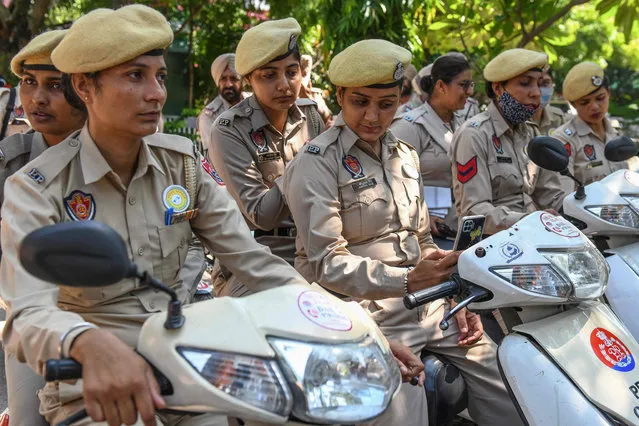
Punjab police's “Shakti Teams” a squad formed for women safety waits before an official flag off ceremony in Amritsar on September 14, 2021. (Photo by Narinder Nanu/AFP Photo)

Punjab police's “Shakti Teams” a squad formed for women safety waits before an official flag off ceremony in Amritsar on September 14, 2021. (Photo by Narinder Nanu/AFP Photo)
Details
22 Sep 2021 08:55:00
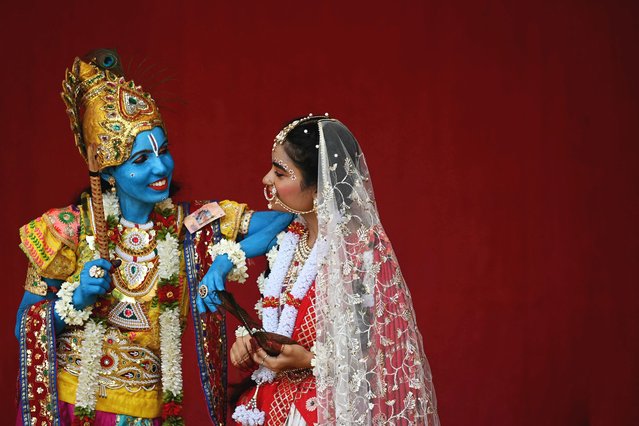
College students dress in the guise of Hindu deities Krishna and Radha, ahead of Janmashtami festival, in Chennai on August 23, 2024. (Photo by R.Satish Babu/AFP Photo)

College students dress in the guise of Hindu deities Krishna and Radha, ahead of Janmashtami festival, in Chennai on August 23, 2024. (Photo by R.Satish Babu/AFP Photo)
Details
30 Aug 2024 04:10:00
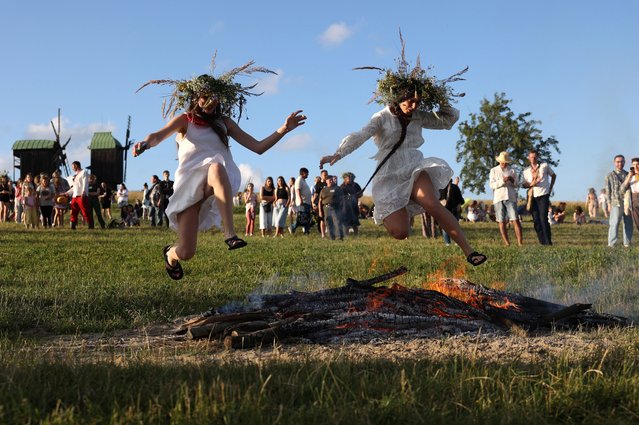
Participants jump over a bonfire as they celebrate the Pagan holiday of Ivan Kupala, a traditional holiday that has been observed in Ukraine since pre-Christian times, in Kyiv, on June 23, 2024, amid the Russian invasion in Ukraine. (Photo by Anatolii Stepanov/AFP Photo)

Participants jump over a bonfire as they celebrate the Pagan holiday of Ivan Kupala, a traditional holiday that has been observed in Ukraine since pre-Christian times, in Kyiv, on June 23, 2024, amid the Russian invasion in Ukraine. (Photo by Anatolii Stepanov/AFP Photo)
Details
07 Nov 2025 02:56:00
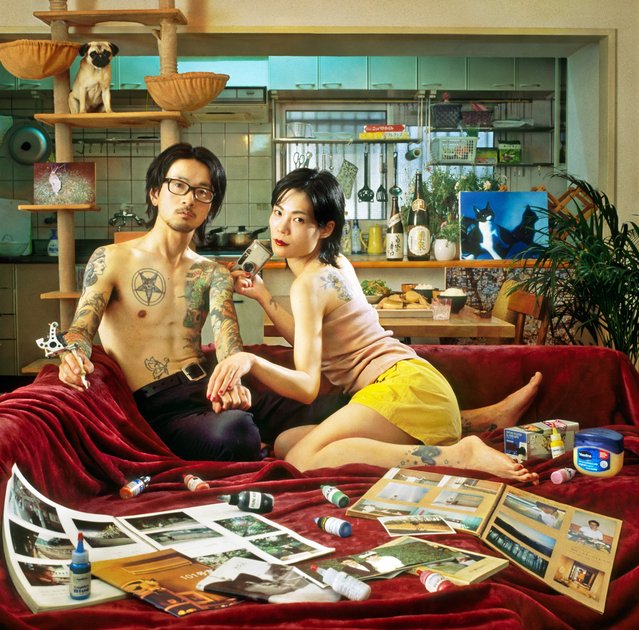
Sakura and Kazuhiro, Tokyo, 2015. Kazuhiro is a tattoo artist and Sakura is a photographer. They love cooking, live with their dog and two cats and each have the date of their wedding tattooed to their ring fingers. (Photo by Mami Kiyoshi/Galerie Annie Gabrielli/The Guardian)

Japanese artist Mami Kiyoshi has spent 15 years creating vivid portraits of people surrounded by their belongings – from wine bottles and violins to the odd stray pet. Mami Kiyoshi’s ongoing series “New Reading Portraits” is, in part, a nod to the mise-en-scène found in traditional woodcut printing. Here: Sakura and Kazuhiro, Tokyo, 2015. (Photo by Mami Kiyoshi/Galerie Annie Gabrielli/The Guardian)
Details
04 Aug 2017 08:48:00
Bo (pictured) is president and co-founder of Grown Men On Bikes (GMOB), one of the oldest groups at Slow Roll. Bo spent $1,300 getting a one-off low-rider custom bike build – but that’s just the start. “Once I go back in it’s going to get big”, he says. “I’m going to get a custom seat, wheels, paint” … The finished bike could cost around $3,000 – but would still be far cheaper than pimping a car. “This is much better. It’s a community. We party”. (Photo by Nick Van Mead)

“We take rusty old junk and we put love into it”. The old Motor City has a unique style in bicycles these days: from fat wheels and fake fuel tanks to stretched cycles with powerful sound systems – and even a family-sized BBQ. “Detroit’s custom bike scene developed alongside Slow Roll, a weekly cycle ride started in 2010 by Jason Hall and Mike MacKool. Now upwards of 2,000 people turn up each Monday to cruise a different part of the city. The week I go the crowd seems evenly split between black and white, male and female, city and suburbs. It’s the most inclusive cycle event I’ve ever witnessed”. (Photo by Jason Walker/Slow Roll Monday Nights)
Details
03 Nov 2016 12:33:00
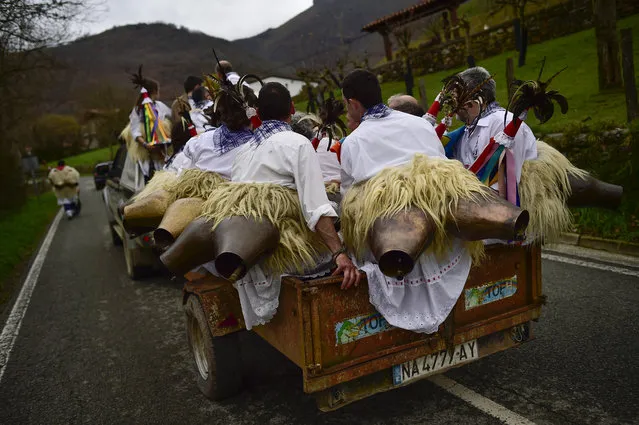
Joaldunaks return in a trailer to their town at the end of Carnival between of the Pyrenees villages of Ituren and Zubieta, northern Spain, Monday, February 1, 2016. In one of the most ancient carnivals in Europe, dating from before the Roman empire, companies of Joaldunak (cowbells) made up of residents of two towns, Ituren and Zubieta, parade the streets costumed in sandals, lace petticoats, sheepskins around the waist and shoulders, coloured neckerchiefs, conical caps with ribbons and a hyssop of horsehair in their right hands and cowbells hung across their lower back. (Photo by Alvaro Barrientos/AP Photo)

Joaldunaks return in a trailer to their town at the end of Carnival between of the Pyrenees villages of Ituren and Zubieta, northern Spain, Monday, February 1, 2016. In one of the most ancient carnivals in Europe, dating from before the Roman empire, companies of Joaldunak (cowbells) made up of residents of two towns, Ituren and Zubieta, parade the streets costumed in sandals, lace petticoats, sheepskins around the waist and shoulders, coloured neckerchiefs, conical caps with ribbons and a hyssop of horsehair in their right hands and cowbells hung across their lower back. (Photo by Alvaro Barrientos/AP Photo)
Details
02 Feb 2016 13:07:00
Of all the species affected by river regulation in Australia, the ibis is one of the few that has changed its behaviour and moved to coastal cities. (Photo by Rick Stevens/The Guardian)

Tip turkey, dumpster chook, rubbish raptor – the Australian white ibis goes by many unflattering names. But it is a true urban success story, scavenging to survive in cities across Australia as wetlands have been lost. Wildlife photographer Rick Stevens captured them in Sydney. Here: Of all the species affected by river regulation in Australia, the ibis is one of the few that has changed its behaviour and moved to coastal cities. (Photo by Rick Stevens/The Guardian)
Details
11 Apr 2018 00:03:00
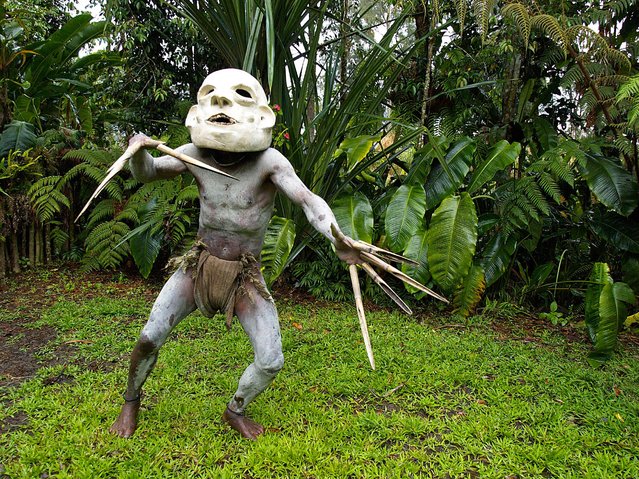
The mudmen come from the country’s western highlands, where there are virtually no roads, cars, electricity or shops. (Photo by Jeremy Hunter/Exclusivepix Media)

For centuries the Highlands peoples of Papua New Guinea fought over land, women and pigs. Sorcery and battle skills could elevate a clan to Bigmanship, where the bigger the “presentation”, the bigger the man. Clans therefore would paint their bodies and create fearsome masks as part of their psy. Here: These are the terrifying tribe of “mudmen” from a remote part of Papua New Guinea. (Photo by Jeremy Hunter/Exclusivepix Media)
Details
08 May 2017 08:12:00