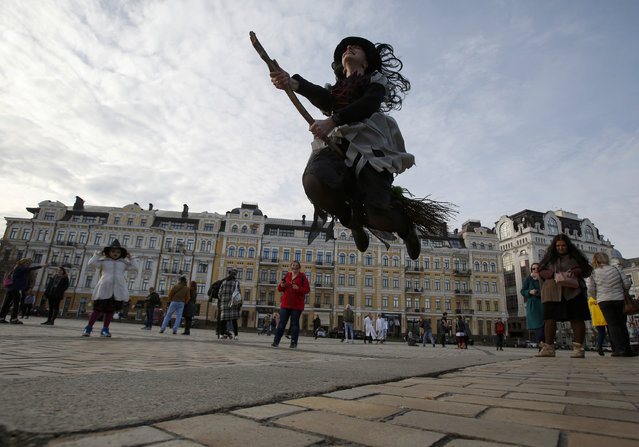
Reveller in costume with a broom jumps during a Zombie Walk event in central Kiev, Ukraine on October 27, 2018, ahead of Halloween celebrations on October 31. (Photo by Anatolii Stepanov/AFP Photo)
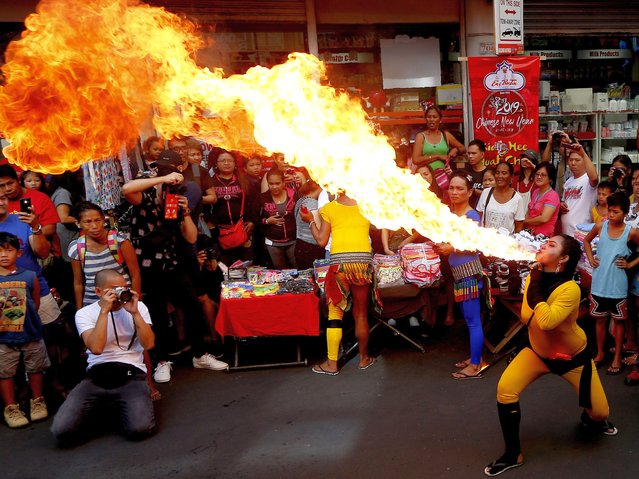
In this Tuesday, February 5, 2019, photo, fire-eater performs during celebrations of the Lunar New Year in the Chinatown district of Manila, Philippines. This year is the Year of the Earth Pig in the Chinese Lunar calendar and is supposed to represent abundance, diligence and generosity. (Photo by Bullit Marquez/AP Photo)
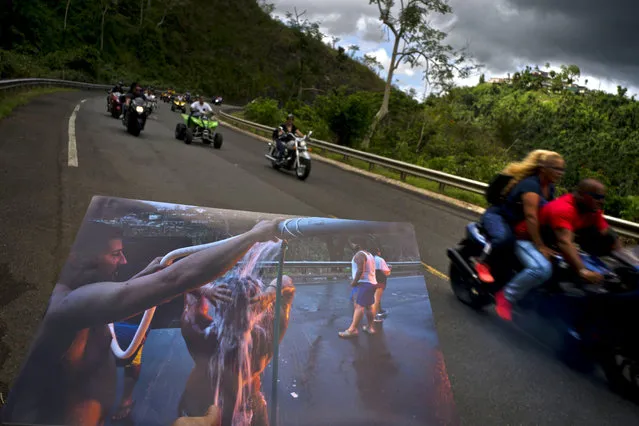
A printed photograph taken on September 28, 2017 shows people bathing on the highway after Hurricane Maria destroyed people's homes, held up at the same spot of the highway where motorcyclists ride past in Naranjito, Puerto Rico, May 27, 2018. Thanks to the owners of the land alongside the highway, creek water was piped to the side of the road for people without water to use for bathing, washing clothes and dishes. (Photo by Ramon Espinosa/AP Photo)
A soldier looks at a line during a ceremony to mark Martyrs' Day at the Tiananmen Square in Beijing, China, 30 September 2022. Martyr's Day is celebrated on the eve of National Day of the People's Republic of China to commemorate the people who sacrificed their lives in pursuit of national independence. (Photo by Mark R. Cristino/EPA/EFE)
Fans of Argentina react while watching the live broadcast of the Qatar 2022 World Cup final football match between Argentina and France in Buenos Aires, on December 18, 2022. (Photo by Luis Robayo/AFP Photo)
A couple dance by the Golden Horn leading to the Bosphorus Strait separating Europe and Asia, in Istanbul, Friday, May 14, 2021. (Photo by Emrah Gurel/AP Photo)
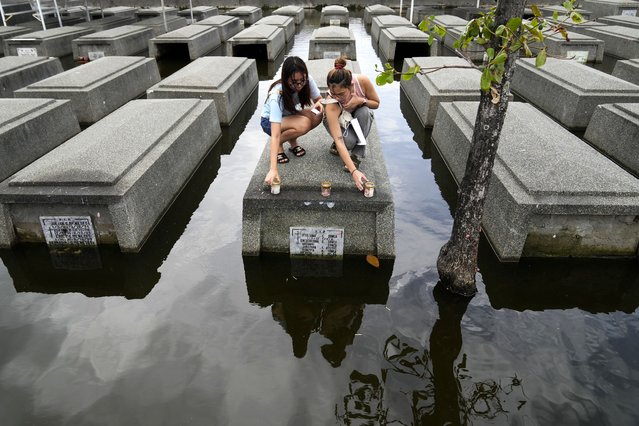
Women place candles on the half-submerged tomb of family members at flood-prone Holy Spirit Memorial Park in Masantol, Pampanga province, Philippines after heavy rains from recent tropical storm Trami caused water to become higher than usual, ahead of All Saints Day, Thursday October 31, 2024. (Photo by Aaron Favila/AP Photo)
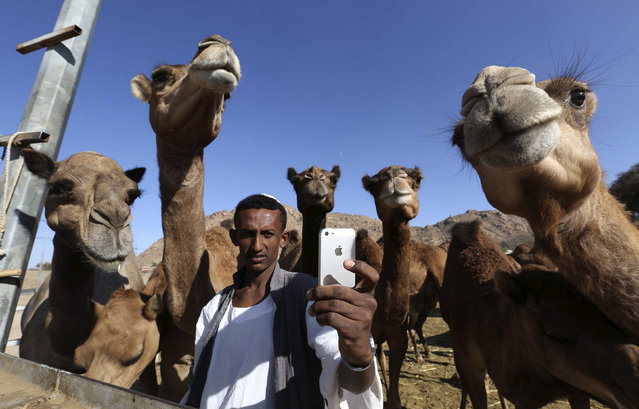
A man takes a “selfie” with camels at a farm in Taif November 1, 2014. Saudi Arabia said late on Wednesday it had detected six new cases of the deadly Middle East Respiratory Syndrome (MERS) in 24 hours, the biggest daily jump for months with officials blaming lax hospital procedures. Scientists are not sure of the origin of the virus, but several studies have linked it to camels and some experts think it is being passed to humans through close physical contact or through the consumption of camel meat or camel milk. (Photo by Mohamed Alhwaity/Reuters)