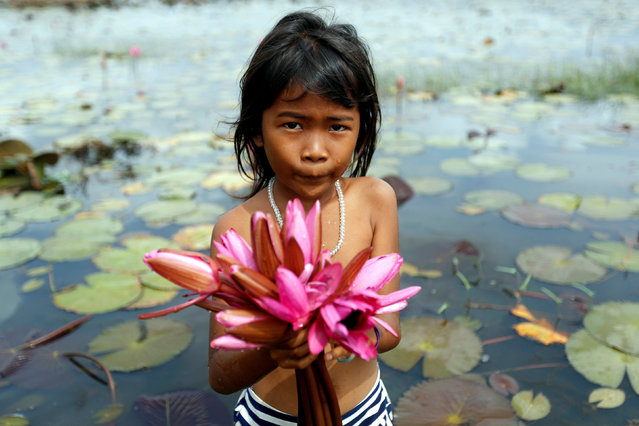
A girl collects water lily flowers at a pond in Kampong Speu province Cambodia, March 24, 2017. Picture taken March 24, 2017. (Photo by Samrang Pring/Reuters)
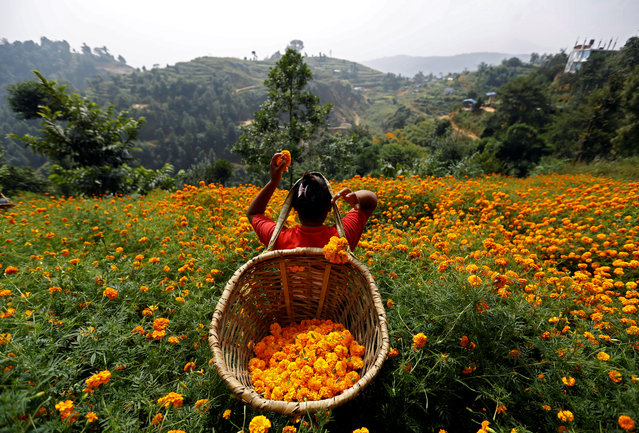
A woman picks marigold flowers used to make garlands and offer prayers, before selling them to the market for the Tihar festival, also called Diwali, in Kathmandu, Nepal on October 17, 2017. (Photo by Navesh Chitrakar/Reuters)
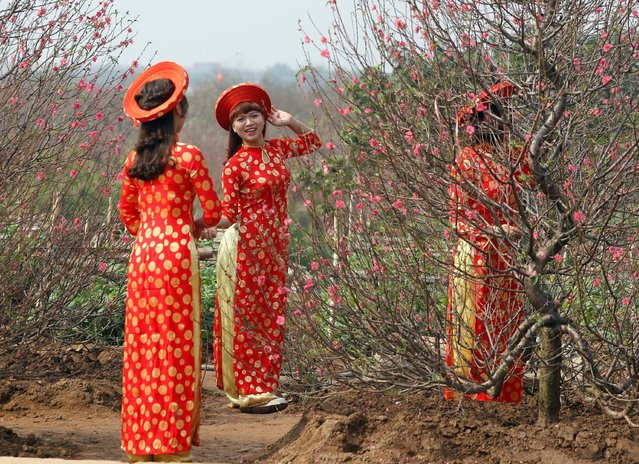
Women, wearing traditional “ao dai” dress, pose for a photo next to peach blossom flowers ahead of Vietnamese “Tet” (the lunar new year festival) in a field in Hanoi January 22, 2017. (Photo by Reuters/Kham)
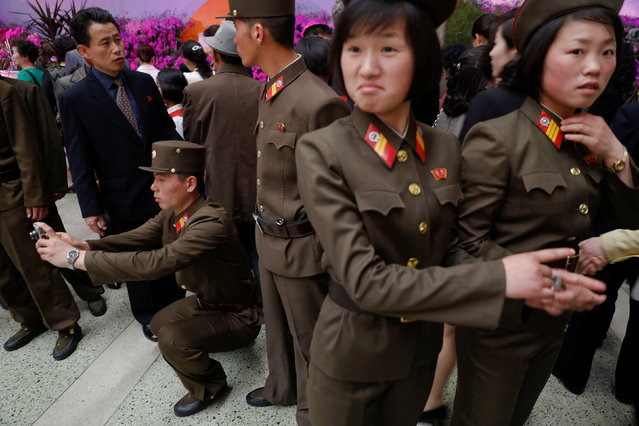
Soldiers pose for a photo during the flower exhibition marking the 105th birth anniversary of the country's founding father, Kim Il Sung in Pyongyang, North Korea April 16, 2017. (Photo by Damir Sagolj/Reuters)
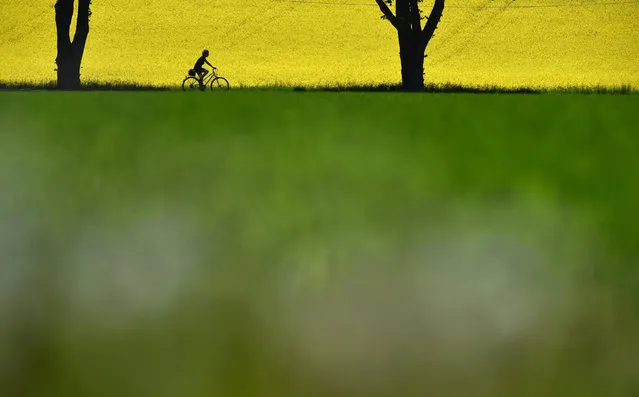
A cyclist drives past a flowering rapeseed field not far from the small Bavarian village of Schoengeising, near Munich, during a nice, warm sunny weather day on May 17, 2017. (Photo by Christof Stache/AFP Photo)
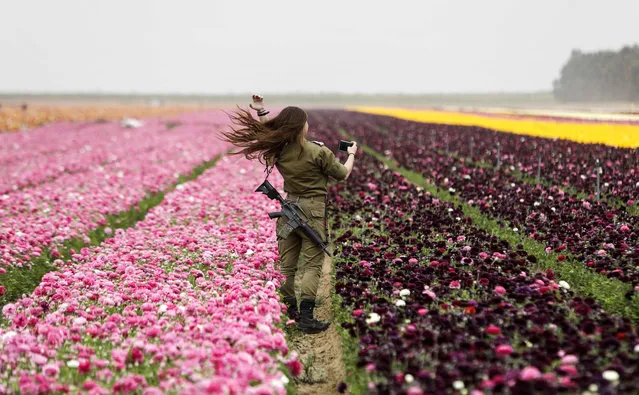
An Israeli soldier looks through her cell phone as she enjoys the Ranunculus flowers in a field in the southern Israeli Kibbutz of Nir Yitzhak, located along the Israeli- Gaza Strip border, during the Jewish holiday of Pesach (Passover) on April 12, 2017. (Photo by Menahem Kahana/AFP Photo)
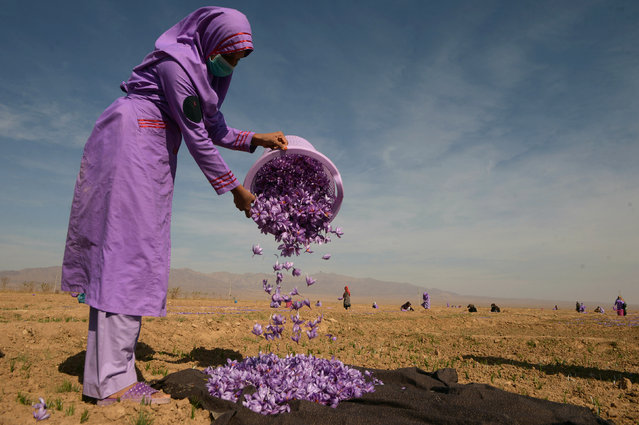
In this photograph taken on October 27, 2017 an Afghan woman collects saffron flowers after picking them in a field on the outskirt of Herat For years, Afghanistan has tried to give farmers alternatives such as fruit crops and saffron to wean them away from poppy farming – the lifeblood of the Taliban insurgency. International donors have splurged billions of dollars on counter- narcotics efforts in Afghanistan over the past decade, including efforts to encourage farmers to switch to other cash crops such as saffron. But those efforts have shown little results. (Photo by Hoshang Hashimi/AFP Photo)