Loading...
Done
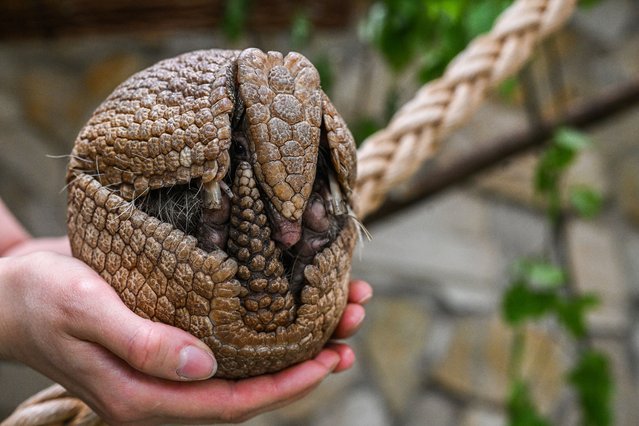
Zookeeper Agata holds a rare newborn Brazilian three-banded armadillo inside its enclosure at the Wroclaw Zoo in Wroclaw, Poland on May 11, 2023. The Tolypeutes matatus, or the southern armor also known as bolita or tatu-bola, is a fairly popular animal in South America but is increasingly rare. The new zoo child was born on March 23. The species is listed as vulnerable by the International Union for the Conservation of Nature (IUCN) and threatened by habitat loss and hunting. (Photo by Omar Marques/Anadolu Agency via Getty Images)

Zookeeper Agata holds a rare newborn Brazilian three-banded armadillo inside its enclosure at the Wroclaw Zoo in Wroclaw, Poland on May 11, 2023. The Tolypeutes matatus, or the southern armor also known as bolita or tatu-bola, is a fairly popular animal in South America but is increasingly rare. The new zoo child was born on March 23. The species is listed as vulnerable by the International Union for the Conservation of Nature (IUCN) and threatened by habitat loss and hunting. (Photo by Omar Marques/Anadolu Agency via Getty Images)
Details
28 May 2023 04:09:00
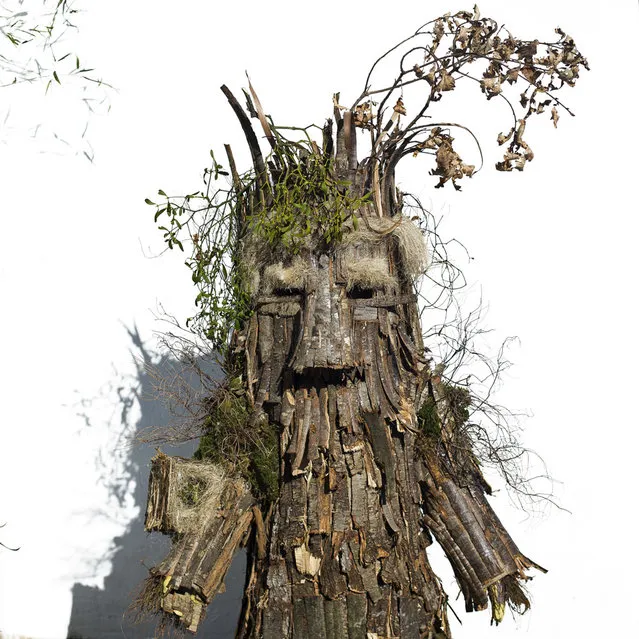
A man dressed as a  “Trapajon”, representing entities of nature, poses for a picture after taking part in the Vijanera Festival in Silio, northern Spain, Sunday, Jan. 6, 2013. The Vijanera masquerade, of pre-Roman origin, is the first carnival of the year in Europe symbolizing the triumph of good over evil and involving the participation of crowds of residents wearing different masks, animal skins and brightly colored clothing with its own complex function and symbolism and becoming the living example of the survival of archaic cults to nature. (Photo by Daniel Ochoa de Olza/AP Photo)

A man dressed as a “Trapajon”, representing entities of nature, poses for a picture after taking part in the Vijanera Festival in Silio, northern Spain, Sunday, Jan. 6, 2013. The Vijanera masquerade, of pre-Roman origin, is the first carnival of the year in Europe symbolizing the triumph of good over evil and involving the participation of crowds of residents wearing different masks, animal skins and brightly colored clothing with its own complex function and symbolism and becoming the living example of the survival of archaic cults to nature. (Photo by Daniel Ochoa de Olza/AP Photo)
Details
19 Jan 2013 13:01:00
Indian tourists walks during heavy snowfall by Dal Lake in Srinagar on January 6, 2017. (Photo by Tauseef Mustafa/AFP Photo)

Indian tourists walks during heavy snowfall by Dal Lake in Srinagar on January 6, 2017. The sub-zero temperatures has frozen many water bodies in Kashmir and even drinking water taps have frozen at some places. (Photo by Tauseef Mustafa/AFP Photo)
Details
09 Jan 2017 12:32:00
Revelers, covered in coloured powder, celebrate, during a Holi Run Festival in Madrid, Spain, Sunday, April 12, 2015. Thousands of revelers took part in the festival that includes a mini marathon. The festivals are fashioned after the Hindu spring festival Holi, which is mainly celebrated in the north and east of India. (Photo by Andres Kudacki/AP Photo)

Revelers, covered in coloured powder, celebrate, during a Holi Run Festival in Madrid, Spain, Sunday, April 12, 2015. Thousands of revelers took part in the festival that includes a mini marathon. The festivals are fashioned after the Hindu spring festival Holi, which is mainly celebrated in the north and east of India. (Photo by Andres Kudacki/AP Photo)
Details
18 Apr 2015 09:38:00
Soccer player David Beckham (C) with Cruz Beckham (L) and Romeo Beckham (R) get slimed onstage during Nickelodeon Kids' Choice Sports Awards 2014 at UCLA's Pauley Pavilion on July 17, 2014 in Los Angeles, California. (Photo by Kevin Winter/Getty Images)

Soccer player David Beckham (C) with Cruz Beckham (L) and Romeo Beckham (R) get slimed onstage during Nickelodeon Kids' Choice Sports Awards 2014 at UCLA's Pauley Pavilion on July 17, 2014 in Los Angeles, California. (Photo by Kevin Winter/Getty Images)
Details
19 Jul 2014 10:44:00
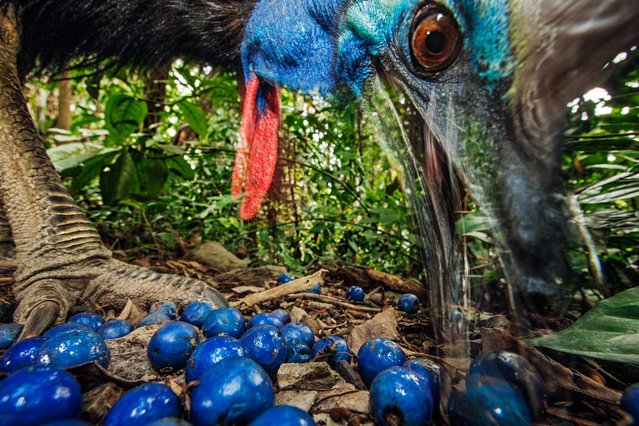
“Cassowaries are large, flightless birds related to emus and (more distantly) to ostriches, rheas, and kiwis”, writes Olivia Judson in the September issue of National Geographic magazine. (Photo by Christian Ziegler/National Geographic)

“Cassowaries are large, flightless birds related to emus and (more distantly) to ostriches, rheas, and kiwis”, writes Olivia Judson in the September issue of National Geographic magazine. How large? People-size: Adult males stand well over five foot five and top 110 pounds. Females are even taller, and can weigh more than 160 pounds. Dangerous when roused, they’re shy and peaceable when left alone. But even birds this big and tough are prey to habitat loss. The dense New Guinea and Australia rain forests where they live have dwindled. Today cassowaries might number 1,500 to 2,000. And because they help shape those same forests – by moving seeds from one place to another – “if they vanish”, Judson writes, “the structure of the forest would gradually change” too. (Photo by Christian Ziegler/National Geographic)
Details
06 Jan 2014 12:21:00
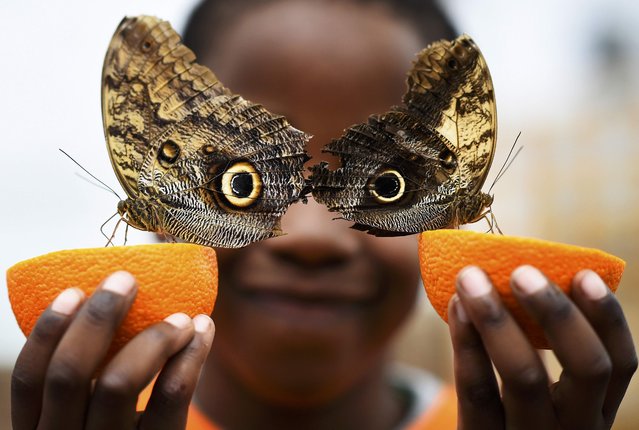
Bjorn, aged 5, smiles as he poses with a Owl butterfly during an event to launch the Sensational Butterflies exhibition at the Natural History Museum in London, Britain March 23, 2016. (Photo by Dylan Martinez/Reuters)

Bjorn, aged 5, smiles as he poses with a Owl butterfly during an event to launch the Sensational Butterflies exhibition at the Natural History Museum in London, Britain March 23, 2016. The exhibition opens to the public on March 24 and runs until September 11. (Photo by Dylan Martinez/Reuters)
Details
24 Mar 2016 12:31:00
People ride a motorcycle near Koudoukou Mosque where Pope Francis meets Imam Tidiani Moussa Naibi in Bangui, Central African Republic, November 30, 2015. (Photo by Stefano Rellandini/Reuters)

People ride a motorcycle near Koudoukou Mosque where Pope Francis meets Imam Tidiani Moussa Naibi in Bangui, Central African Republic, November 30, 2015. (Photo by Stefano Rellandini/Reuters)
Details
01 Dec 2015 09:30:00