Loading...
Done
Kawakanih Yawalapiti, 9, Upper Xingu region of Mato Grosso, Brazil, 2018: Kawakanih lives with her tribe, the Yawalapiti, in Xingu national park, a preserve in the Amazon basin of Brazil. The Yawalapiti collect seeds to preserve species unique to their ecosystem, which lies between the rain forest and savannah. Kawakanih’s diet is simple, consisting mainly of fish, cassava, porridge, fruit and nuts. “It takes five minutes to catch dinner”, says Kawakanih. “When you’re hungry, you just go to the river with your net”. (Photo by Gregg Segal/The Guardian)

Photographer Gregg Segal travelled the world to document children and the food they eat in a week. Partly inspired by the increasing problems of childhood obesity, he tracked traditional regional diets as yet unaffected by globalisation, and ironically, found that the healthiest diets were often eaten by the least well off. (Photo by Gregg Segal/The Guardian)
Details
03 Jul 2019 00:03:00
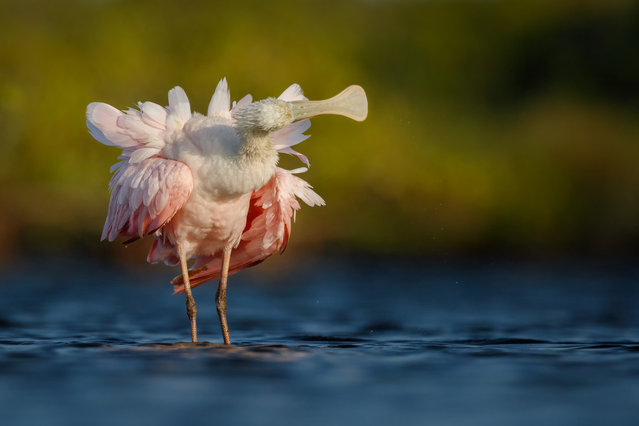
Best portfolio winner. Roseate Spoonbill, Platalea ajaja, by Petr Bambousek, Czech Republic. (Photo by Petr Bambousek/2018 Bird Photographer of the Year)

Best portfolio winner. Roseate Spoonbill, Platalea ajaja, by Petr Bambousek, Czech Republic. (Photo by Petr Bambousek/2018 Bird Photographer of the Year)
Details
24 Aug 2018 00:05:00
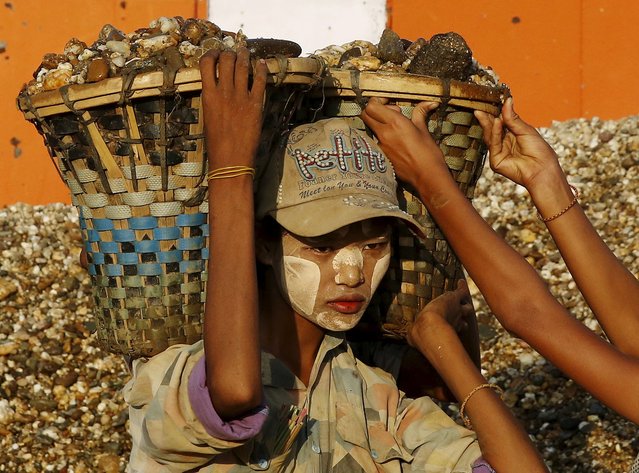
Labourers unload gravel from a boat docked in Dala township, opposite Yangon city, Myanmar, November 12, 2015. (Photo by Olivia Harris/Reuters)

Labourers unload gravel from a boat docked in Dala township, opposite Yangon city, Myanmar, November 12, 2015. (Photo by Olivia Harris/Reuters)
Details
16 Nov 2015 08:09:00
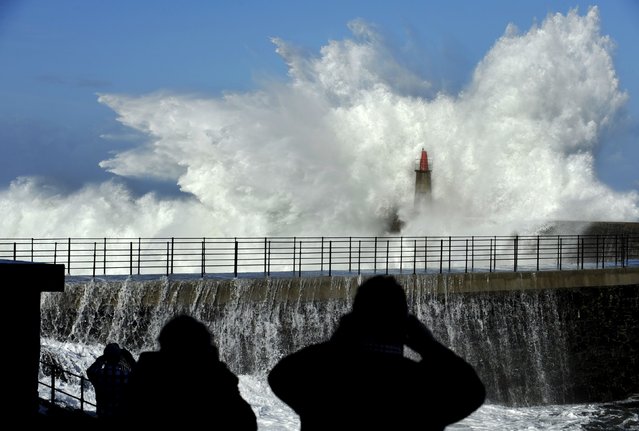
People take pictures of huge waves crash on the Viavelez seafront in the northern Spanish region of Asturias January 2, 2016. (Photo by Eloy Alonso/Reuters)

People take pictures of huge waves crash on the Viavelez seafront in the northern Spanish region of Asturias January 2, 2016. (Photo by Eloy Alonso/Reuters)
Details
03 Jan 2016 10:32:00
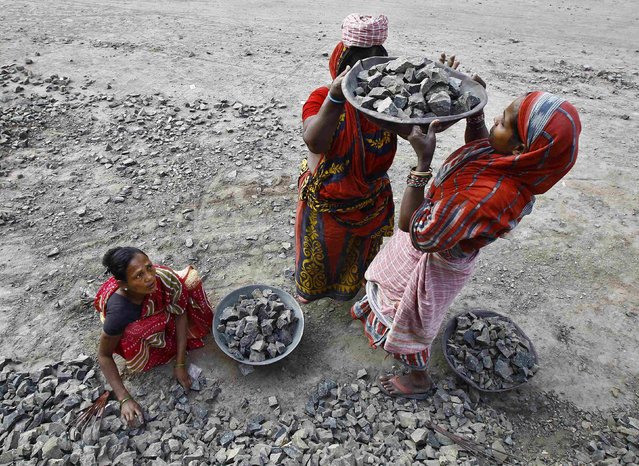
Women labourers work at the construction site of a road in Kolkata January 8, 2015. Across towns and cities in India, it is not uncommon to see women cleaning building sites, carrying bricks and or shoveling gravel - helping construct the infrastructure necessary for the country's economic and social development. (Photo by Rupak De Chowdhuri/Reuters)

Women labourers work at the construction site of a road in Kolkata January 8, 2015. Across towns and cities in India, it is not uncommon to see women cleaning building sites, carrying bricks and or shoveling gravel – helping construct the infrastructure necessary for the country's economic and social development. They help build roads, railway tracks, airports, and offices. They lay pipes for clean water supplies, cables for telecommunications, and dig the drains for sewage systems. But although women make up at least 20 percent of India's 40 million construction workers, they are less recognized than male workers with lower pay and often prone to safety hazards and sexual harassment. They are often unaware of their rights or scared to complain, say activists now trying to campaign for better treatment of women in the construction industry. (Photo by Rupak De Chowdhuri/Reuters)

Details
15 Jan 2015 13:47:00
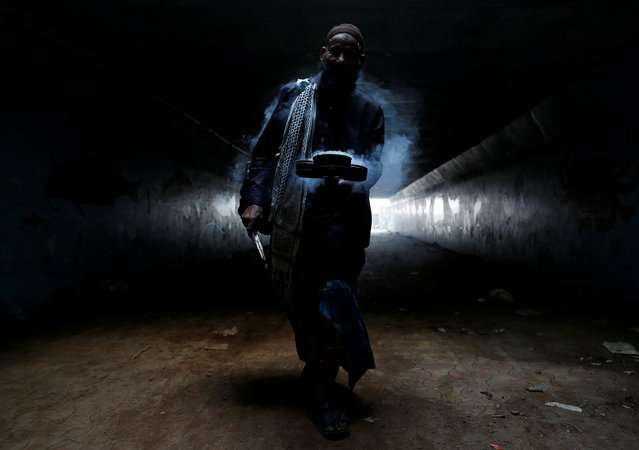
A Muslim man carries holy incensed smoke through a pedestrian subway in Mumbai, India, May 13, 2016. (Photo by Danish Siddiqui/Reuters)

A Muslim man carries holy incensed smoke through a pedestrian subway in Mumbai, India, May 13, 2016. (Photo by Danish Siddiqui/Reuters)
Details
15 May 2016 12:22:00


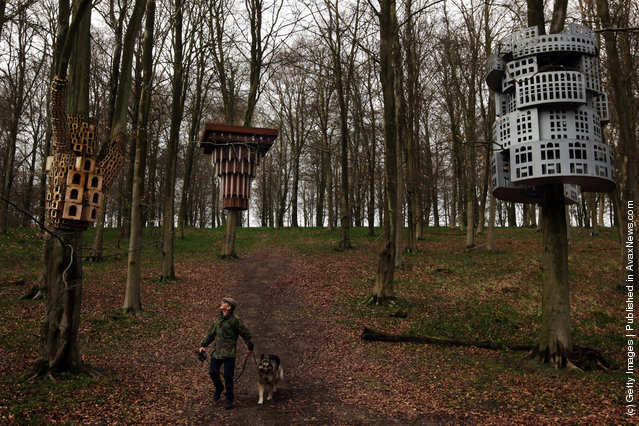
CHALLOCK, ENGLAND - MARCH 31: Tony Hall walks with his dog through an installation entitled 'Super Kingdom', which hangs in trees in King's Wood as part of the Stour Valley Arts project on March 31, 2011 in Challock, England. The works by artists Bruce Gilchrist and Jo Joelson of 'London Fieldworks' consist of a series of interesting animal habitats, modelled on the palaces of Stalin, Ceauscescu and Mussolini, and offer nesting sites to many native and migrant species. (Photo by Dan Kitwood/Getty Images)
Details
20 Nov 2011 19:03:00
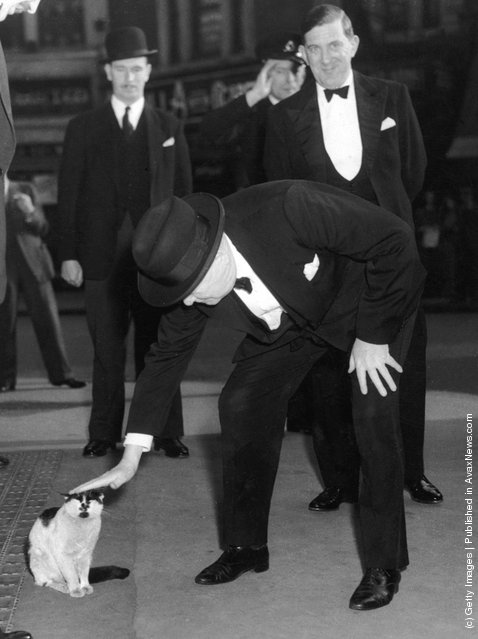
British prime minister Winston Churchill (1874 - 1965) stops to pet a cat at Liverpool Street Station, 24th May 1952

British prime minister Winston Churchill (1874–1965) stops to pet a cat at Liverpool Street Station, 24th May 1952. (Photo by Keystone/Hulton Archive/Getty Images)
Details
23 Nov 2011 12:17:00