Loading...
Done
Chinese women wear protective masks as they are dressed in traditional clothing from the Qing Dynasty era outside a park on March 29, 2020 in Beijing, China. A limited section of the iconic tourist site was re-opened to the public this week allowing a smaller number of visitors to reserve tickets online in advance and to enter after passing health screening. With the pandemic hitting hard across the world, China recorded its first day with no new domestic cases of the coronavirus last week, since the government imposed sweeping measures to keep the disease from spreading. For two months, millions of people across China have been restricted in how they move from their homes, while other cities have been locked down in ways that appeared severe at the time but are now being replicated in other countries trying to contain the virus. Officials believe the worst appears to be over in China, though there are concerns of another wave of infections as the government attempts to reboot the worlds second largest economy. In Beijing, it is mandatory to wear masks outdoors, retail stores operate on reduced hours, restaurants employ social distancing among patrons, and tourist attractions at risk of drawing large crowds remain closed. Monitoring and enforcement of virus-related measures and the quarantine of anyone arriving to Beijing is carried out by neighborhood committees and a network of Communist Party volunteers who wear red arm bands. A primary concern for Chinese authorities remains the arrival of flights from Europe and elsewhere, given the exposure of passengers in regions now regarded as hotbeds for transmission. Since January, China has recorded more than 81,000 cases of COVID-19 and at least 3200 deaths, mostly in and around the city of Wuhan, in central Hubei province, where the outbreak first started. (Photo by Kevin Frayer/Getty Images)

Chinese women wear protective masks as they are dressed in traditional clothing from the Qing Dynasty era outside a park on March 29, 2020 in Beijing, China. A limited section of the iconic tourist site was re-opened to the public this week allowing a smaller number of visitors to reserve tickets online in advance and to enter after passing health screening. (Photo by Kevin Frayer/Getty Images)
Details
01 Apr 2020 00:05:00
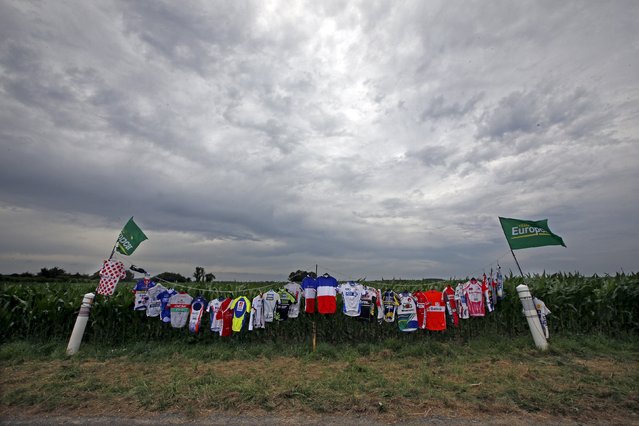
Cycling jerseys, part of a collection belonging to French cycling fan Gerald, hang from a line during the 4th stage of the Tour de France cycling race from Seraing in Belgium to Cambrai in France, July 7, 2015. (Photo by Eric Gaillard/Reuters)

Cycling jerseys, part of a collection belonging to French cycling fan Gerald, hang from a line during the 4th stage of the Tour de France cycling race from Seraing in Belgium to Cambrai in France, July 7, 2015. Photographing the Tour de France cycling race comes with highs and lows: the buzz from capturing just the right image, the tedium of long journeys, the painstaking set-up of equipment, the breath-taking scenery. Reuters photographers have worked not only to capture the thrills and spills on the roads and mountain passes. They have also shot a set of pictures showing their own quirky view from behind the scenes as they travelled through the Netherlands, Belgium and France. (Photo by Eric Gaillard/Reuters)
Details
25 Jul 2015 12:42:00
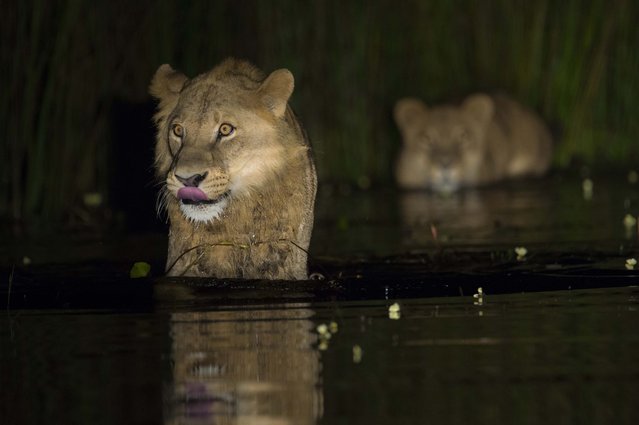
Lions submerged in water. (Photo by Wim van den Heever/Caters News)

These breath-taking photographs reveal the everyday lives of animals living in the wild. The incredible images were taken by wildlife photographer Wim van dan Heever, from Pretoria, South Africa, during trips to locations including Japan, Botswana and Svalbard. The 43-year-old has been photographing wildlife since he was a young boy and turned his passion for animals into a career and set up ODP Safaris. He has travelled across the globe to photograph wild animals – from lions and tigers, to elephants, dolphins and eagles – as they hunt, give birth and graze in their natural habitats. Here: Lions submerged in water. (Photo by Wim van den Heever/Caters News)
Details
07 Aug 2015 11:43:00
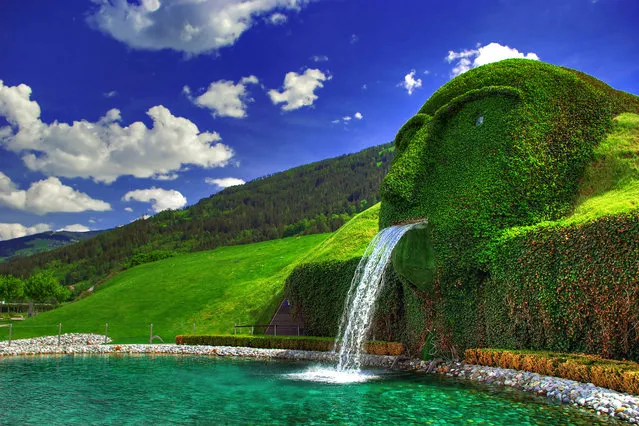
The Swarovski Crystal Head Fountain In Austria

A stone giant exhausted after his long travels decided to rest a while and drink from a pond far below. He lay down and started drinking from the crystal clear pond. So delicious was the water that he was unable to quench his thirst no matter how much he tried. Weeks have passed, months, years. The body of the stone giant became one with the hills and even his tongue has turned to water. This might seem like a fairy tale, yet you’ll be able to see this stone giant if you ever come to Wattens, Austria. He’s still there, guarding the entrance to Swarovski Kristallwelted, otherwise known as the Crystal Worlds. This is a one-of-a-kind theme park that was created by the people who first created Swarovski crystals.
Details
02 Mar 2015 08:30:00
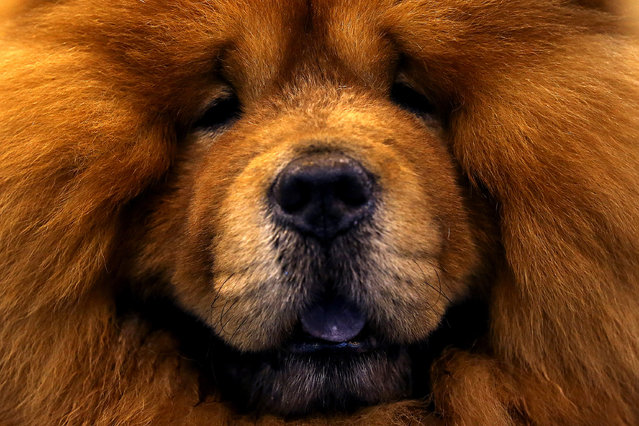
A Chow Chow is seen  on the fourth and final day of Crufts dog show at the National Exhibition Centre on March 8, 2015 in Birmingham, England.  First held in 1891, Crufts is said to be the largest show of its kind in the world. The annual four-day event, features thousands of dogs, with competitors travelling from countries across the globe to take part and vie for the coveted title of 'Best in Show'. (Carl Court/Getty Images)

Crufts is among the largest dog events worldwide. It was first held more than a century ago in 1891. Since then it has grown into more than just a dog show, but an event that celebrates the role that dogs play in our everyday lives. It is unimaginable how much this show has changed since the first time it was set up by Charles Cruft. Even though this event was very different back then, Charles Cruft would surely enjoy the scope and size of the modern Crufts show. The core event of the show is of course the dog show, which celebrates the unique relationship between dogs and their owners.
Details
11 Mar 2015 18:30:00
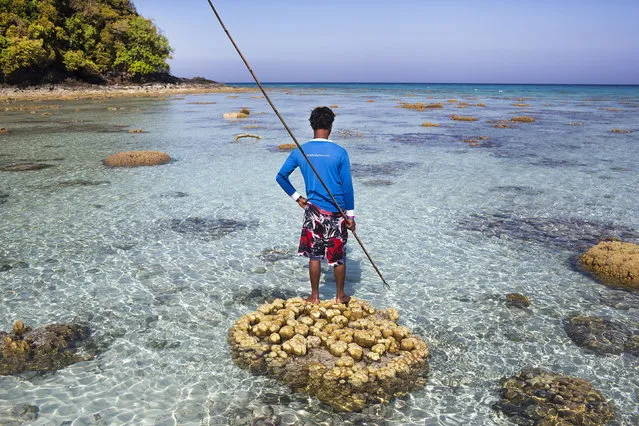
Hook, an indigenous Moken man, holds a three-pronged throwing spear and searches for fish in the waters of Ko Surin National Park. March 1, 2013 – Ko Surin, Thailand. (Photo by Taylor Weidman/zReportage via ZUMA Press)

“For centuries, the Moken sea nomads have traveled the islands between Thailand and Myanmar fishing and foraging for food on the sea floor. Throughout the Mergui Archipelago, Moken migrate in flotillas of Kabangs (traditional boat of the Moken people), stopping at different islands and beaches. Expert freedivers, the Moken have adapted physically to an aquatic life, developing unique characteristics that let them see better and hold their breath longer while underwater”. – Taylor Weidman. Photo: Hook, an indigenous Moken man, holds a three-pronged throwing spear and searches for fish in the waters of Ko Surin National Park. March 1, 2013 – Ko Surin, Thailand. (Photo by Taylor Weidman/zReportage via ZUMA Press)
Details
24 Mar 2014 06:45:00
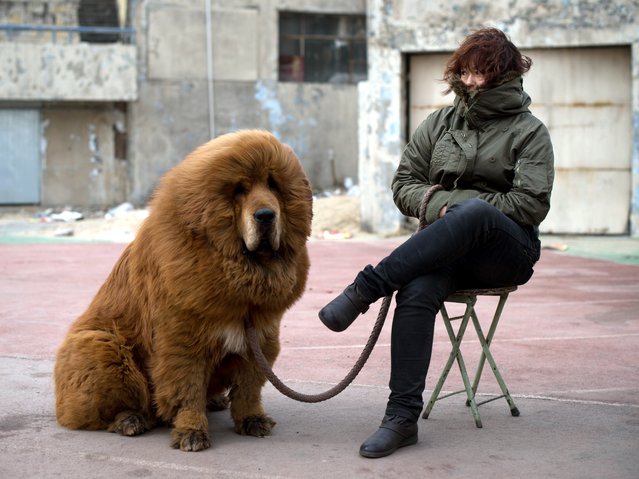
A Tibetan mastiff dog is displayed for sale at a mastiff show in Baoding, Hebei province, south of Beijing on March 9, 2013. Fetching prices up to around 750,000 USD, mastiffs have become a prized status-symbol amongst China's wealthy, with rich buyers across the country sending prices skyrocketing. Owners say the mastiffs, descendents of dogs used for hunting by nomadic tribes in central Asia and Tibet are fiercely loyal and protective. (Photo by Ed Jones/AFP Photo)

A Tibetan mastiff dog is displayed for sale at a mastiff show in Baoding, Hebei province, south of Beijing on March 9, 2013. Fetching prices up to around 750,000 USD, mastiffs have become a prized status-symbol amongst China's wealthy, with rich buyers across the country sending prices skyrocketing. Owners say the mastiffs, descendents of dogs used for hunting by nomadic tribes in central Asia and Tibet are fiercely loyal and protective. Breeders still travel to the Himalayan plateau to collect young puppies, although many are unable to adjust to the low altitudes and die during the journey. (Photo by Ed Jones/AFP Photo)
Details
02 May 2014 09:40:00
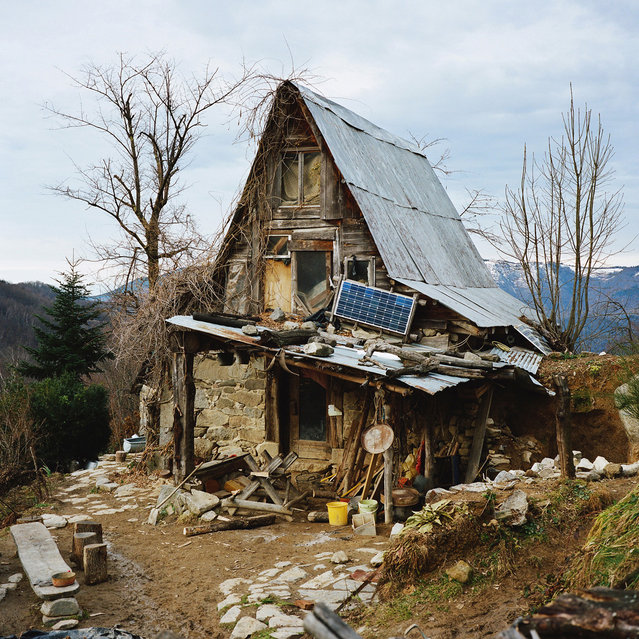
This property in the French Pyrenees is owned by a German man, who moved with his family here 25 years ago. He has since renovated the shack to be a completely self-sufficient house. There are no electrical appliances, but the solar panel powers small lights in the house. (Photo by Antoine Bruy)

Back in 2010, French photographer Antoine Bruy began hitchhiking around Europe without any fixed route. Along his travels, he met people who had entirely abandoned city life in favour of an isolated country existence they found more fulfilling. Bruy began seeking out people who lived off-the-grid. After three years on the road, staying in makeshift houses and on community farms, he has released Scrublands, a documentation of the lifestyle. While each living situation is different, Bruy found that all the people he met shared a common desire to escape the rat race and achieve a quieter life in harmony with nature. (Photo by Antoine Bruy)
Details
13 Aug 2014 09:45:00