Loading...
Done
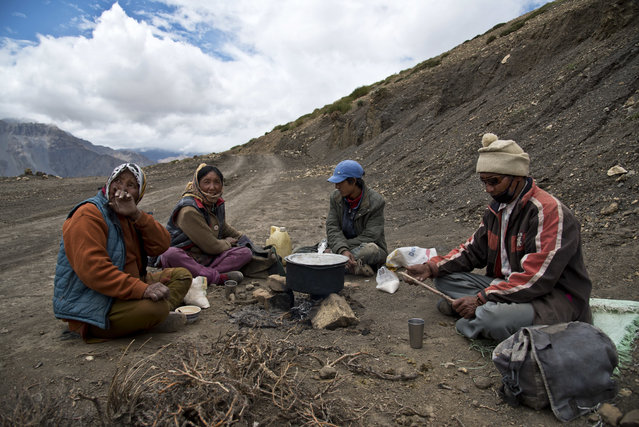
In this August 17, 2016, photo, from left to right, Chhering Chodom, 60, Tashi Yangzom, 50, Lobsang Chhering, 27, and Dorje Tandup, 58, drink milk tea on the side of the road. For centuries, the sleepy valley nestled in the Indian Himalayas remained a hidden Buddhist enclave forbidden to outsiders. Enduring the harsh year-round conditions of the high mountain desert, the people of Spiti Valley lived by a simple communal code – share the Earth's bounty, be hospitable to neighbors, and eschew greed and temptation at all turns. That's all starting to change, for better or worse. Since India began allowing its own citizens as well as outsiders to visit the valley in the early 1990s, tourism and trade have boomed. And the marks of modernization, such as solar panels, asphalt roads and concrete buildings, have begun to appear around some of the villages that dot the remote landscape at altitudes above 4,000 meters (13,000 feet). (Photo by Thomas Cytrynowicz/AP Photo)

In this August 17, 2016, photo, from left to right, Chhering Chodom, 60, Tashi Yangzom, 50, Lobsang Chhering, 27, and Dorje Tandup, 58, drink milk tea on the side of the road. For centuries, the sleepy valley nestled in the Indian Himalayas remained a hidden Buddhist enclave forbidden to outsiders. Enduring the harsh year-round conditions of the high mountain desert, the people of Spiti Valley lived by a simple communal code – share the Earth's bounty, be hospitable to neighbors, and eschew greed and temptation at all turns. That's all starting to change, for better or worse. (Photo by Thomas Cytrynowicz/AP Photo)
Details
15 Sep 2016 09:22:00
In this Thursday, July 10, 2014, photo, Mike Fitzgerald, right, teaches behind a sample display of cannabis-infused products during a cooking class at the New England Grass Roots Institute in Quincy, Mass. Some pot users turn to edibles because they don't like to inhale or smell the smoke, or just want variety or a longer lasting, more intense high. (Photo by Michael Dwyer/AP Photo)

The proliferation of marijuana edibles for both medical and recreational purposes is giving rise to a cottage industry of baked goods, candies, infused oils, cookbooks and classes that promises a slow burn as more states legalize the practice and awareness spreads about the best ways to deliver the drug. Edibles and infused products such as snack bars, olive oils and tinctures popular with medical marijuana users have flourished into a gourmet market of chocolate truffles, whoopie pies and hard candies as Colorado and Washington legalized the recreational use of marijuana in the past year. Photo: In this Thursday, July 10, 2014, photo, Mike Fitzgerald, right, teaches behind a sample display of cannabis-infused products during a cooking class at the New England Grass Roots Institute in Quincy, Mass. (Photo by Michael Dwyer/AP Photo)
Details
21 Jul 2014 11:02:00
In Character By Howard Schatz Part 2

Photographer Howard Schatz had an idea: place actors in a series of roles and dramatic situations to reveal the essence of their characters. Such was the premise behind his book, In Character: Actors Acting, which captures some of Hollywood’s most emotive stars in the act of, well, making faces. Luckily for us, he continued the tradition for Vanity Fair. Here are some of the best.
Details
06 Jan 2014 11:48:00
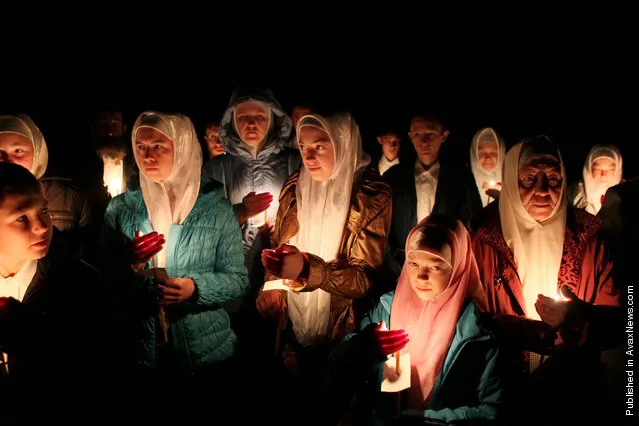
Members of an Orthodox community take part in an Easter service at a church in the village of Poteryaevka, some 200 km (124 miles) southwest of the city of Barnaul in Russia's Altai region

Members of an Orthodox community take part in an Easter service at a church in the village of Poteryaevka, some 200 km (124 miles) southwest of the city of Barnaul in Russia's Altai region, on April 24, 2011. (Reuters/Andrei Kasprishin)
Details
09 Apr 2012 11:05:00
Britain's Mo Farah reacts as he wins the men's 5000m final at the London 2012 Olympic Games at the Olympic Stadium in Britain August 11, 2012. Lucy Nicholson: “When Mo Farah was rounding the final corner for the 5000m the huge stadium was electric, everybody was on their feet and he knew he was going to win as he came into that final stretch. All the photographers were excited because we knew he was going to react in a very dramatic way so it was a lovely sequence of photos as he crossed the finish line – he put his hands over his head, he wrapped himself in the British flag, it was a very long celebration sequence, which is all you can really wish for as a photographer”. (Photo by Lucy Nicholson/Reuters)

The Rio de Janeiro Olympics kick off on August 5 for some two weeks of competitive games drawing athletes as well as audiences from around the world. As they prepare to cover the event, Reuters photographers look back on their favourite pictures from past Olympics where they captured the action on the ground as well as the participants' tears and joy that followed. (Photo by Lucy Nicholson/Reuters)
Details
03 Aug 2016 11:19:00
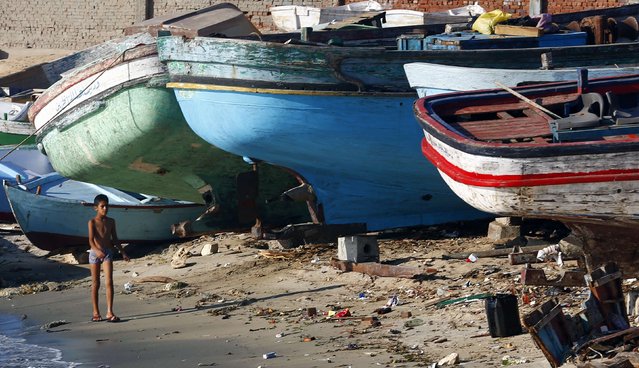
A boy walks past boats docked at the entrance gate of the fishermen's village in the El Max area of the Mediterranean city of Alexandria September 12, 2014.  El Max, where hundreds of boats dart through the canals, has been called the “Venice of Egypt” for its waterways and relaxed atmosphere. Its fishermen, however, worry about how they will make ends meet on meagre earnings they  say are being reduced further by polluted waters that are making fishing more difficult. (Photo by Amr Abdallah Dalsh/Reuters)

A boy walks past boats docked at the entrance gate of the fishermen's village in the El Max area of the Mediterranean city of Alexandria September 12, 2014. El Max, where hundreds of boats dart through the canals, has been called the “Venice of Egypt” for its waterways and relaxed atmosphere. Its fishermen, however, worry about how they will make ends meet on meagre earnings they say are being reduced further by polluted waters that are making fishing more difficult. While the government has tried to fix the state's bloated finances by cutting subsidies and reining in spending, some argue the reforms hurt Egypt's most vulnerable who have long relied on a generous system of fuel and food subsidies to supplement low incomes. (Photo by Amr Abdallah Dalsh/Reuters)
Details
12 Dec 2014 12:42:00
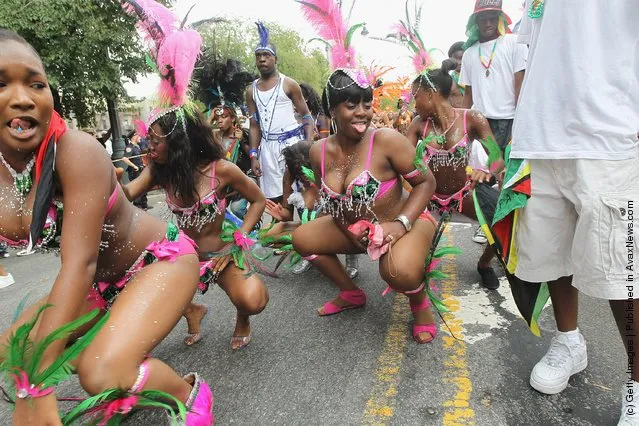
New Yorkers Celebrate At West Indian Day Parade

“The Labor Day Parade (or West Indian Carnival), is an annual celebration held on American Labor Day (the first Monday in September), in Crown Heights, Brooklyn, New York. Ms. Jessie Waddell and some of her West Indian friends started the Carnival in Harlem in the 1920s by staging costume parties in large enclosed places like the Savoy, Renaissance and Audubon Ballrooms due to the cold wintry weather of February. This is the usual time for the pre-Lenten celebrations held in most countries around the world. However, because of the very nature of Carnival, and the need to parade in costume to music, indoor confinement did not work well. The earliest known Carnival street parade was held on September 1, 1947. The Trinidad Carnival Pageant Committee was the founding force behind the parade, which was held in Harlem. The parade route was along Seventh Avenue, starting at 110th St.” – Wikipedia

Photo: A reveler looks on during the West Indian-American Day Parade September 5, 2011 in the Brooklyn borough of New York City. More than 2 million spectators were expected to attend the celebration of Caribbean culture. (Photo by Mario Tama/Getty Images)
Details
06 Sep 2011 11:18:00
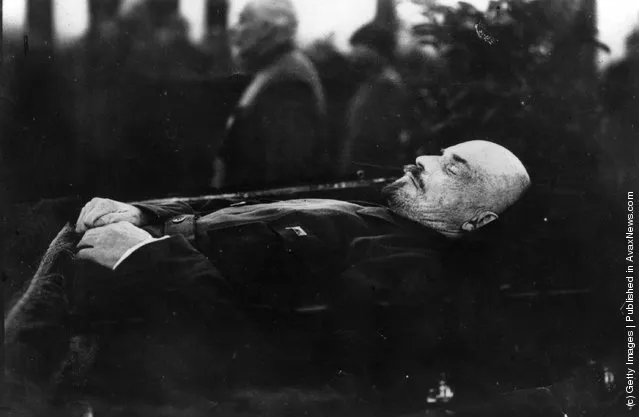
1924:  Vladimir Ilyich Lenin lying in state in the Kremlin

Photo: Vladimir Ilyich Lenin (1870 – 1924) lying in state in the Kremlin. (Photo by Hulton Archive/Getty Images). 1924

Important! For the same article in Russian language click here.

Something quite intriguing is happening within Russian-speaking internet during the last few – should you type a fully academic inquiry (at least, according to Russian academic requirements) in national search engines for "Lenin's mausoleum" – the first thing you get (even in top 10 searches) is website pages talking about black magic and occult. Website authors view this construction differently, but unconditionally agree on one thing: the mausoleum of the "leader of the world proletariat” – the essence of a magical artifact, a sort of “energy vampire”. It was built with a certain purpose: to drain the energy out of miserable Soviet citizens on one hand; and to poison the anthroposphere of one-sixth part of the earth with its vibes (the exact territory that was occupied by the former Soviet Union), depriving the Russian people of will to resist on the other hand. Complete nonsense? No doubt. Nevertheless, an intriguing one. Well, probably because some oddities do exist in mausoleum's history. These oddities are the thing we are going to discuss this time. First, let me refresh you memory on the subject.
Details
16 Oct 2011 11:27:00