Loading...
Done
Brazilian tattoo artist Michel Praddo, also known as Diabao or Human Satan, and his wife Carol Praddo, known as Mulher Demonia or Demon Woman, take a picture with a fan at the beach shore in Praia Grande, Brazil on August 18, 2021. Despite his frightening image, Prado says he has a good heart. His wife Carol Prado, 36, who is known as Demon Woman, also altered her body to fit the image. The Sao Paulo-based couple have undergone their most extreme modifications during the last five years. (Photo by Carla Carniel/Reuters)

Brazilian tattoo artist Michel Praddo, also known as Diabao or Human Satan, and his wife Carol Praddo, known as Mulher Demonia or Demon Woman, take a picture with a fan at the beach shore in Praia Grande, Brazil on August 18, 2021. (Photo by Carla Carniel/Reuters)
Details
24 Aug 2021 08:10:00
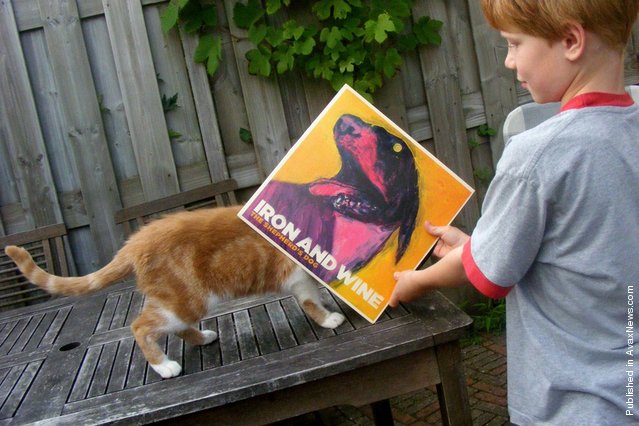
Sleeveface

“Sleeveface is an internet phenomenon wherein one or more persons obscure or augment body parts with record sleeve(s), causing an illusion. Sleeveface has become popular on social networking sites”. – Wikipedia

Photo: “Doggy Style” (Photo by Samuel and Marco van Bergen via SleeveFace.com)
Details
26 Apr 2012 14:26:00
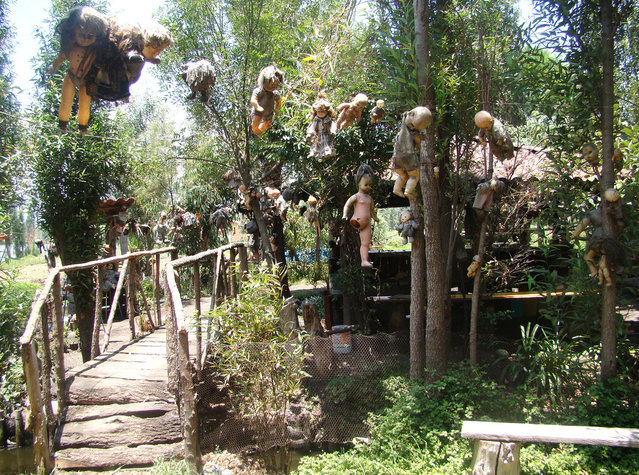
Xochimilco – Island of the Dolls – Dead Line

Xochimilco – Island of the Dolls – Dead Line. Photo by Ramalama_22
Details
30 Jul 2012 06:24:00
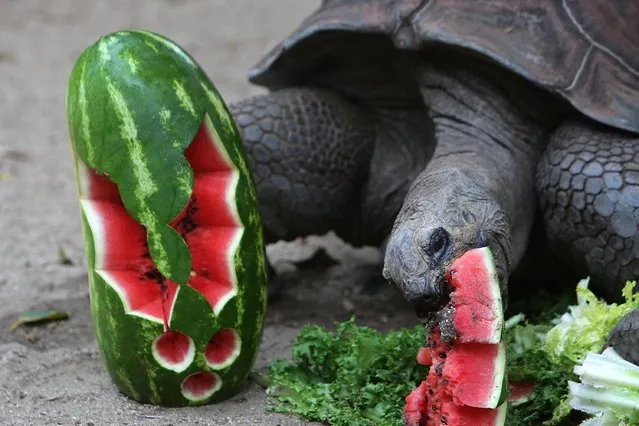
A Aldabra Tortoise receives a Christmas treat at Taronga Zoo on December 14, 2012 in Sydney, Australia. Taronga Zoo celebrated Christmas early giving Christmas-themed environmental activities to the Zoo's Giraffes, Sun Bears, Meerkats, Aldabra Tortoise and Cockatoos providing a wonderful natural display for Zoo visitors.  (Photo by Lisa Maree Williams)

A Aldabra Tortoise receives a Christmas treat at Taronga Zoo on December 14, 2012 in Sydney, Australia. Taronga Zoo celebrated Christmas early giving Christmas-themed environmental activities to the Zoo's Giraffes, Sun Bears, Meerkats, Aldabra Tortoise and Cockatoos providing a wonderful natural display for Zoo visitors. (Photo by Lisa Maree Williams)
Details
15 Dec 2012 09:37:00
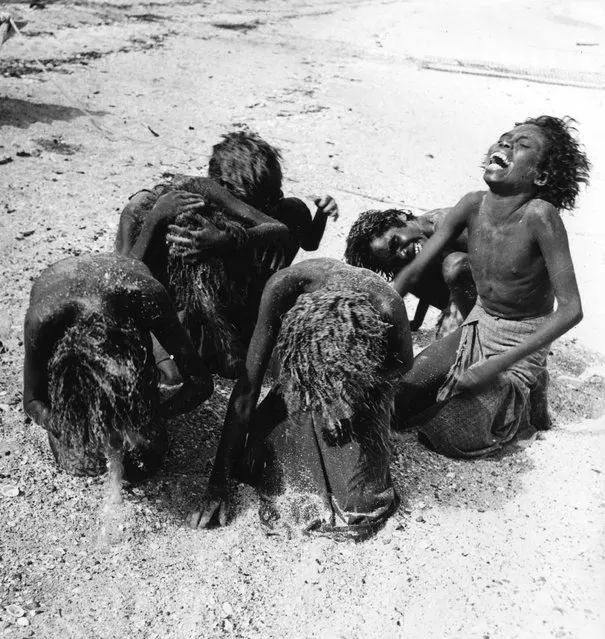
1st January 1950:  Aboriginal women washing their hair with sand at Arnhem land in the Northern Territory of Australia.  (Photo by Three Lions/Getty Images)

“Australian Aborigines are those people regarded as indigenous to the Australian continent. In the High Court of Australia, Australian Aborigines have been specifically identified as a group of people who share, in common, biological ancestry back to the original occupants of the continent”. – Wikipedia

Photo: Aboriginal women washing their hair with sand at Arnhem land in the Northern Territory of Australia. 1st January 1950. (Photo by Three Lions)
Details
02 Feb 2014 07:29:00
Afghan firefighters spray water on a U.S. armoured vehicle after a suicide attack on the outskirts of Jalalabad, January 5, 2015. A suicide attacker targeted a U.S. convoy on the outskirts of Jalalabad on Monday but so far no causalities have been reported yet, provincial spokesman Ahmadzia Abdulzai said. (Photo by Reuters/Parwiz)

Afghan firefighters spray water on a U.S. armoured vehicle after a suicide attack on the outskirts of Jalalabad, January 5, 2015. A suicide attacker targeted a U.S. convoy on the outskirts of Jalalabad on Monday but so far no causalities have been reported yet, provincial spokesman Ahmadzia Abdulzai said. (Photo by Reuters/Parwiz)
Details
06 Jan 2015 11:35:00
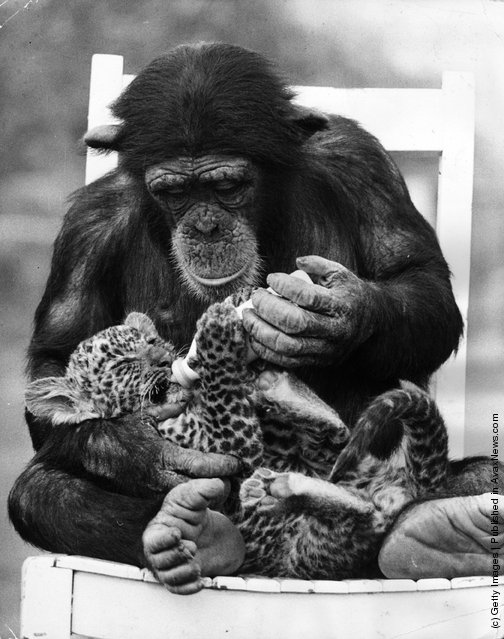
1971: A chimpanzee feeding a leopard cub at Southam Park Zoo, Warwickshire

A chimpanzee feeding a leopard cub at Southam Park Zoo, Warwickshire. (Photo by Ian Tyas/Keystone Features/Getty Images). 1971
Details
08 Sep 2011 14:32:00
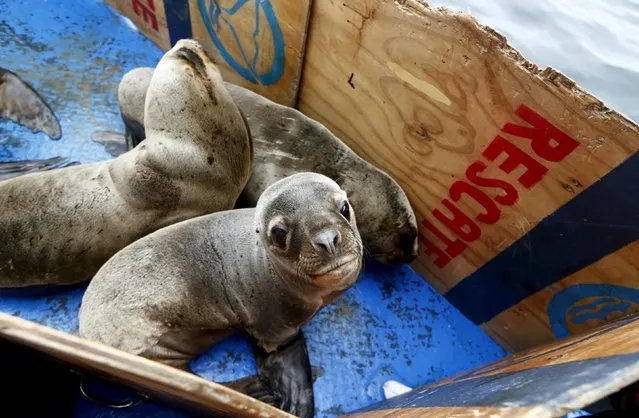
Sea lions wait on the deck of the boat before being released in front of Palomino island, in Callao, Peru September 12, 2015. (Photo by Mariana Bazo/Reuters)

Sea lions wait on the deck of the boat before being released in front of Palomino island, in Callao, Peru September 12, 2015. Four young sea lions returned to the wild after being rescued by marine biologists and treated for various illnesses. The sea lions are survivors of various illnesses which they contracted off the coast of Peru caused by the elevated temperatures in the water because of the El Nino phenomenon, according to Carlos Yaipen, Director of Animal Science and Well-being Organization (ORCA). (Photo by Mariana Bazo/Reuters)
Details
14 Sep 2015 13:37:00