Loading...
Done
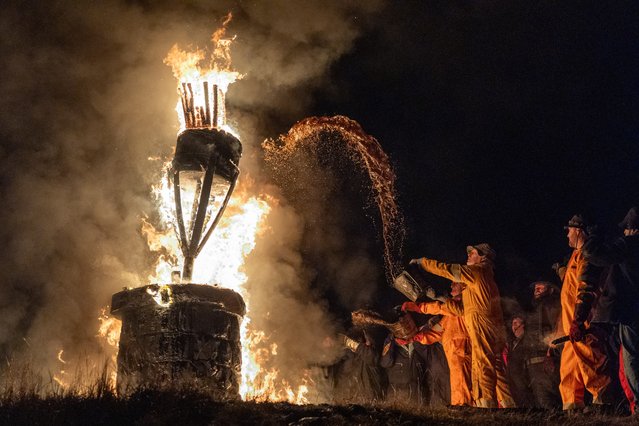
People take part in the Burning of the Clavie fire festival in Burghead, Moray, UK on Saturday, January 11, 2025. Burghead welcomes in the New Year twice each year, on both January 11th and the more traditional January 1st. (Photo by Jane Barlow/PA Images via Getty Images)

People take part in the Burning of the Clavie fire festival in Burghead, Moray, UK on Saturday, January 11, 2025. Burghead welcomes in the New Year twice each year, on both January 11th and the more traditional January 1st. (Photo by Jane Barlow/PA Images via Getty Images)
Details
18 Mar 2025 03:43:00
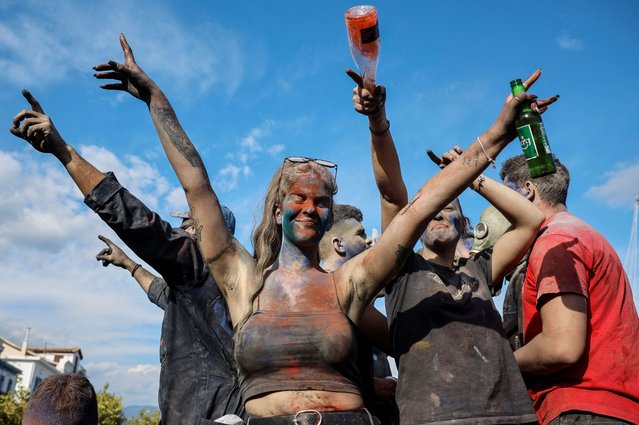
Revellers participate in a colourful “flour war”, celebrating the “Ash Monday” or “Clean Monday”, a traditional festivity marking the end of the carnival season and the start of the 40-day Lent period until the Orthodox Easter, in the town of Galaxidi, Greece, on March 18, 2024. (Photo by Louisa Gouliamaki/Reuters)

Revellers participate in a colourful “flour war”, celebrating the “Ash Monday” or “Clean Monday”, a traditional festivity marking the end of the carnival season and the start of the 40-day Lent period until the Orthodox Easter, in the town of Galaxidi, Greece, on March 18, 2024. (Photo by Louisa Gouliamaki/Reuters)
Details
12 Jun 2025 03:41:00
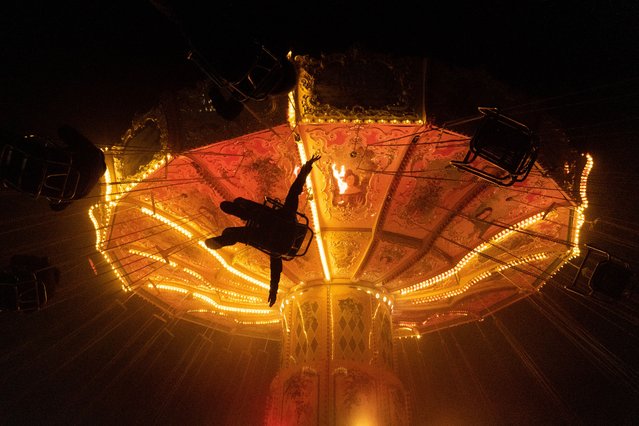
Visitors ride a swing attraction during the Hochheim Market in Hochheim, Germany on November 11, 2025. The traditional autumn fair has been held for more than 500 years. (Photo by Matias Basualdo/ZUMA Press Wire/Rex Features/Shutterstock)

Visitors ride a swing attraction during the Hochheim Market in Hochheim, Germany on November 11, 2025. The traditional autumn fair has been held for more than 500 years. (Photo by Matias Basualdo/ZUMA Press Wire/Rex Features/Shutterstock)
Details
18 Dec 2025 08:19:00
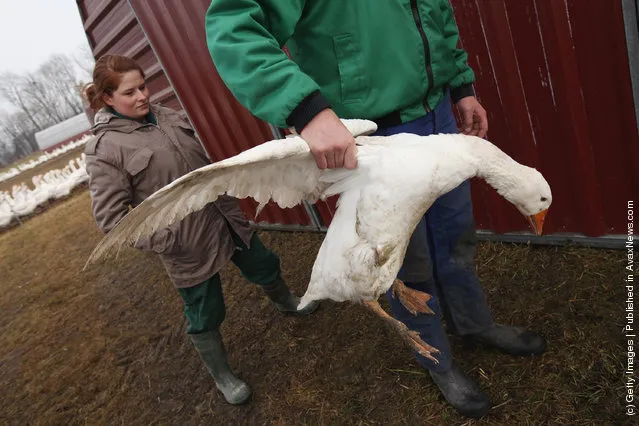
Domestic geese

Farmhand Beatrice Jasiewicz (L) looks on as a colleague carries an injured goose on an open field at the Oekohof Kuhhorst organic farm near Berlin on November 24, 2011 in Kuhhorst, Germany. Goose is the traditional Christmas Eve dinner in Germany. (Photo by Sean Gallup/Getty Images)
Details
25 Nov 2011 12:47:00
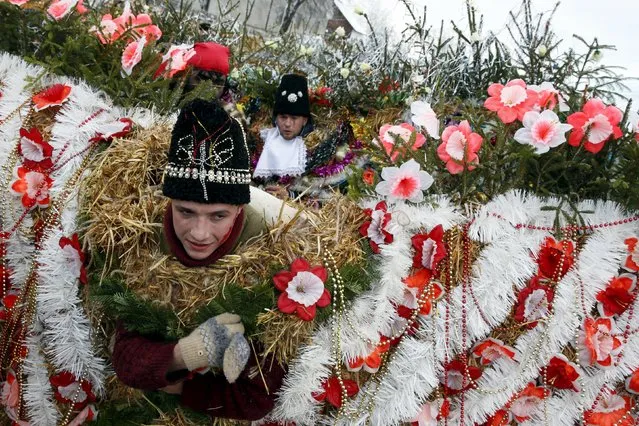
Local residents dressed in costumes perform during celebrations for the Malanka holiday in the village of Krasnoilsk in the Chernivtsi region of Ukraine, January 14, 2016. The Malanka traditional holiday is more popular in the western regions of the country and is also known as the Old New Year celebrated on January 13 and 14 - St. Basil's and St. Melania's Day, according to the old Julian calendar. During the celebrations, youngsters and adults wear traditional carnival costumes and masks, and visit local houses while singing carols, playing pranks or performing short plays. (Photo by Valentyn Ogirenko/Reuters)

Local residents dressed in costumes perform during celebrations for the Malanka holiday in the village of Krasnoilsk in the Chernivtsi region of Ukraine, January 14, 2016. The Malanka traditional holiday is more popular in the western regions of the country and is also known as the Old New Year celebrated on January 13 and 14 – St. Basil's and St. Melania's Day, according to the old Julian calendar. During the celebrations, youngsters and adults wear traditional carnival costumes and masks, and visit local houses while singing carols, playing pranks or performing short plays. (Photo by Valentyn Ogirenko/Reuters)
Details
16 Jan 2016 08:04:00
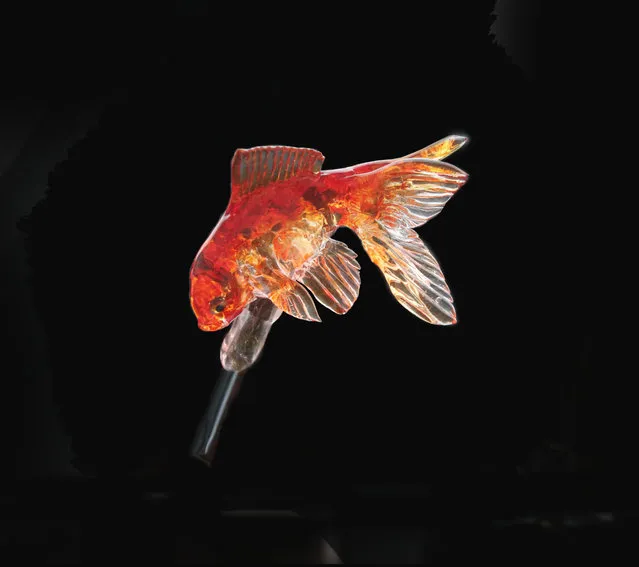
Realistic Animal Lollipops By Shinri Tezuka

Amezaiku is the Japanese craft of lollipop-making, which dates back to the 700s when artisans made mouth-watering and artistic lollipops to be presented as gifts. Carrying on the tradition is 26-year old Shinri Tezuka, the owner of a small shop in the Asakusa district of Tokyo called Ameshin.
Details
04 Sep 2015 08:50:00


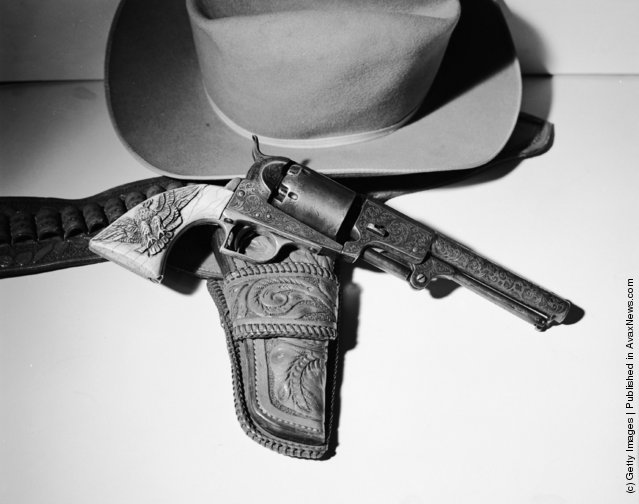
A .44 Colt Dragon with a traditional Cowboy's hat. This weapon was originally used in the Mexican War of 1846-8 and it is typical of the type used in the “Wild West” of America. (Photo by Orlando /Three Lions/Getty Images). Circa 1950
Details
02 Jun 2011 11:48:00
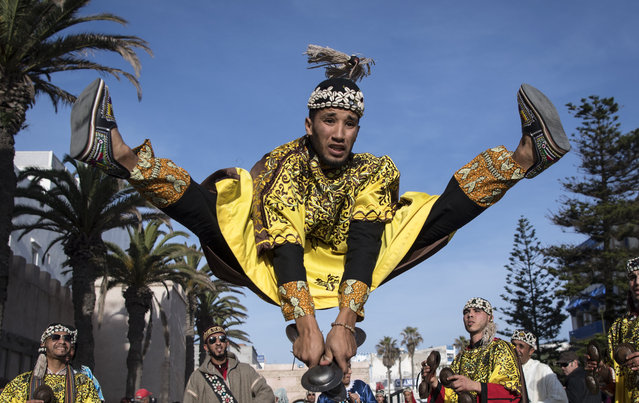
A Gnawa traditional group performs in the city of Essaouira on December 14, 2019, to celebrate the decision of adding the Gnawa culture to UNESCO's list of Intangible Cultural Heritage of Humanity. Gnawa culture, a centuries-old Moroccan practice rooted in music, African rituals and Sufi traditions, was added to UNESCO's list of Intangible Cultural Heritage of Humanity earlier in the week. Gnawa refers to a “set of musical productions, fraternal practices and therapeutic rituals where the secular mixes with the sacred”, according to the nomination submitted by Morocco. Often dressed in colourful outfits, Gnawa musicians play the guenbri, a type of lute with three strings, accompanied by steel castanets called krakebs. (Photo by Fadel Senna/AFP Photo)

A Gnawa traditional group performs in the city of Essaouira on December 14, 2019, to celebrate the decision of adding the Gnawa culture to UNESCO's list of Intangible Cultural Heritage of Humanity. Gnawa culture, a centuries-old Moroccan practice rooted in music, African rituals and Sufi traditions, was added to UNESCO's list of Intangible Cultural Heritage of Humanity earlier in the week. Gnawa refers to a “set of musical productions, fraternal practices and therapeutic rituals where the secular mixes with the sacred”, according to the nomination submitted by Morocco. Often dressed in colourful outfits, Gnawa musicians play the guenbri, a type of lute with three strings, accompanied by steel castanets called krakebs. (Photo by Fadel Senna/AFP Photo)
Details
18 Dec 2019 00:05:00