Loading...
Done
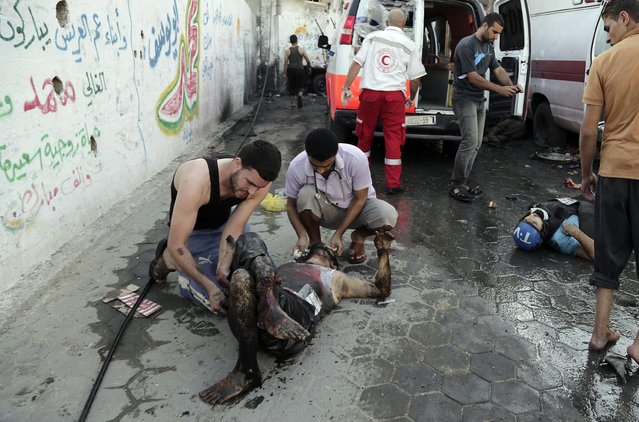
In this July 30, 2014 photo, neighbors help gravely injured Mohammed al-Selek, 39, wounded by an Israeli mortar strike as he lays next to the body of Palestinian journalist Rami Reyan who was killed, in the Shijaiyah neighborhood of the northern Gaza Strip. Al-Selek's life changed forever last July 30, when the shells slammed into his home killing all his three children, his father and six other relatives. (Photo by Adel Hana/AP Photo)

In this July 30, 2014 photo, neighbors help gravely injured Mohammed al-Selek, 39, wounded by an Israeli mortar strike as he lays next to the body of Palestinian journalist Rami Reyan who was killed, in the Shijaiyah neighborhood of the northern Gaza Strip. Al-Selek's life changed forever last July 30, when the shells slammed into his home killing all his three children, his father and six other relatives. A year later, al-Selek, who lost his leg during the airstrike, still struggles to recover and come to terms with his family's loss in the 50-day Israel-Hamas war. (Photo by Adel Hana/AP Photo)
Details
07 Jul 2015 11:28:00
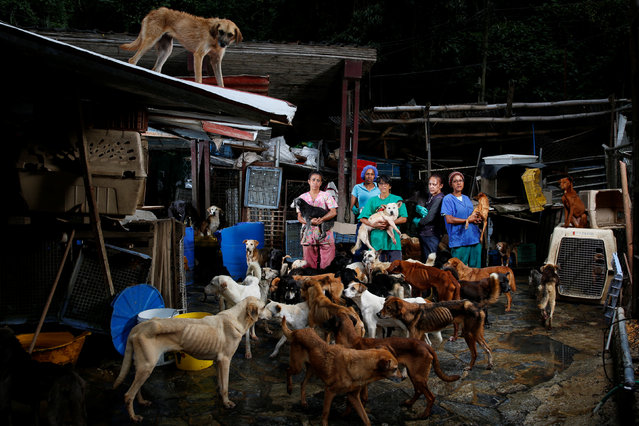
(L-R) Maria Silva, Milena Cortes, Maria Arteaga, Jackeline Bastidas and Gissy Abello pose for a picture at the Famproa dogs shelter where they work, in Los Teques, Venezuela, August 25, 2016. Venezuelans struggling to feed their families let alone their pets are dumping animals on the streets, in parks and at makeshift homes overrun with scrawny animals amid an economic crisis. An hour from Caracas in Los Teques, hundreds of dogs bark and run around the streets scavenging for food outside a makeshift shelter. People come by every few hours to hand over scrawny dogs which are fed by volunteers every day. Venezuela is undergoing a major economic and social crisis, with shortages of basic foods and medicines. Triple digit inflation is hitting everybody hard, including those who own pets. (Photo by Carlos Garcia Rawlins/Reuters)

(L-R) Maria Silva, Milena Cortes, Maria Arteaga, Jackeline Bastidas and Gissy Abello pose for a picture at the Famproa dogs shelter where they work, in Los Teques, Venezuela, August 25, 2016. Venezuelans struggling to feed their families let alone their pets are dumping animals on the streets, in parks and at makeshift homes overrun with scrawny animals amid an economic crisis. An hour from Caracas in Los Teques, hundreds of dogs bark and run around the streets scavenging for food outside a makeshift shelter. (Photo by Carlos Garcia Rawlins/Reuters)
Details
08 Sep 2016 10:01:00
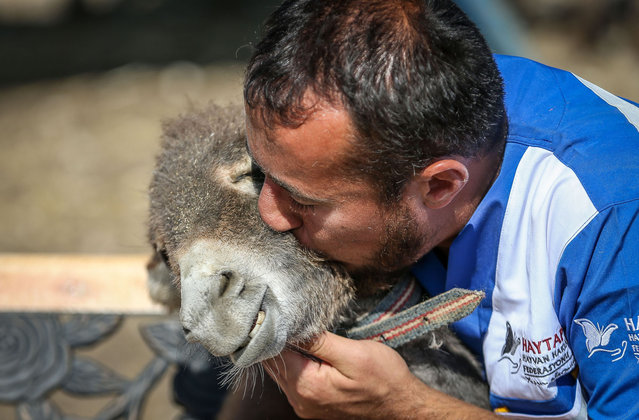
A worker caresses a donkey at the Retired Animals Farm in Turkey's Bursa on October 01, 2020. Animal Rights Federation in Turkey (HAYTAP) established a “Retired Animals Farm” in Bursa for animals that were tortured, thrown out by their owners, injured and in need of assistance for similar reasons. Built in the neighborhood of Baskoy in Nilufer district after long term efforts, the farm provides a home to animals of many species, such as horse, donkey, cow, sheep, chicken from all around Turkey. The farm project receives support from various institutions and organizations. (Photo by Sergen Sezgin/Anadolu Agency via Getty Images)

A worker caresses a donkey at the Retired Animals Farm in Turkey's Bursa on October 01, 2020. Animal Rights Federation in Turkey (HAYTAP) established a “Retired Animals Farm” in Bursa for animals that were tortured, thrown out by their owners, injured and in need of assistance for similar reasons. Built in the neighborhood of Baskoy in Nilufer district after long term efforts, the farm provides a home to animals of many species, such as horse, donkey, cow, sheep, chicken from all around Turkey. The farm project receives support from various institutions and organizations. (Photo by Sergen Sezgin/Anadolu Agency via Getty Images)
Details
22 Oct 2020 00:01:00
These girls are scantily dressed as they head out for a night out in Portsmouth, Hampshire on September 21, 2016 in matching outfits. Thousands of Portsmouth University students enjoy freshers week. Teenagers enjoy their first taste of freedom in bars and clubs near Portsmouth Guildhall which on a midweek alcohol fuelled night of fun in the early hours of Wednesday morning much to the despair of local residents who get disturbed up to 4am when they eventually wander home. Girls dressed in “Dirty Disco” outfits with “Don't tell daddy” on their bums. (Photo by Paul Jacobs/PictureExclusive.com)

These girls are scantily dressed as they head out for a night out in Portsmouth, Hampshire on September 21, 2016 in matching outfits. Thousands of Portsmouth University students enjoy freshers week. Teenagers enjoy their first taste of freedom in bars and clubs near Portsmouth Guildhall which on a midweek alcohol fuelled night of fun in the early hours of Wednesday morning much to the despair of local residents who get disturbed up to 4am when they eventually wander home. Girls dressed in “Dirty Disco” outfits with “Don't tell daddy” on their bums. (Photo by Paul Jacobs/PictureExclusive.com)
Details
22 Sep 2016 10:11:00
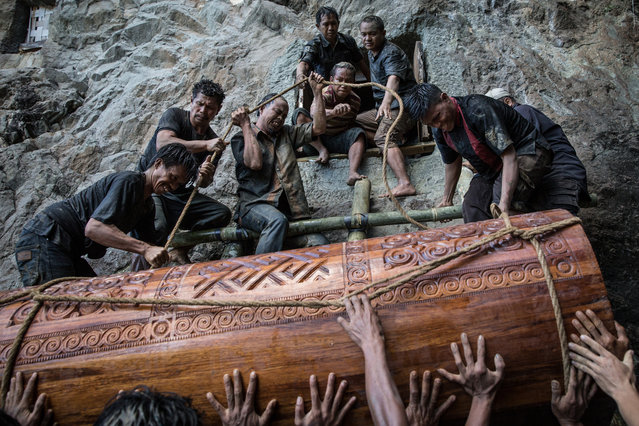
It is said that Torajans are people who “live to die”. For this Indonesian ethnic group, funerals are such extravagant events that they sometimes attract tourists. Families can postpone burials years (and the deceased are considered sick and hosted at home until the funeral) until the family can raise enough money and gather as many relatives as possible. And then it’s a jubilant multiday social event with a parade, dances and animal sacrifices. Agung Parameswara photographed these funerary practices when he traveled to South Sulawesi province, where the Torajans live. But often, their funeral isn’t the last time the dead are seen. In August, crypts are opened, coffins are slid back out and bodies delicately unsheathed. This tender ritual is known as Ma’Nene, which is customarily performed every few years. (Photo by Agung Parameswara/The Washington Post)

It is said that Torajans are people who “live to die”. For this Indonesian ethnic group, funerals are such extravagant events that they sometimes attract tourists. Families can postpone burials years (and the deceased are considered sick and hosted at home until the funeral) until the family can raise enough money and gather as many relatives as possible. And then it’s a jubilant multiday social event with a parade, dances and animal sacrifices. Agung Parameswara photographed these funerary practices when he traveled to South Sulawesi province, where the Torajans live. (Photo by Agung Parameswara/The Washington Post)
Details
06 Oct 2016 09:15:00
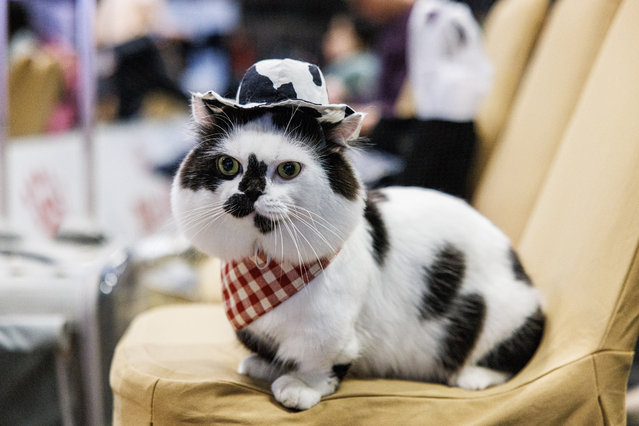
A participant in the “Cats Who Look Like Cows” competition wears a cowboy outfit back stage before judging on March 05, 2023 in Bangkok, Thailand. Thailand's Cat Fanciers' Club hosted a “Cats Who Look Like Cows” competition during a Cat Expo in Bangkok's Ladphro neighborhood. Over 100 cats were judged on how similarly their pattern resembled a cow, color, fur softness and personality. A relaxed, fluffy cat named Arpo took home first prize. (Photo by Lauren DeCicca/Getty Images)

A participant in the “Cats Who Look Like Cows” competition wears a cowboy outfit back stage before judging on March 05, 2023 in Bangkok, Thailand. Thailand's Cat Fanciers' Club hosted a “Cats Who Look Like Cows” competition during a Cat Expo in Bangkok's Ladphro neighborhood. Over 100 cats were judged on how similarly their pattern resembled a cow, color, fur softness and personality. A relaxed, fluffy cat named Arpo took home first prize. (Photo by Lauren DeCicca/Getty Images)
Details
18 Jul 2024 05:04:00
“Telemachus”. Farragut Street, New Orleans, La. Nov. 2006. (Photo by Frank Relle)

Photographer Frank Relle takes long-exposure images of houses in New Orleans. Says Relle, “The city at night comes alive for me. I imagine stories about the people’s lives inside the homes based on the evidence on the outside. My photographs become a portrait without the person. The night obscures details and the lack of information gives possibility”. Photo: “Telemachus”. Farragut Street, New Orleans, La. Nov. 2006. (Photo by Frank Relle)
Details
13 May 2014 08:59:00
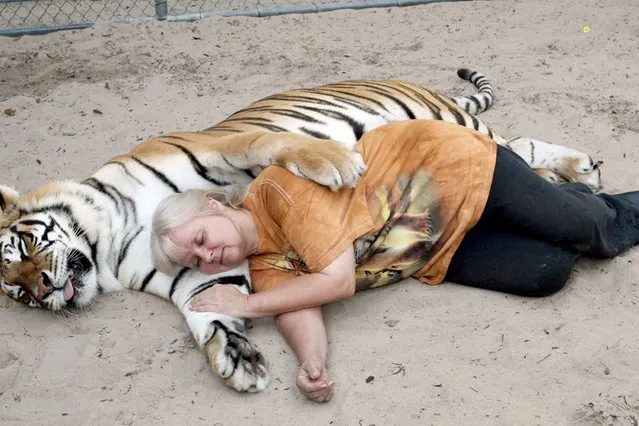
The pair are best of friends. (Photo by Ruaridh Connellan/Barcroft Media)

With six-inch fangs and weighing in at 600lb, Saber and Janda are no ­ordinary house cats. Yet these huge Bengal tigers live in Janice Haley’s suburban garden and are treated like ordinary pets. They are fed by hand, get strokes and cuddles, and white male Saber goes to sleep sucking on her finger. Janice’s life changed 20 years ago when she spotted an advert for a tiger training course in her local paper – and two years later arrived home with her first cub. Then in 2002 she bought Janda, who is now 12. Photo: The pair are best of friends. (Photo by Ruaridh Connellan/Barcroft Media)
Details
27 May 2014 10:35:00