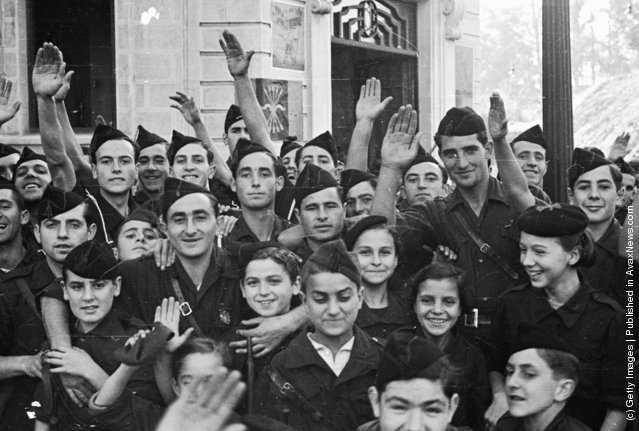
Fascist youth, both boys and girls, in the rebel uniforms in Irun after the city had been captured by the rebels. (Photo by Maeers/Fox Photos/Getty Images). 13th November 1936
Fuse TV VJ's Marianela and Juliya attend the store opening of “Nigo's A Bathing Ape” with Pharrell Williams January 11, 2005 in New York City. (Photo by Paul Hawthorne/Getty Images)
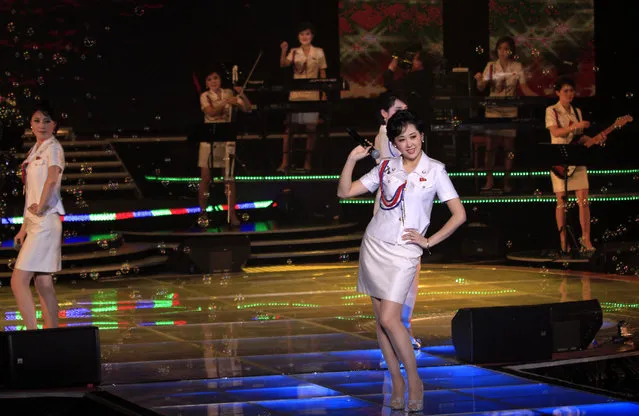
In this Friday, March 28, 2014 photo, singers of the Moranbong Band, Jong Su Hyang, foreground, and Pak Mi Kyong, left perform on their stage in Pyongyang, North Korea. Step aside, Sea of Blood Opera. North Korean leader Kim Jong Un's favorite guitar-slinging, miniskirt-sporting girl group, the Moranbong Band, is back. And these ladies know how to shimmy. (Photo by Jon Chol Jin/AP Photo)
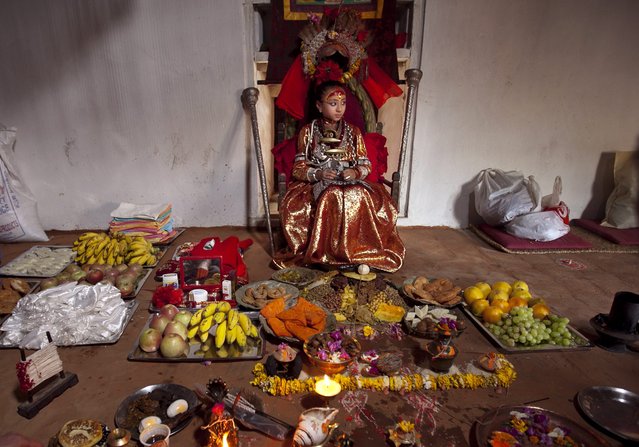
Kumari Samita Bajracharya sits in front of devotees offers during a special puja at Kumari Ghar in Patan, Nepal, 09 April 2011. It is believed that worshipping Kumari and receiving tika from her reduces illness and avoid problems. Kumari, or Kumari Devi, is a “living goddess”. The word literally means virgin in Nepali. The Living Goddesses are young pre-pubescent girls that are considered to be incarnations of the Hindu Goddess of Power, Kali. The Kumari retires when she reaches puberty. (Photo by Narendra Shrestha/EPA)
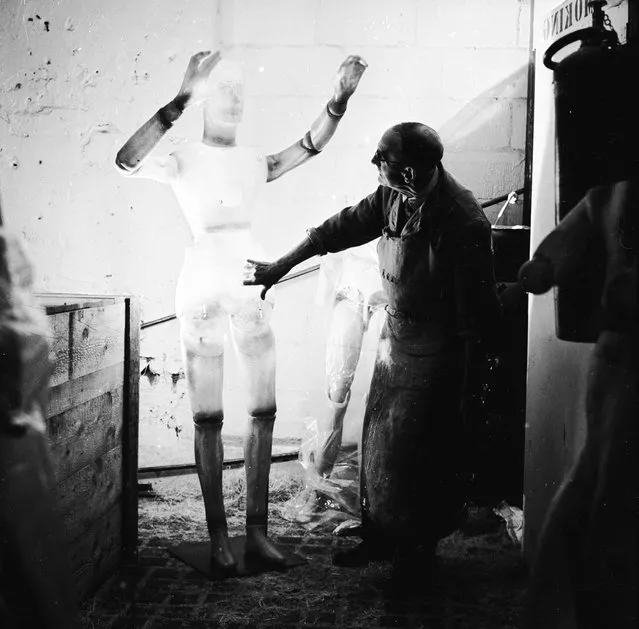
A model of a ghost made from translucent fibreglass is lit from inside at Gem's (Wax Models) Ltd, in the Portobello Road area of west London. The ghost is due to go to the Capistrano Mission Museum in California, where tourists are told the legend of how he frightened a young Indian girl novice to death. 1st May 1965. (Photo by Chris Ware/Keystone Features)
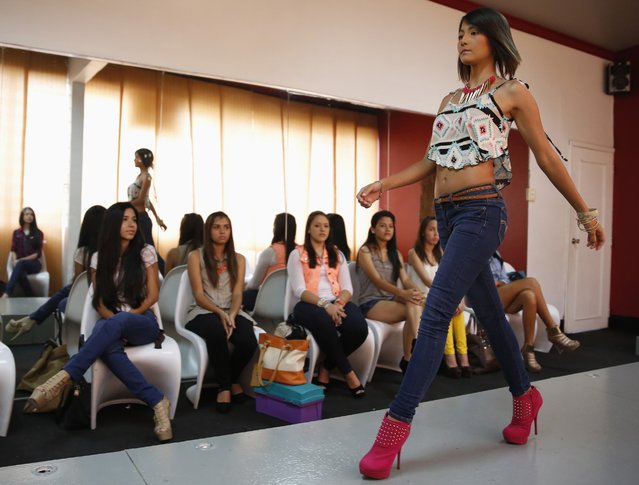
A girl walks down the runway during a class at a modelling academy in Caracas, Venezuela, on September 20, 2014. Venezuela's famed models and aspiring beauty queens are struggling to doll themselves up. In a country that glorifies voluptuous women and opulent beauty pageants, even basics like deodorant are now at times tricky to find as strict currency controls have led to a scarcity of dollars for imported goods. (Photo by Carlos Garcia Rawlins/Reuters)
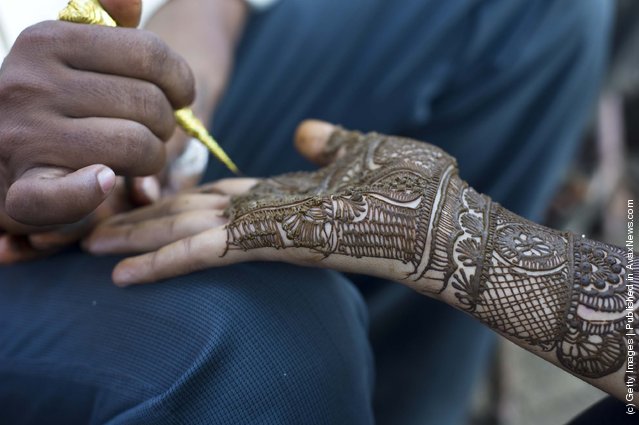
“Mehndi or menhdi is the application of henna as a temporary form of skin decoration in India, as well as by expatriate communities from the country. The word mehndi is derived from the Sanskrit word mendhikā. The use of mehndi and turmeric is described in the earliest Vedic ritual books. Haldi (Staining oneself with turmeric paste) as well as mehndi are important Vedic customs as a symbolic representation of the Outer and the Inner Sun. Vedic customs are meant to awaken the “inner light” and so the gold of the inner Sun has an important symbolic function”. – Wikipedia
Photo: Application of henna or “Mehndi” to a girls hand in a market on October 18, 2010 in Jaipur, India. (Photo by Simon de Trey-White/Getty Images)
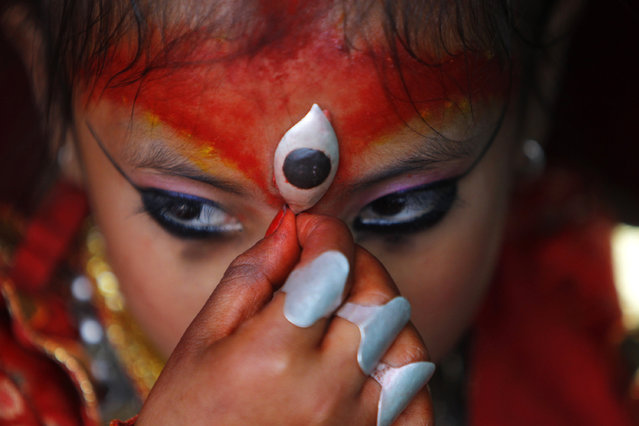
Nepal's Kumari, or living goddess, adjusts her ornament as she watches the Rato Machindranath chariot Festival in Lalitpur, Nepal, Friday, April 24, 2015. Nepal's living goddesses are young pre-pubescent girls considered by devotees to be incarnations of a Hindu goddess. Selected as toddlers, living goddesses usually keep their positions until they reach puberty. (Photo by Niranjan Shrestha/AP Photo)