Loading...
Done
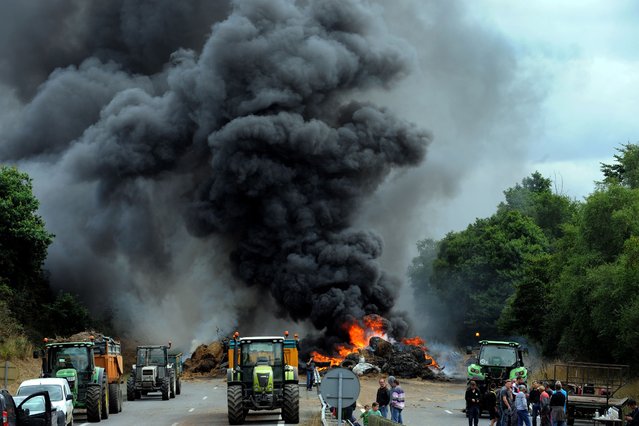
Farmers use tractors and burn tires, hay and manure as they block the highway between Morlaix and Brest during a demonstration against the market prices of their product, on July 22, 2015 in Morlaix, western of France. French farmers protesting over falling food prices threatened to step up blockades of cities, roads and tourist sites, as the government prepared to unveil emergency aid for them. (Photo by Fred Tanneau/AFP Photo)

Farmers use tractors and burn tires, hay and manure as they block the highway between Morlaix and Brest during a demonstration against the market prices of their product, on July 22, 2015 in Morlaix, western of France. French farmers protesting over falling food prices threatened to step up blockades of cities, roads and tourist sites, as the government prepared to unveil emergency aid for them. Farmers have dumped manure in cities, blocked access roads and motorways and hindered tourists from reaching Mont St-Michel in northern France, one of France's most visited sites. (Photo by Fred Tanneau/AFP Photo)
Details
23 Jul 2015 10:39:00
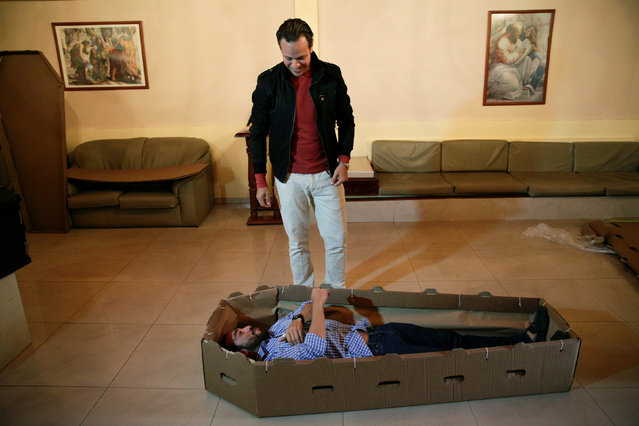
Elio Angulo (bottom C) lies inside a cardboard coffin next to Alejandro Blanchard as they introduce their product to potential customers at a mortuary in Valencia, in the state of Carabobo, Venezuela August 25, 2016. (Photo by Marco Bello/Reuters)

Elio Angulo (bottom C) lies inside a cardboard coffin next to Alejandro Blanchard as they introduce their product to potential customers at a mortuary in Valencia, in the state of Carabobo, Venezuela August 25, 2016. When Venezuelan entrepreneurs Alejandro Blanchard and Elio Angulo decided to create cardboard coffins, they were looking for an ecological selling point to compete against classic wood and brass caskets. Three years on, with the oil-rich country mired in deep economic crisis, their “bio-coffins” are becoming a viable option because of high prices for wooden coffins and shortages of brass ones. (Photo by Marco Bello/Reuters)
Details
27 Aug 2016 11:18:00


With the city of Miami skyline behind it a grand piano is seen on a sandbar in Biscayne Bay on January 26, 2011 in Miami, Florida. It's unknown how or why the heavy musical instrument was on the sandbar but some were speculating it was part of a music video production. The piano was charred from being burned. (Photo by Joe Raedle/Getty Images)
Details
27 Jul 2011 12:51:00
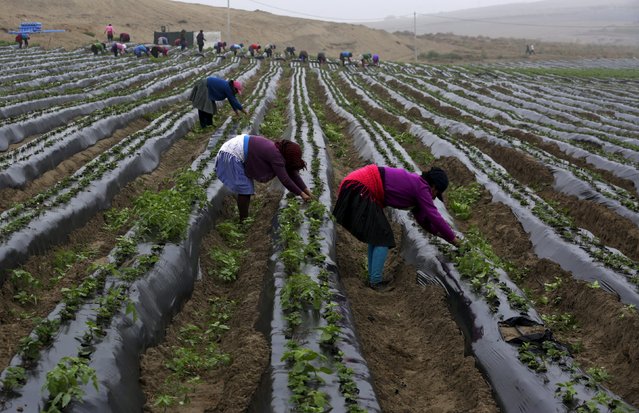
Farmworkers clear weeds in a strawberry field at a farm in Huaral on the outskirts of Lima, Peru, August 5, 2015. (Photo by Mariana Bazo/Reuters)

Farmworkers clear weeds in a strawberry field at a farm in Huaral on the outskirts of Lima, Peru, August 5, 2015. Farmers in northern Lima use pressurized irrigation and plastic wraps for efficient production of strawberries in a coastal area with little water, according to local media. (Photo by Mariana Bazo/Reuters)
Details
07 Aug 2015 11:37:00
Light Calligraphy By Julien Breton

French artist Julien Breton aka Kaalam started calligraphy in 2001 by copying Arabic calligraphers. Self-taught, he began to incorporate long exposure photography to create incredible light paintings around the world. All of the images in this gallery were created in-camera, meaning there is no Photoshop trickery or post-production manipulation involved in creating these works of art.
Details
28 Jul 2014 06:24:00
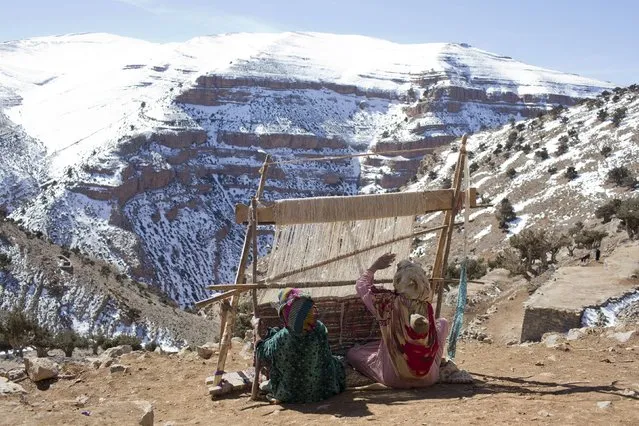
Berber women weave traditional carpets in the village of Ait Sghir in the High Atlas region of Morocco February 15, 2015. The snowy foothills of the High Atlas mountains in Morocco are home to several Berber villages where the inhabitants make their living by farming, baking bread in traditional ovens, herding cattle, and the making and selling of honey, olive oil and pottery. Extreme weather fluctuations and erosion that causes flooding and landslides have led to a drop in agricultural productivity, the United Nations said. (Photo by Youssef Boudlal/Reuters)

Berber women weave traditional carpets in the village of Ait Sghir in the High Atlas region of Morocco February 15, 2015. The snowy foothills of the High Atlas mountains in Morocco are home to several Berber villages where the inhabitants make their living by farming, baking bread in traditional ovens, herding cattle, and the making and selling of honey, olive oil and pottery. Extreme weather fluctuations and erosion that causes flooding and landslides have led to a drop in agricultural productivity, the United Nations said. (Photo by Youssef Boudlal/Reuters)
Details
26 Feb 2015 06:07:00
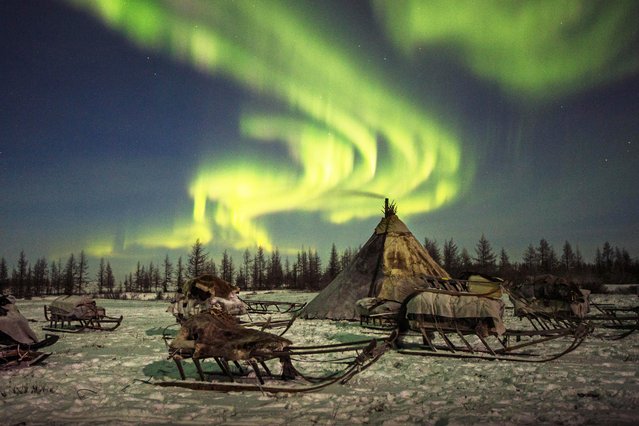
An empty camp is shown beneath a colourful sky in Siberia, December 2016. (Photo by Timothy Allen/Barcroft Productions)

A British photographer has captured life at the “edge of the world”. Timothy Allen, best known for his work on BBC's Human Planet, trekked through the freezing Siberian wilderness for 16 days as he joined part of an 800km migration of reindeer in the Yamal-Nenets region – a name that roughly translates to “edge of the world”. The stunning pictures feature the nomadic Nenets tribe, who drink blood to survive in -45°C temperatures. Timothy's epic journey, which will be revealed in an eight-minute documentary on Animal Planet USA, saw him travel across the bleak terrain of the frozen Ob River with the Nenets people in December last year. Here: An empty camp is shown beneath a colourful sky in Siberia, December 2016. (Photo by Timothy Allen/Barcroft Productions)
Details
19 Sep 2017 07:48:00
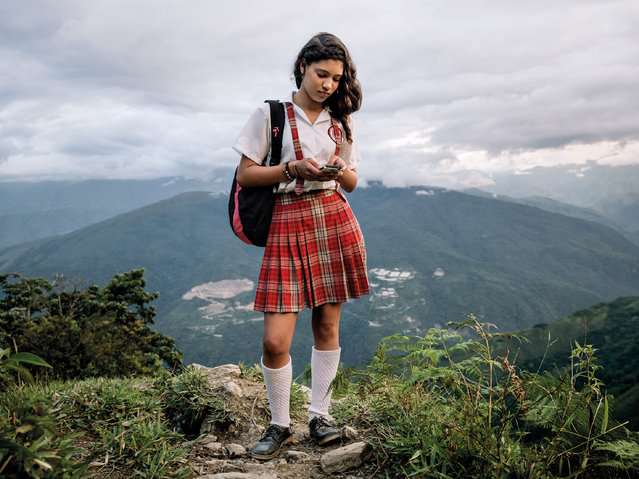
Alexandra Mazo, 12, with her cellphone on her way down the mountain after finishing school. The remote mountain village of Pueblo Nuevo has been highly affected by the armed conflict and direct combat between the national army and Farc guerrillas due to its strategic location and the intensive production on coca crops on the surrounding hillsides. (Photo by Mads Nissen/Politiken/The Guardian/Panos Pictures/The Nobel Peace Center)

Alexandra Mazo, 12, with her cellphone on her way down the mountain after finishing school. The remote mountain village of Pueblo Nuevo has been highly affected by the armed conflict and direct combat between the national army and Farc guerrillas due to its strategic location and the intensive production on coca crops on the surrounding hillsides. (Photo by Mads Nissen/Politiken/The Guardian/Panos Pictures/The Nobel Peace Center)
Details
18 Jun 2018 00:05:00